










Beautiful Lacy Crochet Shawl Free Patterns: Your Complete Guide to Creating Stunning Wraps
Introduction to Lacy Crochet Shawls
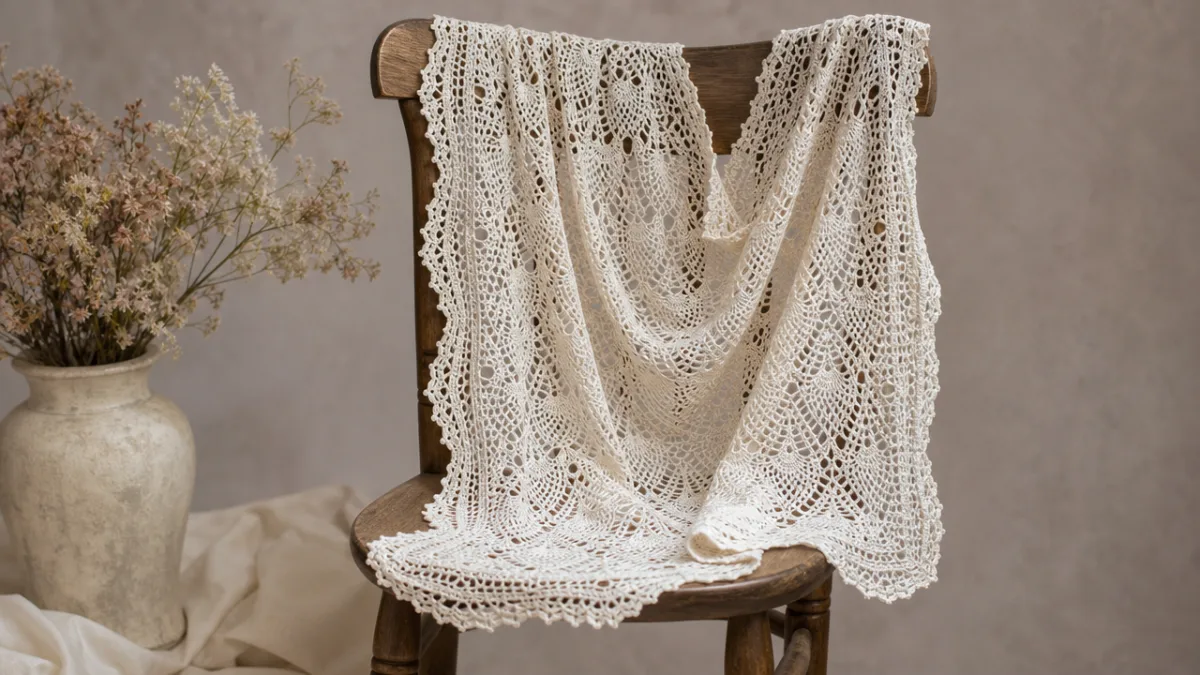
Lacy crochet shawls have captured the hearts of crafters for generations, offering a perfect blend of elegance, warmth, and artistic expression. Whether you are a seasoned crocheter or someone just beginning to explore the world of yarn and hooks, a beautifully crafted lacy shawl represents one of the most rewarding projects you can take on. These delicate yet functional pieces can transform a simple outfit into something truly special, making them a beloved staple in the handmade fashion world.
What makes lacy crochet shawls particularly appealing is their incredible versatility. A well-designed shawl can serve as a lightweight layer during cool summer evenings, a cozy wrap during autumn gatherings, or even a breathtaking accessory at a formal event. The openwork stitches that give lacy patterns their characteristic airy quality also make them surprisingly quick to work up, since your hook passes through large spaces rather than dense fabric. This combination of beauty and efficiency is one reason why shawl patterns remain perennially popular in the crochet community.
The world of free lacy crochet shawl patterns is remarkably generous. Talented designers across the globe share their creations freely through blogs, pattern websites, and social media platforms, meaning that you can access hundreds of stunning designs without spending a single dollar. From simple triangle shawls suited to beginners to intricate circular wraps requiring advanced stitch knowledge, the range of available free patterns ensures that every skill level is well represented and every aesthetic preference can be satisfied.
Essential Tools and Materials for Lacy Shawl Crochet
Before diving into your first lacy shawl project, gathering the right tools and materials will set you up for success and make the entire crafting experience more enjoyable. The most critical choice you will make is your yarn selection, and for lacy shawls, this decision carries particular weight. Lace-weight or fingering-weight yarns are the traditional choices because their fine gauge creates the delicate, gossamer-like fabric that defines the style. Natural fibers such as merino wool, alpaca, silk, and cotton are especially prized for their drape, sheen, and ability to block beautifully once your project is complete.
Your crochet hook is equally important in achieving the right look and feel for a lacy shawl. For lace-weight yarn, hooks in the range of 2mm to 3.5mm are typical, though many designers intentionally use a larger hook than the yarn label suggests. Going up a hook size or two creates a more open, drapey fabric with better stitch definition in the lace pattern. Hooks made from steel, aluminum, or smooth wood all work well, and your personal preference for grip and feel should guide your choice. Some crocheters find that longer hooks with ergonomic handles reduce fatigue during longer sessions.
Beyond yarn and hooks, a few additional tools will prove invaluable throughout your shawl-making journey. A set of stitch markers helps you track pattern repeats and mark the beginning of rounds in circular shawls. A yarn needle with a blunt tip is essential for weaving in ends neatly once your shawl is finished. Blocking mats, rust-proof pins, and a spray bottle or basin for wet blocking are critical for transforming your finished crochet into its most beautiful final form, since blocking opens up the lace stitches and gives the shawl its full, polished appearance.
- Lace-weight or fingering-weight yarn in a fiber with good drape, such as merino, silk, or bamboo blends
- Crochet hook one to two sizes larger than recommended on the yarn label for better openwork definition
- Stitch markers in multiple colors to track pattern repeats and section boundaries
- Blunt-tipped yarn needle for secure, invisible end weaving
- Blocking mats, rust-proof T-pins, and a spray bottle or blocking wires for finishing
- A small ruler or stitch gauge tool to check your tension before beginning the full project

Understanding Lace Crochet Stitches and Techniques
The magic of lacy crochet lies in a relatively small collection of fundamental stitches and techniques that, when combined in thoughtful ways, produce endlessly varied and breathtaking results. At the heart of most lace patterns are chains and spaces, created by working chains between single crochets, double crochets, or treble crochets to form the open mesh that defines lace fabric. Understanding how to read these stitch combinations in a pattern and execute them with consistent tension is the foundational skill every lace crocheter must develop before tackling more complex designs.
Picots are another beloved element in lacy crochet shawl patterns. A picot is a tiny decorative loop formed by chaining a small number of stitches and then slip stitching back into the base stitch, creating a little point or bump along an edge or within a motif. Picot edgings are frequently used along the outer border of shawls to add delicate finishing detail, and scattered picots within the body of a pattern can create additional texture and visual interest. Learning to make picots consistently will open up a wide range of patterns that feature them prominently.
Shell stitches and fan stitches are workhorses of the lacy shawl world, producing elegant scalloped effects that add fullness and movement to a finished piece. A shell is typically made by working several double crochets or treble crochets all into a single stitch or space, fanning out to create a rounded, petal-like shape. When shells are placed in alternating positions across rows or rounds, they create an interlocking fabric with natural openings between each fan. Many of the most popular free shawl patterns rely primarily on variations of the shell stitch, making them accessible to intermediate crocheters while still producing a stunning result.
Reading Lace Crochet Charts
Many lacy crochet patterns, particularly those originating from European designers, are presented as visual symbol charts rather than written row-by-row instructions. Learning to read these charts can initially feel intimidating, but it quickly becomes second nature and actually makes complex lace patterns much easier to follow. Each stitch type is represented by a standardized symbol, such as an oval for a chain, an X for a single crochet, or a tall rectangle for a double crochet, and the chart shows exactly how these stitches relate to one another spatially across the fabric.
The advantage of working from a chart is that you can see the overall design emerging as you work, making it easier to catch mistakes before they propagate through many rows. Charts are also language-neutral, meaning that a pattern published in German, Japanese, or Spanish is fully accessible to any crocheter who can read the symbols. If you have never worked from a crochet chart before, many online tutorials and stitch dictionaries offer excellent introductions, and practicing with a simple pattern before attempting something complex will build your confidence quickly and effectively.
Tension and Gauge in Lace Crochet
Tension, or gauge, plays a particularly important role in lace crochet because the openwork structure of lace patterns is highly sensitive to how tightly or loosely you work your stitches. A shawl worked too tightly will feel stiff and the lace holes will close up, losing the delicate, airy quality that makes the style so appealing. Conversely, working too loosely can make the fabric limp and shapeless, with stitches that lack the crisp definition needed for the pattern to read clearly. Before beginning any shawl project, crocheting a small swatch and comparing it to the pattern’s gauge specifications will save considerable frustration.
It is worth noting that many experienced lace crocheters deliberately ignore gauge specifications for shawls, since unlike garments, shawls do not need to fit specific body measurements in a precise way. The general approach is to use a hook size that produces a fabric you find pleasing in terms of drape and openness. If your swatch looks stiff and closed, try a larger hook. If it looks too floppy and the stitches are hard to distinguish, try a smaller hook. This intuitive approach, combined with a willingness to swatch and adjust, will serve you well throughout your lace crochet journey.

Top Free Lacy Crochet Shawl Pattern Styles
The landscape of free lacy crochet shawl patterns is incredibly diverse, encompassing numerous distinct shapes and design philosophies. The classic triangle shawl is arguably the most popular starting point for new shawl makers, and for good reason. Triangle shawls can be constructed from the top center down, adding increases at strategic points to build the familiar wedge shape, or they can be worked from one corner outward in a diagonal construction. Both methods produce versatile, wearable shawls that drape beautifully across the shoulders and back.
Crescent shawls represent another beloved style, characterized by their curved upper edge and deeper lower edge that creates a shape resembling a crescent moon. This particular silhouette is often considered especially flattering because it stays on the shoulders more naturally than a straight-edged triangle shawl. The gentle curve is typically achieved through short-row techniques or strategic increase and decrease placement, and the resulting shape lends itself beautifully to lacy edging patterns along the curved bottom hem. Free crescent shawl patterns range from straightforward beginner-friendly designs to elaborate creations featuring multiple lace stitch patterns.
Rectangular and square shawls, often called wraps or stoles, offer yet another approach. These simpler shapes can be worked in a single stitch pattern from end to end, making them meditative and relaxing to crochet once you have memorized the pattern repeat. A rectangular shawl in a simple mesh or shell lace pattern worked in a beautiful hand-dyed yarn can be absolutely stunning, proving that extraordinary results do not always require complex construction. Many free rectangular shawl patterns are specifically designed with beginners in mind, using straightforward stitch combinations while still achieving a genuinely gorgeous finished piece.
Circular and Pi Shawls
Circular shawls, worked from the center outward in ever-expanding rounds, represent some of the most mathematically elegant and visually impressive designs in the crochet world. The Pi shawl construction, inspired by the mathematical concept of Pi and pioneered in the knitting world by designer Elizabeth Zimmermann, places increase rounds at specific mathematically determined intervals, creating a smooth, circular shape with long stretches of flat fabric between increases. These flat sections are perfect for inserting lace pattern repeats, and the result is a shawl that looks astonishingly complex while following a logical, repeating structure.
Working a circular shawl requires some comfort with working in the round and reading charts that spiral outward from a center point, but the techniques involved are not particularly difficult once you understand the basic principle. Many free circular shawl patterns include helpful notes about stitch count checkpoints and tips for managing the increasing number of stitches as the shawl grows. The finished circular shawl can be worn as a full circular wrap draped across the back, or folded in half and worn as a semicircular shawl with the flat edge along the top.
Blocking and Finishing Your Lacy Crochet Shawl
Blocking is the transformative final step that takes a finished lacy crochet shawl from looking like a crumpled, slightly disappointing heap of yarn to a stunning, polished accessory that showcases every stitch to its best advantage. The process involves wetting or steaming your finished shawl, stretching it to its full dimensions, and allowing it to dry completely while pinned in shape on blocking mats. For lacy shawls in particular, this step is not optional or merely cosmetic. Blocking physically opens up the lace stitches, relaxes the yarn, and sets the drape of the fabric in a way that simply cannot be achieved through any other means.
Wet blocking is the most thorough method and is ideal for most natural fiber yarns including wool, cotton, and silk blends. The process begins by soaking your finished shawl in cool or lukewarm water with a small amount of wool wash or gentle shampoo for approximately fifteen to thirty minutes, allowing the fibers to become fully saturated. You then carefully lift the shawl out of the water, supporting its full weight to avoid stretching it unevenly, and gently press out as much water as possible by rolling the shawl in a clean dry towel and pressing firmly. Never wring or twist a wet crochet shawl, as this can distort the fabric permanently.
Once your shawl is damp rather than dripping, lay it out on your blocking mats and begin pinning it to shape. For triangle shawls, start by pinning the center top and the two bottom corners, then work along the edges, stretching gently and placing pins every inch or two to create smooth, even lines. For shawls with picot edgings or pointed lace borders, each individual point should be pinned out separately to maximize the visual impact of the edging. Allow the shawl to dry completely, which may take twelve to twenty-four hours depending on the fiber and ambient humidity. The results of this patient process will astonish you every single time.
Caring for Your Finished Shawl
Once your lacy shawl is complete and blocked, knowing how to care for it properly will ensure that it remains beautiful for many years to come. Most natural fiber shawls should be hand washed in cool water with a gentle wool wash, following the same general process as blocking. Lay the shawl flat to dry rather than hanging it, since the weight of a wet shawl can cause it to stretch out of shape if hung on a peg or hanger. If you need to remove a small amount of wilting between washes, a gentle steam treatment while the shawl is laid flat can refresh the fibers and lightly reblock the lace.
Storing your shawl correctly is equally important for its long-term preservation. Fold it loosely and store it in a breathable cotton bag or wrapped in acid-free tissue paper rather than sealed in plastic bags, which can trap moisture and encourage mildew. For wool shawls, adding cedar blocks or lavender sachets to your storage area provides a pleasant and effective deterrent against moths, which are attracted to natural protein fibers. With proper care, a hand-crocheted lacy shawl made from quality yarn can last for decades and even become a treasured heirloom passed from one generation to the next.
Finding and Using Free Lacy Shawl Patterns Online
The internet has created an extraordinary ecosystem of free crochet patterns that would have been unimaginable to crafters of previous generations. Websites like Ravelry, which functions as both a pattern database and a vibrant crafting community, host tens of thousands of free shawl patterns searchable by construction type, difficulty level, stitch type, and yarn weight. Creating a free Ravelry account allows you to save patterns to your library, track your projects, and connect with other crocheters who have made the same pattern, which is invaluable when you have a question about a confusing section of a pattern.
Beyond Ravelry, countless independent crochet designers maintain blogs and websites where they publish free patterns supported by advertising or their shops selling premium patterns and products. Following these designers on social media platforms such as Instagram and Pinterest is a wonderful way to discover new free patterns as they are released and to find inspiration for colorways and styling ideas. Many designers also maintain active YouTube channels featuring video tutorials that walk through their free patterns stitch by stitch, which is especially helpful for visual learners and for patterns that include unfamiliar techniques.
Pinterest itself is one of the most powerful tools available for discovering free lacy crochet shawl patterns, since its visual nature makes it easy to browse through hundreds of finished shawl photos quickly and click through to the original pattern source when something catches your eye. Building a dedicated Pinterest board for crochet shawl patterns you want to try creates a personal collection you can return to whenever you finish a project and are ready to start something new. The key is to always click through to the original source and save the actual pattern link or PDF, since pins can disappear over time if the original website goes offline.
Tips for Pattern Success
Even the best-written free patterns occasionally contain errors or unclear instructions, and knowing how to navigate these situations will save you from significant frustration. Before beginning any pattern, read through it completely from start to finish to check for anything that seems unclear or potentially problematic. Look up the pattern on Ravelry to read project notes from other crocheters, who often flag known errors and share corrections or clarifications that make the pattern easier to follow. Many pattern designers also maintain errata lists on their blogs or websites where they post corrections to errors discovered after publication.
Starting a new lacy shawl pattern with a swatch is valuable not only for checking gauge but also for practicing any unfamiliar stitch combinations before working them on your actual project. There is nothing more disheartening than discovering that you have been misinterpreting a stitch for twenty rows and need to frog a significant portion of your work. A small test swatch worked in the main stitch pattern costs only a little time and yarn but can prevent major setbacks by giving you a chance to practice and ask questions before your mistakes are multiplied across the full shawl. Approach each new pattern as a learning experience, and you will improve rapidly with every project you complete.
- Read through the entire pattern before casting on or beginning your first stitch to identify potential problem areas early.
- Search for the pattern on Ravelry to find notes and corrections from other crocheters who have already completed it.
- Work a swatch using the main stitch pattern to practice unfamiliar techniques and confirm your hook size feels right.
- Use stitch markers generously to track pattern repeats and prevent counting errors in long lace rows.
- Check your stitch count at the end of every row or round, especially in patterns with significant increases or decreases.
- Take photos of your work in progress so you can refer back to earlier stages if you need to troubleshoot a problem.
- Block your finished shawl without exception, no matter how tempted you are to wear it immediately after binding off.
The community of crocheters who love and make lacy shawls is one of the warmest and most supportive in the entire crafting world. Whether you connect through online forums, local yarn shops, or social media groups, sharing your work in progress and finished projects invites encouragement, advice, and inspiration from fellow enthusiasts at every skill level. Many experienced crocheters are genuinely delighted to help beginners work through difficult sections of patterns, and in turn, you will find yourself helping others as your own skills grow. This generosity of spirit, combined with the abundance of beautiful free patterns available to anyone with an internet connection, makes lacy crochet shawl making one of the most accessible and rewarding fiber arts you can pursue.








What do you think?
It is nice to know your opinion. Leave a comment.