










40 Gorgeous DIY Stone, Rock, and Pebble Crafts To Beautify Your Life
The Timeless Appeal of Natural Stone in Crafting
There is something deeply satisfying about working with materials that the earth itself has shaped over thousands of years. Stones, rocks, and pebbles carry a quiet, ancient beauty that no synthetic material can truly replicate. Whether smoothed by a river or etched by wind and rain, each piece arrives in your hands already possessing a unique character, texture, and story. This is precisely why stone crafting has seen such an extraordinary revival in the DIY community, inspiring countless creators to transform humble, freely gathered materials into objects of genuine beauty and lasting purpose.
Unlike many craft supplies that require a trip to the store and a significant investment, stones are accessible to nearly everyone. A walk along a riverbank, a beach stroll, or even a wander through a garden can yield a generous collection of raw material. This accessibility makes stone crafting one of the most democratic and earth-friendly creative pursuits available. You are not buying plastic or contributing to manufacturing waste — you are simply redirecting what nature has already made, giving it a new role and a new home within your living spaces and gardens.
The versatility of stone as a crafting medium is genuinely remarkable. From tiny delicate pebbles that become mosaic tiles or painted miniatures, to larger rocks that are transformed into garden sculptures, stepping stones, or bold decorative centerpieces, the range of projects you can pursue is staggering. Skilled crafters and enthusiastic beginners alike find equal footing in this creative arena, because the materials themselves are forgiving, endlessly varied, and naturally beautiful even before a single brushstroke or drop of adhesive is applied. The forty projects explored in this guide represent just a fraction of what is possible when imagination meets the enduring material of the natural world.
Painted Rock Projects: Turning Pebbles Into Art
Painted rocks have become one of the most beloved and widely shared craft categories on social platforms, and for very good reason. The smooth surface of a river pebble or beach stone provides an ideal canvas for acrylic paint, offering just enough texture to hold pigment beautifully while remaining accessible even to those who do not consider themselves skilled painters. Beginners can create simple geometric patterns, dots, and stripes, while more experienced artists use stones to paint intricate mandalas, miniature landscapes, portraits of beloved pets, or detailed floral compositions that rival any canvas painting in their complexity and charm.
One of the most popular painted rock traditions to emerge in recent years is the community rock-hiding movement, where painted stones are sealed with weatherproof varnish and left in public spaces for strangers to discover and either keep or re-hide elsewhere. This practice transforms a personal craft hobby into a community act of generosity and joy, brightening the day of whoever is lucky enough to find a beautifully painted stone tucked beneath a park bench or nestled among the roots of a tree. Families with children find this tradition particularly magical, as it adds an element of treasure hunting to everyday outings and encourages a spirit of creative generosity.
For home display purposes, painted rocks serve wonderfully as paperweights, bookends, garden markers, or simply as decorative objects arranged in bowls, trays, and on shelving. Inspirational words painted in neat lettering make meaningful, personalized gifts. Animal-painted stones arranged in a terrarium create a whimsical miniature scene. Abstract color-wash techniques using watered-down acrylics can yield stones that look like tiny gemstones or planets, perfect for scattering across a coffee table or windowsill. The supplies required are minimal — quality acrylic paints, a selection of brushes, a sealing varnish — and the results are consistently rewarding regardless of the painter’s experience level.

Garden and Landscape Projects Using Rocks and Stones
The garden is perhaps the most natural home for stone craft projects, and the possibilities for integrating rocks and pebbles into outdoor spaces are truly extensive. Stepping stone paths are among the most satisfying large-scale DIY undertakings a homeowner can attempt, combining functional purpose with decorative charm. Using simple concrete molds or repurposed cake tins, crafters embed pebbles, glass marbles, shells, and larger decorative stones into wet concrete to create custom-designed stepping stones that are both practical walkway elements and genuine works of art. Each stone in the path can be a different design, creating a mosaic narrative that guests follow through your garden.
Rock gardens, also known as rockeries, represent one of the most enduring and low-maintenance landscaping traditions in the world, and they can be designed and implemented entirely as a DIY project with careful planning and a good eye for composition. The key is selecting rocks of varying sizes and arranging them in a way that mimics natural geological formations rather than appearing artificially stacked. Alpine plants, succulents, and creeping ground covers are planted between and around the rocks, softening the composition and filling it with living texture and seasonal color. A well-designed rock garden requires very little watering once established and virtually no mowing, making it a practical as well as beautiful landscaping solution.
Smaller garden projects include pebble mulch borders around flower beds, which suppress weeds while adding a polished, professional appearance to planting areas. River rocks arranged in a dry stream bed create the illusion of water flowing through a landscape, particularly effective in drought-prone gardens where water features would be impractical. Stone-edged raised planters built from stacked fieldstone have a cottage-garden appeal that blends beautifully with both formal and informal planting schemes. Even simple arrangements of a few large, interesting boulders can serve as focal points in an otherwise flat garden, adding vertical interest, visual weight, and a sense of permanence and intention to the landscape design.
Indoor Décor and Home Accessory Projects
Bringing the beauty of natural stone indoors requires nothing more than a thoughtful eye and a willingness to experiment. One of the simplest and most effective indoor stone craft projects involves filling glass vases, hurricane lanterns, or large apothecary jars with a selection of river pebbles in complementary tones. The result is an instantly sophisticated decorative element that works equally well in minimalist Scandinavian interiors, rustic farmhouse spaces, and coastal-themed rooms. Candles nestled into pebble-filled vessels cast warm, flickering light that reflects subtly off the polished stone surfaces, creating an atmosphere of calm and organic elegance.
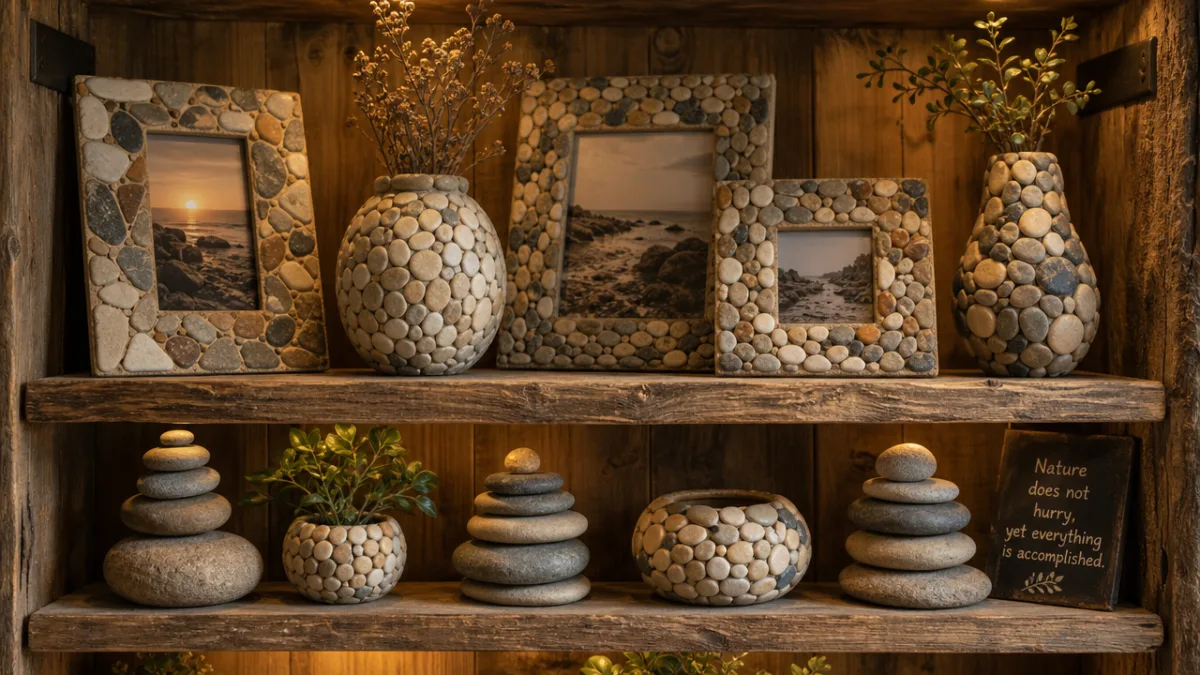
Stone mosaic projects offer a more technically demanding but deeply rewarding indoor crafting experience. Flat pebbles and small stones can be arranged into mosaic patterns and adhered to picture frames, mirror surrounds, tabletops, plant pot covers, and decorative trays using tile adhesive and grout. The finished pieces have a Mediterranean or artisan quality that looks expensive and handcrafted, because they genuinely are. Color sorting your pebbles before beginning a mosaic project is essential — grouping them by tone, size, and shape allows you to plan your design more accurately and work more efficiently once the adhesive is applied and time becomes a factor.
Stone bookends represent one of the most practical and frequently gifted indoor stone craft projects. Two large, flat-bottomed stones — ideally matching or complementary in size and appearance — can be fitted with adhesive felt on their bases and used immediately as functional bookends. For a more polished finish, crafters often paint these stones with chalk paint, leaving the top surface bare to reveal the natural stone texture while coating the visible sides in a matte color that coordinates with the room’s palette. Other popular indoor stone projects include:
- Pebble bath mats created by adhering smooth river stones to a rubber mat backing, providing a spa-like foot massage experience in the shower
- Stone coasters sealed with resin to protect both the stone surface and the furniture beneath
- Stacked balancing stone sculptures used as Zen-inspired table centerpieces or meditation focal points
- Pebble-framed wall clocks that replace standard clock surrounds with a ring of carefully selected stones
- Rock name signs for nurseries and children’s rooms, with each letter painted on an individual stone and arranged in a display tray
The beauty of these indoor projects lies in their adaptability. Stone is a neutral material that harmonizes with virtually any design aesthetic, from the warm earthiness of bohemian interiors to the cool restraint of contemporary minimalism. Whether you are drawn to the natural tones of unadorned pebbles or prefer to introduce color through paint and resin finishes, the material accommodates your vision with remarkable flexibility. A well-executed stone craft project does not simply decorate a room — it introduces a quality of texture, weight, and natural history that mass-produced decorative items simply cannot replicate.
Functional Crafts: Stone Projects With Practical Purpose
One of the most compelling arguments for stone crafting is that the resulting objects are not merely decorative — many of them serve genuine, everyday practical purposes that integrate seamlessly into the rhythms of domestic life. The pebble bath mat, for instance, is both a design statement and a genuinely functional bathroom accessory, providing a non-slip, massaging surface underfoot that drains naturally and requires only occasional rinsing to keep clean. When made with care using properly sealed stones and a durable rubber backing, a pebble mat can last for many years, outlasting conventional fabric bath mats by a considerable margin.
Stone trivets and coasters are another category of functional craft that combines practicality with natural beauty in an entirely satisfying way. Large, flat stones make ideal trivets for protecting countertops and dining tables from hot pots and pans, requiring only a coat of heat-resistant sealant and a set of rubber feet to be fully functional. Collections of smaller, matched pebbles can be turned into coaster sets with the addition of felt backing and a coat of waterproofing resin on the upper surface. Presented in a small wooden tray or a woven basket, stone coaster sets make thoughtful, personalized gifts for housewarmings, weddings, and other occasions where a handmade touch is particularly welcome.
Garden markers made from painted or engraved stones represent one of the most universally appreciated functional stone crafts, combining the practical need to identify plantings with an opportunity for creative expression. Unlike wooden or plastic markers that degrade in outdoor conditions, stone markers weather beautifully over time and will never rot, warp, or fade beyond recognition. Names of herbs, vegetables, and flowers can be applied using paint pens, carved with a rotary tool, or simply written with a permanent marker and sealed. Larger flat stones can even serve as recipe markers in kitchen herb gardens, with the herb name on one side and a suggested use painted on the other, creating a charming and informative garden feature.
Collecting, Preparing, and Sourcing Your Stones
The first step in any stone crafting adventure is building a collection of suitable raw material, and this process is itself a deeply enjoyable part of the hobby. River stones and beach pebbles are the most commonly used, prized for their smooth surfaces and rounded forms that develop through years of water tumbling. Lakes, streams, hiking trails, and beaches are all excellent sources, though it is important to be aware of local regulations — some natural reserves and beaches prohibit the removal of stones or other natural materials, and these rules exist to protect ecosystems that depend on the gradual accumulation of sediment and rock. Always collect responsibly and in moderation, taking only what you will genuinely use.
For crafters who do not have easy access to natural collecting sites, or who prefer the convenience of consistent material, bags of river pebbles, polished stones, and decorative gravel are widely available from garden centers, home improvement stores, and online retailers at very reasonable prices. Craft stores also sell bags of smaller decorative stones in specific color ranges, which is particularly useful for mosaic projects where color consistency and sorting time would otherwise be significant challenges. Aquarium supply stores are an often-overlooked source of beautiful small pebbles in unusual colors and finishes, perfectly sized for detailed mosaic work or pebble paintings.
Proper preparation of your stones before crafting is an important step that many beginners overlook to their later frustration. Stones collected from outdoors should be thoroughly washed to remove dirt, organic matter, and any residue that might prevent adhesive or paint from bonding properly to the surface. Soaking in warm soapy water followed by a rinse and complete air-drying is usually sufficient, though a brief scrub with a stiff brush will help with stones that have significant surface deposits. For painting projects, lightly sanding the surface of very smooth stones with fine-grit sandpaper can improve paint adhesion and is particularly recommended when working with acrylic craft paints rather than specialist stone paints.
Organizing your collection is a practice that will pay dividends every time you begin a new project. Sorting stones by size, shape, surface texture, and color into separate containers or trays makes the selection process faster and more intuitive, allowing you to focus creative energy on design rather than rummaging through an undifferentiated pile. Many dedicated stone crafters maintain a reference collection of particularly beautiful or unusual specimens that they cannot bring themselves to alter — these serve as inspiration objects and mood-setters for new projects, reminding the crafter of the natural beauty that underlies all of their creative work and providing a kind of visual library of what stone can look like in its most purely itself form.
Getting Started: Tips, Tools, and Tutorials
Beginning a stone crafting practice requires very little in the way of initial investment, which is one of the great joys of this particular creative pursuit. The most fundamental supply for painted stone projects is a set of quality acrylic paints in a range of colors, a selection of brush sizes from fine-tipped detail brushes to broader flat brushes for base coating, and a bottle of gloss or matte sealant varnish to protect finished work from moisture and handling. These basics can be purchased inexpensively at any craft supply store, and the paints and varnishes will last through many dozens of projects. A white paint pen or a fine-tipped white acrylic marker is an extremely useful addition for adding highlights, lettering, and fine detail lines without the mess of loading a very small brush.
For mosaic and adhesive-based projects, the essential supplies expand to include tile adhesive or a strong multi-surface craft glue, unsanded grout in your preferred color (white, grey, black, and natural tones are all popular choices), a grout float or old credit card for applying grout, and rubber gloves to protect your hands during the grouting process. A pencil and paper for sketching your mosaic design before committing to the adhesive stage will save considerable time and frustration, particularly for more complex geometric or figurative compositions. Many experienced mosaic artists also recommend having a bucket of water and a damp sponge on hand throughout the grouting process for wiping excess grout from stone surfaces before it dries.
The online crafting community has generated an extraordinary wealth of free tutorial resources for stone crafts of every level and type. Pinterest boards dedicated to rock and pebble crafts contain thousands of project ideas, many with direct links to full written tutorials and video walkthroughs. YouTube channels devoted to stone painting alone have accumulated millions of views, with instructors guiding viewers through everything from basic dot painting techniques to advanced portraiture on stone. Following along with video tutorials is particularly valuable for understanding the pace and consistency of paint application, the technique of blending colors on a curved surface, and the proper timing of each stage of a project, all of which are difficult to convey through photographs and written instructions alone.
As your skills and confidence develop, do not be afraid to experiment beyond the tutorials and develop your own distinctive style and signature approaches. The most memorable and beloved stone craft work tends to emerge when a crafter stops trying to replicate what they have seen and starts responding directly to the particular qualities of the stone in front of them — the way a patch of natural mineral variation suggests a background for a tiny painted scene, or the way the elongated shape of a particular pebble perfectly suits a painted fish or leaf motif. Nature has already done extraordinary design work in every stone you pick up; your creative role is to recognize what is already there and decide how best to celebrate and extend it into something new and personally meaningful.








What do you think?
It is nice to know your opinion. Leave a comment.