










Shamrock Plant Care: How To Grow Oxalis Plants
Introduction to Oxalis: The Charming Shamrock Plant
If you’ve ever spotted a plant with delicate, clover-like leaves and tiny flowers that seem almost too pretty to be real, there’s a good chance you were looking at an Oxalis. Also called the shamrock plant or wood sorrel, Oxalis has been winning over gardeners for centuries — and it’s not hard to see why. The name itself comes from the Greek word for “sour,” which makes sense once you know the leaves contain oxalic acid and have a pleasantly tart flavor. Whether you’ve been growing plants for decades or you just brought home your very first pot, Oxalis is the kind of plant that rewards you without asking for too much in return.
The Oxalis genus is surprisingly huge — over 800 species — making it one of the largest plant families out there. Most of them grow as outdoor ground covers or wildflowers, but a handful of varieties have become true houseplant favorites. The most popular is probably Oxalis triangularis, with its deep purple, butterfly-shaped leaves that practically stop people in their tracks. Then there’s Oxalis tetraphylla, the one you often see sold as a “lucky clover” around St. Patrick’s Day. Each variety has its own personality, from cheerful bright green to dramatic burgundy that practically glows when afternoon light hits it.
One of the coolest things about Oxalis is something called nyctinasty — basically, the plant folds its leaves and closes its flowers when the light drops. It opens back up in the morning, giving it this almost animated quality, like it’s on the same schedule you are. Honestly, watching it go through that daily rhythm never really gets old. Pair that with its graceful look and compact size, and you’ve got a plant that’s practically made for windowsills, desks, and tabletops. Once you get a feel for what it needs, Oxalis tends to become one of those plants you find yourself recommending to everyone.
Choosing the Right Variety for Your Home
Picking the right Oxalis variety is a great first step, and luckily you have some really lovely options. Oxalis triangularis — the purple shamrock — is probably the most dramatic of the bunch and the most popular for growing indoors. Its deep violet to near-black leaflets look striking against pretty much any backdrop, and the soft pink to lavender flowers it produces are a gorgeous contrast. It’s also pretty forgiving, which makes it a great pick if you’re still building your plant care confidence.
If you’re more drawn to the classic shamrock look, Oxalis acetosella and Oxalis deppei are worth a look. Both have bright green, heart-shaped leaflets that look like they jumped straight out of an Irish folklore illustration. They tend to handle cooler temperatures a bit better and can even grow outdoors in mild climates. Oxalis deppei — also called lucky clover — often has four leaflets with a reddish center that makes it really stand out. Come spring, both varieties burst into bloom with cheerful pink or white flowers that stick around for several weeks and genuinely brighten up a room.
When you go shopping for an Oxalis, you’ll likely come across both established potted plants and small bulbs called corms. Buying corms is usually cheaper, and there’s something satisfying about growing the plant right from the start. Just plant them a few inches deep in well-draining soil with the pointed end facing up, and you should see sprouts within a couple of weeks. Whether you go the corm route or pick up a plant that’s already growing, getting familiar with your variety’s natural growth cycle will make a real difference in how well you’re able to care for it throughout the year.
Light, Temperature, and Placement Requirements
Oxalis genuinely loves light, though it prefers bright and indirect over the harsh, direct afternoon sun that can scorch those delicate leaves. A spot near an east- or west-facing window where it gets a few hours of gentle sun each day is pretty much ideal. South-facing windows work well in winter when the light isn’t as intense, but during summer you might want to hang a sheer curtain to take the edge off. If you notice your plant getting leggy and stretching toward the window, that’s usually a sign it’s not getting enough light and needs to move closer to a brighter spot.
As far as temperature goes, Oxalis leans toward the cooler side of what’s comfortable for most homes. The sweet spot for most varieties is somewhere between 60°F and 75°F (15°C to 24°C), which makes them a natural fit for homes that stay a bit cooler in winter. A lot of growers actually notice their Oxalis looks its best and flowers most when there’s a slight dip in temperature overnight — it mimics the conditions these plants evolved in. One thing to watch out for: heating vents, radiators, and drafty windows are all bad news, since sudden temperature swings can stress the plant and push it into dormancy before its time.
If you want to move your Oxalis outside for the warmer months, you absolutely can. In USDA hardiness zones 6 through 9, some varieties can even overwinter outdoors with very little fuss. Just make sure you introduce the plant to outdoor conditions gradually — about one to two weeks of slowly increasing sun exposure should do it. Going too fast can lead to leaf scorch, and nobody wants that after putting in the effort to keep the plant happy all winter. Whether you grow it inside or out, consistent light and stable temperatures are really the foundation of a healthy, blooming Oxalis.
Watering, Soil, and Fertilization
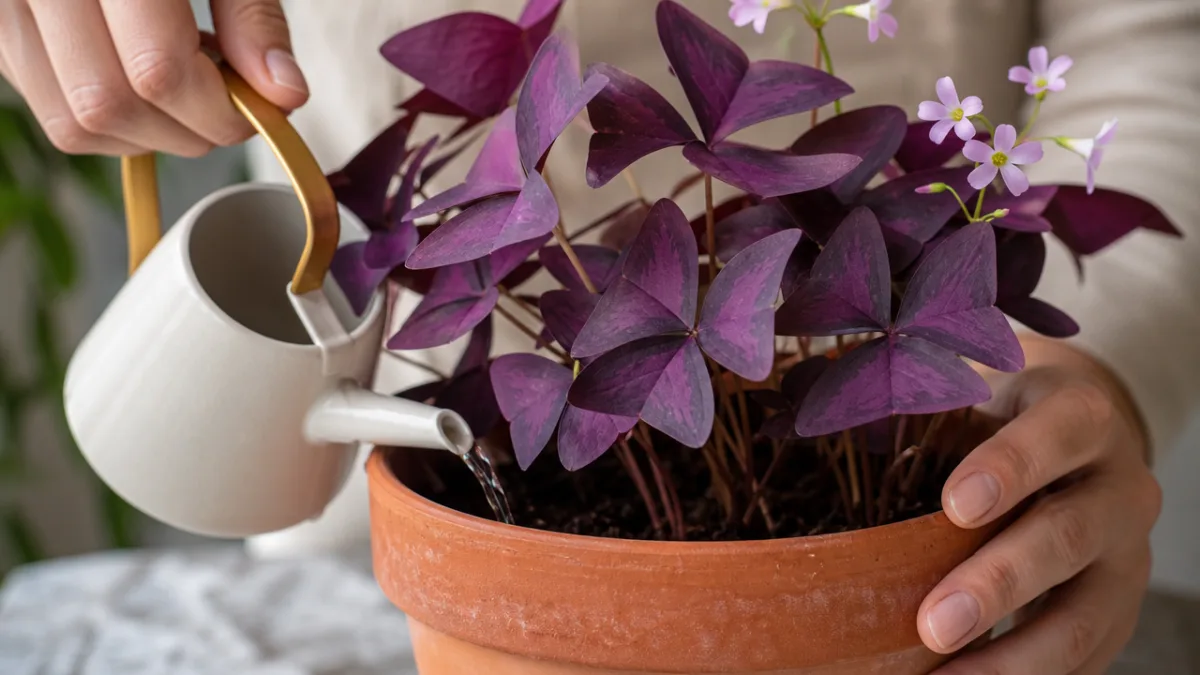
Getting the watering right is probably the single most important thing you can do for your Oxalis. These plants like to dry out a bit between drinks — their corm-based root systems are pretty sensitive to sitting in wet soil for too long, which can lead to rot. A simple approach that works well: water thoroughly when the top inch of soil feels dry, let the excess drain out the bottom completely, and then empty the saucer within an hour. That last step is easy to forget, but standing water under the pot is one of the fastest ways to invite fungal problems and root decay.
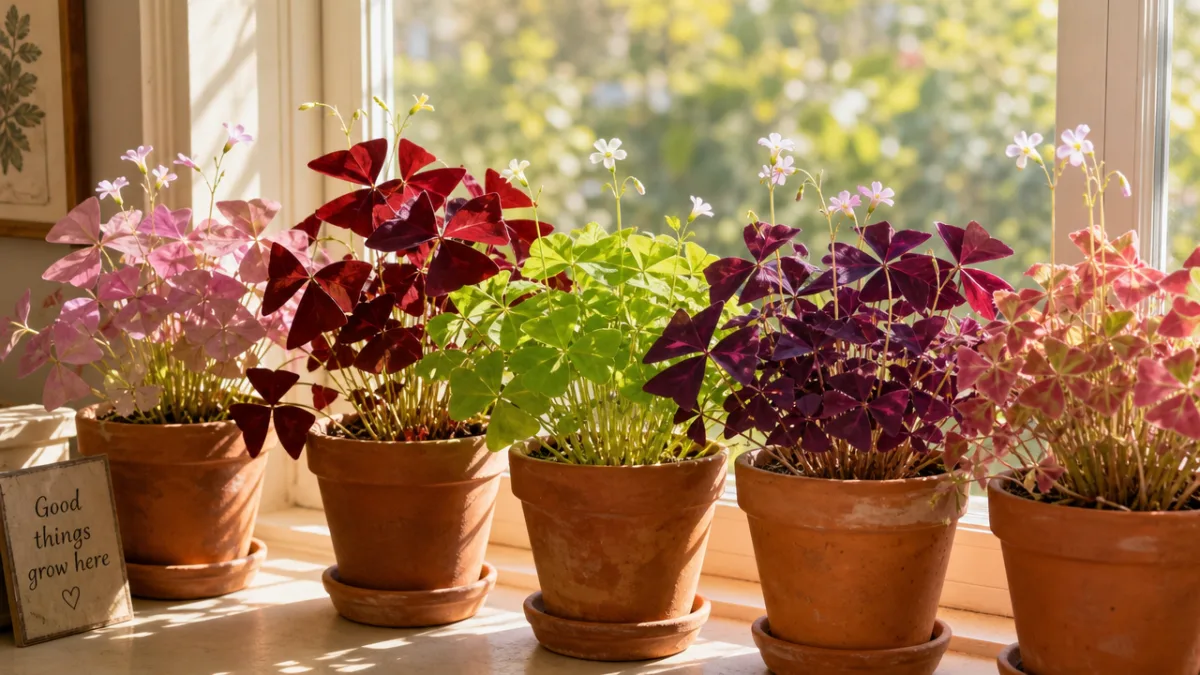
For soil, you want something that drains well but still holds a little moisture. A standard potting mix with perlite or coarse sand mixed in is a solid choice — roughly two parts potting soil to one part perlite is a reliable ratio to start with. Some growers also toss in a bit of orchid bark for extra airflow around the roots, which Oxalis tends to appreciate. The pot matters too. Always go with something that has drainage holes, and consider terra cotta if you’re prone to overwatering, since it’s porous and naturally wicks moisture away from the roots over time.
Fertilizing Oxalis doesn’t need to be complicated. During the active growing season — roughly late winter through early fall — a balanced liquid fertilizer diluted to half strength once a month is plenty. Something with a roughly equal ratio of nitrogen, phosphorus, and potassium, like a 10-10-10 or 20-20-20 formula, works well. Just don’t go overboard; too much fertilizer can push the plant into producing lots of leaves at the cost of flowers and can leave salt buildup in the soil over time. And when the plant goes dormant, stop fertilizing entirely and let it rest.
Quick Reference: Watering and Feeding Tips
- Water when the top inch of soil is dry, then water thoroughly until it drains from the bottom of the pot.
- Never leave the plant sitting in a saucer full of water — empty it promptly after watering.
- Use a well-draining potting mix amended with perlite for best results.
- Feed with a balanced, half-strength liquid fertilizer once a month during the growing season.
- Stop fertilizing completely once the plant goes dormant.
- Terra cotta pots are a great option since they naturally help wick away excess moisture.
Understanding and Managing Dormancy
Here’s something that trips up a lot of new Oxalis owners: the plant goes dormant once a year, and when it does, it can look like it’s dying. Indoor plants usually go dormant in summer, while outdoor ones tend to rest in winter. The foliage slowly yellows and dies back until there’s nothing left above the soil — just an apparently empty pot. It’s completely normal and actually a sign of a healthy plant, not a failing one. Whatever you do, don’t throw it out during this phase. The corms are alive underground and just waiting for the right moment to come back.
Once you notice the signs — yellowing leaves, drooping stems, a general loss of energy — cut back on watering and stop feeding the plant altogether. Let the foliage die back on its own without cutting it prematurely, since those withering leaves are still sending energy down to the corms. Then move the pot somewhere cool and dim and give it about eight to twelve weeks of rest, watering only occasionally so the corms don’t dry out completely. It might feel strange to essentially ignore your plant for two to three months, but this rest period is what keeps it healthy and sets it up for a strong comeback.
Bringing an Oxalis out of dormancy is genuinely one of the more delightful moments in houseplant care. Move the pot back into a bright spot, start watering again, and within one to three weeks you’ll start seeing small, tightly curled leaves pushing up through the soil — often appearing almost overnight. It really does feel a little magical. As the plant fills back in, pick up your regular fertilizing schedule and enjoy watching it settle into a fresh flush of growth. A lot of growers say their Oxalis actually comes back looking better than before dormancy, which makes the waiting feel more than worth it.
Propagation, Repotting, and Common Problems
Propagating Oxalis is one of the easier and more rewarding things you can do with a houseplant. The main method is dividing the corms when you repot — take the plant out of its pot and you’ll usually find a whole cluster of small, irregular corms tucked into the roots. You can pull them apart gently by hand and plant them individually or in small groups in fresh potting mix. Every corm can grow into a full plant, which makes Oxalis one of the most generous plants to share with people. It’s worth jotting down the variety name and the date on a little label when you pot up your divisions, so you don’t lose track later.
Plan on repotting every one to two years, or sooner if you see roots circling the bottom of the pot or sneaking out of the drainage holes. The ideal time to do it is right as the plant is waking up from dormancy and putting out new growth. When you choose a new pot, don’t go too much bigger — just one to two inches wider in diameter than the current one. Oxalis actually tends to flower more when it’s slightly snug in its pot, so bigger isn’t always better here. Use fresh potting mix and be careful not to bury the corms too deep, since shallow planting tends to lead to faster, more vigorous sprouting.
Oxalis is pretty resilient overall, but it can run into the occasional pest or disease issue, especially when something in its environment is off. Spider mites, aphids, and fungus gnats are the most common culprits — usually showing up when the plant is overwatered or dealing with low humidity. Get into the habit of checking the undersides of leaves for webbing or sticky residue, and keep an eye out for tiny insects hovering near the soil. Most pest problems respond well to neem oil, insecticidal soap, or simply fixing whatever stressed the plant in the first place. Root rot is the most serious issue to watch for, and like most diseases, it’s much easier to prevent with good watering habits than it is to treat after the fact.
Common Oxalis Problems and Solutions
- Leggy, stretched growth: Move the plant to a brighter spot with more hours of indirect light each day.
- Yellowing leaves outside of dormancy: Check whether you’re overwatering and make sure the pot has proper drainage so water isn’t pooling around the roots.
- Failure to flower: The plant probably needs more light or more consistent feeding during the growing season.
- Wilting despite moist soil: Root rot is likely the culprit — take the plant out of its pot, trim off any blackened roots, and repot it in fresh, dry soil right away.
- Spider mites: Spray with neem oil or insecticidal soap every five to seven days until the problem clears up.
- Fungus gnats: Let the soil dry out more between waterings and try adding a thin layer of sand on top of the soil to deter them.
Displaying and Enjoying Your Oxalis Plant
One of the things that makes Oxalis so fun to work with is how well it fits into so many different settings. A single purple shamrock in a clean white ceramic pot can look really striking on a minimalist desk or shelf, while a grouping of mixed green and purple varieties along a kitchen windowsill has this lovely, cottage-garden feel to it. They’re compact enough for spaces where a larger plant just wouldn’t work, and the constant movement of those leaves opening and closing throughout the day adds a kind of quiet liveliness to a room that you don’t really get from a static decoration.
Because Oxalis takes a seasonal break, a lot of enthusiastic growers keep several pots going at once at different stages of the cycle. That way there’s almost always at least one plant in full, gorgeous growth while the others are resting quietly somewhere out of the way. It’s a smart approach if you’ve fallen for the plant and can’t imagine going months without it on display. Oxalis also plays nicely with other plants that have similar needs — begonias, impatiens, and certain ferns all make great companions and can create a really attractive mixed arrangement that’s simple to care for as a unit.
There’s also something a little extra special about Oxalis beyond just how it looks. It’s long been associated with good luck — especially around St. Patrick’s Day — and makes a genuinely thoughtful living gift for a housewarming, a birthday, or any time you want to wish someone well. In a lot of cultures, the three-leafed clover represents faith, hope, and love, and the rare four-leafed version adds luck into the mix. Growing Oxalis isn’t just about keeping a plant alive; it’s a small, everyday connection to natural rhythms, cultural traditions, and the simple pleasure of having something living and beautiful in your home.








What do you think?
It is nice to know your opinion. Leave a comment.