










25 Upcycled Garden Ideas With Privacy Screens for Patios
The Art of Upcycling: Turning Trash Into Garden Treasure
There is something deeply satisfying about transforming discarded materials into beautiful, functional elements for your outdoor living space. Upcycling in the garden is not merely a budget-friendly trend — it is a philosophy that combines environmental responsibility with genuine creativity. When you repurpose old wood, metal, or fabric into a privacy screen for your patio, you create a piece that carries its own unique history and character, something no store-bought product can replicate.
The concept of upcycled garden privacy screens has grown enormously in popularity over the past decade, driven by both sustainability movements and a growing appreciation for handmade, one-of-a-kind outdoor spaces. Homeowners, renters, and garden enthusiasts alike are discovering that the materials they once considered junk — old pallets, broken shutters, rusted bed frames, or worn-out ladders — can become the backbone of a striking and private outdoor retreat that reflects their personal style and values.
Beyond the aesthetic appeal, upcycled privacy screens offer genuine practical benefits for patio life. They block unwanted sightlines from neighbors or busy streets, reduce wind exposure on exposed decks, create defined zones within a larger garden, and can even provide structural support for climbing plants. When you build your screen from reclaimed materials, you also reduce your carbon footprint, divert waste from landfills, and save considerable money compared to purchasing fencing or commercial privacy panels.
Why Patios Benefit From Privacy Screens
A patio without privacy often feels more like a stage than a sanctuary. Whether you are trying to enjoy a quiet morning coffee, host an intimate dinner party, or simply relax without feeling observed, having a visual barrier between your space and the outside world makes an enormous psychological difference. Studies on outdoor living consistently show that perceived privacy is one of the top factors influencing how frequently and comfortably people use their outdoor spaces.
Upcycled privacy screens achieve this sense of enclosure without the imposing or institutional look of standard vinyl fencing or concrete walls. A screen built from weathered reclaimed wood, for example, brings warmth, texture, and an organic quality to the patio that manufactured products rarely match. The slight irregularities and imperfections in repurposed materials are precisely what give them their charm, making the space feel curated and personal rather than generic and mass-produced.
There is also a seasonal dimension to consider. Strategically placed privacy screens can block harsh afternoon sun during summer, create windbreaks that extend the usability of a patio well into autumn, and frame views of the garden in a way that changes beautifully with each season. An upcycled screen made from wooden shutters, for instance, can be adjusted to control airflow and light in the same way it once did indoors, giving you remarkable flexibility in how you shape your outdoor environment.
Pallet Wood Privacy Screens: The Ultimate Beginner Project
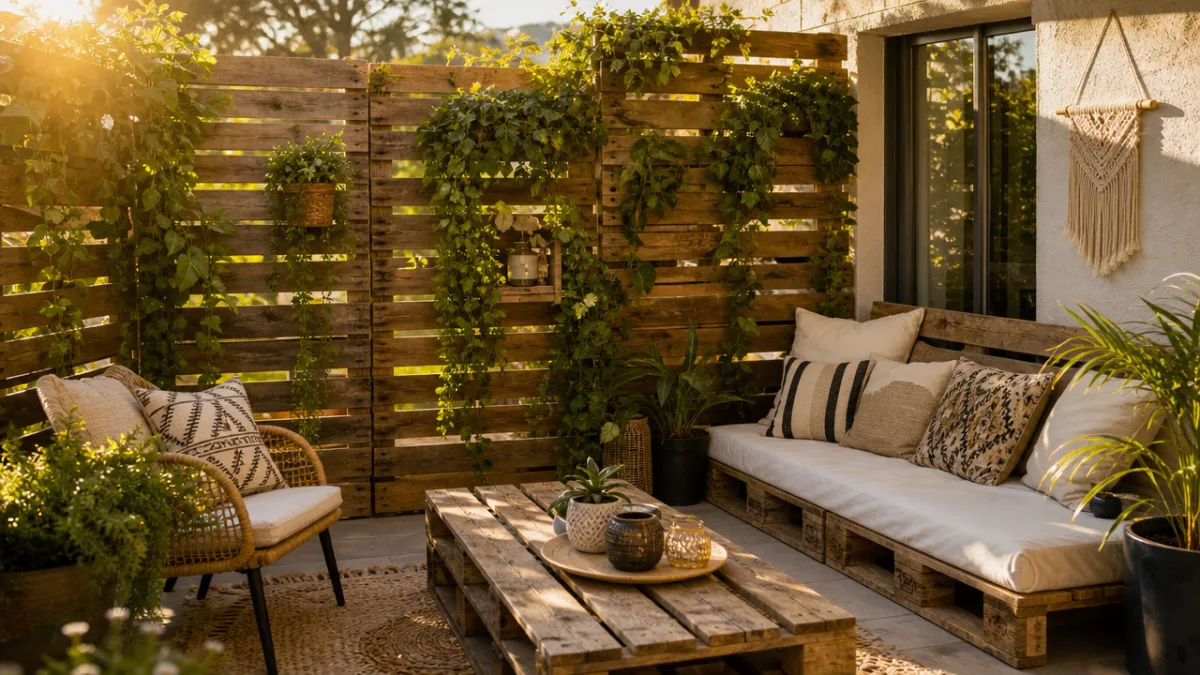
Wooden pallets are perhaps the single most versatile and widely available upcycling material on the planet. Businesses discard them constantly, and many are happy to give them away for free to anyone willing to collect them. For garden privacy screens, pallets offer a ready-made grid structure that requires minimal modification to become a functional and attractive barrier. A row of three or four standing pallets can define an entire side of a patio in an afternoon, with very little cost involved beyond the time and effort to collect and position them.
The simplest pallet screen involves little more than standing the pallets upright and securing them together with heavy-duty zip ties or carriage bolts. For a more finished look, you can sand the surfaces, apply an exterior wood stain or paint in a color that complements your existing garden palette, and add decorative touches like hanging planters, string lights, or small hooks for tools and accessories. The open slats of the pallet naturally allow some airflow and dappled light through, preventing the screen from feeling oppressive while still providing meaningful visual privacy.
For those willing to invest a little more effort, pallets can be disassembled and their boards reused to create a more refined horizontal plank screen. By spacing the boards at deliberate intervals and mounting them to a simple frame made from reclaimed lumber, you can achieve a look that rivals professionally installed privacy fencing. Painting the boards in alternating tones — perhaps a deep charcoal paired with natural wood — adds visual rhythm and modern appeal to what is, at its core, a pile of reclaimed timber.
Design Variations Using Pallet Wood
The flexibility of pallet wood extends far beyond simple upright panels. Creative gardeners have developed an impressive array of design variations that push the material into genuinely artistic territory. One popular approach involves cutting pallet boards into chevron or herringbone patterns, then assembling them into a diamond-grid screen that catches the eye and creates a sense of movement across the surface. This technique requires more precise cutting but the result is a screen that looks like a considered design choice rather than a budget solution.
Another compelling variation is the living pallet wall, which combines the structural function of a privacy screen with vertical gardening. By attaching small planting pockets to the back of a standing pallet — using recycled burlap, old canvas bags, or even repurposed tin cans — you create a vertical garden that cascades with greenery, herbs, or flowers. Trailing plants like nasturtiums, sweet potato vine, or climbing roses can be encouraged to weave through the slats over time, gradually transforming the wooden structure into a lush green wall that provides both privacy and planting space.
Color is another powerful tool when working with pallet wood screens. While the natural weathered grey of untreated pallet wood has genuine appeal, a bold painted screen can become a genuine focal point in the garden. Deep navy, forest green, burnt orange, or even a striking black can transform a simple pallet arrangement into a dramatic backdrop for outdoor furniture and plantings. Stenciling patterns or geometric designs onto a painted screen adds another layer of visual interest, creating something that functions as both privacy barrier and outdoor wall art.
Repurposed Doors, Shutters, and Windows as Privacy Panels
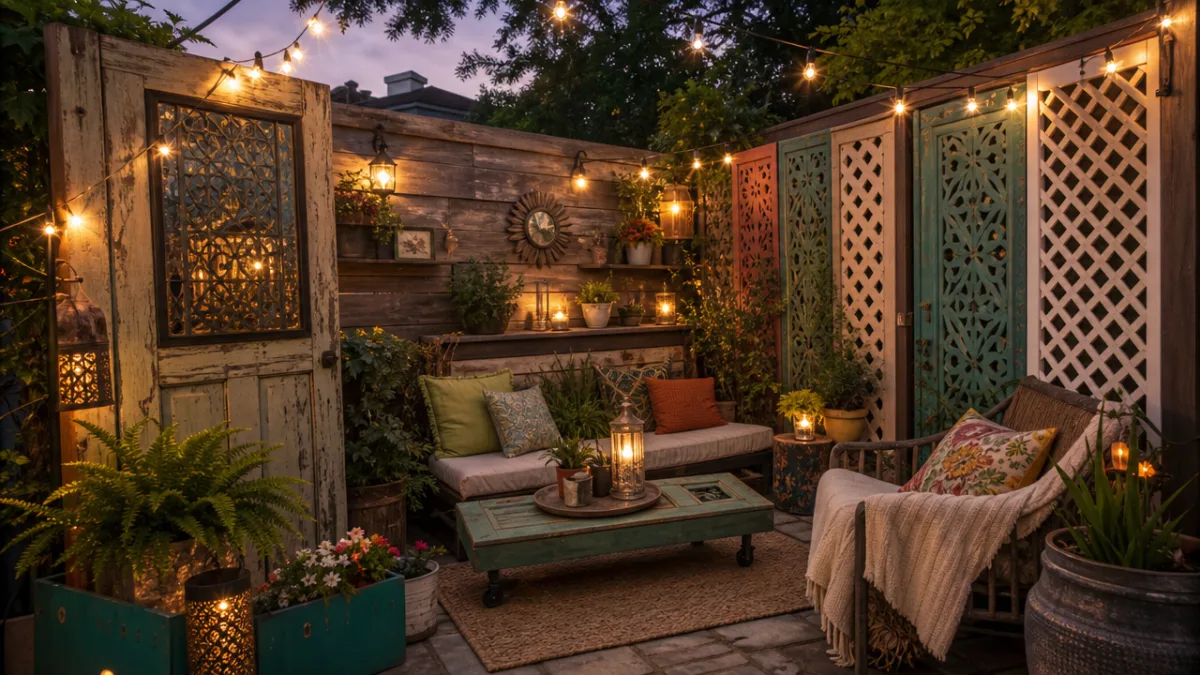
Old doors and window shutters salvaged from renovation projects or architectural salvage yards make extraordinary privacy screens, bringing instant character and history to any patio space. A row of mismatched vintage doors, standing upright and secured to a simple rail system, creates a screen with enormous visual impact — each door telling a different story through its particular shape, colour, and hardware. This approach works especially well in eclectic, bohemian, or cottage-style gardens where a sense of accumulated history is part of the aesthetic.
The structural advantage of using full doors as privacy panels is that they are already built to withstand regular use and weather exposure, being made from solid wood or robust composite materials. With minimal preparation — sanding rough edges, applying a coat of exterior sealant or paint, and adding simple ground anchors or a cross-rail to keep them standing — old doors can serve as durable, reliable privacy barriers for many years. Vintage panelled doors with interesting mouldings or glass inserts are particularly striking, as the varied texture across the surface plays beautifully with shifting light throughout the day.
Louvred shutters are another salvage treasure for patio privacy. Their slatted design allows you to control the degree of privacy and airflow in a way that solid panels cannot, and they carry an inherently Mediterranean, coastal, or classical elegance depending on their style. Painted in crisp white, faded turquoise, or warm terracotta, a row of reclaimed shutters can transport a basic urban patio to somewhere that feels distinctly like a sun-drenched holiday destination. They are also lightweight and easy to reconfigure, making them ideal for renters or those who like to frequently refresh their outdoor space.
Incorporating Glass and Translucent Elements
Old window frames, particularly those with their glass still intact, offer a unique opportunity to create privacy screens that preserve a sense of openness and light while still defining spatial boundaries. A screen made from reclaimed window frames does not block the view entirely — instead it frames it, like a series of paintings of the garden beyond. This approach is especially effective when the windows are of different sizes and styles, creating an eclectic gallery effect that is visually rich and full of personality.
Frosted or textured glass windows offer a more conventional privacy solution within this category, blurring the view beyond while still allowing generous amounts of natural light to filter through. This quality makes frosted window screens particularly valuable in smaller patios or courtyards where blocking all light with a solid screen would make the space feel dark and enclosed. The play of light through textured glass across the hours of the day creates a constantly changing, almost cinematic quality in the patio space.
Safety is an important consideration when working with old glass windows in a garden setting. Any cracked or compromised panes should be replaced or removed and the frames repurposed with alternative fill materials such as lattice, chicken wire, or stretched fabric panels. For a contemporary twist, old window frames can be filled with mirror glass — carefully sourced from old wardrobes or bathroom cabinets — which reflects the garden back on itself and creates a magical sense of depth and expanded space, particularly effective in smaller patio areas.
Metal Upcycling: Bed Frames, Gates, and Industrial Finds
The upcycled garden aesthetic extends powerfully into the realm of metal, where old bed frames, wrought iron gates, industrial shelving units, and salvaged grilles find remarkable second lives as patio privacy screens. Metal brings a completely different visual quality to the garden compared to wood — a sense of permanence, formality, and aged elegance when it is ornate ironwork, or a bold industrial edge when it comes from factory or warehouse origins. The variety within the category of reclaimed metal is vast, and the creative possibilities are correspondingly broad.
A wrought iron bed headboard, mounted upright between two sturdy posts, makes an immediately striking privacy element for a patio corner or entryway. The intricate scrollwork and curves typical of Victorian and Edwardian bed frames introduce a romantic, garden-party quality that pairs beautifully with climbing roses, jasmine, or wisteria trained through the metal framework. Over time, as plants fill in the structure, the boundary between garden and privacy screen dissolves entirely, creating something that feels more like a living architectural feature than a repurposed piece of bedroom furniture.
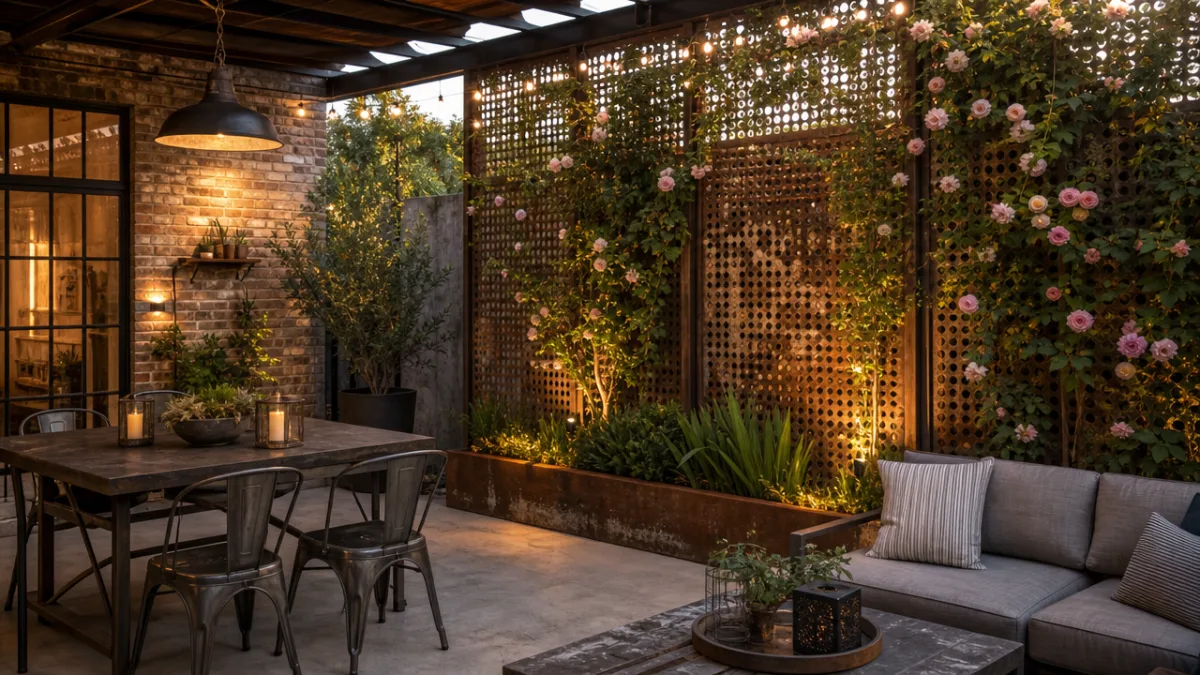
Salvaged agricultural and industrial metal finds — old water tank lids, sections of corrugated iron, cast iron radiator panels, or heavy-duty wire mesh — offer a more contemporary or rustic-industrial interpretation of the upcycled privacy screen. Corrugated metal cladding, for example, can be attached to a timber frame to create a sleek, modern privacy wall with excellent durability and a strikingly graphic appearance. Weathering steel, which develops a deep orange-brown patina as it oxidises, is another industrial material that has moved from the factory yard into fashionable garden design, valued for its powerful colour and texture.
Combining Metal With Living Plants
Metal privacy screens reach their full potential when combined with living plants, which soften the hard lines and cool tones of the material while bringing seasonal colour and biological life into the structure. The open lattice of a wire mesh screen, a repurposed livestock panel, or the gaps in an ornate iron gate all provide ideal attachment points and climbing structures for a wide range of climbing and trailing plants. Within a single growing season, a bare metal screen can transform into a lush green wall teeming with insect life.
The choice of plants to combine with metal screens depends largely on the visual effect desired and the local climate. For a romantic, cottage-garden look, climbing roses and clematis are classics that reward with spectacular seasonal flowers. For a wilder, more naturalistic appearance, native climbing species such as Virginia creeper or honeysuckle provide rapid coverage and exceptional wildlife value. In warmer climates, bougainvillea tumbling over a rusty iron frame creates a dramatically colourful combination that is both practical as a privacy solution and stunning as a garden feature.
It is worth noting that the relationship between metal and plants is not always straightforward. Some metals, particularly those with zinc coatings or certain painted finishes, can be mildly toxic to plants over time. Using naturally rusting steel, powder-coated metal, or stainless steel avoids this issue. Additionally, ensuring adequate drainage beneath a densely planted metal screen prevents moisture accumulation that can accelerate corrosion at ground level. With a little forethought about material selection and plant placement, a metal-and-plant privacy screen can be both beautiful and durable.
Fabric, Rope, and Textile Privacy Solutions
Not all upcycled privacy screens need to be rigid structures. Fabric, rope, and textile-based solutions offer a softer, more relaxed aesthetic that suits certain garden styles beautifully. Old sailcloth, heavy canvas tarpaulins, reclaimed burlap, or even densely woven jute sacking can all be repurposed into privacy screens that move gently in the breeze, casting dappled shadows and creating an atmosphere of relaxed informality. These textile screens are particularly well suited to beach-adjacent gardens, bohemian outdoor spaces, or any setting where a sense of casual, flowing comfort is the desired mood.
Macramé — the ancient technique of knotting rope or cord into decorative patterns — has experienced a powerful revival in recent years, and its application to outdoor privacy screens represents one of its most practical and impressive uses. A large-scale macramé panel made from natural jute or cotton rope, hung between two posts or trees, creates a screen that is simultaneously open and enclosed, allowing air and some light through while providing genuine visual privacy. The intricate knotwork becomes a piece of outdoor textile art in its own right, and the natural materials weather gracefully, developing a sun-bleached patina that only adds to their appeal.
Old sari fabric, canvas drop cloths, vintage grain sacks, or lengths of densely woven outdoor fabric can all be suspended from a simple rail system to create temporary or semi-permanent privacy screens. This approach is particularly valuable for renters who cannot install fixed structures, or for those who like to change the look of their patio with the seasons. A set of colourful fabric panels stored during winter and brought out each spring transforms the patio instantly, requiring nothing more than a tension wire or simple curtain rod strung between fixed anchor points.
Vertical Gardens as Living Privacy Screens
One of the most beautiful and multifunctional upcycled privacy solutions combines the structural concept of a screen with the living energy of a vertical garden. Old wooden pallets, wire frames made from salvaged fencing, repurposed guttering mounted to a backing board, or even stacked reclaimed crates can all serve as the structural backbone for a wall of plants that provides privacy, improves air quality, reduces urban heat, and creates habitat for pollinators and beneficial insects.
The key to a successful living privacy screen lies in choosing the right combination of plants for the structure and conditions. Hardy evergreen plants like small-leaved ferns, sedums, or dwarf pittosporums maintain coverage year-round. Seasonal herbs such as mint, thyme, basil, and parsley add fragrance and culinary utility. Trailing flowering plants like lobelia, petunias, or calibrachoa add splashes of colour through the warmer months. A well-designed vertical garden screen can thus deliver constant visual interest through the seasons while steadily improving in density and coverage year after year.
The irrigation of a living privacy screen is an important practical consideration. Without reliable moisture, plants in vertical structures dry out far more quickly than those in ground-level beds. Repurposed drip irrigation from old garden hose, salvaged soaker hose, or a simple gravity-fed reservoir made from reclaimed containers can solve this problem sustainably and economically. With smart planting choices and a modest watering system, a living upcycled privacy screen can thrive with minimal ongoing maintenance, delivering beauty and function in equal measure across many growing seasons.
Bringing It All Together: Designing Your Upcycled Patio Sanctuary
The most successful upcycled patio privacy screens are those that feel intentional and integrated rather than improvised and random. This does not mean they need to be elaborate or expensive — it simply means that the materials, scale, and style of the screen should be chosen with the broader garden design in mind. A reclaimed wood screen painted in a colour drawn from the cushions on your outdoor furniture, or a metal screen whose patina echoes the tones of terracotta pots nearby, creates a sense of considered design that elevates the overall impression of the space considerably.
Scale is a fundamental consideration that beginners often overlook. A privacy screen that is too low fails to provide meaningful screening from standing neighbours or elevated vantage points. As a general guide, screens intended for seated privacy should be at least 1.5 metres tall, while those designed to screen a full patio from overlooking windows should ideally reach 1.8 to 2 metres. The horizontal extent of the screen matters equally — a narrow panel in the middle of an exposed patio provides visual privacy only from a very narrow angle, while a screen that runs the full length of the boundary or problem sightline is far more effective.
Lighting transforms an upcycled privacy screen after dark, turning a practical daytime barrier into a dramatic evening feature. Solar-powered fairy lights threaded through pallet slats, clip-on spotlights illuminating a metal screen from below, candle lanterns hung from hooks on a shutter panel, or LED strip lighting along the base of a screen all create magical nocturnal atmosphere. The textures of reclaimed materials — rough wood grain, rusted metal, knotted rope — respond exceptionally well to directional lighting, their surfaces coming alive with shadows and highlights that manufactured surfaces rarely produce.
Maintenance and Longevity of Upcycled Screens
A common concern about upcycled garden structures is their longevity. It is fair to acknowledge that reclaimed materials vary considerably in their condition and remaining lifespan, and that an untreated pallet screen will deteriorate faster than a commercially manufactured panel. However, with appropriate preparation and ongoing maintenance, upcycled screens can remain attractive and functional for many years. The key steps are sealing or treating wood surfaces with quality exterior products, ensuring adequate ventilation and drainage at ground level to prevent rot, and regularly inspecting fixings and joints for signs of deterioration.
For metal upcycled screens, wire brushing loose rust, applying a rust-inhibiting primer, and finishing with a quality outdoor paint extends the functional life dramatically. Wrought iron and cast iron pieces that develop surface rust without deeper structural corrosion can often be treated with a rust converter product and repainted, restoring their appearance and halting further deterioration. The irregular surface of hand-applied paint on reclaimed metal actually weathers beautifully, developing a convincingly antique appearance that commercial garden furniture manufacturers struggle to replicate.
Finally, it is worth embracing the natural evolution of an upcycled privacy screen rather than fighting it. A pallet screen that gradually weathers to silver-grey, a metal frame that develops a deeper patina, or a rope screen that bleaches and softens in the sun — these changes are not failures but progressions, each stage of the material’s journey adding character and authenticity to your outdoor space. The garden is a living, changing environment, and a privacy screen that changes with it feels entirely at home in that dynamic, seasonal, wonderfully impermanent world.








What do you think?
It is nice to know your opinion. Leave a comment.