










25 Spring Garden Arbor Decor Ideas for a Dreamy Entrance
Why a Garden Arbor Transforms Your Outdoor Space
If you’ve been looking for one addition that can completely change the feel of your outdoor space, a garden arbor might be exactly it — and spring is honestly the best time to make it happen. These structures do something that’s hard to explain until you see it in person: they frame your garden like a doorway, adding height and a sense of architecture that most yards just don’t have on their own. Whether your space is a generous country plot or a modest suburban backyard, an arbor instantly makes it feel more intentional, like someone who really loves this place lives here.
There’s also a very practical side to arbors that gardeners tend to appreciate more and more over time. They give climbing plants — vines, roses, sweet peas — something to actually work with, letting them grow and sprawl the way they’re meant to. From those first fragile shoots in early spring all the way to the lush peak of summer, your arbor becomes a living structure that’s always changing. Different blooms, different textures, different scents drifting through depending on the week. Pollinators love it too.
And honestly, don’t underestimate what it feels like to walk beneath a flower-covered arch. There’s something almost ceremonial about it — a sense that you’re crossing into somewhere special. Guests notice it immediately. Garden designers have understood this for centuries, which is why you’ll find flower-draped arbors everywhere from classic English cottage gardens to the wisteria pergolas of traditional Japanese landscapes. The idea has stuck around because it genuinely works on people.
Choosing the Right Arbor Style for Your Garden Aesthetic
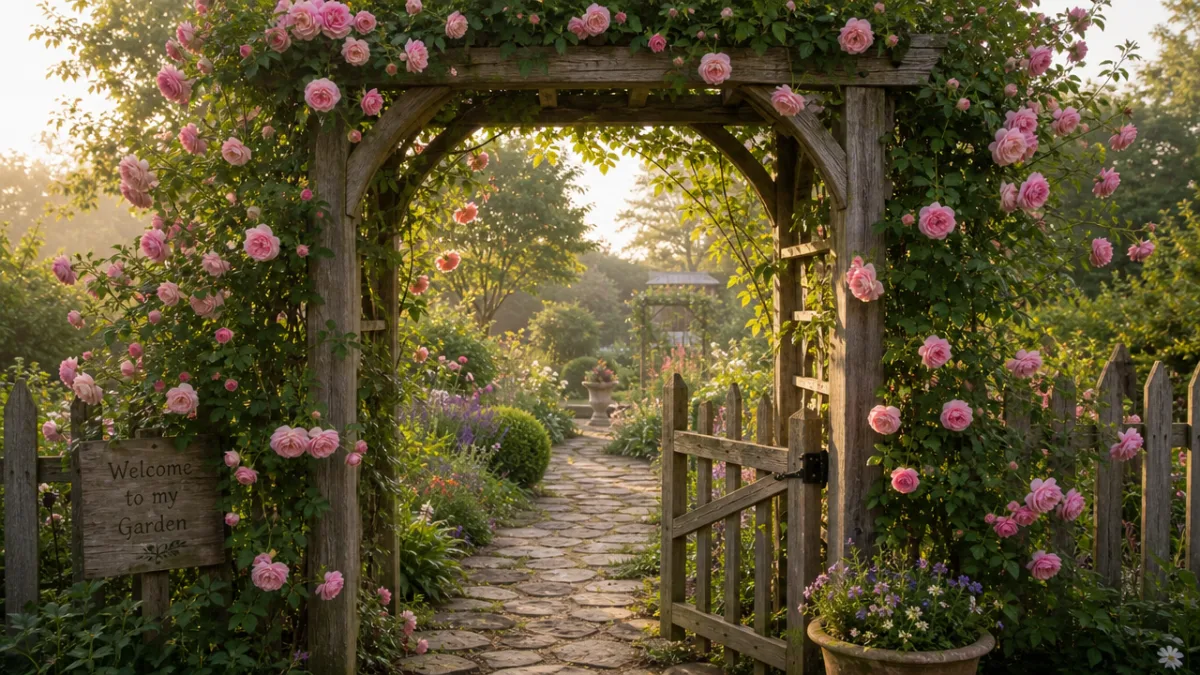
Out of every decision you’ll make when putting together your arbor display, choosing the right style is probably the most important one — and thankfully, there are a lot of great options out there. Classic wooden arbors made from cedar or redwood are a perennial favorite for good reason. The natural grain and warm honey tones age beautifully over time and seem to get along with almost every type of garden planting. They feel grounded and organic rather than imposed, which is exactly what you want when you’re trying to blend a structure into a living landscape. Cottage gardens, farmhouse-style yards, and romantic outdoor spaces are especially well-suited to this look.
If your taste runs more contemporary, metal arbors — wrought iron or powder-coated steel — bring a totally different kind of beauty to the table. The clean lines and sculptural silhouettes give a garden entrance a sophisticated, almost gallery-like quality. Black metal in particular does something really striking against soft spring blooms: it acts like a picture frame, making the plants pop in a way that a natural wood structure just wouldn’t. Pair a dark metal arbor with white climbing roses or pale lavender wisteria and you’ve got one of the most visually dramatic garden moments possible.
Rustic and naturalistic arbors have really had a moment lately, and it’s not hard to see why. Structures made from bent willow, unpeeled logs, or reclaimed timber have this wild, earthy charm that feels perfectly matched to the loose abundance of spring. They look like they could have grown there, which blurs the line between structure and nature in a way that feels almost magical. Pair them with rambling climbers like old roses, passionflower, or sweet peas and you end up with a garden entrance that feels genuinely unhurried and enchanted.
The Best Climbing Plants for Spring Arbor Decoration
The plants you choose will ultimately shape everything about your arbor — its mood, its fragrance, its seasonal rhythm. Climbing roses are still the gold standard for a reason. Varieties like New Dawn, Climbing Cecile Brunner, and Blaze put on a truly spectacular show when you train them along the framework in spring. Guide and tie their canes early in the season, and by late spring you’ll have blooms so dense and fragrant that the structure itself practically disappears beneath them. It’s one of those garden rewards that never gets old.
Wisteria is in a category of its own when it comes to sheer drama. You do need a sturdy structure — this plant gets heavy over time — but a wisteria-covered arbor in full bloom is one of those sights that stops people mid-step. Those long cascading flower clusters in purple, lilac, or white are something else entirely. Japanese wisteria tends to have the longest, most dramatic racemes, while American wisteria is a bit more manageable if you’re working with a smaller garden. Either way, the spring display is absolutely worth the commitment to regular pruning.
For gardeners who want more options to play with, the following climbing plants all work beautifully on spring arbors:
- Clematis comes in an incredible range — from deep purple Jackmanii to soft pink Nelly Moser — with exquisite star-shaped blooms that appear in generous flushes from spring through summer.
- Sweet peas are easy to start from seed and will happily cover a small arbor in fragrant, jewel-toned flowers that are also some of the best cutting blooms you can bring inside.
- Honeysuckle draws hummingbirds and bees all season long, producing masses of tubular flowers in orange, yellow, or cream along with a sweetly intoxicating evening scent.
- Passionflower has these extraordinary, almost alien-looking blooms in purple and white that bring a hint of the tropics to a spring garden in the best possible way.
- Virginia creeper gives you lush green coverage through spring and summer, then turns a brilliant crimson in autumn — meaning your arbor stays interesting long after the spring flush is over.
One of the best planting strategies is to combine two or more climbers on the same structure rather than sticking with a single species. Pairing a late-flowering clematis with an early rose, for instance, extends your bloom window significantly — you’ll have something going on from the first warm days of spring well into summer. It does take a bit of planning, since roses and clematis have different pruning schedules, but once you’ve got the rhythm down, the payoff is an arbor that’s almost constantly in flower across a much longer season.
Decorative Accents That Elevate Your Arbor Beyond Plants
Plants do most of the heavy lifting on any spring arbor, but the right decorative touches can really take the whole thing to another level. Hanging lanterns are one of the most universally loved options, and it’s easy to see why. Suspend a few solar-powered lanterns in aged bronze or antique brass from the crossbeams at varying heights, and as the evening light fades you get this warm, twinkling effect that makes the whole entrance feel magical. It’s the difference between an arbor that looks beautiful during the day and one that earns its keep around the clock.
String lights have become almost essential in modern garden arbor styling, and when you use them thoughtfully rather than going overboard, they’re genuinely beautiful. Warm white fairy lights wound along the posts and overhead beams create an ethereal glow that makes the space look enchanted after dark — perfect for outdoor entertaining or a quiet evening in the garden. The key detail here is color temperature: go warm rather than cool. Cool white lights can feel harsh and clinical, while warm white harmonizes naturally with the soft pinks, whites, and purples that dominate spring bloom palettes.
Here are some other decorative touches worth considering if you want your arbor to feel really personal and pulled-together:
- Wind chimes in glass or aged metal add a gentle, musical quality to the space — they catch spring breezes in a way that’s quietly delightful and always a little unpredictable.
- Hanging baskets overflowing with trailing petunias, bacopa, or lobelia bring immediate color while your climbing plants are still getting established.
- Vintage ironwork details — finials, decorative brackets, ornate hinges — can elevate a simple wooden arbor and give it a sense of craftsmanship and age.
- A reclaimed wooden sign with a welcoming message, house number, or botanical motif gives the arbor a personalized focal point that feels considered rather than generic.
- A small birdhouse or feeder worked into the structure draws wildlife into the space and adds another layer of life and movement to the entrance.
Seasonal Care and Maintenance for Your Spring Garden Arbor
A gorgeous arbor takes some looking after, and knowing what to do — and when — will protect your investment and help the display get better year after year. As winter winds down and spring arrives, start with a close inspection of the structure itself. Look at every joint, fastener, and support point for any damage from frost, wind, or lingering moisture. Wooden arbors often benefit from a fresh coat of preservative oil or exterior paint at this point, and metal structures should be checked for any rust spots that can be caught and treated before they spread. Getting all of this sorted before the plants kick into growth makes the whole process much easier.
Pruning your climbing plants at the right time is one of the most important things you can do for a thriving arbor garden, and the timing really does vary quite a bit depending on what you’re growing. Roses that bloom on old wood need to be pruned right after flowering, while those that bloom on new growth can be cut back hard in early spring. Clematis is famously divided into three pruning groups with completely different schedules, so knowing which group your variety falls into genuinely matters. It sounds like a lot to track, but following the right approach for each plant makes a noticeable difference in how well they flower and how healthy they stay.
Training new growth as it emerges is an ongoing spring task, and it’s one that rewards a little regular attention rather than one big effort. As shoots appear with the warming weather, guide them horizontally along the arbor’s crosspieces rather than letting them head straight up. Plants trained horizontally produce far more lateral shoots, and those lateral shoots are where most of the flowers come from — so this one habit has a big impact on how lush the display ends up looking. Use soft garden twine or plant clips and tie loosely, checking regularly to make sure stems aren’t being pinched as they thicken. A little bit of this work done consistently throughout spring is genuinely the secret behind those arbor displays that look almost impossibly abundant.
Inspiring Design Themes for Your Dream Spring Arbor
Deciding on a design theme is one of the most enjoyable parts of planning an arbor — it gives everything else a direction to follow and makes the finished result feel cohesive rather than random. The romantic cottage garden look is perennially popular, and for good reason. It leans into soft, pastel-toned planting — pale pink climbing roses, mauve wisteria, white sweet peas — combined with a gently weathered wooden arbor that looks like it’s been there for decades. This aesthetic is all about beautiful imperfection and joyful abundance, and it’s hard not to feel something when you walk beneath it. It’s that idealized English country garden feeling, and it genuinely delivers.
A Mediterranean-inspired theme goes in a completely different direction but is equally compelling. Here, you’d pair a simple white or stone-effect arbor with deep purple wisteria or bougainvillea, flank the entrance with terracotta pots, and maybe lay down a gravel path leading through. The color palette is bolder — vivid purples and magentas against white architecture create a really striking contrast. This theme works especially well in sunny spots, since the plants associated with this style need warmth to really perform at their best.
For those who prefer a quieter, more disciplined aesthetic, a Japanese-inspired arbor is deeply satisfying to put together. A simple black metal or dark-stained wood structure draped in a single climbing species — white wisteria or one carefully chosen rose variety — creates an effect of elegant restraint that’s just as beautiful in its own way as something more exuberant. The surrounding planting follows the same focused palette: gravel or moss underfoot, well-shaped evergreen shrubs flanking the entrance, lighting that highlights the silhouette rather than cluttering the space. This approach proves that sometimes an arbor is most breathtaking when it’s quiet rather than loud.
Whatever direction you go, the most important thing is to commit to it. An arbor that tries to do everything at once — mixing rustic lanterns with sleek metal, combining a dozen different climbing plants in clashing colors — tends to end up feeling chaotic rather than charmingly eclectic. Pick your theme, let it guide every plant and accessory choice you make, and resist adding things just because you love them in isolation. That consistency of vision is ultimately what separates an arbor that’s simply there from one that genuinely stops people in their tracks.








What do you think?
It is nice to know your opinion. Leave a comment.