










16 Simple Garden Ideas on a Budget to Beautify Your Yard
Why Budget Gardening Is More Rewarding Than You Think
A lot of homeowners assume you need to spend serious money to have a beautiful yard, but honestly, some of the most gorgeous outdoor spaces I’ve ever seen were put together on next to nothing. The secret is creativity, a bit of resourcefulness, and being willing to spend your time instead of your wallet. Working within tight constraints actually pushes you to make more thoughtful choices about what really matters in your space — and the result tends to feel a lot more personal than anything a pricey landscaping company could hand you.
There’s also something really satisfying about getting your hands dirty in the most literal sense. When you propagate plants from cuttings, throw together your own raised beds from scrap wood, or start a compost pile, you build a genuine understanding of how your garden actually works. That knowledge stacks up season after season, turning you into a better gardener over time and making you less dependent on expensive products or outside help. Growing something beautiful from almost nothing is a feeling that’s genuinely hard to beat.
And here’s something worth mentioning: budget gardening tends to be good for the environment too. Repurposing old materials, skipping the synthetic fertilizers, and planting natives all add up to a healthier little ecosystem right outside your door. A lot of the cheapest approaches also happen to be the greenest ones — so your frugal choices end up benefiting the bees, birds, and beyond. A stunning yard and a lighter footprint aren’t at odds with each other; in fact, they go together pretty naturally when you’re working on a budget.
Transforming Your Yard with DIY Raised Beds and Borders
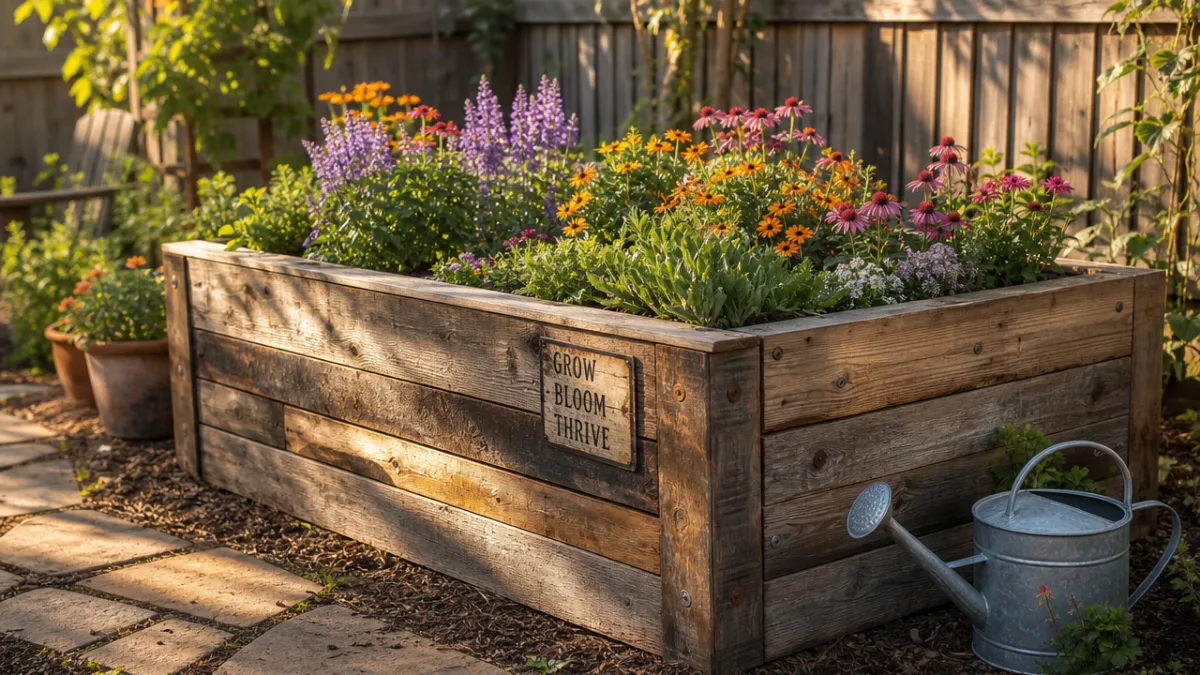
If there’s one thing that can completely change how a yard looks and feels, it’s a raised garden bed — and you really don’t have to spend much to make it happen. Reclaimed timber, old pallets, concrete blocks, stacked stones — all of these can work beautifully as border materials. A simple rectangular bed built from untreated lumber can come together for under twenty dollars if you’re willing to hunt around a salvage yard or pull wood from an old fence or deck. Just that one structure can take a flat, forgettable lawn and turn it into something that looks purposeful and designed.
Beyond the practical perks like better drainage and easier soil control, raised beds give your yard a real visual backbone. Line a few up in a row or arrange them in a geometric pattern and suddenly even a modest space feels curated. You can paint or stain the wood to match your house, or just let it weather naturally into something rustic and charming. Either way, you’re adding character without needing to hire anyone.
Borders and edging are another surprisingly powerful tool when you’re working on a budget. Something as simple as a neat trench cut between your lawn and a garden bed creates a clean visual line that makes the whole yard look sharper. Or use river stones, salvaged bricks, or thick branches arranged end-to-end to define the edges in a more decorative way. These borders also do real practical work — keeping grass from sneaking into your flower beds — so the time you put in keeps paying off all season long.
Using Containers and Repurposed Items as Planters
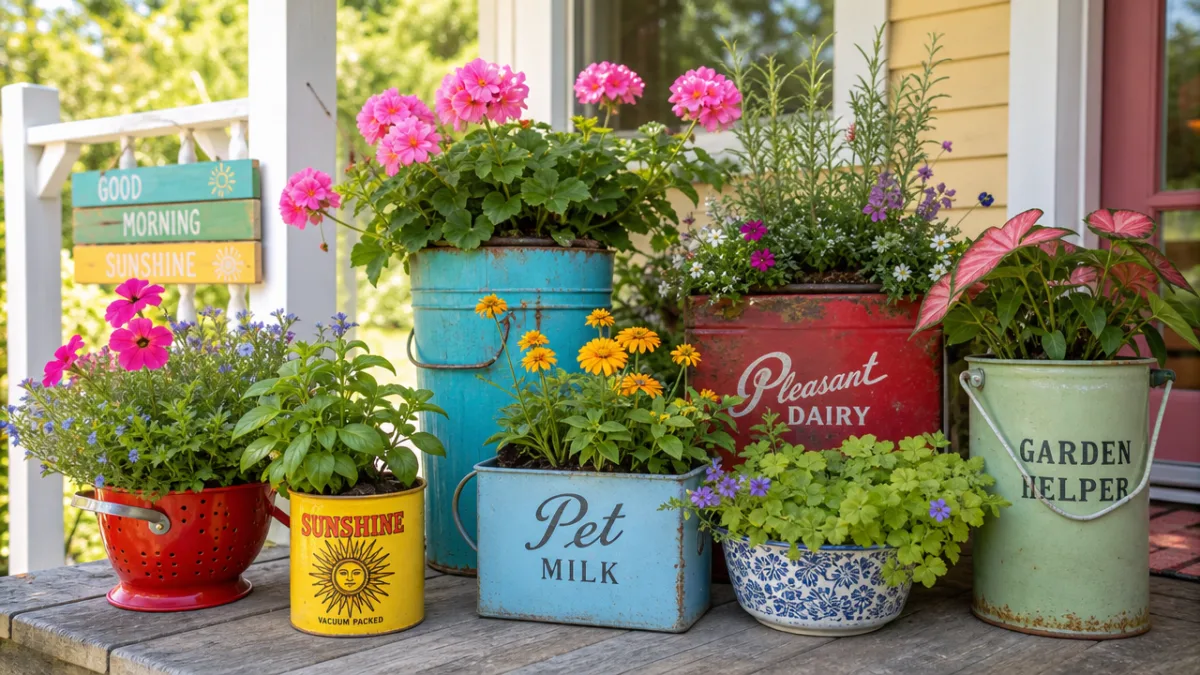
Container gardening is one of the most flexible and wallet-friendly ways to brighten up a yard, especially if you’re renting or working with a small outdoor space. Honestly, almost anything that holds water can become a planter once you drill a few drainage holes in the bottom. Old colanders, wooden crates, galvanized buckets, cracked ceramic bowls, even worn-out rubber boots — they’ve all had second lives as charming planters. The key is to embrace the mix: vary the sizes, materials, and heights, and the whole thing looks intentional rather than thrown together.
Grouping containers in odd numbers — threes, fives, or sevens — is one of those classic design tricks that just works. Put a tall plant at the back, something medium in the middle, and a trailing or low grower up front. This layered look works on a porch step, along a garden path, or propped against a fence. The result looks like something out of a magazine, and it costs very little if you’re working with plants you’ve propagated yourself or picked up as small starters.
Vertical container displays are worth a serious look if you’re short on ground space. A wooden pallet mounted upright and filled with soil, a hanging shoe organizer stuffed with herbs, or a simple ladder shelf holding a collection of mismatched pots can all turn a bare wall or fence into a lush vertical garden. You’re making use of airspace that would otherwise go to waste, which dramatically expands your planting area without needing a single extra square foot of ground. For urban gardeners or anyone with a paved courtyard, this can genuinely be a game-changer.
Budget-Friendly Plant Selection and Propagation Strategies
The plants you choose might be the most important budget decision you make. Natives and perennials are almost always your best bet for long-term value — they come back year after year without needing to be replanted, and since they’re suited to your local climate, they generally need less water, fewer fertilizers, and less fussing overall. Spending a little more upfront on a solid perennial almost always beats buying cheap annuals every spring, and your garden just keeps getting fuller and more established as the years go by.
Propagation is honestly the superpower of budget gardening. Taking cuttings, dividing mature clumps, saving seeds at the end of the season — these are all ways to multiply your plant collection for basically nothing. Hostas, daylilies, black-eyed Susans, sedums — so many common garden favorites are easy to divide every few years, giving you a handful of new plants from a single original purchase. Local gardening clubs and online plant swap communities are also worth looking into; there’s a whole world of generous gardeners out there happy to share divisions and cuttings.
Shopping smart with your timing makes a real difference too. End-of-season sales at garden centers regularly offer fifty percent off or more, and while those plants might look a little tired, most bounce back beautifully once they’re in the ground and have time to settle in before spring. Buying small starter plants and growing them on is another great approach — a four-inch pot of lavender costs a fraction of a gallon-sized one and will catch right up within a single growing season. Patience really is one of the most useful things a gardener can have.
- Choose perennials over annuals for long-term cost savings and a more established-looking garden each year.
- Divide mature plants like hostas, daylilies, and ornamental grasses every two to three years to multiply your collection for free.
- Collect seeds from open-pollinated varieties at the end of each season and store them in a cool, dry place for the following year.
- Take softwood cuttings from shrubs and herbs in late spring or early summer and root them in water or moist compost.
- Shop end-of-season sales and clearance sections at garden centers for deeply discounted but perfectly healthy plants.
- Join community plant swaps, local gardening Facebook groups, or neighborhood exchanges to access a wide variety of plants at no cost.
Adding Structure and Charm with Low-Cost Hardscaping
Hardscaping — the paths, seating areas, and decorative structures that give a garden its bones — doesn’t have to mean expensive professional installation. A simple stepping stone path made from flat fieldstones you found locally, broken concrete pieces laid out creatively, or a few inexpensive paving slabs from the hardware store can do the job beautifully. Even a short path from a gate to your front door makes a surprising difference to how a yard feels — it gives the space a sense of arrival and welcome that was never there before.
Arches, obelisks, and trellises add height and structure without costing a lot. A basic wooden arch can be built from four pressure-treated posts and some lattice for under thirty dollars, and once a climbing rose, clematis, or sweet pea finds its way up there, the effect is genuinely spectacular. Teepee-style supports made from bamboo canes tied at the top are another charming, inexpensive option — they look lovely in a cottage garden and give climbing beans, peas, or cucumbers exactly the support they need.
Seating often gets overlooked in garden design, but it’s worth thinking about. A simple bench or a couple of chairs creates an anchor for the space and makes your yard feel like an actual outdoor room rather than just a collection of plants. A wooden pallet painted in a bold color and fitted with a cushion works as a low bench or even a daybed, and two tree stumps with a plank across them can become a rustic table in minutes. The real goal here is to create a space that makes you want to stay — because a garden that gets used and lived in has an energy that no amount of plants alone can quite match.
Water Features, Lighting, and Finishing Touches on a Budget
There’s something about water that makes a garden feel instantly more serene, and the good news is that small-scale water features are more affordable than most people realize. A glazed ceramic pot sealed with waterproof sealant and fitted with a small submersible pump can create a gentle bubbling sound for well under fifty dollars. Even a simple birdbath — no pump, no electricity needed — brings that calming water element into your garden while also drawing in birds and beneficial insects. It’s one of those additions that punches way above its weight.
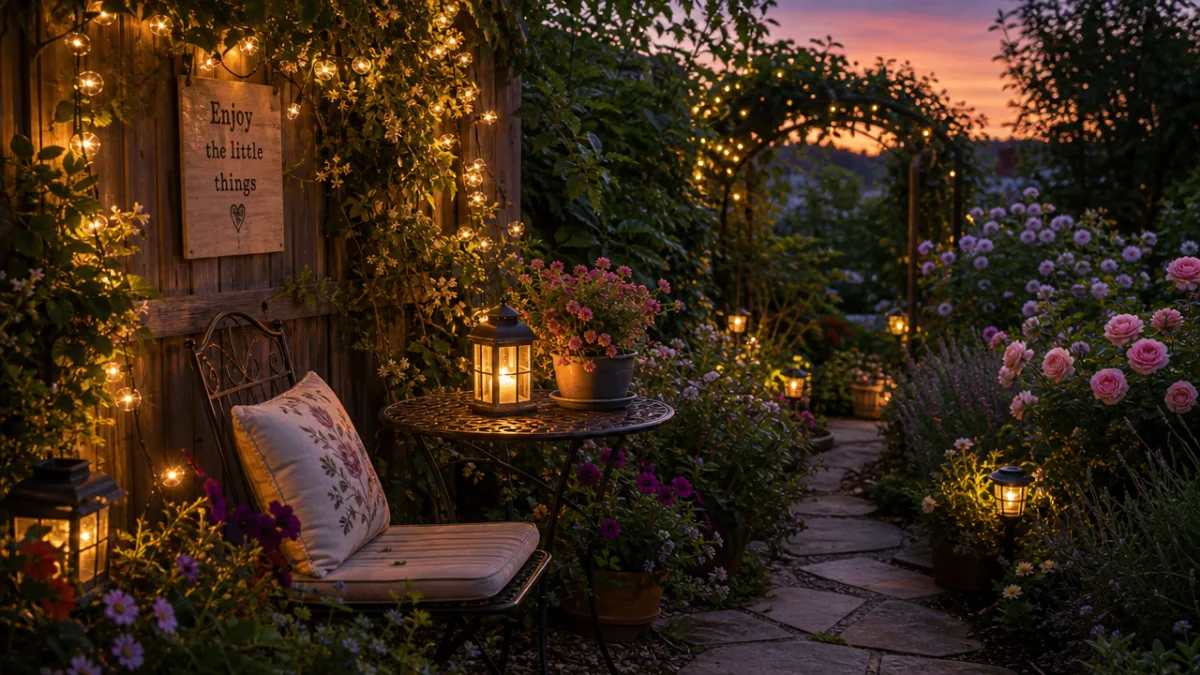
Lighting is another area where you can get a lot of atmosphere for very little money, thanks to solar-powered options. Solar stake lights along a path, fairy lights wound through a shrub or draped over an arch, solar lanterns hanging from tree branches — all of these create a genuinely magical feel once the sun goes down, without adding anything to your electricity bill. String lights in particular have become a go-to for budget outdoor design because they’re cheap, incredibly versatile, and flattering in almost any setting, from a tiny balcony to a sprawling back garden.
And then there are the small finishing touches that tie everything together — often the cheapest moves of all. A fresh coat of deep, rich paint on a fence makes the plants in front of it absolutely pop. Painting terracotta pots in a coordinated palette turns a mismatched collection into something that looks curated. A weatherproof mirror hung on an outdoor wall bounces light around and makes the space feel bigger. Stenciling a pattern onto a concrete patio or adding a mosaic accent to a stepping stone brings in a handcrafted detail that looks like it cost a fortune — but really just takes a few hours and a bit of creativity.
- Install a simple ceramic pot water feature with a submersible pump to introduce the calming sound of moving water.
- Use solar stake lights along pathways to create safe, attractive illumination with zero ongoing energy costs.
- Wind outdoor fairy lights through hedges, over arches, or across a pergola for an enchanting evening atmosphere.
- Paint a boundary fence in a deep, rich color such as slate blue, forest green, or charcoal to create a dramatic backdrop for plants.
- Coordinate the colors of your terracotta or plastic pots with paint to create a cohesive, designed look throughout your container displays.
- Hang a weatherproof mirror on an outdoor wall to reflect light, create depth, and make a small garden feel significantly larger.
- Add a simple birdbath or shallow dish of water to attract wildlife and introduce the visual and auditory element of water.
Maintaining Your Beautiful Budget Garden Through the Seasons
A garden that looks incredible in July but falls apart by September is a real missed opportunity. The good news is that keeping a budget garden looking great is mostly about building simple, consistent habits rather than spending money on products or services. Regularly deadheading spent blooms, for instance, encourages many plants to keep flowering for far longer than they would otherwise — and for most soft-stemmed plants, all you need is your thumb and forefinger. It takes a few minutes per visit, and the payoff is weeks of extra color.
Making your own compost is probably the single most impactful free practice in all of budget gardening. Kitchen scraps, garden trimmings, cardboard, fallen leaves — all of that stuff can be turned into rich, dark compost that improves your soil, feeds your plants, and keeps weeds down. A simple compost bay made from four pallets tied together costs essentially nothing and can produce enough to feed an entire garden. Over time, a garden that’s regularly fed with homemade compost just gets better and better, and your need for any bought fertilizers or soil amendments quietly fades away.
Planning ahead for each new season is another habit that saves real time and money in the long run. Keeping a simple notebook or photo journal — what worked, what flopped, where things got a bit bare — helps you make smarter choices year after year. Budget gardening is really just a long process of learning and tweaking, and the garden you’ll have in five years will carry all the lessons of every season before it. The most beautiful budget gardens aren’t built in a weekend. They’re grown, slowly and lovingly, over time.








What do you think?
It is nice to know your opinion. Leave a comment.