










Fun Toys for Kids: The Magic of Paper Crafts and DIY Projects
Why Paper Crafts Are the Ultimate Kids’ Activity
We live in a world that’s absolutely packed with screens, tablets, and gadgets of every kind — so it’s pretty refreshing that a simple sheet of paper can still capture a kid’s attention like nothing else. There’s something genuinely satisfying about turning that blank piece of paper into something beautiful, silly, or totally unexpected. Paper crafts pull kids into a space where their imagination runs the show, and the only real limit is how far they’re willing to take it.
All that folding, cutting, gluing, and painting quietly builds fine motor skills that kids actually need — the same control that helps them write, draw, and handle everyday tasks as they grow. When a child carefully folds a corner or tries to snip along a dotted line, they’re working those muscles in a way that feels like pure play but is doing a lot of good under the surface.
And honestly? The confidence boost alone is worth it. When a kid holds up a paper butterfly they made themselves, that look on their face says everything. The “I made this” feeling is powerful at any age, but it hits especially hard when you’re little. It teaches kids early on that putting in effort and trying something creative leads to real, tangible results — and that’s a lesson that sticks with them for a long time.
Getting Started: What You Need and How to Set Up a Craft Space
Here’s the best part about paper crafts: you almost certainly have most of what you need already. No expensive supply hauls, no dedicated art studio required. Colored construction paper, scissors, a glue stick, some tape, markers, and a flat surface to work on — that’s really all it takes to get started. A kitchen table or a cleared-off bedroom floor works perfectly well for most young crafters.
That said, having a few extra supplies on hand opens things up quite a bit. Watercolor paints, washi tape in fun patterns, metallic markers, glitter glue, foam sheets, and a hole punch can take a project from simple to genuinely impressive. Keeping everything in a small plastic bin or a rolling cart is a game changer — when crafting can start quickly and with minimal setup, kids are way more likely to actually do it. Kids like to strike while the inspiration is there, not after a ten-minute supply hunt.
If you can set aside even a small dedicated craft spot, it’s worth doing. Something about having their own space tells kids that their creativity matters and has a real home. Tossing a vinyl tablecloth or some newspaper over the table takes cleanup from stressful to totally manageable, and keeping a small trash bin close by helps kids learn to tidy up after themselves. A well-organized space makes kids more focused, more confident, and a lot more willing to get messy without worrying about it.
- Construction paper in multiple colors — the backbone of nearly every paper craft project
- Child-safe scissors with rounded tips for younger children and sharper craft scissors for older kids
- Glue sticks and liquid glue for different bonding needs
- Markers, crayons, and colored pencils for decorating finished pieces
- Washi tape for adding fun patterns without the mess of glue
- Hole punch and ribbon for creating hanging decorations and bookmarks
- Watercolor paints for adding painted elements and backgrounds
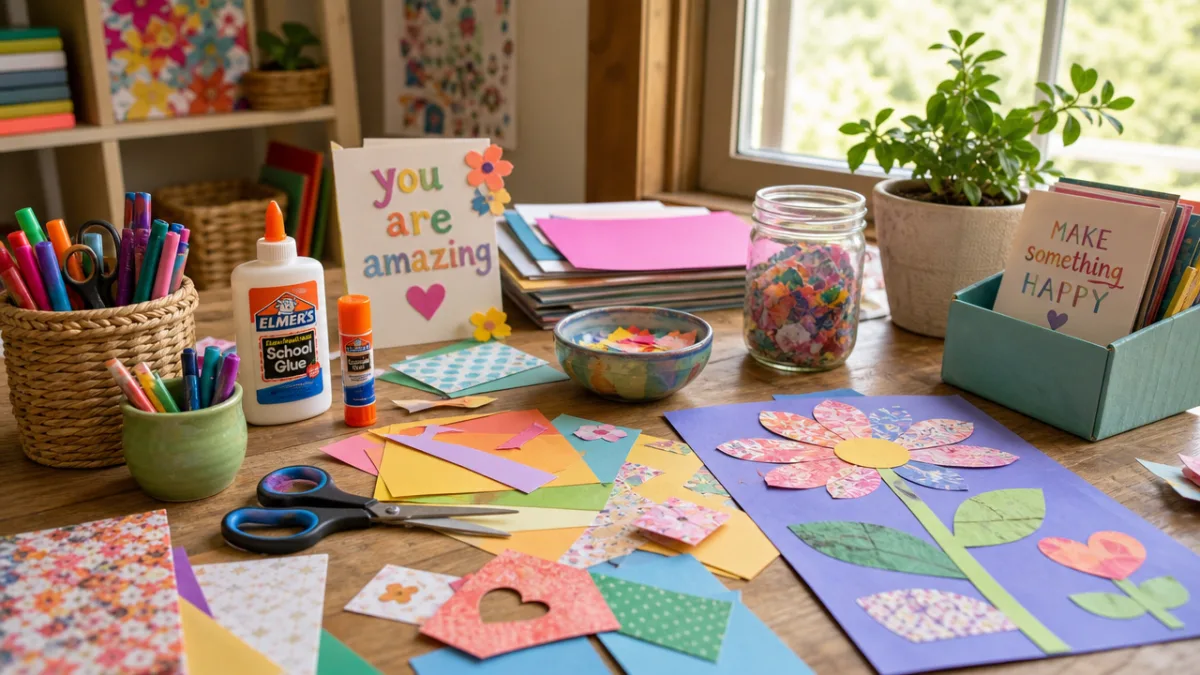
Top Paper Craft Ideas That Kids Absolutely Love
Some paper craft projects just never go out of style. Paper animals are always a hit — think origami frogs that actually jump, or elaborate paper peacocks with layered feather tails that kids are genuinely proud to show off. These projects teach kids about shape and symmetry without it ever feeling like a lesson. Even the youngest crafters can make a simple paper caterpillar by gluing circles into a line and drawing on a little face, and they’ll be thrilled with the result.
Paper chain garlands are another one that somehow stays fresh no matter how many times kids make them. Rainbow chains, holiday decorations, personalized birthday banners — the options are endless. There’s also something almost calming about the rhythm of cutting strips and linking them together, and kids can work away at a comfortable pace while watching something really cool take shape. Hang a long paper chain across a bedroom and suddenly the whole room feels like a party.
Pinwheels, pop-up cards, paper bag puppets, DIY paper hats — these are the projects where craft and play blur together in the best possible way. A paper bag puppet made in the afternoon can easily become the star of a full theatrical production by dinnertime. A pop-up card made with a few careful folds turns into something a grandparent or teacher will genuinely treasure. That’s one of the really wonderful things about paper crafts: finishing the project isn’t the end of the fun — it’s more like the beginning of whatever comes next.
- Origami animals — frogs, cranes, butterflies, and foxes using simple folding techniques
- Paper plate masks — decorated with paint, feathers, and yarn for dramatic play
- DIY paper flowers — tissue paper roses and coffee filter blooms that look stunning in a vase
- Paper bag puppets — instant characters for storytelling and imaginative play
- Accordion-fold bookmarks — practical, pretty, and perfect as gifts
- Paper chain garlands — classic decorations for any celebration or season
- Pop-up greeting cards — a magical surprise for whoever opens them
Educational Benefits of DIY Crafts for Children
It’s easy to think of paper crafts as just a fun way to pass the time, but child development experts have a lot to say about what’s actually happening when kids sit down to make something. Crafting teaches sequencing — kids learn that steps need to happen in a certain order to get to the result they want. That kind of logical thinking feeds directly into math and reading comprehension. It’s basically a sneaky academic workout dressed up as playtime.
Paper crafts also introduce kids to geometry in the most natural, hands-on way possible. Folding a square piece of paper in half shows what symmetry actually means. Cutting out a hexagon lets kids feel what a six-sided shape is like in their hands. Arranging cut-outs into a mosaic gets them thinking about pattern and spatial reasoning without a single worksheet in sight. None of it requires a lesson plan — it just happens as part of making something cool.
Language skills get a boost too, especially when kids are crafting alongside adults or friends. Describing what they’re making, following instructions, reading a simple how-to guide, or narrating their choices as they go — all of that builds vocabulary and communication in a context that feels completely natural. When a kid says, “I’m making a rainbow fish and the scales overlap like this,” they’re doing real descriptive language work without even realizing it.
But honestly, the biggest gift paper crafts give kids might be problem-solving. When a fold doesn’t come out right, when the glue makes the paper buckle, or when a piece gets cut too small, kids have to figure out what to do. Start over? Find a workaround? Change the plan entirely? Those little decisions — repeated over and over across dozens of projects — build resilience, flexible thinking, and a healthy comfort with things not going perfectly. That kind of thinking carries into every corner of a kid’s life, well beyond the craft table.

Seasonal and Themed Paper Craft Projects to Keep Things Fresh
One of the best tricks for keeping kids excited about crafting over the long haul is tying projects to whatever season or holiday is happening right now. In autumn, kids can cut leaf shapes from red, orange, and gold paper for collages, or fold paper pumpkins to line a windowsill. In winter, cutting paper snowflakes from folded white paper is a classic that never gets old — and if you want to sneak in a little math conversation, the six-fold symmetry of a snowflake is a genuinely cool thing to talk about.
Spring is absolutely made for paper flowers and garden-themed crafts. Tissue paper tulips and coffee filter butterflies are cheerful and easy, and they look beautiful displayed in a handmade paper vase or strung together as a mobile. Earth Day is also a great moment to show kids how newspaper, cardboard packaging, and old magazines can be turned into something new and beautiful instead of going straight to the recycling bin — a small but meaningful lesson in creativity and resourcefulness.
Summer opens things up for ocean-themed crafts — paper plate fish, accordion-fold jellyfish, layered paper seascapes — all perfect for those long, warm afternoons. And when back-to-school season rolls around, there’s something really fun about making your own supplies feel special: handmade bookmarks, custom notebook covers decorated with washi tape and stickers, paper pencil holders that are entirely your own. Tying crafts to the rhythm of the year gives kids something to look forward to and keeps their creativity connected to the world around them.
- Winter: Snowflakes, paper lanterns, holiday cards, paper ornaments
- Spring: Tissue paper flowers, butterfly mobiles, paper Easter eggs
- Summer: Paper boats, ocean scenes, sun catchers from tissue paper
- Autumn: Leaf collages, paper pumpkins, harvest-themed wreaths

Encouraging Creativity and Independence in Young Crafters
The single most important thing an adult can do while a child is crafting is resist the urge to step in. It’s genuinely hard not to straighten a lopsided fold or suggest a different color — but every time we do, we’re quietly sending the message that their instincts aren’t quite right. The point of kids’ crafting isn’t a flawless finished product. It’s the exploring, the deciding, and the self-expression. A wonky paper cat made entirely by a four-year-old is worth so much more than a perfect one that an adult quietly fixed along the way.
Asking open-ended questions is a much better move than offering directions. “What are you thinking of making next?” or “How did you figure out to do it that way?” invites kids to reflect and feel proud without nudging them away from their own vision. Specific praise goes a long way too — “I love how you used that striped pattern for the wings” lands so much better than a generic “good job,” because it shows you actually noticed what they chose to do. That kind of attention helps kids start to trust and value their own creative instincts.
Putting out a variety of materials and then stepping back is probably the most powerful thing you can do for a young crafter’s independence. When kids have access to supplies without being told what to make, they have to imagine, plan, and follow through entirely on their own. Some kids will settle in quietly and work on something intricate and focused. Others will experiment wildly, mixing things in combinations that seem strange but end up surprisingly original. Both are completely valid, both are wonderful, and both deserve the same enthusiastic response.
Kids who get that kind of creative freedom consistently tend to develop what educators call a growth mindset — the understanding that abilities grow through effort rather than being fixed from the start. When a project doesn’t turn out the way they imagined, they try again instead of giving up. When they see something impressive that someone else made, they feel inspired rather than defeated. Paper crafts might seem humble, but they have a real way of shaping how kids think about themselves — their potential, their abilities, and their very real capacity to make something out of nothing.








What do you think?
It is nice to know your opinion. Leave a comment.