










Palo Blanco (Lysiloma candida): The White-Barked Tree of Baja California
Introduction and Overview
If you’ve ever wandered the hills of Baja California and done a double-take at a tree with bark so white it almost glows, you’ve probably met Palo Blanco — or Lysiloma candida, if you want to get formal about it. The name is pure Spanish practicality: “white stick” or “white tree,” which is exactly what you’re looking at. That smooth, chalky bark is genuinely hard to miss in bright sunlight. Botanically speaking, it belongs to the legume family Fabaceae and the subfamily Mimosoideae, which puts it in good company alongside the acacias, mimosas, and other fine-leafed trees that have made themselves at home in dry landscapes across the Americas.
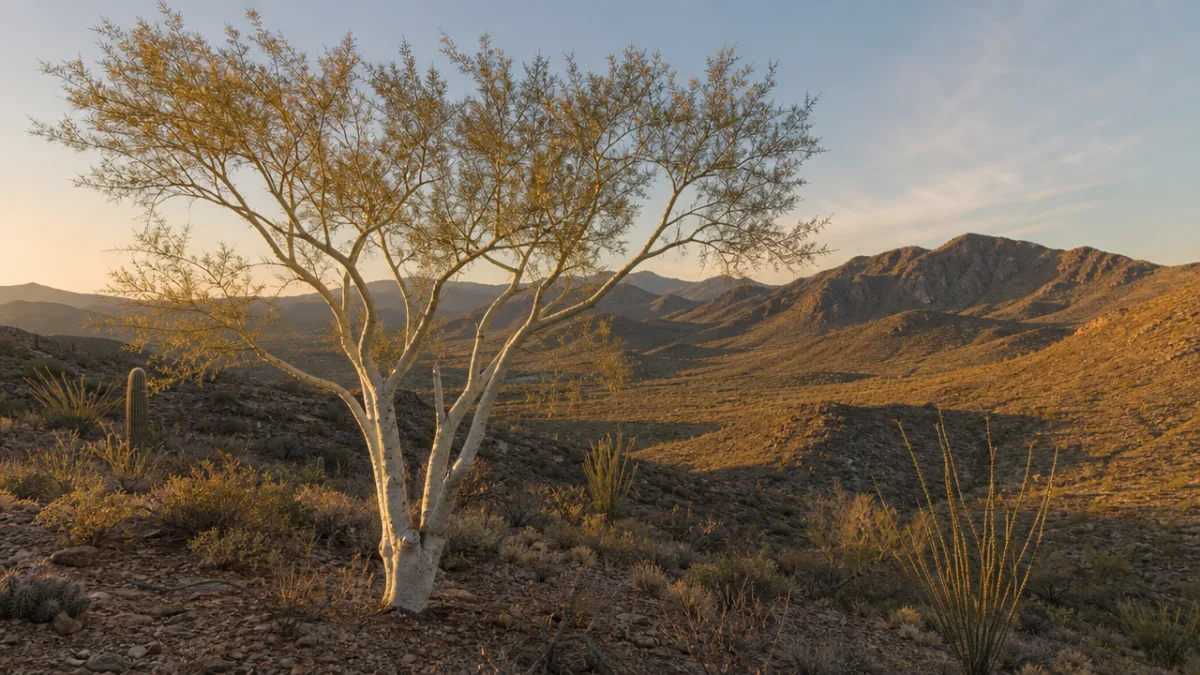
Palo Blanco is mostly at home along the Pacific coast of Baja California Sur, where it fits right into the thornscrub and tropical dry forest that covers that rugged stretch of peninsula. It’s especially associated with the foothills and arroyos around Cabo San Lucas and the Cape Region — a place where desert meets sea and an impressive number of species found nowhere else on Earth have quietly evolved over millennia. Against the tawny, sun-baked hillsides, those white trunks stand out like something placed there on purpose.
But Palo Blanco is more than a pretty face. Being a leguminous tree, it pulls nitrogen out of the atmosphere through bacteria living in its root nodules, which goes a long way toward enriching the thin, rocky soils it grows in. It shelters birds, insects, and mammals, and its canopy throws enough shade to meaningfully cool the ground beneath it. To really appreciate this tree, you have to see it as both a striking piece of natural scenery and a working piece of a fragile, irreplaceable ecosystem.
Botanical Description and Identification
Spotting Lysiloma candida in the field isn’t exactly a challenge — it tends to announce itself. Most trees fall somewhere between 4 and 10 meters tall, though a particularly happy specimen in a good location can push beyond that. The trunk often splits into multiple stems near the base before spreading into a broad canopy that throws generous shade. The bark is the thing everyone notices first: smooth, peeling away in papery layers, and brilliantly white to pale cream, with hints of green or yellow where fresh bark is peeking through underneath.
The leaves are bipinnately compound — a fancy way of saying each leaf splits into multiple pinnae, which then split again into dozens of tiny little leaflets. The result is a wonderfully feathery, delicate look that plays beautifully against the bold white trunk. The leaflets themselves are small and oval, a soft green that catches the desert light with a gentle shimmer. Come the dry season, the tree may drop some or all of its leaves, which is a pretty standard survival strategy among tropical dry forest trees that need to hang onto every drop of water they can.
Palo Blanco’s flowers are small, fluffy, white to pale yellow pom-poms — classic mimosoid territory, structurally similar to the powder-puff blooms you’d see on related species. Native bees are big fans. The flowers show up mainly in the warmer months, and once pollinated, the tree follows up with flat, papery seed pods in the way legumes do. Those pods dry to a tan or straw color and can hang around on the branches for quite a while, rattling in the wind before eventually splitting open and scattering their seeds across the hillside.
Native Habitat and Ecology
Lysiloma candida calls the tropical dry forest and thornscrub of Baja California Sur’s Cape Region home — an environment defined by long, punishing dry seasons and bursts of summer rain delivered by the North American Monsoon. That seasonal rhythm shapes everything in the region. Palo Blanco has had millennia to figure out how to make the most of the wet season and simply survive the dry one, relying on deep roots, some capacity to store water, and that willingness to drop its leaves when things get tough.
In the plant community, it tends to keep company with other Cape Region regulars: the towering cardon cactus (Pachycereus pringlei), the aromatic copal trees (Bursera species) with their own papery, peeling bark, various columnar and shrubby cacti, and a dense understory of succulents and drought-hardened shrubs. What makes this community remarkable is how many of its members exist nowhere else on the planet. The Cape Region has earned serious attention from botanists and conservationists precisely because of that extraordinary level of endemism — it’s ecologically isolated in a way that has produced something genuinely irreplaceable.
The tree’s contributions to its ecosystem go well beyond fixing nitrogen. Its flowers feed pollinators, its seeds and pods get eaten by birds and small mammals, and its bark and branches give cavity-nesting insects and birds somewhere to set up shop. The shade beneath its canopy creates a noticeably cooler, more humid little world at ground level, which helps seedlings of all kinds get established. In areas that have been disturbed or degraded, Palo Blanco can actually step in as a pioneer species, slowly rebuilding soil quality and canopy cover — which makes it genuinely useful for ecological restoration work in the region.
Cultural and Historical Significance
The indigenous peoples of Baja California — including the Guaycura and Pericú of the Cape Region — lived alongside the peninsula’s plants for thousands of years before European contact. Detailed ethnobotanical records from these groups are unfortunately scarce, largely because of what happened to these communities after colonization, but it’s clear that the landscape shaped daily life, spiritual practice, and accumulated ecological knowledge in profound ways. A tree as visually distinctive as Palo Blanco, with its stark white trunks visible from a distance, would almost certainly have served as a landmark and waypoint — the kind of thing you’d reference when giving directions or telling a story.
When Spanish missionaries and colonizers arrived in the 17th and 18th centuries, they occasionally noted the distinctive trees of the peninsula in their written records. Those white trunks would have been hard to ignore for anyone moving through the Cape Region’s thornscrub for the first time. The wood, described as moderately hard and durable, was likely put to use for construction, fencing, and firewood by mission communities. The name Palo Blanco itself is very much in keeping with how Spanish colonial settlers named things — straightforwardly, descriptively, with a direct nod to whatever was most obviously different about a plant or place.
Today, Palo Blanco holds a quiet but real place in Mexican ecological and cultural identity. It shows up in botanical illustrations, nature tourism materials, and conservation campaigns as a kind of ambassador for Baja’s unique flora. Local communities in the Cape Region have long known that seeing Palo Blanco means you’re looking at relatively intact native vegetation. And there’s growing enthusiasm among architects, landscape designers, and home gardeners for bringing this endemic species into plantings that both celebrate regional identity and actually do something good for local biodiversity.
Horticultural Potential and Landscape Use
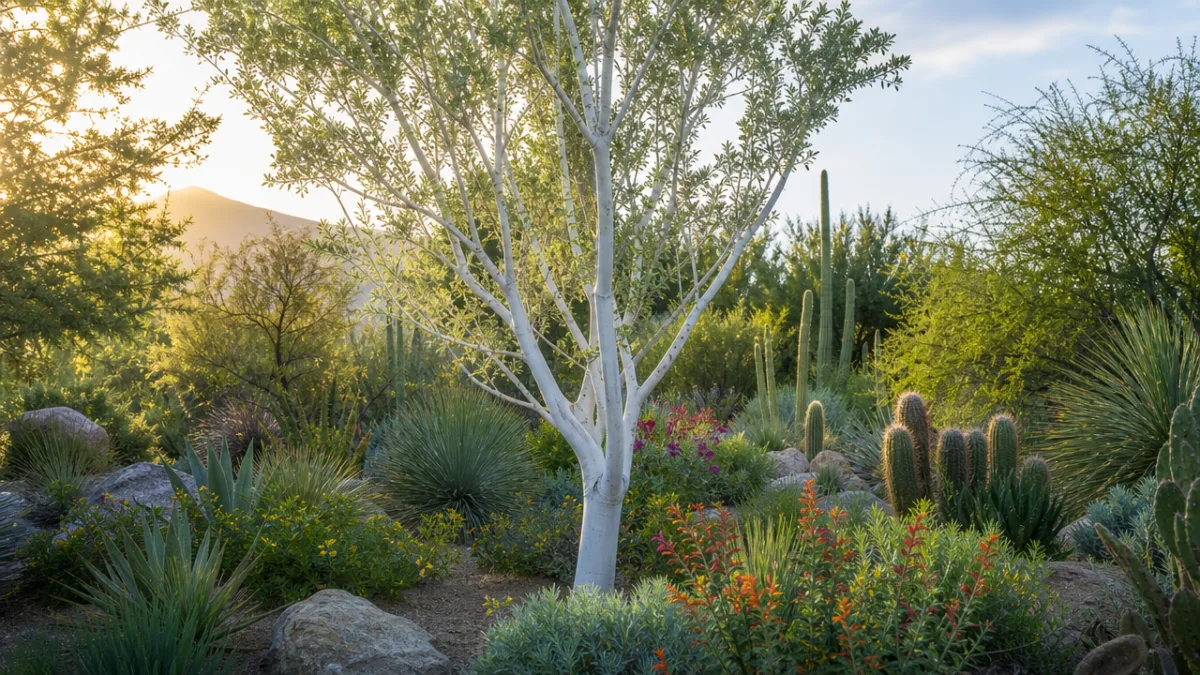
Horticulturists and landscape designers in the southwestern United States and northern Mexico have been taking notice of Lysiloma candida, and it’s not hard to see why. Water-wise gardening has gone from being a niche interest to a genuine design movement in these regions, and Palo Blanco fits that conversation perfectly. The white bark alone earns its keep year-round — even when the tree drops its leaves in a dry season, you still have what amounts to a living sculpture in your garden. Add the feathery, bipinnate foliage back into the picture and you get a rare combination of bold architectural presence and fine-textured detail that most trees simply can’t pull off.
The good news for gardeners in Arizona, southern California, Nevada, and similar climates is that Palo Blanco wants exactly what these places have: excellent drainage, low to moderate rainfall, and plenty of heat. Once established — which usually takes two to three years of regular watering to get the roots properly settled in — these trees are remarkably self-sufficient. That low water requirement is a genuine selling point in a region where water scarcity is only becoming a more pressing concern.
As for how to use it in a design, Palo Blanco is versatile. It works beautifully as a specimen tree where the bark can really be seen and appreciated, as a shade tree over a patio or outdoor seating area, and as part of a naturalistic desert composition. You can train it to a single trunk if that’s the look you’re after, or let it do its natural multi-stemmed thing. It grows at a moderate pace and tends to be long-lived when conditions suit it. A few things worth keeping in mind for successful cultivation:
- Plant in full sun for best growth and bark development; avoid shade or crowding from other large plants.
- Provide excellent drainage and avoid heavy clay soils that retain moisture around the root zone.
- Water deeply but infrequently during establishment, training the roots to seek moisture deep in the soil profile.
- Avoid excessive fertilization, which can produce overly lush, fast growth prone to structural weakness.
- Prune minimally and only to remove crossing or damaged branches; the natural branching habit is one of the tree’s aesthetic assets.
- Protect young trees from frost; established specimens can tolerate brief light frosts but are not cold-hardy in climates with prolonged freezing temperatures.
Seeds are the go-to method for propagating Palo Blanco. They have a hard seed coat that benefits from a little help — either a quick mechanical scarification or a brief soak in hot water — before germination. Once you’ve done that, germination under warm conditions is typically fast and reliable, and seedlings take off enthusiastically in their first season given warmth, moisture, and well-drained mix. Specialty native plant nurseries in the Southwest and Mexico are increasingly stocking container-grown trees, which makes it much more practical for gardeners and restoration practitioners to get their hands on one.
Conservation Status and Environmental Threats
The conservation picture for Lysiloma candida mirrors what’s happening across the Cape Region more broadly. The species isn’t currently listed as endangered, but the habitat it depends on is under real and growing pressure. The transformation of the Los Cabos corridor from a remote, rugged peninsula tip into one of Mexico’s busiest tourist destinations has meant extensive clearing of native thornscrub and tropical dry forest for resorts, housing developments, golf courses, and all the infrastructure that comes with them. When that land gets cleared, it’s not just individual Palo Blanco trees that disappear — the whole ecological community they’re part of goes with them.
Climate change layers a more systemic threat on top of all that. The Cape Region’s climate is already right at the edge of what tree growth requires — high heat, low and unpredictable rainfall, periodic severe drought. Climate projections for the area point toward higher temperatures and even more erratic precipitation, conditions that could gradually push the ecosystem toward something drier and more barren where trees like Palo Blanco struggle to regenerate. There’s also the complication of tropical storms, which can bring catastrophic rainfall and flooding to the region and leave mature tree populations damaged and hillside soils destabilized.
Then there’s the invasive species problem. Buffelgrass (Pennisetum ciliare) has spread extensively across the Sonoran Desert and is making serious inroads into Baja California. The trouble with buffelgrass is that it creates a continuous carpet of fine, dry fuel in ecosystems that historically had very little fire — and when those fires burn through, they can kill native cacti and trees, including Palo Blanco. After the burn, buffelgrass typically comes back even stronger while native vegetation struggles to recover. It’s a self-reinforcing cycle that’s very hard to break, and conservation groups in the Cape Region have rightly identified invasive grass management as a critical priority.
On the more encouraging side, protected areas have been established in the Cape Region, interest in native plant restoration is growing, and more people living and working in the area are coming to recognize what makes this endemic flora worth protecting. Botanical gardens in both Mexico and the United States have added Lysiloma candida to their collections, which serves both as public education and as a kind of insurance policy against population declines in the wild. Ongoing research collaborations between Mexican and international universities continue to fill in the gaps in our understanding of the species’ biology, ecology, and genetics — all of which is essential groundwork for meaningful long-term conservation.
Related Species and the Genus Lysiloma
The genus Lysiloma is a small one, made up of trees and large shrubs spread across Mexico, Central America, and the Caribbean, all of them adapted to warm climates with distinct dry seasons. It sits within the tribe Ingeae in the mimosoid legumes, and its members share the same family resemblances: bipinnate leaves, fluffy flower heads, and flat seed pods. The closest relative most North American gardeners are likely to know is Lysiloma watsonii — the Desert Fern or Feather Bush — which reaches into southern Arizona and has become popular in southwestern gardens for its exceptionally fine, fern-like foliage and graceful, spreading shape.
Lysiloma divaricatum, known as Tepeguaje or Wild Tamarind, is a larger and more widely distributed species ranging from Mexico down through Central America, where it’s valued for timber, shade, and its nitrogen-fixing contributions to agroforestry systems. Lysiloma latisiliquum, another Wild Tamarind, represents the genus in subtropical Florida, where it’s native to the hammock forests of the Keys. Taken together, these species tell the story of a genus that has repeatedly found ways to thrive at the edges of tropical dry environments across an enormous range.
But when you set Lysiloma candida next to its relatives, one thing becomes immediately clear: nothing else in the genus has that bark. That luminous white is unique to this species, and it’s almost certainly not just for show. Reflective, light-colored bark helps moderate the temperature of the living tissue beneath it, protecting the cambium from heat damage under intense desert sun — a strategy that has evolved independently in desert trees all around the world. So the gorgeous white bark that makes Palo Blanco so visually arresting is also, in a very real sense, how the tree stays alive. There’s something satisfying about that: what looks like pure beauty turns out to be pure function too.








What do you think?
It is nice to know your opinion. Leave a comment.