










Oplismenus imbecillis: A Comprehensive Guide to Wavyleaf Basketgrass
Introduction and Botanical Overview
Oplismenus imbecillis, commonly known as wavyleaf basketgrass or woodland basketgrass, is a delicate creeping grass species belonging to the family Poaceae. This perennial grass is native to a wide range of tropical and subtropical regions across Africa, Asia, Australia, and the Americas. It thrives in shaded woodland environments and forest understories, where it forms a low-growing, mat-like groundcover that can spread extensively across the forest floor. Its slender, trailing stems and distinctively wavy leaf edges make it immediately recognizable among botanists and naturalists.
The genus name Oplismenus derives from the Greek word “hoplismenos,” meaning armed, a reference to the awned spikelets that characterize many species within the group. The species epithet imbecillis comes from the Latin for weak or slender, aptly describing the plant’s thin, delicate stems and its generally modest, understated growth habit. Despite this seemingly fragile nature, Oplismenus imbecillis is remarkably resilient and adaptable, capable of colonizing a wide variety of shaded habitats across multiple continents and climate zones.
As a member of the tribe Paniceae within the grass family, Oplismenus imbecillis shares certain structural and reproductive traits with other panic grasses, though it occupies a somewhat unique ecological niche as a shade-tolerant, low-growing herb. Botanical classification places it firmly within the subfamily Panicoideae, and it has been studied extensively in regions where it has established itself as both a native groundcover and, in some cases, a non-native invasive species of considerable concern to conservation managers and land stewards.
Physical Characteristics and Identification
Identifying Oplismenus imbecillis in the field is relatively straightforward once a naturalist becomes familiar with its distinctive features. The stems are slender and trailing, rooting freely at the nodes wherever they come into contact with moist soil, which allows the plant to spread laterally and cover large areas of forest floor with a dense, interwoven mat of foliage. The leaves are lance-shaped to ovate, typically ranging from two to eight centimeters in length, and display the characteristic wavy or undulate margins that give the plant one of its common names. Leaf surfaces are often hairy, contributing a soft texture to the plant’s overall appearance.
The inflorescence of Oplismenus imbecillis is a distinctive raceme that rises above the foliage, bearing small spikelets armed with prominent awns. These awns are sticky and barbed, an adaptation that facilitates seed dispersal by attaching readily to the fur of passing animals or the clothing and gear of people moving through forested areas. This mechanism of dispersal, known as epizoochory, is highly effective and is one of the primary reasons the species has spread so successfully across diverse geographic regions and why it has proven particularly difficult to contain once established outside its native range.
One useful identification feature is the comparison between Oplismenus imbecillis and its close relative Oplismenus hirtellus, a species that has become notably invasive in the eastern United States. Oplismenus imbecillis tends to have narrower leaves and somewhat less vigorous growth, though the two species can appear superficially similar, particularly in photographs or herbarium specimens. Key distinguishing features include leaf width, the density of surface hairs, and subtle differences in spikelet structure. Botanists examining specimens in the mid-Atlantic region of North America have sometimes debated the identity of populations encountered in shaded woodland settings.
- Stems: Slender, creeping, rooting at nodes, typically 20–60 cm long
- Leaves: Lanceolate to ovate, 2–8 cm, wavy margins, hairy surfaces
- Inflorescence: Racemose, bearing sticky awned spikelets adapted for animal dispersal
- Color: Pale to medium green, sometimes with purplish tints in high-light conditions
- Root system: Shallow, fibrous, spreading horizontally from nodal roots
Native Range and Global Distribution
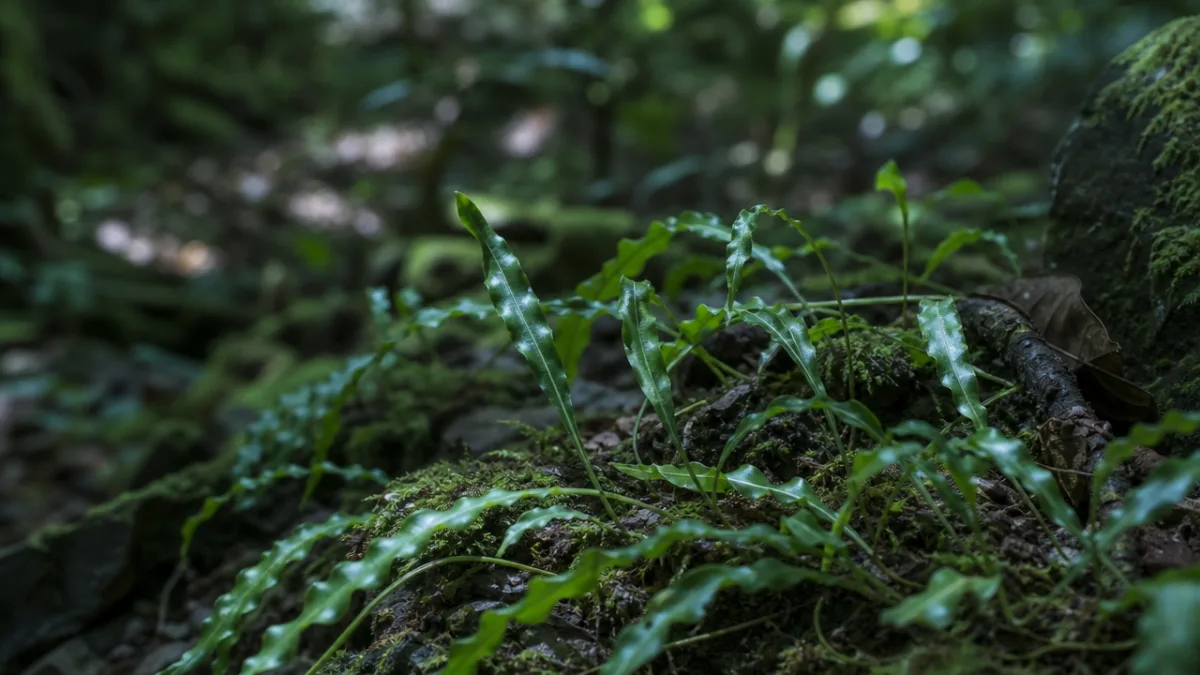
Oplismenus imbecillis enjoys a remarkably wide native distribution that spans multiple continents and a broad range of climatic zones. In its native range, the species is found throughout tropical and subtropical Africa, from the forests of West Africa through the highland woodlands of East Africa and down into the mosaic landscapes of southern Africa. It is also native to large parts of Asia, including the Indian subcontinent, Southeast Asia, and parts of East Asia, where it occupies similar shaded woodland and forest margin habitats. In Australia, it is recorded from the tropical north and parts of the eastern coast, where it grows in rainforest margins and disturbed forest understories.
Within its native range, Oplismenus imbecillis is generally regarded as a benign or even ecologically valuable component of the forest floor community. It provides groundcover in shaded situations where many other plant species struggle to establish, and it contributes to soil stabilization and moisture retention in forest environments. Native fauna interact with the plant in various ways, including through seed dispersal and as a minor forage source for certain small mammals and invertebrates. In these contexts, the plant exists as part of a balanced ecological community with natural controls on its abundance and spread.
The species has also been recorded from Central and South America, where its status — whether as a long-established native, an ancient introduction, or a more recent arrival — has been the subject of some botanical debate. Regardless of its ultimate origin in the Neotropics, the plant is widely naturalized across many parts of Latin America and the Caribbean, growing in similar shaded environments to those it occupies elsewhere in its global range. Understanding the full scope of this distribution is important for conservation planning and for assessing where the species may pose ecological risks as conditions change.
Invasive Potential and Ecological Concerns
While Oplismenus imbecillis itself is less frequently flagged as a major invasive species compared to its close relative Oplismenus hirtellus, the broader Oplismenus genus has drawn significant attention from conservation biologists in the eastern United States and other regions. The concern lies in the species’ life history traits — shade tolerance, prolific vegetative spread, efficient seed dispersal via sticky awns, and the ability to form dense mats — that collectively make it a potent competitor in forest understory environments. When plants with these traits are introduced outside their native range, they can displace native wildflowers, ferns, and other groundcover species that form the foundation of forest biodiversity.
In invaded forest systems, dense mats of Oplismenus can dramatically reduce native plant diversity by smothering seedlings and outcompeting established groundcover species for light, moisture, and soil nutrients. The forest understory is a particularly sensitive habitat because many native woodland wildflowers depend on specific light conditions, seasonal timing, and established ecological relationships with pollinators, mycorrhizal fungi, and other organisms. A thick carpet of invasive grass disrupts all of these relationships simultaneously, leading to a cascade of negative effects on the broader forest ecosystem, including reduced food availability for specialist insects and birds that depend on native understory plants.
Management of Oplismenus invasions has proven challenging because the plant’s vegetative spread and efficient dispersal mechanisms allow it to rapidly recolonize areas after removal efforts. Hand-pulling and mechanical removal can be effective for small infestations but must be repeated regularly and require careful disposal of plant material to prevent re-rooting. Herbicide treatments using selective grass-killing chemicals have shown promise in some situations, but their application in sensitive forest habitats requires careful planning to avoid harming non-target plant species. Early detection and rapid response remain the most effective strategies for preventing the establishment of large, difficult-to-control populations.
- Monitor woodland areas regularly for early signs of basketgrass establishment
- Report new occurrences to local invasive species programs and herbaria
- Remove small infestations by hand-pulling before seed set if possible
- Follow up removal with regular monitoring to catch regrowth from nodal fragments
- Consult land management professionals before applying herbicide treatments
- Engage local volunteer groups in community-based early detection programs
Habitat Preferences and Ecological Role
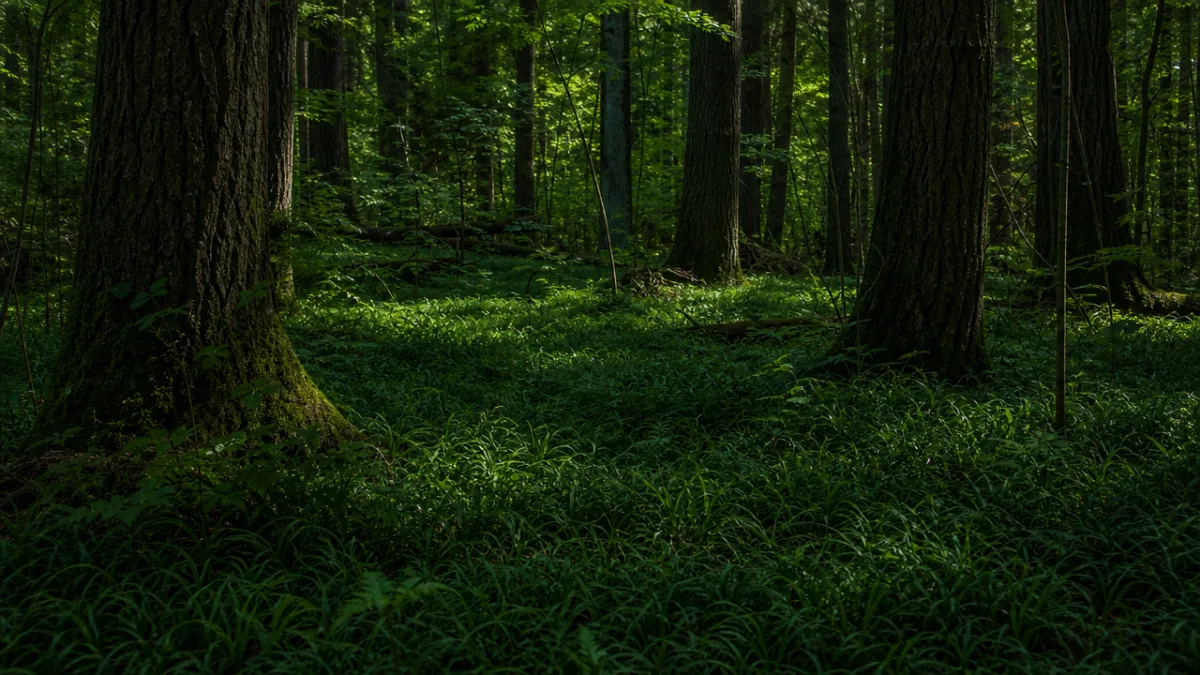
Oplismenus imbecillis is a highly specialized shade-tolerant plant, capable of thriving in light conditions that would limit the growth of most other grasses. It is most commonly found in closed-canopy forests, forest margins, and shaded riparian corridors where high humidity and indirect light prevail. The species prefers moist, well-drained soils rich in organic matter, conditions typical of productive forest floors with an active litter layer. It is notably absent from open, exposed habitats such as grasslands or disturbed sites without shade, which distinguishes it ecologically from many other opportunistic weedy species.
Within native forest ecosystems, Oplismenus imbecillis plays a modest but meaningful ecological role. Its dense growth habit can provide shelter for small invertebrates, including beetles, spiders, and other arthropods that form the base of complex food webs supporting larger animals. The plant also contributes biomass to the forest floor litter layer as stems and leaves die back seasonally, feeding decomposer communities of fungi, bacteria, and invertebrates. In regions where the forest floor would otherwise be sparsely vegetated due to deep shade or seasonal drought, the presence of this grass can meaningfully increase habitat complexity and structural diversity.
The species shows a notable preference for habitats that have experienced some level of disturbance, including forest gaps created by fallen trees, trail edges, and areas affected by human activity such as logging or recreational use. This association with disturbance is common among shade-tolerant grasses and reflects the ecological truth that even minor increases in light availability can dramatically accelerate the growth and reproduction of a plant otherwise constrained by deep shade. Conservation managers working to protect intact forest habitats must therefore be attentive to the ways in which disturbance, even small-scale or apparently benign human disturbance, can facilitate the spread of Oplismenus and similar opportunistic species.
Cultural, Historical, and Scientific Significance
While Oplismenus imbecillis has not historically been a plant of major economic or cultural significance to human societies, it occupies an interesting place in the history of botanical science. The species was formally described during the great era of European botanical exploration in the eighteenth and nineteenth centuries, when naturalists accompanying colonial expeditions documented and cataloged the plant diversity of tropical regions across Africa, Asia, and the Americas. Type specimens collected during these expeditions and deposited in major European herbaria such as Kew, the Natural History Museum in London, and the Muséum National d’Histoire Naturelle in Paris remain important reference points for taxonomic work today.
The plant has attracted renewed scientific interest in recent decades primarily because of the broader concern about invasive grasses in forest ecosystems. Studies examining the genetic diversity of Oplismenus populations across its global range have provided insights into the pathways by which the plant has spread and the degree to which introduced populations differ genetically from native source populations. Such work is foundational for understanding invasion biology and for developing predictive models of which regions and habitats may be most vulnerable to future Oplismenus establishment as global trade and travel continue to facilitate the movement of plant propagules across geographic barriers.
In a broader context, the story of Oplismenus imbecillis and its relatives illustrates the complex interplay between natural history, human activity, and ecological change that characterizes the modern era of biodiversity science. As forests around the world face mounting pressures from habitat fragmentation, climate change, and biological invasions, understanding even relatively obscure species like wavyleaf basketgrass becomes increasingly important. Each species, however modest its profile, occupies a role in the ecosystems it inhabits, and changes in its abundance or distribution can have rippling effects on the webs of life that depend upon forest habitats for their survival and reproduction.
Conservation and Management Recommendations
Effective conservation and management of Oplismenus imbecillis and its ecological context requires a coordinated approach that integrates scientific monitoring, community engagement, and evidence-based intervention strategies. Land managers working in forests where the species is established or at risk of establishment should prioritize regular baseline surveys to document the current distribution and abundance of basketgrass populations. These data provide the foundation for tracking changes over time and for evaluating the effectiveness of management interventions. Digital tools and citizen science platforms have increasingly been used to extend the reach of such monitoring efforts beyond what professional staff alone could achieve.
Restoration efforts in areas where Oplismenus has displaced native groundcover species require both removal of the invasive grass and active replanting of native species to fill the ecological space vacated by management activities. Without replanting, treated areas can be rapidly recolonized by basketgrass or other opportunistic species. Native shade-tolerant groundcover plants, including ferns, native sedges, and woodland wildflowers, should be propagated from locally sourced material and used to revegetate cleared areas. Ongoing monitoring and follow-up treatment will typically be necessary for several years following initial management to achieve lasting reductions in invasive grass cover and meaningful recovery of native plant communities.
Public education and outreach are also critical components of any comprehensive management strategy for Oplismenus. Many introductions of invasive plants occur inadvertently through the movement of contaminated soil, equipment, or plant material by people who are unaware of the problem. Hikers, trail runners, mountain bikers, and other recreational users of forested areas can unknowingly transport basketgrass seeds on their clothing, footwear, and gear. Simple prevention measures, such as cleaning equipment before and after visits to affected areas, can substantially reduce the rate of new introductions and help contain existing infestations to the areas where they are already established.
- Conduct regular vegetation surveys in vulnerable forest habitats to detect new Oplismenus establishment early
- Train volunteers and community members to identify basketgrass and report new occurrences promptly
- Develop site-specific management plans that integrate removal, revegetation, and long-term monitoring
- Engage recreational user groups in prevention campaigns focused on cleaning equipment and gear
- Support research into biological and chemical control methods that minimize impacts on native species
- Collaborate across land management jurisdictions to address the landscape-scale nature of invasive grass spread
The long-term conservation of forest biodiversity in regions affected by Oplismenus and related invasive grasses ultimately depends on our collective willingness to invest in the sustained, unglamorous work of monitoring, management, and restoration. Unlike dramatic conservation crises involving charismatic megafauna, the slow creep of invasive groundcover grasses across forest floors tends to attract less public attention and fewer resources, even as the cumulative ecological damage accumulates season by season. Raising awareness of this quiet but consequential threat is among the most important contributions that botanists, ecologists, educators, and conservation advocates can make to the long-term health of the world’s temperate and tropical forest ecosystems.








What do you think?
It is nice to know your opinion. Leave a comment.