










Miss Molly Butterfly Bush: A Complete Guide to Buddleia ‘Miss Molly’
Introduction to Miss Molly Butterfly Bush
If you’ve ever wanted a flowering shrub that really stops people in their tracks, Miss Molly Butterfly Bush — or Buddleia ‘Miss Molly’ if you want to get botanical about it — is worth a serious look. Those deep crimson blooms are nothing like the purple butterfly bushes most of us grew up seeing, and whether you’re a home gardener or a landscape designer, that warm jewel-toned color is genuinely hard to match. She blooms reliably from midsummer right through the first hard frosts, which is a longer run than a lot of showier plants can manage.
Miss Molly came out of a newer wave of Buddleia breeding that set out to fix some of the real complaints gardeners had about older varieties. She grows more compactly, which is a big deal for smaller modern yards. She’s also got better disease resistance and more vibrant color than the plants that came before her. Those flower spikes — anywhere from six to twelve inches long and packed with tiny individual florets — create a look that’s as beautiful up close as it is from across the yard, and the honey-like fragrance is genuinely intoxicating.
Longfellow’s Greenhouses has been one of Miss Molly’s biggest champions, featuring her prominently and recommending her to customers looking for something low-maintenance but high-impact. That kind of endorsement from a respected nursery goes a long way, and it’s helped introduce Miss Molly to a much wider audience of gardeners who’ve since become devoted fans. It’s the sort of plant that earns new admirers every single season.
Physical Characteristics and Ornamental Appeal
One of the first things people appreciate about Miss Molly is her size. At a mature height and spread of roughly four to five feet, she’s genuinely manageable — a far cry from the old Buddleia varieties that could bolt to eight feet and take over a bed if you weren’t paying attention. Her natural growth habit is rounded and tidy, so you’re not constantly fighting to keep her in shape. The foliage is a soft gray-green with lance-shaped leaves that serve as a lovely silvery backdrop for those bold flower spikes.
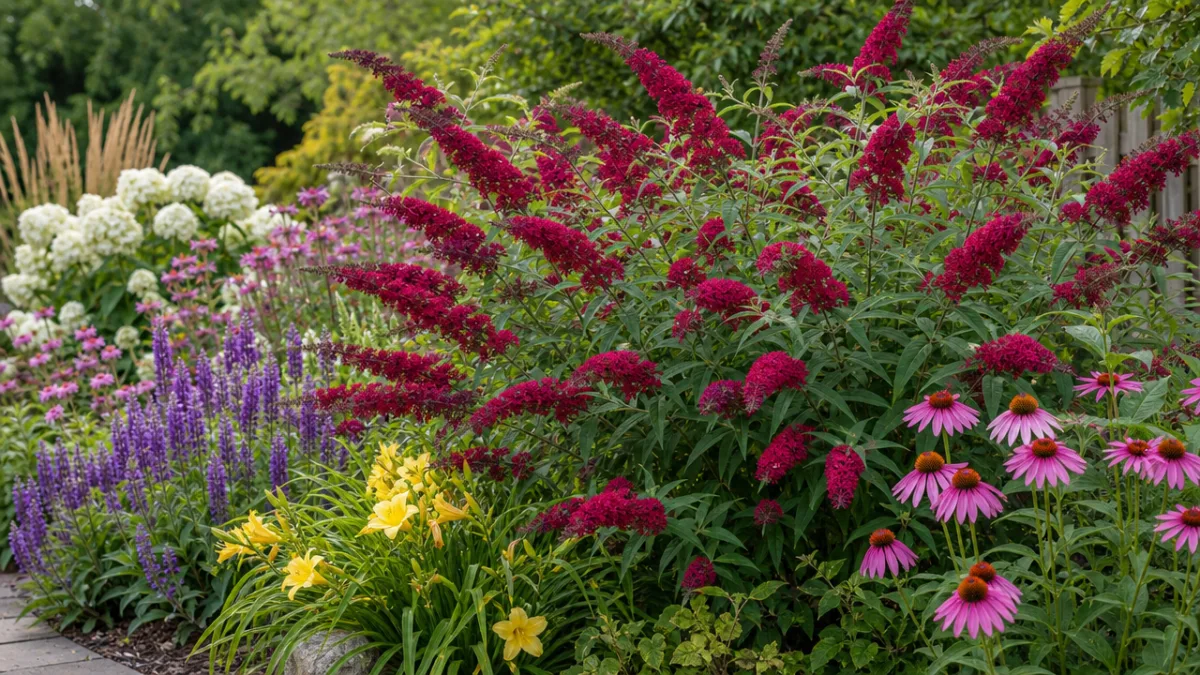
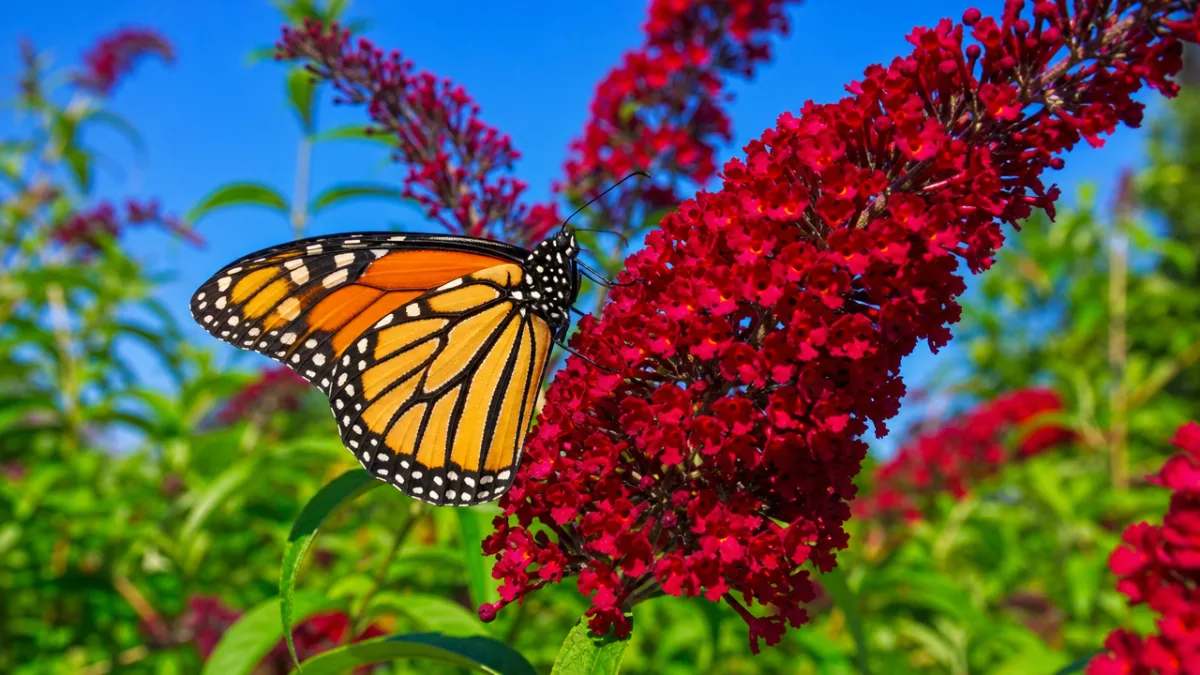
The flowers, though, are the real reason you plant this shrub. Each spike is made up of hundreds of tiny tubular blooms in a rich magenta-crimson that actually deepens toward true red when temperatures drop in fall. Depending on the light and the time of year, you might hear the color described as deep rose, cherry red, or crimson — but in any light, it reads as a warm, saturated jewel tone that genuinely commands attention. What makes it even better is the bright orange eye at the center of each tiny floret, a small detail that adds real contrast and, as it turns out, is incredibly effective at luring in pollinators.
Then there’s the scent. Miss Molly smells wonderful — sweet and honey-like in the way all Buddleia do, but with a warm, slightly spicy edge that a lot of gardeners describe as nostalgic, like something they can’t quite place but immediately love. On a calm summer evening, that fragrance can travel surprisingly far, which makes her an excellent choice near a patio, a seating area, or an open window. Having that scent drift inside on a warm night is one of those small pleasures that makes gardening genuinely worthwhile.
Growing Conditions and Soil Requirements
The good news about Miss Molly is that she’s not fussy. She’s hardy in USDA zones 5 through 9, which covers most of the continental US, so the vast majority of gardeners can grow her without any special accommodation. In colder zones near the edge of her hardiness range, she may die back to the ground over winter — but don’t panic, because she’ll almost always push up again from the roots in spring, often coming back even more vigorous than before.
For soil, Miss Molly does best in well-draining ground that’s moderately fertile with a neutral to slightly alkaline pH. Heavy clay that holds water is her real nemesis, especially in winter when the plant is dormant and sitting in soggy soil can cause root rot. Sandy soil is fine for drainage but usually needs some organic matter worked in to keep nutrients available through the heat of summer. The sweet spot is a good loamy soil that drains well but doesn’t dry out completely between rains.
Sunlight is the one thing you absolutely cannot compromise on with Miss Molly. She needs full sun — at least six hours of direct light per day, and she’s happiest with eight or more. In partial shade she’ll survive, and she might even flower a little, but you’ll end up with fewer blooms, washed-out color, and a plant that grows leggy and loose rather than full and rounded. Picking the right spot, one with plenty of sun, is honestly the most important decision you’ll make when planting her.
Planting and Establishment
Spring is the ideal time to get Miss Molly in the ground — after your last frost date, so she has a full growing season to settle in before her first winter. If you’re in a milder climate, zones 7 through 9, fall planting works well too. Container-grown plants from nurseries like Longfellow’s Greenhouses are the easiest option and can go in virtually any time the ground is workable and temperatures aren’t extreme.
When you dig the planting hole, make it two to three times as wide as the root ball but no deeper. That wide opening loosens the surrounding soil and gives roots room to spread outward, which is exactly what you want for a strong, stable shrub. Backfill with the original soil, mixing in a little compost if what you’ve got is on the poor side, then water thoroughly. One thing to avoid: don’t over-enrich the backfill soil. If the planting hole is dramatically more fertile than the surrounding ground, roots tend to stay in that comfortable pocket instead of venturing out — and that’s not what you want long-term.
Once she’s in, a two-to-three-inch layer of organic mulch around the base does a lot of good — it moderates soil temperature, holds moisture, keeps weeds down, and breaks down over time to feed the soil. Just keep it a few inches away from the main stem. That first growing season, stay on top of watering during dry spells, because Miss Molly’s drought tolerance really kicks in once she’s established a deep root system, and that takes time.
- Plant in full sun with a minimum of six hours of direct light daily for best flowering performance.
- Ensure excellent soil drainage to prevent root rot, especially in clay-heavy soils.
- Water newly planted specimens deeply and consistently throughout the first growing season.
- Apply a two-to-three-inch mulch layer around the base to conserve moisture and regulate soil temperature.
- Avoid fertilizing heavily at planting; wait until the second season to begin a modest feeding program.
Pruning, Care, and Maintenance
Pruning is probably the most important maintenance task to understand with Miss Molly, and once you know the reasoning behind it, it makes complete sense. Buddleia blooms on new wood — meaning the flower spikes come from growth the plant puts out in the current season. That’s why a hard cutback in late winter or early spring, right as new growth starts showing at the base, leads to the most vigorous new shoots and the best flowering. A lot of experienced gardeners cut Miss Molly down to twelve to eighteen inches from the ground every spring and are consistently rewarded with an exceptional display.
During the blooming season, deadheading makes a real difference. When a spent flower spike starts to fade and brown, cut it back to a pair of healthy leaves or a lateral shoot that’s starting to emerge, and the plant will push out a new flowering shoot in its place. In regions with a long growing season, keeping up with deadheading can stretch Miss Molly’s bloom time from midsummer well into autumn — months of continuous color and fragrance rather than a single flush that fades out.
Beyond pruning, she’s a remarkably easy-going plant once she’s found her footing. A good soak during extended dry spells keeps her performing well, but established plants handle drought considerably better than most people expect. For fertilizer, one application of a balanced, slow-release granular formula in early spring is usually all she needs for a full season. Resist the urge to feed heavily, especially with high-nitrogen products — that pushes lush leafy growth at the expense of flowers, which is the opposite of what you’re after.
Wildlife Value and Ecological Benefits
“Butterfly Bush” isn’t just a catchy name — Miss Molly genuinely earns it. Those dense, nectar-rich spikes and that irresistible fragrance attract an impressive range of butterfly species, and if you plant one in a good sunny spot, you’ll likely see Monarchs, Swallowtails, Painted Ladies, Skippers, and others visiting in real numbers throughout the summer. For gardeners who want to do something meaningful for butterfly populations, this is one of the most effective plants you can add.
It’s not just butterflies, either. Native bees, honey bees, hummingbird moths, and all kinds of other pollinators show up at Miss Molly’s blooms regularly. What makes her particularly valuable ecologically is the timing — she’s blooming when a lot of other flowering plants have already wrapped up for the year, filling a gap in the nectar calendar when food resources for pollinators are getting harder to find. That late-season contribution is genuinely significant, not just pretty to watch.
It’s also worth mentioning that the invasive potential concerns some gardeners have heard about butterfly bushes are largely aimed at older varieties. Miss Molly and other modern cultivars have been bred with significantly reduced seed fertility, which means the aggressive self-seeding and naturalization that caused problems in places like the Pacific Northwest is much less of a concern. Gardeners who were previously hesitant can feel a lot more comfortable planting her knowing that work has been done to address those issues.
- Monarchs and other migratory butterflies rely on high-calorie nectar sources like Miss Molly during their seasonal journeys.
- Native bees and honey bees benefit from the abundant, accessible nectar produced throughout the long blooming season.
- Hummingbirds occasionally visit Miss Molly blooms, attracted by both the color and the nectar concentration.
- The late-season bloom period fills a critical gap when many other nectar sources have declined or finished.
- Reduced seed fertility in modern cultivars minimizes invasive spread concerns in sensitive ecosystems.
Landscape Design Applications
Miss Molly is one of those plants that plays well with a lot of others while still being confident enough to hold her own. Her rich crimson pairs beautifully with the soft blues and purples of salvias, catmint, and ornamental grasses — combinations that feel bold but never jarring. She’s equally at home next to yellow-flowering plants like rudbeckia, coreopsis, or black-eyed Susan, where the complementary contrast creates that energetic, high-summer feeling that makes a garden feel genuinely alive.
As a standalone specimen in an island bed or at a focal point, she delivers all season. While other plants in the border come and go, Miss Molly keeps producing color and fragrance from midsummer into fall, which earns her real estate in any serious planting plan. In a mixed shrub border she adds texture, wildlife interest, and strong color without crowding her neighbors — her naturally tidy growth habit is a real asset there. She’s also a solid choice along fences, walls, or property lines, where she creates an attractive, wildlife-friendly screen without becoming a maintenance headache.
If you’re short on ground space, it’s worth knowing that Miss Molly can work in containers too. You’ll need a large one — fifteen to twenty gallons at minimum — and you’ll need to water and feed more often than you would with a ground-planted shrub. In colder climates, container plants need a bit more winter protection. But for urban gardeners or anyone working with a patio or terrace rather than a traditional yard, this flexibility means Miss Molly’s charms aren’t off the table just because your space is limited.
Where to Find and Purchase Miss Molly
Miss Molly has become widely available at independent garden centers, specialty nurseries, and mail-order suppliers across the country and beyond. Longfellow’s Greenhouses, which has been one of her biggest advocates, is exactly the kind of knowledgeable independent nursery where you’ll get a well-grown plant and real advice about how to care for it — not just a tag in a pot. That matters more than people sometimes realize, because a plant that’s been properly hardened off and well cared for before it gets to you is going to establish much more reliably than one that hasn’t.
When you’re actually picking a plant at the nursery, take a good look before you buy. The foliage should be healthy gray-green without any yellowing, spots, or visible pest damage. Tip the pot and check the drainage holes — you want to see some white roots, which signals a well-developed root system, but not a densely compacted tangle of roots that have been circling too long. A plant with one or two open flower spikes is ideal: it confirms you’ve got the right variety, gives you instant color, and still has plenty of vigor left for getting established in a new spot.
If you don’t have a great local source, reputable mail-order nurseries are a perfectly good alternative, and many of them feature Miss Molly in their pollinator or butterfly garden collections. Just pay attention to what size plant you’re ordering — bare-root or plug specimens are smaller and may take a season to hit their stride visually. Whatever route you take to get her, Miss Molly is the kind of plant that pays you back season after season in beauty, fragrance, and a steady stream of butterflies. Most gardeners find that’s more than worth it.








What do you think?
It is nice to know your opinion. Leave a comment.