










Cheap Crafts to Make and Sell: Your Complete Guide to Turning Creativity into Cash
Why Selling Handmade Crafts Is a Smart Side Hustle
Let’s be real — most of us could use a little extra income, but the idea of taking on a second job feels exhausting. That’s exactly why selling handmade crafts has become such a popular move. You set your own hours, work from home, and the startup costs are often surprisingly small. The handmade marketplace has genuinely taken off in recent years, and platforms like Etsy, Amazon Handmade, and local farmers markets have made it easier than ever to reach buyers who are actively looking for something unique and handcrafted instead of another mass-produced item off a shelf.
What makes this kind of business so appealing is how low the barrier to entry really is. You don’t need a storefront, employees, or a pile of startup capital. A lot of the most profitable crafts start with just a few dollars’ worth of supplies and end up selling for ten or twenty times that once they’re finished. The trick is figuring out which crafts people actually want to buy, which ones don’t take forever to make, and where to find materials without overpaying.
And honestly, there’s something about selling your own handmade work that feels different from most side hustles. Watching someone love something enough to buy it — something you made with your own hands — is genuinely satisfying in a way that’s hard to put into words. Whether you’ve been crafting for years or you’re just now picking up a glue gun for the first time, there’s room for you in this market. This guide is here to walk you through where to start, what to make, and how to price things so your creative hobby actually puts money in your pocket.
The Best Cheap Crafts to Make and Sell for Beginners
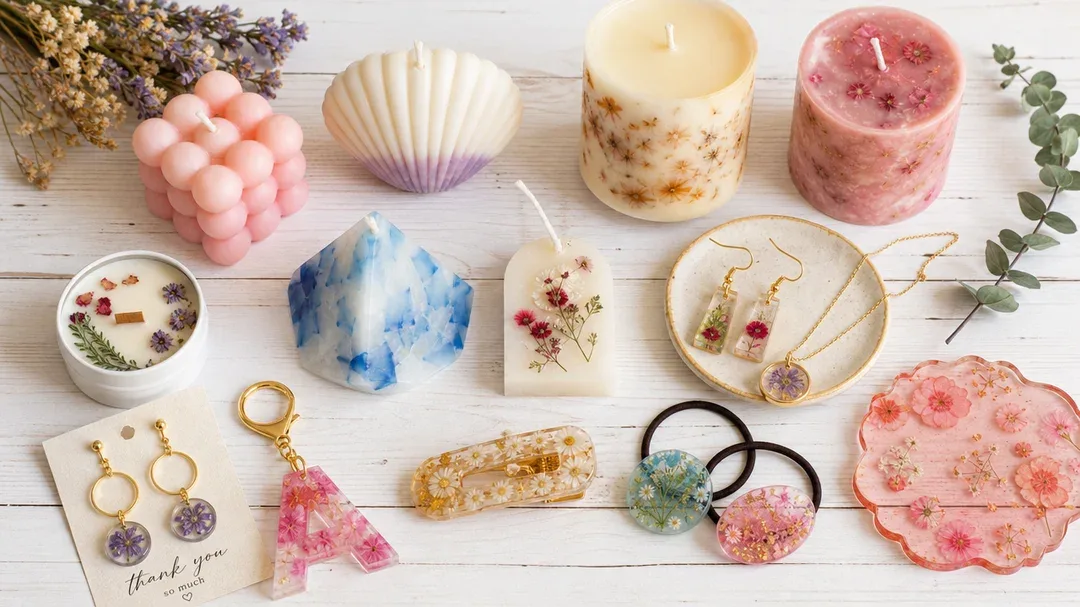
When you’re just getting started, you want crafts that are easy to pick up, don’t cost much to make, and still feel special enough that people are happy to pay for them. Candle making is one of the most popular choices, and for good reason. You can buy wax, fragrance oils, wicks, and containers in bulk for a pretty modest investment, and a finished candle can sell anywhere from twelve to forty dollars. Scented soy candles are especially in demand because people tie them to self-care and home vibes — so they’re willing to spend on something that might cost you just two or three dollars to make.
Resin jewelry and accessories are another great starting point. Epoxy resin kits are cheap and easy to find, and you can make so many different things with them — earrings, pendants, keychains, bookmarks, you name it. A single pair of resin earrings might cost you under a dollar in materials, but once you’ve added some dried flowers, glitter, or interesting color combinations, they can sell for fifteen to thirty dollars on a craft marketplace. The better you get at it, the more you can experiment with complex molds and designs without spending much more money.
It’s also worth talking about printables and digital downloads, because they’re a bit of an outlier in the best way. Designing planners, wall art, greeting cards, or party decorations in something like Canva means you create the file once and sell it over and over again with essentially zero ongoing cost. It’s less about physical crafting and more about design, but the profit margins are extraordinary. Plenty of Etsy sellers are still earning money from digital products they made years ago — it’s one of the most scalable options out there once you get rolling.
Sourcing Materials Without Breaking the Bank
Your profit margins live and die by what you spend on materials, so learning to source smart is genuinely one of the most important skills you can develop. The good news? Going cheap doesn’t have to mean going low quality. Buying in bulk is the single biggest thing you can do to bring your cost per item down. Sites like AliExpress, Alibaba, and Amazon all offer real discounts when you order larger quantities of things like wax, ribbon, beads, felt, or wood blanks. If you’re making candles, for example, buying a 25-pound bag of soy wax instead of individual blocks can cut your wax cost by 60% or more — and that difference adds up fast when you’re selling dozens of candles.
Thrift stores, dollar stores, and discount craft retailers are also seriously underrated. Dollar Tree in particular has developed a devoted following in the crafting community because you can find picture frames, glass vases, baskets, and all kinds of decorative bits for next to nothing. Plenty of successful sellers have built entire businesses around picking up cheap thrift store finds and transforming them into desirable home décor through paint, decoupage, or simple embellishments. The transformation is where the value comes from — not the raw materials.
Joining online crafting communities and local groups is another move that pays off in more ways than one. Crafters trade and sell surplus supplies to each other all the time, often at a fraction of retail price, and group buying arrangements let you share bulk discounts with others. Facebook groups, Reddit communities like r/crafts, and local hobby clubs are great places to find these kinds of deals. On top of the savings, these communities are goldmines for supplier recommendations, technique tips, and real talk about what’s actually selling right now.
And don’t sleep on seasonal sales at Michaels, Hobby Lobby, and Jo-Ann Fabrics. These stores regularly clear out seasonal merchandise at 50–70% off, which means a crafter with a little foresight can stock up on Christmas supplies in January and Valentine’s Day materials in February for a fraction of what they’d normally cost. When those holidays come around the following year, your margins look a whole lot better than everyone who bought materials at full price last minute.
Pricing Your Crafts to Maximize Profit
Underpricing is probably the most common mistake new craft sellers make, and it’s easy to fall into. A lot of beginners just add up their material costs and tack on a small markup, which sounds reasonable until you realize they’ve completely left out the value of their time, marketplace fees, packaging, shipping supplies, and the skill that went into making the thing. The result is a shop that gets sales but doesn’t actually generate real income — or worse, one that quietly loses money once everything is accounted for. Getting your pricing right is genuinely one of the most important things you can do for your business.
A formula that works well for many handmade sellers is to multiply your total material cost by three, then add your labor based on a fair hourly rate. Say a macramé wall hanging costs you four dollars in supplies and takes 90 minutes to make, and you’re valuing your time at $15 an hour — your base price would come out to around $34 before fees and packaging. From there you’d layer in a buffer for platform fees (Etsy charges around 6.5% per sale plus listing fees) and make sure you’re walking away with a profit that actually feels worth your while.
Before you finalize anything, do your market research. Spend some time browsing Etsy and similar platforms to see what comparable items are selling for, and focus on sellers who have strong reviews and consistent sales — they’ve already done the homework. If buyers are regularly purchasing those items at a certain price point, that’s your signal the market will support it. Resist the urge to undercut everyone just to get sales; you’ll end up working harder for less money. Instead, put your energy into better photography, nicer packaging, and product descriptions that help people understand why your work is worth the price.
The Most Profitable Crafts by Category
Home décor is one of the most reliable categories in the handmade market — it sells year-round and people are genuinely willing to spend on pieces they love for their homes. Hand-painted signs, macramé wall hangings, wreaths, and decorative pillow covers all do well because buyers think of them as investments in their space. A simple wooden sign in a farmhouse style might cost you three dollars and twenty minutes, but sell consistently for $25–$40. Seasonal items — Halloween wreaths, Christmas centerpieces, spring arrangements — can go even higher because of that limited-time, now-or-never appeal.
Gifts and stationery are another category with real earning potential. Handmade greeting cards, gift tags, and personalized items never really go out of style because there’s always a birthday, holiday, or milestone coming up for someone. Personalization is especially powerful here — slapping someone’s name or a custom message on something makes it feel genuinely special, and buyers will pay more for it. Sellers who offer personalization consistently report better conversion rates and the ability to charge a premium, because a custom item just feels more meaningful than anything you’d find in a store.
Wearable crafts and accessories cover a huge range of things — hand-stamped metal jewelry, fabric headbands, macramé bracelets, embroidered patches — and the Etsy fashion market is enormous. Shoppers there are specifically looking for something that doesn’t feel mass-produced. Hair accessories have had a real moment recently, with scrunchies, headbands, and claw clips in trending fabrics flying off virtual shelves. A set of five fabric scrunchies might cost under two dollars to make and sell for $12–$18 — a margin that gets really attractive when you’re cranking them out in batches.
- Candles and wax melts — High demand, excellent margins, and easy to scale with bulk material purchasing.
- Macramé items — Wall hangings, plant hangers, and keychains remain extremely popular in bohemian and minimalist home aesthetics.
- Resin crafts — Jewelry, coasters, keychains, and bookmarks offer nearly unlimited creative variation at very low material cost.
- Personalized gifts — Mugs, tote bags, cutting boards, and ornaments with custom names or messages command premium prices.
- Wreaths and seasonal décor — High perceived value items that sell consistently, especially around major holidays.
- Soap and bath products — Natural and handmade soaps, bath bombs, and scrubs are enormously popular in the wellness market.
- Fabric accessories — Scrunchies, headbands, tote bags, and zipper pouches are quick to produce and sell in high volume.
Where to Sell Your Crafts and How to Grow Your Business
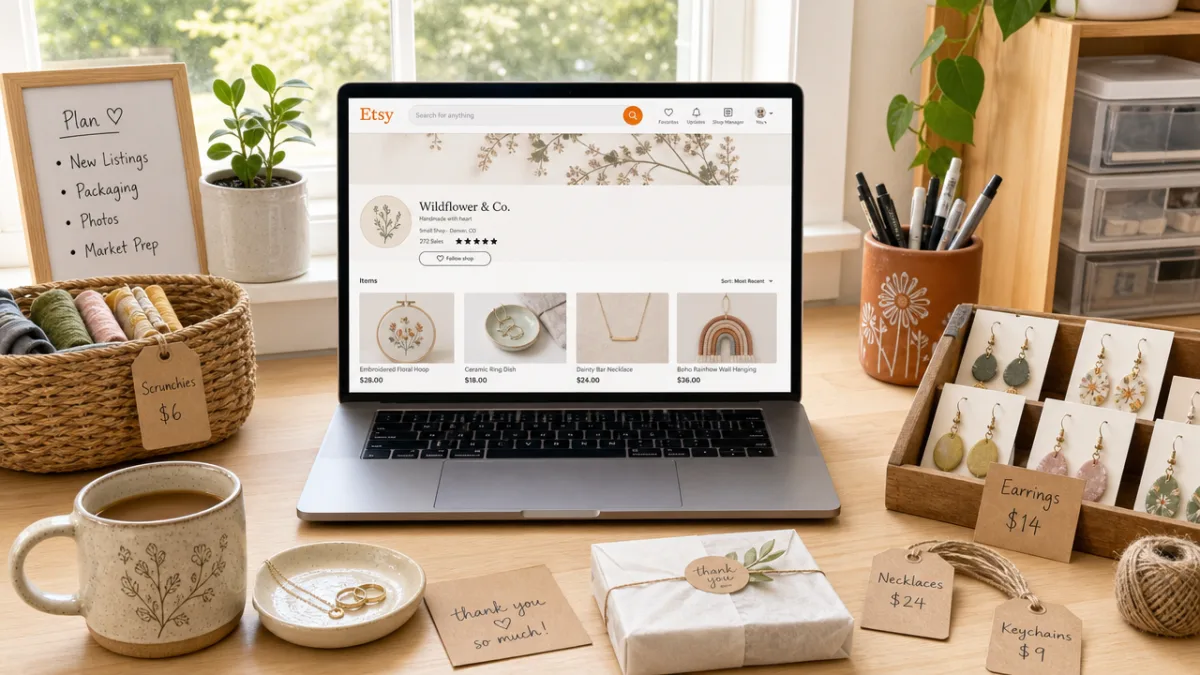
Where you sell matters just as much as what you’re selling. Etsy is still the go-to platform for handmade goods, with over 90 million active buyers specifically looking for artisan and vintage products. Getting your shop set up is pretty straightforward and inexpensive, though you will need to put some real effort into product photography and descriptions. Etsy’s search is keyword-driven, so using the right tags, titles, and category selections is the difference between a listing that gets found and one that just sits there. It’s worth taking the time to learn how the platform’s SEO works.
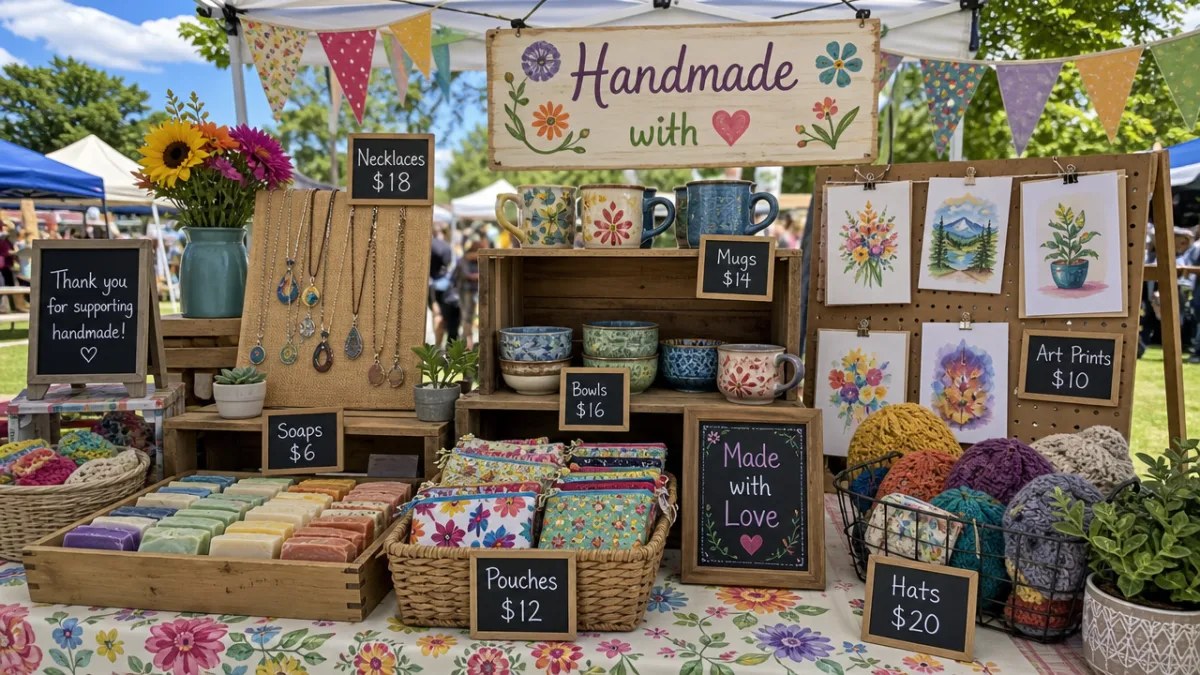
Local selling is also worth taking seriously, especially when you’re starting out. Farmers markets, craft fairs, holiday bazaars, and pop-up events let you talk directly with customers, get immediate feedback, and build a loyal local following — all without paying online platform fees. For higher-priced items especially, in-person selling works really well because people like to see and touch something before committing. Showing up consistently at recurring markets means people start to recognize you, and those repeat customers are incredibly valuable.
Social media — particularly Instagram, Pinterest, and TikTok — has become a must-have tool for craft sellers who want to grow without spending a lot on advertising. Process videos, where you show yourself actually making something, consistently perform well on TikTok and Instagram Reels and tend to attract both potential buyers and fellow crafters. Pinterest is especially good for driving traffic to Etsy listings since it functions like a visual search engine — people discover something they love and click through to buy it. Posting consistently and genuinely engaging with your audience can build real organic growth over time.
As your business picks up, try to expand your product line intentionally rather than just adding things randomly. Pay attention to what sells consistently, what gets the most questions, and what earns the best reviews — then build on those winners. A candle seller might naturally grow into wax melts, reed diffusers, and room sprays to create a whole home fragrance line. A jewelry maker might expand from earrings into matching necklaces and bracelets and offer bundle deals that nudge up the average order value. Growing based on what your actual customers are responding to is so much more effective than throwing things at the wall and hoping something sticks.
One more thing worth doing from day one: start building an email list. Unlike your social media followers, your email subscribers are yours no matter what — no algorithm update can take them away from you. Offer a small incentive like a discount code or a free printable to get people to sign up, then send regular newsletters with new products, behind-the-scenes peeks, and exclusive offers. Email marketing consistently delivers the best return of any digital marketing channel, and even a few hundred engaged subscribers can drive meaningful sales during a product launch or holiday push. Your email list is genuinely one of your most valuable long-term assets, so the sooner you start building it, the better off you’ll be.








What do you think?
It is nice to know your opinion. Leave a comment.