










What Is Mid Century Modern Style? Understanding the Aesthetic
Mid century modern design is one of the most beloved and enduring interior styles of the twentieth century, emerging primarily between the 1940s and 1970s. Rooted in post-war optimism and a desire to create functional yet beautiful living spaces, this style blends clean lines, organic forms, and a seamless relationship between indoor and outdoor environments. It was a movement that celebrated craftsmanship while embracing new materials like molded plywood, fiberglass, and bent metal, making furniture both sculptural and practical at the same time.
What makes mid century modern so appealing today is its remarkable versatility. Whether you live in a sprawling suburban home or a compact city apartment, the principles of this style translate beautifully across different scales and budgets. The aesthetic avoids unnecessary ornamentation, favoring instead the natural beauty of wood grain, the warmth of earthy tones, and the elegance of simple geometric shapes. This stripped-back philosophy creates rooms that feel both sophisticated and genuinely livable, a combination that many contemporary styles struggle to achieve.
At its core, mid century modern is about balance — between form and function, between retro nostalgia and forward-thinking design, between bold statement pieces and restrained simplicity. Understanding these tensions is the key to successfully decorating a living room in this style. It is not about filling a room with vintage furniture or replicating a museum exhibit, but about capturing a spirit: one that is warm, intelligent, and quietly confident in its own aesthetic choices.
Key Characteristics That Define the Look
Several defining characteristics separate mid century modern from other vintage-inspired styles. Clean horizontal lines dominate furniture silhouettes, with sofas sitting low to the ground and tables featuring tapered, angled legs that give pieces a light, almost floating appearance. Organic curves borrowed from nature appear in chair backs, lamp shades, and decorative objects, softening what might otherwise feel like a too-rigid geometric scheme. Together, these elements create a visual rhythm that is orderly without being cold or clinical.
Color plays a critical role in establishing an authentic mid century modern atmosphere. The palette typically draws from nature, featuring warm mustard yellows, burnt oranges, olive greens, teal blues, and rich chocolate browns. These are grounded by neutral backdrops of warm white, cream, or soft gray, which allow bolder accent colors to sing without overwhelming the space. Avoiding the stark, cool whites of minimalism is important here — the warmth of the palette is what gives mid century rooms their characteristic coziness and inviting glow.
Furniture Selection: Choosing the Right Pieces for Your Living Room
Furniture is the foundation of any mid century modern living room, and selecting the right pieces will determine whether the room achieves its intended character. The iconic designs of this era — think the Eames Lounge Chair, the Egg Chair by Arne Jacobsen, or the Barcelona Chair by Mies van der Rohe — remain as compelling today as when they were first created. While original vintage pieces carry enormous charm and historical value, well-made reproductions or vintage-inspired designs from contemporary manufacturers can deliver the same visual impact at a fraction of the cost, making the style accessible to apartment dwellers and budget-conscious decorators alike.
When selecting a sofa, look for low-profile designs with clean, straight backs and solid-color upholstery in period-appropriate fabrics. Boucle, velvet, and wool tweed in shades of camel, teal, olive, or warm rust all feel authentic to the era. Avoid overstuffed, overly casual sectional sofas, which undermine the tailored elegance that defines mid century modern. Instead, opt for a streamlined three-seater or a paired combination of a sofa and a complementary accent chair, creating a conversational seating arrangement that feels both stylish and socially inviting.
Accent chairs offer one of the best opportunities to introduce personality into a mid century modern living room. A sculptural single chair in a bold color or interesting material — think a tulip-style molded plastic chair or a teak-framed armchair with a patterned cushion — can act as a focal point that anchors the entire room. Coffee tables with tapered legs and surfaces in wood, smoked glass, or marble are equally important, providing practical surface space while contributing to the overall geometric elegance of the arrangement.
Mixing Vintage Finds with New Purchases
One of the most rewarding aspects of decorating in the mid century modern style is the treasure hunt element involved in sourcing vintage pieces. Thrift stores, estate sales, antique markets, and online platforms like eBay or Facebook Marketplace regularly yield genuine mid century furniture at surprisingly reasonable prices. A teak sideboard with tapered legs, a set of original dining chairs with molded plywood seats, or a vintage arc floor lamp can all be found with patience and a trained eye, adding layers of authenticity that no new purchase can fully replicate.
Mixing old and new is not only acceptable in this style — it is actively encouraged. The goal is to create a room that feels curated and lived-in rather than showroom-perfect. Pair a genuinely vintage side table with a contemporary sofa upholstered in a period-appropriate fabric. Layer a new geometric rug beneath an inherited mid century armchair. This blending of timelines creates a space that tells a personal story while remaining visually coherent, which is ultimately far more interesting than a room furnished entirely from a single source or era.
Color Palettes and Materials: Creating Warmth and Character
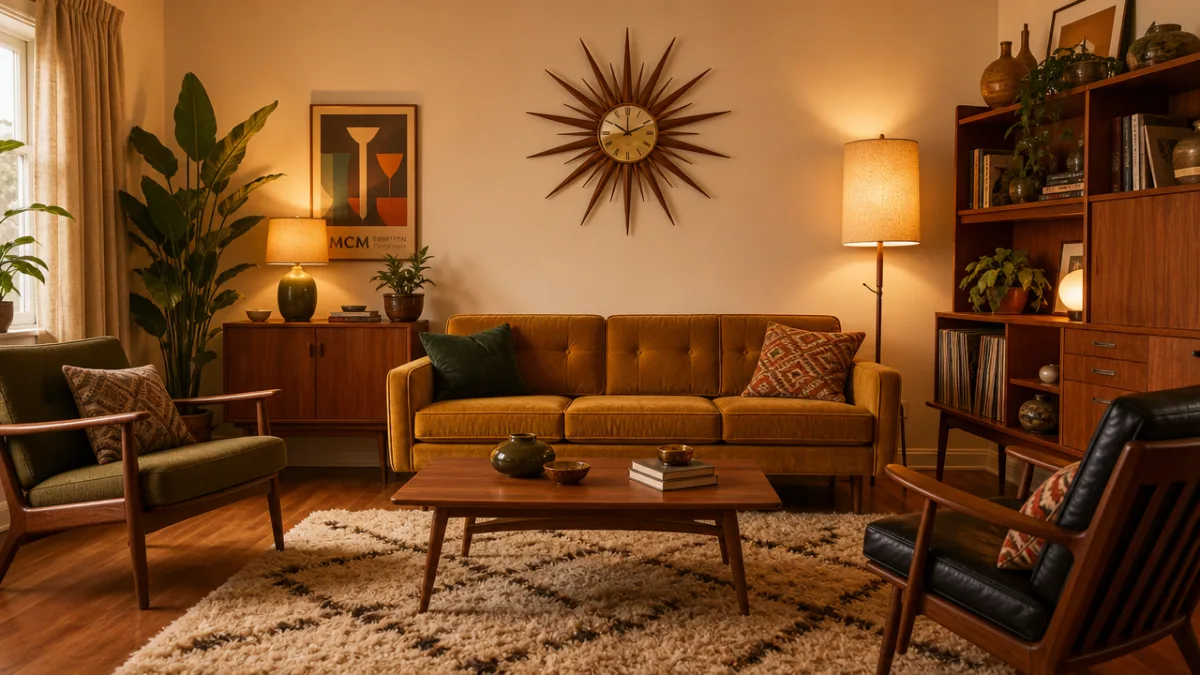
Choosing the right color palette is perhaps the single most transformative decision you will make when decorating a mid century modern living room. The colors of this era are warm and earthy, drawn from the natural world and reflecting the optimistic, sun-drenched spirit of post-war American and Scandinavian design. A foundational wall color in warm white, soft cream, or pale terracotta sets the tone immediately, creating a backdrop that allows wood tones and upholstery colors to glow rather than recede. Avoid anything too stark or cool, as these shades work against the cozy, inviting atmosphere that defines the style at its best.
Accent colors should be introduced thoughtfully and deliberately. The classic mid century modern palette pairs warm neutrals with bold, saturated accents: a teal throw pillow on a camel sofa, a mustard yellow armchair against a warm white wall, or a terracotta ceramic vase on a walnut sideboard. These color combinations feel both retro and surprisingly fresh, which explains why they have translated so well into contemporary interiors. The key is restraint — choose two or three accent colors and repeat them throughout the room in different proportions, creating a sense of visual harmony without monotony.
Materials are equally important in achieving the right atmosphere. Warm-toned wood — walnut, teak, and oak — should appear throughout the room in furniture, flooring, and decorative objects. These natural materials bring texture and organic warmth that no paint color or fabric can replicate on its own. Leather in caramel, cognac, or saddle tones adds sophistication, while natural fiber rugs in jute, sisal, or wool provide grounding texture underfoot. Brass and gold-toned metal hardware and light fixtures introduce a touch of glamour that lifts the overall scheme without tipping into ostentation.
Textiles and Layering for a Cozy Retro Feel
Textiles are what transform a stylistically correct room into one that actually feels cozy and inviting. In a mid century modern living room, the right combination of rugs, throw pillows, curtains, and blankets can add considerable warmth and personality without compromising the clean lines of the furniture. Look for geometric patterns — diamonds, hexagons, abstract sunbursts — in period-appropriate colors. These patterns appear on cushions, area rugs, and even curtain fabrics, injecting graphic interest while remaining true to the visual language of the era.
Curtains in particular deserve careful attention. Floor-length drapes in a solid warm color or subtle texture add height and drama to a living room, making even modest apartment spaces feel more expansive and considered. Avoid heavy, fussy window treatments in favor of simple tab-top or eyelet panels in linen, cotton, or a lightweight wool blend. When natural light pours through these curtains, it creates that quintessential mid century glow — warm, golden, and utterly inviting — that makes these spaces so photographed and so universally admired.
Lighting Design: Setting the Mood in a Mid Century Living Room
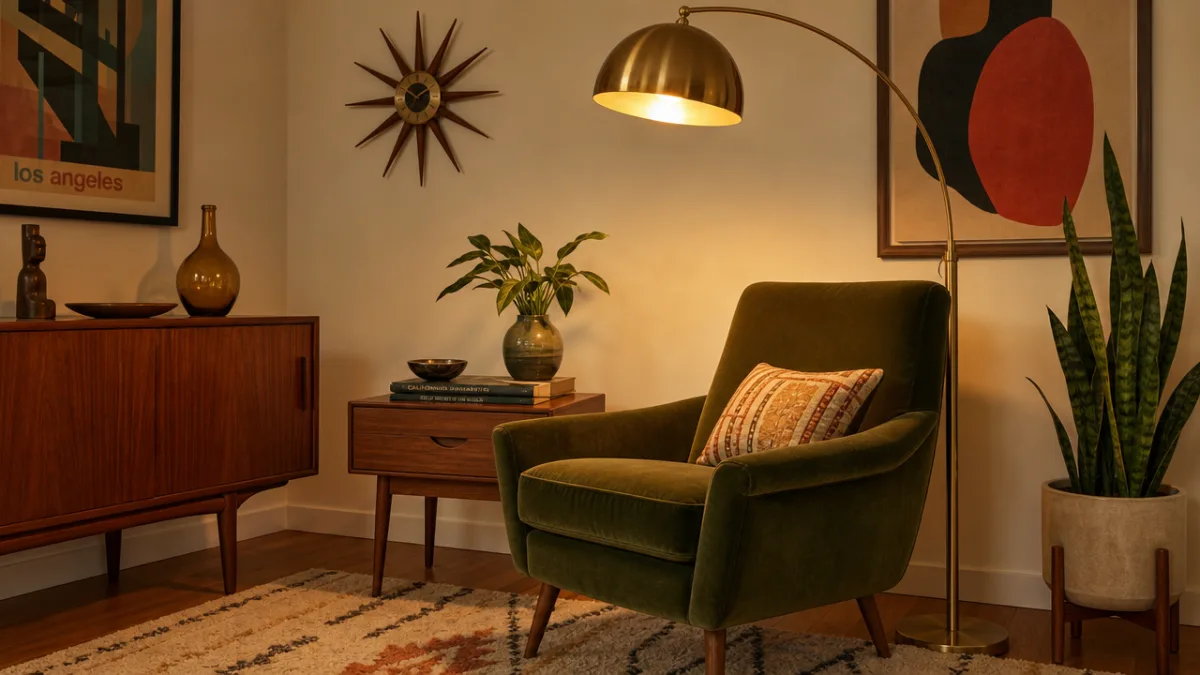
Lighting is one of the most powerful and frequently underestimated tools in interior design, and in a mid century modern living room, it takes on particular importance. The architects and designers of the mid century era understood that artificial light could be as sculptural and expressive as any piece of furniture, and they designed accordingly. Iconic lighting from this period — the Nelson Bubble Lamp, the Arco Floor Lamp, the Sputnik chandelier — remains in production today precisely because these designs are so successful at combining form and function in a single object.
Layering light sources is essential for creating the right atmosphere. A central overhead fixture should be complemented by floor lamps, table lamps, and if possible, wall-mounted sconces, allowing you to adjust the mood of the room at different times of day and for different activities. A warm arc floor lamp positioned beside a reading chair creates an intimate pool of light perfect for evening relaxation, while a statement pendant above a sideboard provides both task lighting and visual focus. Avoiding harsh, flat overhead illumination in favor of multiple layered sources is one of the easiest ways to immediately elevate any interior.
Bulb selection matters more than many people realize. Warm white LED bulbs in the 2700K to 3000K color temperature range replicate the amber glow of the incandescent bulbs that were standard during the mid century era, and they work beautifully with warm wood tones and earthy upholstery colors. This golden warmth is a fundamental part of the mid century modern atmosphere — it is what makes these rooms feel so different from the cooler, brighter interiors favored by minimalist and Scandinavian-inspired styles of more recent vintage.
Statement Lighting as Decorative Art
In mid century modern interiors, a light fixture is never merely a functional object — it is an opportunity to make a design statement and introduce a moment of visual drama into an otherwise restrained scheme. A Sputnik-style chandelier with multiple arms radiating outward like the spokes of a starburst brings instant period authenticity to any room, while a pair of sculptural ceramic table lamps in a bold glaze color can tie together the accent palette of an entire space. These fixtures are conversation pieces as much as they are light sources, reflecting the era’s delight in clever, expressive design.
When sourcing statement lighting, consider both original vintage pieces and contemporary reproductions. Original mid century pendant lamps and floor lamps appear regularly at estate sales and antique dealers, often at prices that reflect their age and wear rather than their considerable design value. Alternatively, many lighting manufacturers produce faithful reproductions of iconic designs that offer the same visual impact with modern wiring and safety compliance. Either approach can yield spectacular results — what matters most is choosing pieces that feel sculptural, warm, and genuinely expressive rather than generic or mass-produced.
Decorating with Art, Plants, and Accessories
Once the furniture, colors, and lighting are in place, it is the accessories and decorative objects that breathe final life into a mid century modern living room. This is where personal taste and creative expression have the most room to play, and where a room transitions from a stylistic exercise into a genuinely personal space. Mid century modern interiors are not minimalist in the strict contemporary sense — they celebrate objects and collections, favoring curated displays of meaningful things over sterile emptiness. The key is thoughtful curation: every object should earn its place through beauty, meaning, or both.
Art is essential. Abstract paintings and prints in warm, earthy tones were central to mid century interior culture, and original works or quality prints in this tradition remain among the most effective ways to bring period authenticity to a living room wall. Look for abstract expressionist compositions, geometric prints, or botanical illustrations, all of which feel at home in this context. A gallery wall of smaller framed prints can be particularly effective in an apartment setting, creating a focal point that draws the eye and communicates the personality and interests of the occupants.
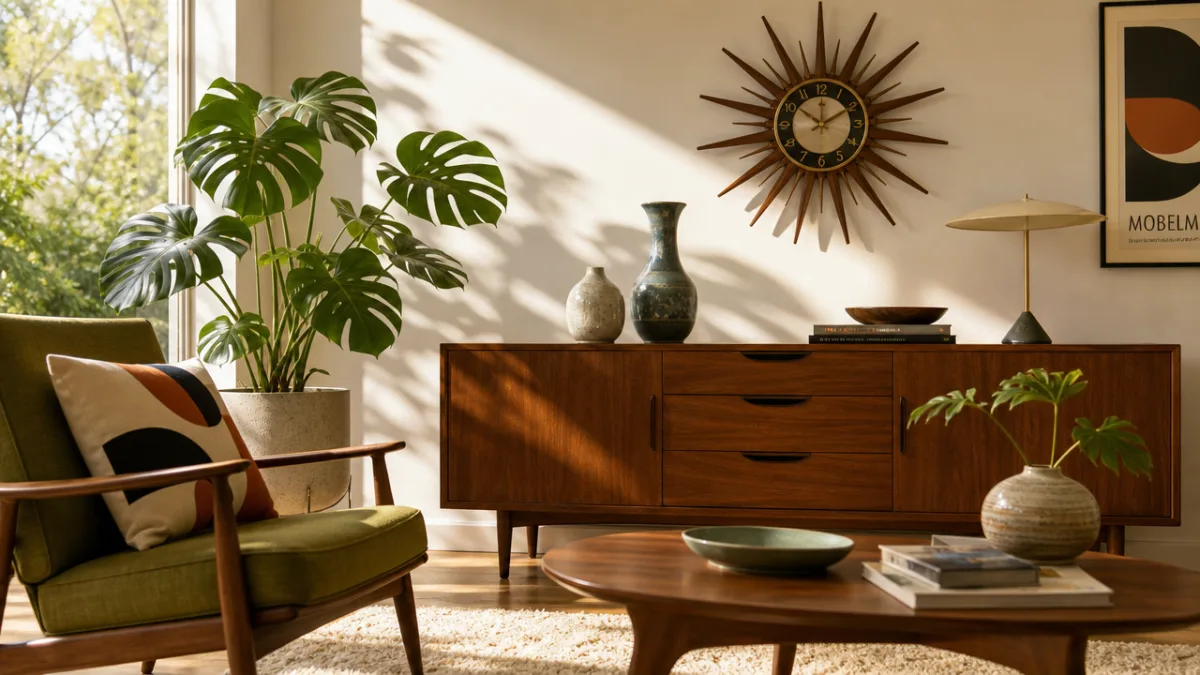
Houseplants were a beloved feature of mid century modern interiors, and they remain one of the easiest and most affordable ways to add life, color, and organic texture to a contemporary living room in this style. Large-leafed plants like the fiddle-leaf fig, monstera, rubber plant, or bird of paradise feel particularly at home in this context, their sculptural silhouettes complementing the clean lines of mid century furniture beautifully. Place them in ceramic or teak planters in warm, earthy glazes, and position them near windows where they can benefit from natural light while contributing to the overall composition of the room.
Curating a Personal Collection of Mid Century Objects
Small decorative objects — ceramics, sculptures, clocks, vases, and trays — contribute enormously to the character of a mid century modern living room. The era produced an extraordinary range of beautifully designed everyday objects, from the iconic sunburst wall clock to hand-thrown studio pottery in rich earth glazes, and collecting these pieces over time creates a room that feels deeply personal and genuinely connected to the period. Display them on sideboards, shelves, and coffee tables in small, thoughtfully arranged groups rather than scattering them randomly across the room.
Books are another key accessory in mid century modern interiors. Coffee table books on architecture, design, travel, and art are both decorative and functional, their spines adding color and visual texture to tabletop arrangements. Stack them in small piles alongside a ceramic object or a low vase of dried flowers for a relaxed, intellectual atmosphere that feels authentically mid century in spirit. The goal throughout is to create a room that appears to have been assembled gradually and lovingly over time, rather than purchased wholesale in a single shopping trip.
Making It Work in a Small Apartment: Cozy Retro Decorating on a Budget
One of the most encouraging aspects of mid century modern style is how well it adapts to small apartment living. The low-profile furniture that defines the aesthetic actually works in favor of compact spaces, keeping sightlines open and making rooms feel larger than they are. A low-slung sofa, a compact teak coffee table, and a pair of tapered-leg side tables take up no more floor space than their conventional equivalents, but they contribute enormously more visual interest and stylistic coherence. In small spaces, every piece of furniture must work hard, and mid century modern design is built on exactly that principle.
Budget is rarely a barrier to achieving a convincing mid century modern living room, particularly if you are willing to invest time in sourcing vintage and secondhand pieces. Thrift stores and charity shops regularly stock mid century furniture at prices far below their market value, simply because not every seller is aware of what they have. A patient, regular visit to these stores, combined with an active watch on online marketplaces, can yield remarkable finds: teak sideboards for a fraction of their antique store price, original upholstered chairs for the cost of a new budget alternative, or genuine ceramic pieces from the period for a few dollars each.
DIY and upcycling also play a significant role in budget-conscious mid century decorating. A wooden dresser with new tapered legs and a fresh coat of warm walnut stain becomes a convincing mid century sideboard. A plain jute rug adorned with geometric stenciling in period colors achieves the look of a specialist vintage rug without the associated cost. Reupholstering a tired but well-shaped vintage chair in a bold velvet or boucle fabric can completely transform an unremarkable secondhand find into the most characterful piece in the room. These projects require time and creativity, but they produce results that no amount of money can entirely replicate: objects with genuine history and personal investment woven into their fabric.
Final Tips for Pulling the Room Together
Achieving a cohesive mid century modern living room requires stepping back periodically to assess the overall composition rather than focusing exclusively on individual pieces. Stand in the doorway and look at the room as a whole: do the proportions feel balanced? Is there a clear focal point? Do the colors work together harmoniously? Does the room feel warm and inviting, or does something feel off? These questions are worth asking at every stage of the decorating process, as it is far easier to make adjustments along the way than to rethink an entire scheme once everything is in place.
Resist the urge to finish the room all at once. The most beautiful and characterful interiors are assembled gradually, with new pieces added as they are discovered, inherited, or saved for. Give yourself permission to live with incomplete spaces and to change your mind as your eye develops and your collection grows. A mid century modern living room is not a static destination but an ongoing creative project, one that should evolve alongside your tastes, your life, and the wonderful objects that find their way to you over time. That organic, evolving quality is precisely what makes these rooms feel so alive, so personal, and so enduringly appealing.








What do you think?
It is nice to know your opinion. Leave a comment.