










Kohleria ‘Rebecka’: The Ultimate Guide to Growing This Everblooming Houseplant
Introduction to Kohleria ‘Rebecka’
If you’re looking for a houseplant that genuinely earns its keep, Kohleria ‘Rebecka’ might just be the one. It belongs to the Gesneriaceae family — the same crowd as African violets and gloxinias — and it’s built up a loyal following among indoor gardeners for one very good reason: it blooms almost constantly when you give it what it needs. Add in the velvety, richly textured leaves and those gorgeous tubular flowers, and you’ve got a plant that turns a windowsill into something that feels genuinely tropical.
The Kohleria genus comes from the tropical and subtropical mountain forests of Central and South America, and ‘Rebecka’ is the result of years of careful breeding work. The goal was a compact, free-flowering plant that would actually thrive inside a normal home — and it delivers. Where most flowering houseplants treat you to one or two blooming seasons a year and then go quiet, ‘Rebecka’ just keeps going, which makes it feel like a much better deal than the typical options at the garden centre.
The other thing that sets ‘Rebecka’ apart is how adaptable it is once you’ve got the basics sorted. Kohleria plants do have their preferences around light, humidity, and how you water them, but this cultivar is noticeably more forgiving than a lot of its tropical relatives. Whether you’ve been collecting plants for years or you’re just starting to branch out beyond succulents and pothos, this one rewards the attention you put into it with an almost nonstop show of flowers that’s hard not to love.
Identifying the Plant: Foliage, Flowers, and Form
The first thing you notice about Kohleria ‘Rebecka’ is the leaves. They’re covered in fine, soft hairs that give them a velvety feel you don’t get from most houseplants — it’s a texture that’s almost impossible not to touch. The foliage is typically a deep, rich green, sometimes with a bronzy sheen depending on how much light the plant is getting, and the stems are upright with a slight trail to them that fills the pot out nicely. That hairy texture isn’t just for looks, either — in the plant’s native habitat it helps hold onto moisture and keeps insects at bay.
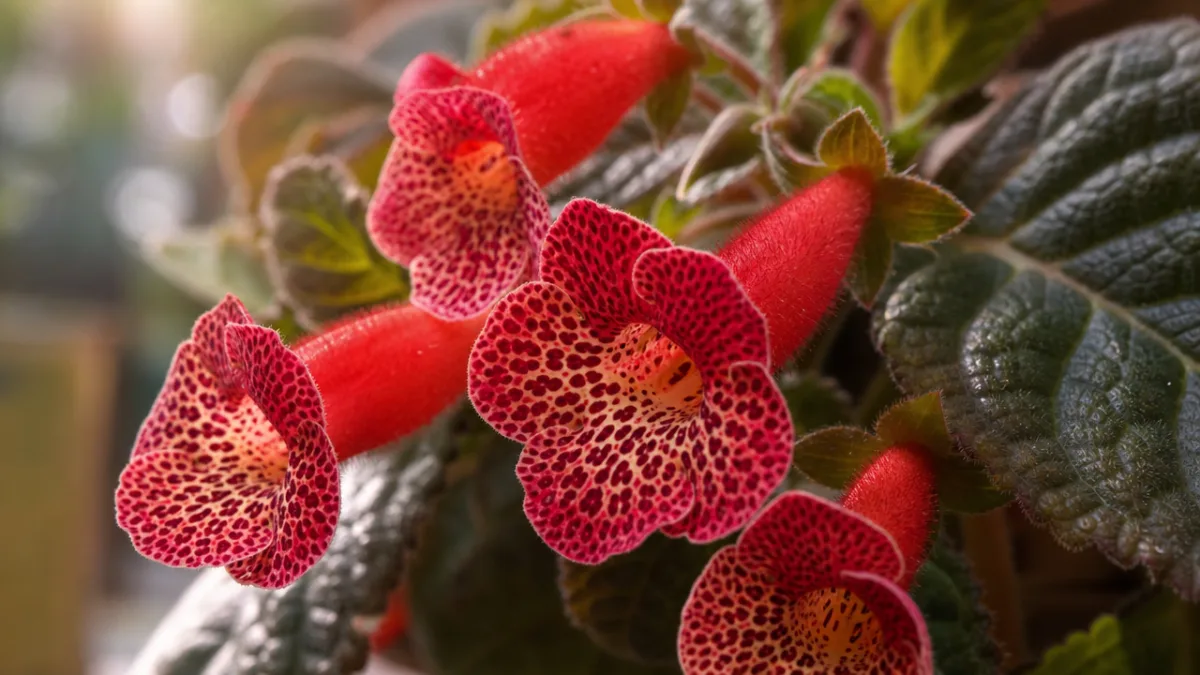
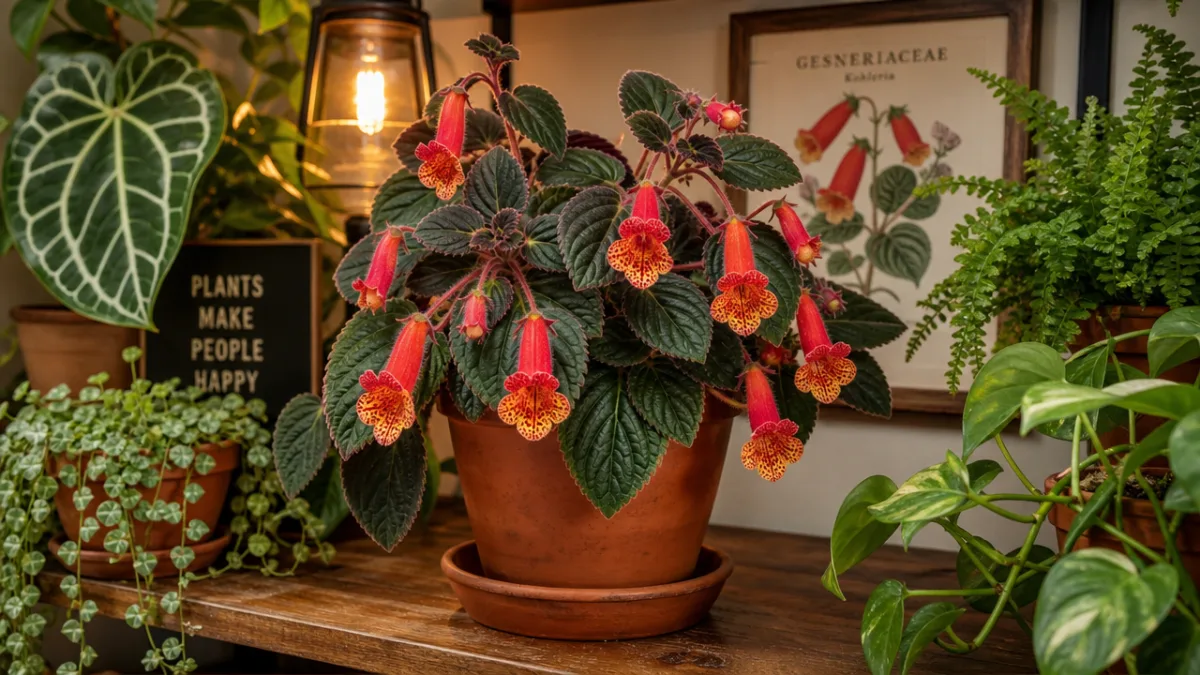
But the flowers are what ‘Rebecka’ is really about. They’re tubular, flaring out at the tip into five rounded lobes, and they come in warm reds, oranges, and pinks with intricate spotted or speckled patterns on the inside of the tube. Each flower is on the smaller side, but they come in generous clusters all along the stems, so the effect is both delicate up close and quite bold from across the room. That spotted interior is a signature of Kohleria hybrids and gives the blooms an almost orchid-like intricacy that genuinely surprises people who haven’t seen one before.
As a whole plant, ‘Rebecka’ usually reaches around 30 to 45 centimetres in a standard pot, though you can keep it more compact with a bit of occasional pinching. It grows from rhizomes — scaly underground storage structures that help the plant weather stress and also happen to be the easiest way to propagate it. That rhizomatous habit is actually a big part of why ‘Rebecka’ blooms so reliably; the plant naturally renews itself by sending up fresh stems loaded with new flower buds, cycling through the seasons without much encouragement from you.
Light Requirements and Optimal Placement
If there’s one thing that makes or breaks ‘Rebecka’s everblooming reputation, it’s light. This plant wants bright, indirect light — several hours of filtered sunshine a day, but nothing harsh and direct, which will scorch those soft, hairy leaves and bleach the colour right out of the flowers. An east-facing windowsill is often ideal, as is a spot pulled back a little from a south or west-facing window. North-facing windows can work too, depending on how much light comes through.
One of the genuinely great things about this plant is how well it takes to grow lights, which makes it a brilliant option for darker rooms or for keeping things blooming through the winter. Full-spectrum LED grow lights positioned about 20 to 30 centimetres above the plant, running for 14 to 16 hours a day, can replicate natural light conditions well enough that the plant doesn’t skip a beat even in the depths of January. Plenty of dedicated Kohleria growers go entirely artificial for this reason, and honestly the results can be remarkable.
If you’re working with natural light, it’s worth making small seasonal adjustments. In summer, be careful about afternoon sun — it’s far more intense than the dappled forest light ‘Rebecka’ evolved in. In winter, shifting the plant closer to a south-facing window can help compensate for shorter days and keep the flowering cycle ticking along. The simplest check is just to look at the leaves: if they’re lush and a healthy, vibrant green with no bleaching or brown patches, the light is probably about right.
Watering, Humidity, and Soil Needs
Watering ‘Rebecka’ is about finding the middle ground — it doesn’t like sitting in wet soil, but it doesn’t appreciate being left to dry out completely either. The approach that works best is watering thoroughly once the top centimetre or two of the mix feels dry, making sure the water drains freely through the pot before you put it back in its saucer. Never let it sit in standing water; the rhizomes are particularly prone to rotting in waterlogged conditions. In winter or during any slower growth period, just back off a little to match what the plant is actually doing.
How you water matters just as much as how often. Like African violets and their other Gesneriaceae relatives, ‘Rebecka’ really doesn’t want wet leaves — cold water splashed onto that hairy foliage leaves permanent brown marks that you can’t fix. The safest approach is to water at the base, or better yet, water from below by setting the pot in a shallow dish of water for about half an hour and letting the soil soak it up through the drainage holes. Room-temperature water is also worth using; cold tap water straight from the tap can stress the roots of a tropical plant.
Humidity is something you’ll want to think about, especially in winter. ‘Rebecka’ comes from humid mountain environments and really does best when humidity sits somewhere between 50 and 70 percent — which is higher than the average centrally heated living room in January. A few practical ways to bring humidity up around the plant:
- Group it together with other houseplants so they share a more humid little microclimate
- Sit the pot on a tray of pebbles and water, making sure the base of the pot stays above the waterline
- Use a small ultrasonic humidifier nearby
- Keep it in a naturally humid spot like a well-lit bathroom or kitchen
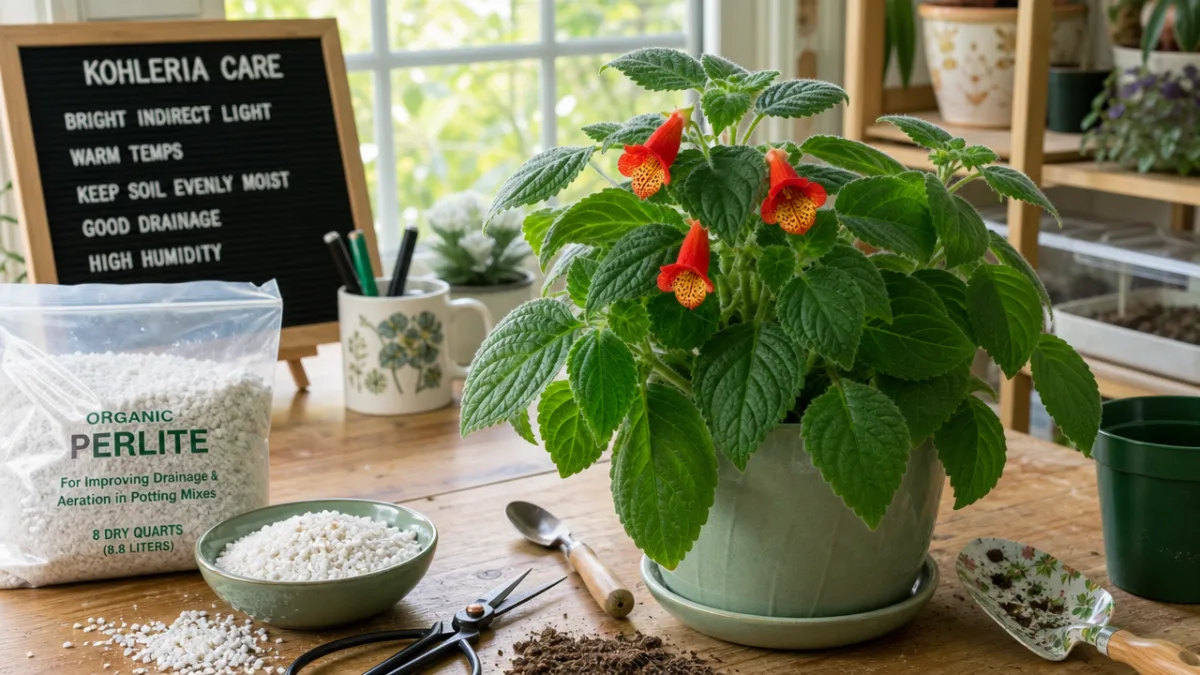
For the potting mix, you want something light and free-draining that still holds a bit of moisture without getting heavy or compacted. African violet compost works really well and is easy to find, or you can mix your own with two parts peat-free compost, one part perlite, and one part coarse horticultural grit. Whatever you use, good drainage is non-negotiable — make sure your pot has at least one proper drainage hole, and a layer of coarse grit or broken crockery at the bottom will help keep that hole clear over time.
Fertilizing and Encouraging Continuous Blooming
To keep ‘Rebecka’ flowering the way it’s capable of, you need to feed it regularly through the growing season. A balanced water-soluble fertilizer — roughly equal parts nitrogen, phosphorus, and potassium — applied at half the recommended strength every two weeks from spring through autumn gives the plant the steady nutritional support it needs to keep producing so many flowers. In winter, cut back to once a month, or stop altogether if the plant seems to be taking a natural rest.
If you want to push the flowering even harder, switching to a bloom booster fertilizer — one that’s higher in phosphorus and potassium — during the peak flowering season can make a noticeable difference to both the number of blooms and how vivid they are. Phosphorus is especially important for flower development, while potassium helps with overall vigour and keeping disease at bay. Just don’t overdo the nitrogen-heavy feeds; too much nitrogen pushes the plant into producing lush leafy growth at the expense of flowers, which is the opposite of what you’re going for.
Deadheading is one of those small habits that pays off more than you’d expect. When individual flowers fade, pinch them off at the base promptly. This nudges the plant to put its energy into making new buds rather than setting seed, which is a costly process that can temporarily put the brakes on flowering. If stems start getting long and leggy, cutting them back by about a third will stimulate a fresh burst of bushy growth from the rhizomes below and bring on a new flush of blooms within a few weeks.
Propagation Methods and Repotting
Propagating ‘Rebecka’ is one of the more satisfying parts of growing it, and there are a couple of easy routes depending on what you prefer. The simplest and most productive method is rhizome division, which works with the plant’s natural growth habit rather than against it. When you repot in spring, you’ll usually find a network of small, scaly rhizomes just below the soil surface. These can be carefully separated and potted up individually into small containers of moist, well-draining mix. Even a small rhizome piece just a centimetre or two long has a decent chance of sprouting into a new plant, as long as it gets warmth and consistent moisture.
Stem cuttings are another reliable option, and they’re a great way to make use of material from pruning. Take cuttings about 8 to 10 centimetres long, strip the lowest set of leaves, and pop them into moist perlite or a peat-free cutting mix. Covering them loosely with a clear plastic bag or using a small propagator helps keep humidity up around the cuttings, which encourages rooting — this usually happens within three to five weeks at around 20 to 24 degrees Celsius. Once you see signs of new active growth, they’re ready to be moved into their permanent mix.
Repotting every one to two years in spring, moving up just one pot size at a time, keeps the rhizomes from getting too cramped and gives the plant a fresh nutrient supply. It’s worth noting that ‘Rebecka’ actually tends to bloom more freely when it’s slightly root-bound, so there’s no need to jump to a much bigger pot — going from a 10-centimetre to a 13-centimetre pot is usually plenty. Repotting is also a good opportunity to check the rhizomes over for any signs of rot or damage, cutting away anything suspect cleanly before replanting in fresh, sterile compost.
Common Problems, Pests, and Troubleshooting
‘Rebecka’ is reasonably resilient, but there are a few pests and problems that are worth knowing about before they catch you off guard. Fungus gnats are probably the most common nuisance — they’re drawn to moist potting mix and lay their larvae in the top layers of soil where they can nibble on young roots. Letting the soil surface dry out a bit between waterings is your best prevention, and if you already have an infestation, sticky yellow traps and biological controls like Steinernema feltiae nematodes work well without needing to reach for chemical pesticides.
Spider mites can also be a problem, especially during hot dry spells in summer or when indoor heating drops the humidity in winter. You’ll spot them by the fine webbing on the undersides of leaves and a stippled, slightly dusty look to the foliage as the mites drain sap from the leaf cells. Bumping up humidity, wiping the leaves gently with a damp cloth now and then, and applying a diluted neem oil solution can all help bring populations under control. The best long-term defence is just keeping ‘Rebecka’ well-watered and at a decent humidity level — unhappy, stressed plants attract pests far more readily than thriving ones.
Most of the problems people run into with Kohleria are actually caused by growing conditions rather than pests or disease. Here are the most common ones and what to do about them:
- Leaves developing brown spots: Usually cold water splashing onto the foliage, or sunburn. Switch to bottom watering and check whether the light is too intense.
- Plant stops blooming: Often a light issue, too much nitrogen fertilizer, or a severely root-bound plant. Check the light first, then consider whether it needs repotting.
- Yellowing lower leaves: Typically a sign of overwatering or poor drainage. Let the soil dry out a little more before the next watering and make sure the drainage holes aren’t blocked.
- Leggy, elongated stems with few flowers: The plant isn’t getting enough light. Move it somewhere brighter or add a grow light.
- Wilting despite moist soil: This one’s more serious and may mean root or rhizome rot. Unpot the plant, cut away any soft or damaged tissue, and repot in fresh mix after letting the rhizomes air-dry briefly.
Most of these issues can be sorted quickly if you catch them early, and ‘Rebecka’ is good at telling you when something’s off — you just have to be paying attention. Getting into the habit of looking your plant over regularly, checking the leaf colour, how the stems are sitting, and the general feel of the soil, is honestly the most useful thing you can do as a plant owner. When ‘Rebecka’ is happy, those near-constant clusters of beautiful spotted blooms make it very clear that the effort was worth it.








What do you think?
It is nice to know your opinion. Leave a comment.