










The Art of Recycled Fabric Wrapped Hangers: A Sustainable Approach to Wardrobe Organization
What Are Fabric Wrapped Hangers and Why Do They Matter?
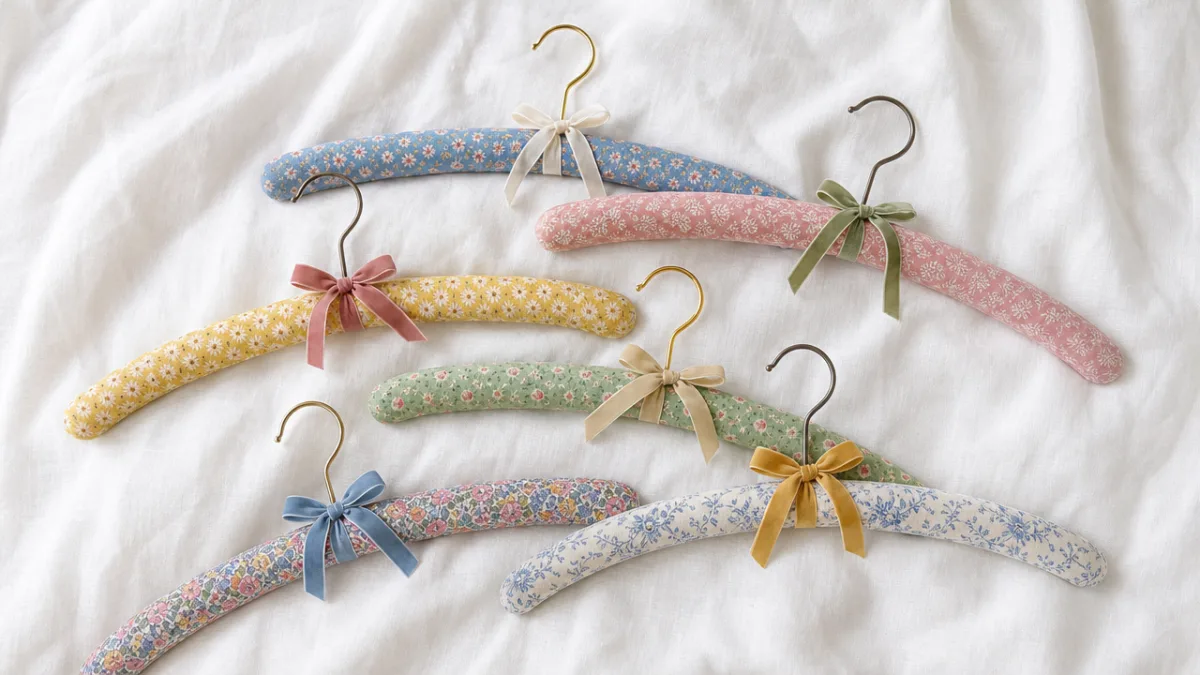
Fabric wrapped hangers are a beautifully crafted alternative to the standard plastic or wire hangers that fill most closets. Made by winding strips of recycled or repurposed fabric tightly around a base hanger frame, these charming accessories transform a purely functional object into something that feels handmade, intentional, and warm. Each hanger tells a story through its textile choices, whether drawn from old clothing, vintage curtains, or leftover quilting scraps that would otherwise end up discarded.
The significance of these hangers goes well beyond their aesthetic appeal. Every year, billions of plastic hangers are manufactured and discarded globally, contributing to a staggering volume of non-biodegradable waste. Fabric wrapped hangers offer a direct, accessible alternative that anyone can appreciate — whether they are a dedicated sustainability advocate or simply someone who appreciates beautiful, purposeful objects in their home. A set of four hangers might seem small, but the mindset behind them points toward something much larger.
When sold through platforms like Etsy, fabric wrapped hangers also support independent artisans and small creative businesses. Purchasing a handmade set means your money flows directly to a craftsperson who sourced materials thoughtfully, spent time wrapping each hanger carefully, and put genuine skill into the finished product. This direct relationship between maker and buyer is one of the defining pleasures of the handmade marketplace, and fabric wrapped hangers embody it perfectly.
The History of Decorative Hangers
The concept of beautifying the humble hanger is not a modern invention. Throughout the mid-twentieth century, crafters commonly padded and covered hangers with fabric as gifts, particularly for bridal showers and housewarmings. These padded satin hangers became a genteel tradition, often embroidered or finished with lace trim, intended for delicate garments like lingerie, silk blouses, and wedding dresses. The padded hanger was considered a mark of care and consideration for one’s most precious clothing.
Today’s recycled fabric wrapped hangers draw on this same tradition but update it with contemporary values. Rather than using fresh materials purchased specifically for the project, modern makers emphasize repurposing and upcycling. The aesthetic leans toward the eclectic and artisanal rather than the formally ornate. Stripes, florals, denims, and patchwork patterns sit comfortably alongside one another, celebrating the beauty of mismatched textiles united by a single crafting purpose. This evolution reflects a broader cultural shift toward sustainable living woven into everyday domestic objects.
The Etsy marketplace has become one of the primary venues where this tradition has found its contemporary expression. Sellers from around the world offer their own interpretations, some using locally sourced fabrics, others working with textiles that carry personal or cultural significance. Browsing these listings is almost like visiting a small textile museum, where every hanger represents a distinct regional craft sensibility and a commitment to giving old materials new purpose.
The Environmental Case for Recycled and Upcycled Materials
The fashion and textile industry is one of the most polluting industries on the planet, responsible for a significant percentage of global water consumption, chemical runoff, and landfill waste. When fabrics are recycled and repurposed rather than discarded, even small gestures like wrapping a hanger help divert material from the waste stream. Each yard of fabric given a second life represents energy saved, water conserved, and landfill space preserved. The collective impact of many small choices adds up in ways that are genuinely meaningful.
Recycled fabric wrapped hangers are a tangible, everyday reminder of the circular economy in practice. The circular economy is an economic model that aims to eliminate waste by keeping materials in use for as long as possible. Instead of the traditional linear model of take, make, dispose, the circular approach encourages repair, reuse, and recycling at every stage of a product’s life. A fabric wrapped hanger made from an old denim jacket or a worn cotton shirt exemplifies this philosophy in the most domestic and accessible way imaginable.
Beyond the fabric itself, consider what happens to the base hanger. Many artisans who create these wrapped hangers use salvaged or thrifted hanger frames rather than purchasing new ones. This doubles the sustainability benefit, ensuring that both the textile and the structural component of the finished product have been rescued from potential disposal. When you hang a blouse on a recycled fabric wrapped hanger, you are participating in a small but meaningful act of environmental stewardship with every outfit you choose.
Fabric Choices and Their Environmental Footprints
Not all recycled fabrics carry the same environmental story, and part of the pleasure of owning or creating these hangers is understanding where the materials come from. Cotton scraps from worn-out T-shirts are among the most common wrapping materials, offering a soft texture and wide color range. Denim offcuts bring a sturdy, bohemian character, while silk and satin remnants lend an elegant finish suitable for a dressing room display. Each fabric type brings its own tactile quality to the finished hanger.
Wool fabric strips are particularly valued for their natural grip, which helps garments stay in place on the hanger without sliding. This is a functional benefit that perfectly aligns with the sustainable sourcing story — an old wool sweater that has lost its shape but retains its fibers becomes a genuinely useful component of a new object. Linen scraps, meanwhile, offer natural breathability and a beautiful neutral palette that complements a wide range of interior styles, from rustic farmhouse to minimalist Scandinavian.
Makers who source their fabrics from thrift stores, estate sales, or community textile swaps bring an additional layer of social sustainability to their work. By purchasing pre-loved fabrics rather than new yardage, they avoid the energy and water costs associated with new textile production. Some artisans are transparent about the origins of their materials, sharing stories about the vintage tablecloth or the grandmother’s curtain fabric that found its way into a set of beautiful hangers. These narratives add depth and meaning to what might otherwise seem like a simple craft object.
How Fabric Wrapped Hangers Are Made: The Craft Behind the Object
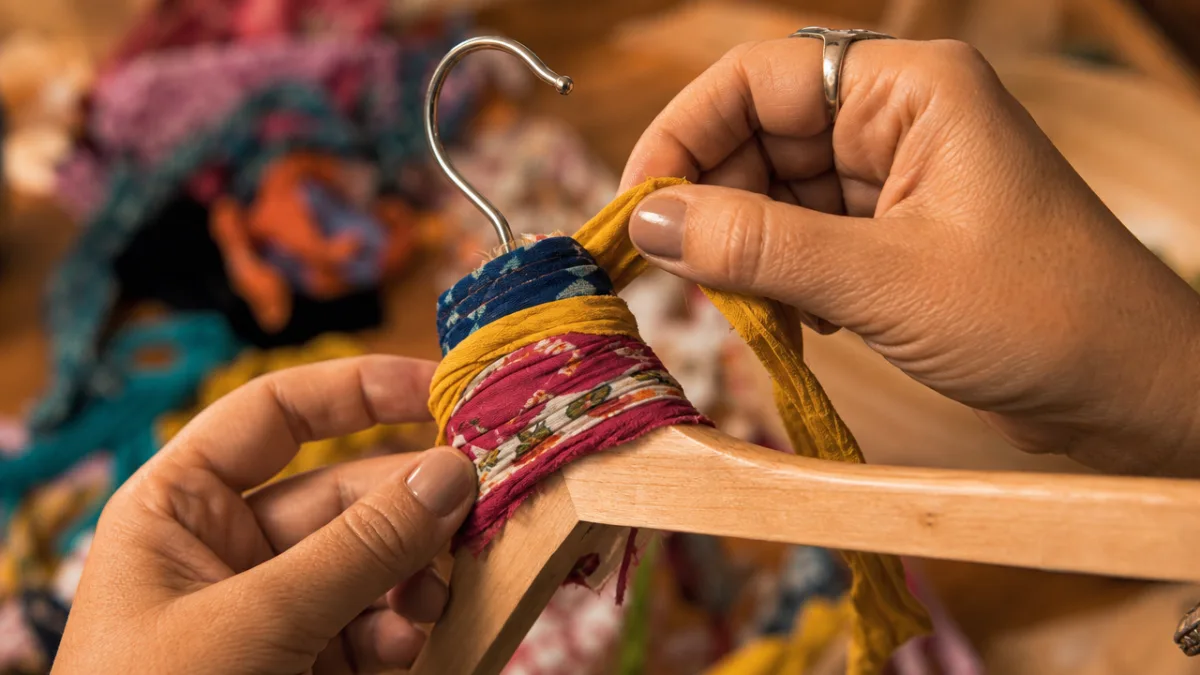
Creating a set of fabric wrapped hangers is a meditative and satisfying process that requires patience, steady hands, and an eye for color and texture. The basic technique involves cutting fabric into long, narrow strips — typically between one and two centimeters wide — and then winding them tightly around the hanger frame, usually beginning at one end of the shoulder and working gradually toward the hook. The wrapping must be consistent in tension throughout to achieve a smooth, professional result without lumps or gaps.
Skilled makers develop their own preferred variations on this fundamental technique. Some use a single long strip of fabric for the entire hanger, creating a uniform look with one textile. Others deliberately combine multiple fabrics, switching colors or patterns at strategic points along the frame to create a patchwork or striped effect. The most intricate versions involve braiding or twisting strips together before wrapping, adding dimensional texture that makes each hanger a genuinely complex piece of textile craft. The hook of the hanger is often finished with a different material or a small embellishment like a button, knot, or ribbon bow.
The process is accessible enough for beginners to enjoy but nuanced enough to reward practice and skill development. Many people who begin wrapping hangers as a way to use up fabric scraps find themselves drawn deeper into the craft, experimenting with new techniques and beginning to source fabrics specifically for their color relationships or textural contrasts. Community workshops, online video tutorials, and craft groups have helped spread the knowledge of this technique widely, ensuring that it remains a living craft tradition rather than a fading one.
Tools and Materials You Need to Get Started
One of the most appealing aspects of this craft is how little specialized equipment it requires. The basic toolkit is minimal and likely already present in most crafting households. To begin wrapping your own hangers, you will generally need the following materials and tools:
- A base hanger — wood, wire, or plastic, in good condition or salvaged from your closet
- Fabric strips cut from recycled clothing, scraps, or remnants, approximately 1 to 2 centimeters wide
- Sharp fabric scissors or a rotary cutter and cutting mat for clean, even strips
- Strong craft glue or a hot glue gun to secure the beginning and end of each strip
- Needle and thread for securing joins invisibly if you prefer not to use adhesive
- Embellishments such as ribbon, buttons, or beads for finishing the hook area
The preparation of the fabric strips is often the most time-consuming part of the process. Cutting fabric into long, even strips requires care to avoid uneven widths that will disrupt the final appearance. Many makers cut along the grain of the fabric to minimize fraying, while others embrace a slight frayed edge as part of the handmade aesthetic. Pre-washing fabrics before cutting is advisable if you are working with fabrics of unknown provenance, as this prevents later shrinkage or color bleeding onto garments.
Once your strips are prepared and your base hanger is ready, the actual wrapping process can feel almost hypnotic. Working at a comfortable table with good lighting, you begin at one end, secure the strip with a dab of glue, and then wind steadily and evenly down the length of the hanger, maintaining consistent tension. Most people find that they settle into a rhythm quickly, and a single hanger can be completed in thirty to forty-five minutes once the technique becomes familiar. A set of four, like those commonly sold on Etsy, might represent an afternoon’s focused work for an experienced maker.
Styling and Using Fabric Wrapped Hangers in Your Home
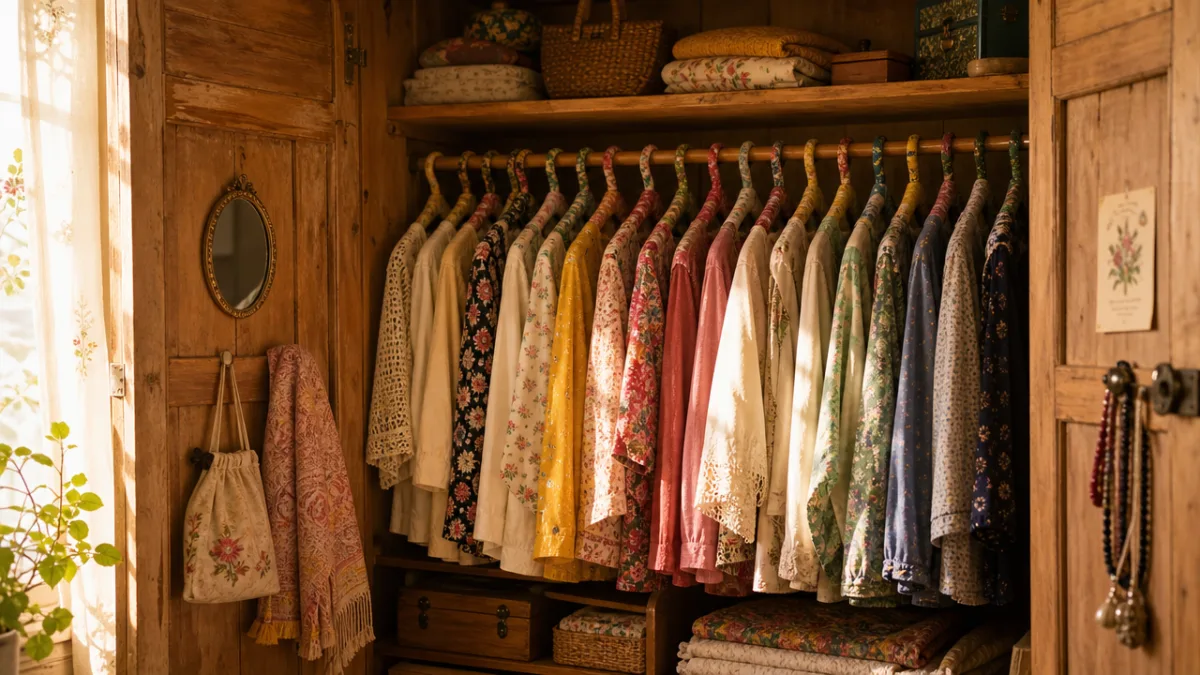
Fabric wrapped hangers are not merely functional — they are genuinely decorative objects that can transform the look and feel of a wardrobe, closet, or dressing space. When hung in a row along a closet rail, a coordinated set in complementary colors creates a visual rhythm that makes even an everyday getting-dressed routine feel more pleasurable and intentional. Many people choose to display their most beautiful wrapped hangers on open hanging rails or wall-mounted hooks, where they become part of the room’s overall aesthetic rather than hidden behind closed doors.
The gentle grip provided by fabric-wrapped surfaces is a practical advantage that goes hand in hand with the visual appeal. Silky or delicate garments that slide off smooth plastic or wire hangers will cling naturally to the textured surface of a wrapped hanger, staying neatly in position rather than pooling on the closet floor. Knitwear benefits from the softer surface, which distributes weight more evenly across the shoulder area and reduces the risk of stretched-out shoulder points that can permanently distort the shape of a beloved sweater.
For those who enjoy a coordinated, curated home aesthetic, fabric wrapped hangers offer an opportunity to extend a color palette or design sensibility throughout an entire room, including the inside of closets and wardrobes. A bedroom decorated in earthy terracottas, warm whites, and botanical greens can be complemented by hangers wrapped in coordinating fabric scraps, creating a cohesive environment that feels considered from floor to ceiling. This level of intentional detail is one of the hallmarks of a truly personalized home.
Gift Giving and Special Occasions
A set of fabric wrapped hangers makes an exceptionally thoughtful gift for a range of occasions. Because they are both practical and beautiful, they occupy that rare category of present that will genuinely be used rather than stored and forgotten. Housewarming gifts, bridal shower presents, and new baby celebrations are all occasions where a handmade set of wrapped hangers carries deep symbolic resonance — welcoming someone into a new home, celebrating a new domestic partnership, or honoring the arrival of a new life with something crafted by hand and full of care.
When purchased through Etsy, many sellers offer customization options that elevate the gift further. Buyers can often request specific color combinations to match a recipient’s known preferences or existing décor, choose particular fabric types such as floral cotton or neutral linen, or ask for a personalized finishing touch like a monogrammed ribbon on the hook. This level of personalization transforms a utilitarian object into something truly meaningful, signaling that the giver thought carefully about what would bring pleasure to the specific person receiving it.
Fabric wrapped hangers also make wonderful additions to gift hampers and curated gift boxes. Paired with a beautifully scented sachet, a small potted plant, or a handwritten note, a set of four wrapped hangers becomes the centerpiece of a thoughtfully assembled present that communicates warmth, sustainability, and genuine craftsmanship. In an age of mass-produced gifts purchased at the last minute, a handmade object chosen with care stands out and is remembered long after other presents have been forgotten.
Supporting Artisans and the Handmade Economy Through Conscious Purchasing
Every purchase made on a platform like Etsy is a vote for a particular kind of economy — one that values human skill, creative labor, and small-scale production over mass manufacturing and algorithmic retail. When you buy a set of recycled fabric wrapped hangers from an independent maker, you are directly supporting someone who has invested time in learning a craft, sourcing materials responsibly, and building a small business on their own terms. This transaction carries social and economic weight that extends far beyond the simple exchange of money for an object.
Many Etsy sellers who create fabric wrapped hangers are also deeply embedded in their local communities, sourcing fabrics from neighborhood thrift stores, participating in local craft markets, and collaborating with other small makers on projects and promotions. Supporting these sellers helps sustain broader ecosystems of creative enterprise at the local level, keeping money circulating within communities rather than extracting it toward distant corporate headquarters. The seemingly simple act of buying a handmade hanger can have ripple effects that support cultural vibrancy and economic resilience in ways that are genuinely significant.
There is also an educational dimension to engaging with handmade goods on platforms like Etsy. Many sellers generously share information about their processes, materials, and inspirations through their shop descriptions, social media accounts, and product photography. Buyers who take time to read these stories often come away with a richer understanding of textile craft, sustainable sourcing, and the real human labor involved in making beautiful things. This knowledge enriches our relationship with the objects we own and encourages a more thoughtful approach to consumption overall.
How to Choose the Right Seller and Set for Your Needs
With many talented makers offering fabric wrapped hangers on Etsy, the process of choosing the right set can feel pleasantly overwhelming. A few key considerations can help narrow your options and ensure that you end up with hangers you will love and use for years to come. Think first about the visual character of the space where the hangers will live — a rustic, bohemian bedroom calls for different fabric choices than a sleek, contemporary dressing room, and most sellers offer enough variety to accommodate a wide range of aesthetic preferences.
Reading seller reviews carefully is always worthwhile. Look for mentions of the hanger’s durability, the quality of the fabric wrapping, how well the finished hangers hold different types of garments, and the quality of the packaging and communication. Reviews that mention repeat purchases are a particularly good sign, as they suggest that buyers found the hangers genuinely useful and beautiful enough to want more of them. A high rating combined with detailed, specific reviews is a reliable indicator of a seller who takes quality seriously.
Consider also whether the seller offers any customization, and whether the pricing reflects the true value of handmade work. Fabric wrapped hangers require real time, skill, and sourced materials to produce. A price that seems very low relative to comparable handmade goods may indicate corners being cut somewhere — in material quality, wrapping consistency, or fair compensation for the maker’s labor. Paying a fair price for well-made, sustainably sourced handmade goods is part of the commitment to ethical consumption that makes purchasing from independent artisans genuinely meaningful.
Caring for Your Fabric Wrapped Hangers and Extending Their Life
Like any handcrafted textile object, fabric wrapped hangers will reward thoughtful care with years of reliable use and continued visual appeal. The most important thing to understand about their maintenance is that they are not designed to be laundered in the traditional sense — the glue or thread holding the fabric in place, as well as the base hanger itself, may not survive immersion in water. Instead, fabric wrapped hangers should be spot-cleaned when necessary using a barely damp cloth and a tiny amount of gentle soap, then allowed to air dry completely before garments are hung on them again.
Keeping your hangers in a well-ventilated wardrobe will help prevent any mustiness that can develop in enclosed spaces, particularly if the fabrics used in wrapping are natural fibers like cotton or linen. A small lavender sachet hung nearby will naturally freshen both the hangers and the garments stored with them, adding another layer of sensory pleasure to the experience of opening your wardrobe each morning. If a hanger begins to show wear at a particular point — usually at the hook or the outermost shoulder tips — a small amount of craft glue and a short length of matching fabric can make a discreet repair that extends its useful life considerably.
Over time, the fabric on a wrapped hanger may fade slightly, particularly if the wardrobe receives direct sunlight. This gentle fading often adds a pleasing patina to the finished object, giving it the kind of soft, lived-in quality that characterizes well-loved handmade things. If fading becomes significant, or if a hanger is unwrapped through accident or wear, the base frame can always be rewrapped with fresh fabric, beginning the craft cycle anew and giving the hanger another complete chapter of useful, beautiful life.
Inspiring a More Intentional Relationship With Your Wardrobe
There is something quietly transformative about filling a closet with objects that have been made with care and chosen with intention. Fabric wrapped hangers are a small but meaningful way to begin cultivating a more conscious relationship with your wardrobe and the objects within it. When every hanger has been thoughtfully selected, made from repurposed materials, and designed to be both beautiful and functional, the act of choosing an outfit each day becomes slightly more considered and slightly more pleasurable.
This intentionality can extend outward from the hangers themselves, encouraging a broader reassessment of what we keep, how we store it, and why we choose the garments we do. A wardrobe organized with beautiful handmade hangers invites us to look more carefully at each item of clothing, to consider whether it brings genuine joy or utility, and to be more deliberate about what we bring into our lives. In this way, a simple set of fabric wrapped hangers can become an unexpected catalyst for a more thoughtful approach to personal style and domestic life.
The movement toward sustainable, handmade, and intentional living is not about perfection or rigid adherence to rules. It is about making choices that align with our values wherever we can, celebrating the skill and creativity of human makers, and finding beauty in objects that carry stories and meaning. A set of recycled fabric wrapped hangers, ordered from a small Etsy shop and unwrapped from its carefully packed parcel, is a reminder that thoughtful consumption and genuine delight are not mutually exclusive — they can, and should, exist together in the objects that fill our most intimate spaces.








What do you think?
It is nice to know your opinion. Leave a comment.