










Candlelit Wedding Tables with Minimal White Roses: A Complete Guide to Timeless Elegance
Few wedding aesthetics have proven as enduring, as quietly breathtaking, or as universally beloved as the candlelit table adorned with minimal white roses. This combination speaks a visual language that transcends trends, cultural moments, and even personal taste — it simply works, every single time. Whether you are planning an intimate dinner for thirty guests in a converted barn or a grand reception in a historic ballroom, the pairing of soft candlelight and restrained white florals creates an atmosphere that feels at once deeply romantic and effortlessly sophisticated. It is the kind of beauty that photographs beautifully yet somehow looks even more stunning in person, which is perhaps its greatest achievement.
The appeal of this aesthetic is rooted in something fundamental about how human beings respond to light and nature. Candle flames produce a warm, flickering glow that flatters every skin tone, softens architectural edges, and creates a sense of intimacy that electric lighting simply cannot replicate. White roses, meanwhile, carry centuries of symbolic weight — purity, new beginnings, deep and enduring love — while their clean, pale petals serve as a perfect reflective surface for that golden candlelight. Together, they do not compete for attention. They collaborate, each element amplifying the other, creating a sum that is far greater than its parts.
What makes the minimal approach particularly compelling is the deliberate restraint at its core. Rather than overwhelming a table with towering floral arrangements, miles of greenery, and an arsenal of decorative objects, the minimal white rose aesthetic trusts in the power of negative space. Each bloom is chosen intentionally. Each candle is placed with purpose. The result is a tablescape that feels curated rather than cluttered, considered rather than excessive, and ultimately far more memorable than a table groaning under the weight of every possible decorative element. This guide will walk you through everything you need to know to achieve this look beautifully.
Understanding the Philosophy of Minimalist Wedding Decor
Minimalism in wedding design is frequently misunderstood as simply using fewer things, but the philosophy runs considerably deeper than that. True minimalist wedding decor is about intentionality — the careful, deliberate selection of each element so that nothing present is accidental or arbitrary. Every candle, every stem, every fold of linen earns its place at the table by contributing meaningfully to the overall composition. This approach requires more thought, not less, because there is nowhere to hide design mistakes behind abundance. When you strip everything back to its essentials, what remains must be genuinely beautiful and genuinely purposeful.
The roots of this aesthetic stretch back through Scandinavian design traditions, Japanese wabi-sabi philosophy, and the mid-century modernist movement, all of which celebrated the idea that beauty emerges from simplicity rather than in spite of it. In the context of wedding design, this translates to a willingness to resist the temptation to add just one more centerpiece element, one more layer of ribbon, one more cluster of accent flowers. Couples who commit to this philosophy often find that the preparation process feels more peaceful and the final result more personally meaningful, because every choice made was truly chosen rather than defaulted to.
It is also worth noting that minimalist wedding tables are remarkably adaptable to different venues and budgets. A heavily maximalist tablescape relies on volume and variety to achieve its effect, which means it requires significant investment across many different categories of décor. A minimal approach, by contrast, allows you to invest deeply in a smaller number of high-quality elements. You might spend more per stem on exceptionally beautiful white roses, or source hand-poured artisan candles in precisely the right vessel, knowing that these choices will be visible and appreciated rather than lost in a sea of competing details. Quality, in minimalist design, always wins over quantity.
Choosing the Right Candles: Vessels, Heights, and Flame
The candles you select will arguably do more work in creating your overall atmosphere than any other single element, and so they deserve careful and thoughtful consideration. The first decision is between pillar candles, taper candles, tea lights, and votive candles — and most beautifully executed candlelit wedding tables use a thoughtful combination of two or three of these formats rather than relying exclusively on one. Taper candles in tall candlesticks create vertical drama and a sense of ceremony, while low votives and tea lights in glass holders scatter light at table level, creating that characteristic golden glow that makes every guest feel as though they are dining inside a painting.
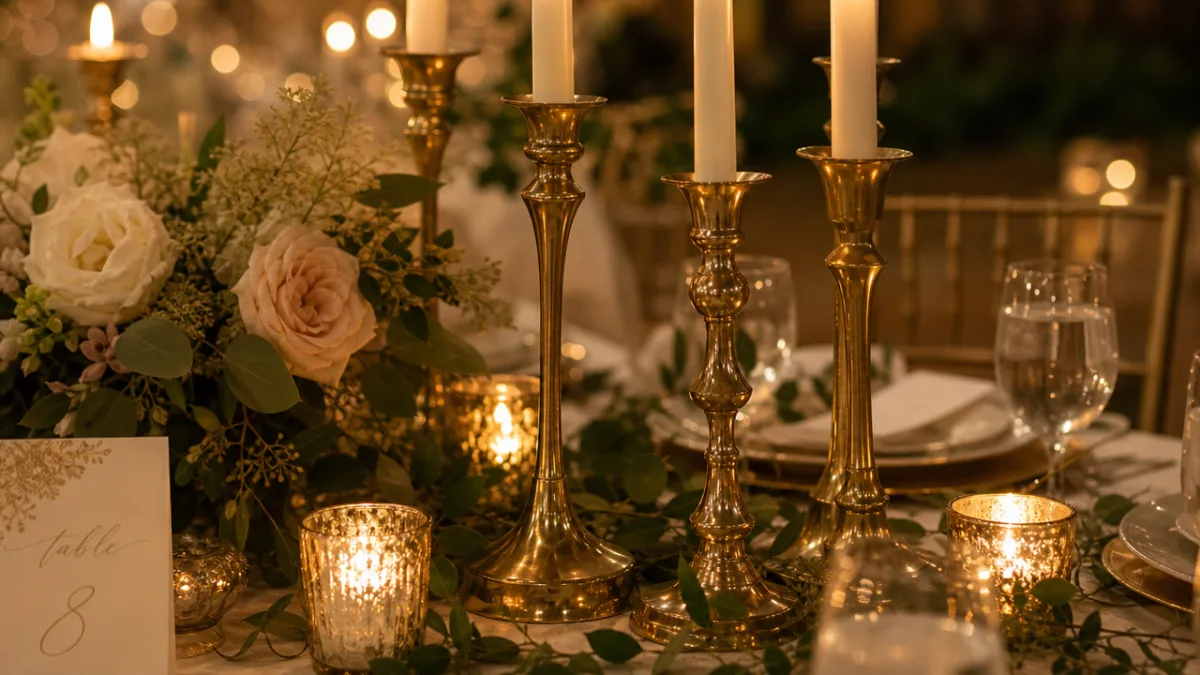
The vessels that hold your candles are just as important as the candles themselves, and for a minimal white rose aesthetic, the guiding principle should be restraint and material harmony. Clear glass hurricane shades protect taper flames from air movement while allowing the light to radiate outward without obstruction. Simple white ceramic candleholders add a matte, sculptural quality. Polished brass or aged gold candlesticks bring warmth and a hint of vintage glamour that pairs beautifully with the creamy tones of white roses. What you want to avoid is introducing too many different materials or finishes, which would fragment the visual cohesion of your table and undermine the serene, unified effect you are working toward.
Height variation is the secret weapon of an expertly designed candlelit table. When all of your candles sit at the same level, the tablescape feels flat and uninspired, regardless of how beautiful the individual elements might be. By combining tall taper candles in high candlesticks with medium pillar candles and low-set votives, you create a landscape of light that has rhythm, movement, and visual interest. A general rule of thumb is to use odd numbers of varying heights — three different heights, five candles in a cluster, seven votives scattered asymmetrically — because odd groupings feel more organic and natural than even, symmetrical arrangements. Consider these key candle vessel options for a cohesive look:
- Clear glass hurricanes in varying diameters for taper candle protection and light diffusion
- Antique brass or matte gold candlesticks at two or three different heights for vertical drama
- Simple mercury glass votives for scattered low-level warmth across the table surface
- Frosted glass pillar holders that soften the flame glow into a diffused, gentle light
- Minimalist white ceramic holders that echo the clean tones of white rose petals
Selecting and Styling White Roses for a Minimal Arrangement
Not all white roses are created equal, and for a minimal arrangement where each stem is highly visible, the variety you choose matters enormously. Garden roses, with their full, many-petaled blooms and soft, almost informal shape, bring a sense of romantic abundance even in small numbers. Standard hybrid tea roses offer a more architectural, precise beauty — their high-centered blooms and clean outlines work beautifully in very spare, graphic arrangements. Spray roses, smaller and more delicate, can be used as filler to add texture without introducing competing colors. Many floral designers working in the minimal aesthetic prefer to blend two varieties, perhaps one large garden rose for focal impact and smaller spray roses for soft supporting texture.
The stage of bloom at which your roses arrive is another variable worth discussing with your florist well in advance. Fully open roses have a lush, almost decadent beauty and reflect candlelight magnificently across their broad, curved petals. Tightly budded roses feel more formal and precise, with a sculptural quality that suits a more graphic, architectural table design. For most candlelit wedding tables, roses at approximately three-quarters open represent the ideal balance — open enough to show their full beauty and reflect light beautifully, but not so fully blown that they risk dropping petals during the reception. Your florist should be able to time the delivery and conditioning of stems to achieve exactly the stage of bloom you want for your table.
When it comes to actually placing roses on the table, the minimal approach favors low, tight arrangements that keep sightlines open across the table and allow guests to converse easily without floral obstructions. A simple cluster of three to five white roses in a low, heavy glass or ceramic vase can be extraordinarily beautiful when placed in deliberate relationship to the surrounding candles. Alternatively, individual rose heads floated in shallow bowls of water, or single stems laid horizontally across folded napkins, can serve as both place markers and decorative elements simultaneously. Some of the most memorable minimal tablescapes include no formal centerpiece at all, relying instead on scattered individual stems and clusters of candles to create a table that feels organic, intimate, and deeply personal.
Linens, Tableware, and the Supporting Cast
The linen foundation of your table sets the entire tonal palette for everything that sits upon it, and in a minimal white rose aesthetic, this choice is critical. White linens — whether crisp, pressed cotton, flowing natural linen, or luxurious silk — create a seamless visual connection between the tablecloth and the roses, allowing the arrangement to feel as though it emerges organically from the table surface rather than sitting atop it. Ivory or cream linens introduce warmth and work particularly well when your candles have warm-toned flame guards or when the venue has amber or wood tones in its architecture. The specific texture of the linen also matters: a rough-woven natural linen reads rustic and organic, while a tightly woven cotton sateen feels formal and precise.
Tableware selection follows the same minimalist principles as every other element — each piece should be beautiful in itself, harmonious with its neighbors, and free of unnecessary decoration. Simple white ceramic plates with clean, unadorned edges allow the food and floral elements to remain the visual focus. Clear crystal glassware catches and scatters candlelight in genuinely magical ways, creating spontaneous sparkle that no designed lighting effect can quite replicate. Polished silverware or warm gold flatware complements brass candlestick holders and adds a layer of material richness that elevates the table without complicating it. Avoid heavily patterned china or colored glassware, which would introduce competing visual elements that undermine the quiet, unified beauty of the overall composition.
Place cards and menu cards, when done well, become miniature design moments in their own right. For a minimal candlelit table, these should be printed on heavy white or cream card stock in a clean, elegant typeface — nothing ornate or elaborate, but carefully chosen and beautifully executed. A calligraphed place card propped against a small votive candle, or tucked beneath the stem of a single rose, becomes an invitation and a gesture of welcome simultaneously. Consider also the napkin fold or presentation: a simply folded napkin placed beneath the flatware, or a napkin loosely tied with a single strand of natural twine or a narrow satin ribbon in white or champagne, maintains the minimal aesthetic while adding a tactile, personal quality that guests will notice and appreciate.
Venue Considerations and Lighting Design
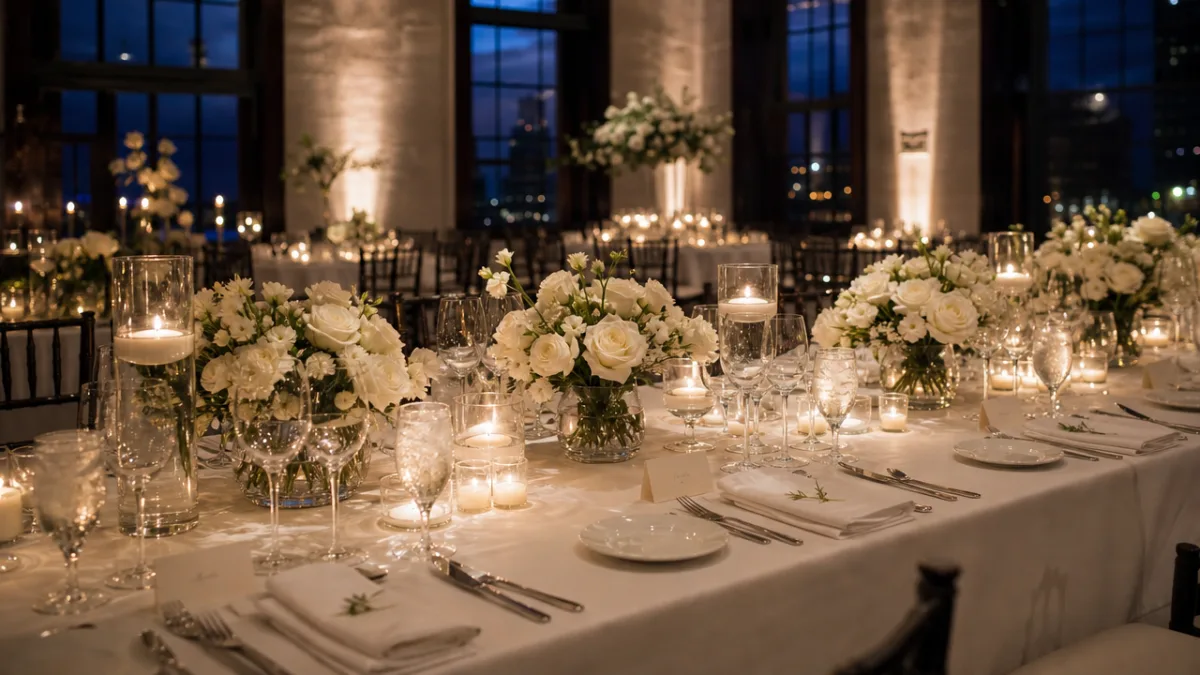
The venue you choose will either support or challenge your minimal candlelit aesthetic in fundamental ways, and understanding this relationship before you commit to a location will save you significant creative effort and expense. Venues with architectural warmth — exposed stone walls, aged timber beams, plaster ceilings with natural imperfections — provide a textured backdrop that makes candles glow more beautifully and white roses appear more luminous. Highly modern venues with glossy white walls and stainless steel surfaces can work beautifully but require careful attention to additional warmth through lighting design, because the space itself offers little thermal quality for the candlelight to play against.
Ambient lighting at your venue is the invisible design element that either makes or breaks a candlelit wedding table. If the venue’s overhead lighting is harsh, cool, or too bright, it will completely overpower the intimate warmth of your candles and strip the roses of their soft, glowing beauty. Most experienced wedding coordinators and lighting designers recommend using the venue’s lighting at very low levels — ideally dimmable to ten or fifteen percent of full intensity — to provide just enough ambient light for safety and navigation while allowing the candles to do the primary visual work. If your venue has fixed, non-dimmable lighting, it is worth investing in uplighting in warm amber tones positioned around the room’s perimeter, which can transform even a fluorescent-lit space into something approaching candlelit warmth.
The spatial layout of your tables within the venue also affects the overall impact of your candlelit aesthetic. Closely spaced tables, where the light from one table’s candles visually merges with that of the next, create a landscape of warm light that is immersive and breathtaking. More widely spaced tables, each isolated as its own island of light in a darker surrounding space, create a more dramatic, theatrical effect with each table as a distinct focal point. Neither approach is superior — they simply create different emotional atmospheres — but understanding which effect you are working toward will help you make consistent choices about candle quantity, arrangement scale, and supporting décor throughout the planning process.
Seasonal Adaptations and Practical Planning Tips
One of the great practical advantages of the minimal white rose and candle aesthetic is its adaptability across all four seasons without requiring fundamental redesign. In spring and summer, white roses feel natural and garden-fresh, and you might complement them with a few stems of white ranunculus, white sweet peas, or the feathery texture of white astilbe, all of which maintain the color palette while introducing seasonal botanical variety. In autumn and winter, the same white roses take on a different quality — they feel more precious and deliberate against the darker, colder world outside, and you might introduce dried elements like preserved white lunaria or silvery eucalyptus to add seasonal texture while staying firmly within the minimal aesthetic.
Planning the practical logistics of a candlelit wedding table requires forethought, particularly if your venue has restrictions around open flames — which many do. Always confirm candle policies with your venue coordinator before committing to a candle-heavy design, and come prepared with high-quality flameless LED alternatives that genuinely mimic candlelight for any areas where real flames are prohibited. Modern LED candles, particularly those with realistic flame movement simulation and warm amber light output, can be used in combination with real candles to achieve the full desired effect while respecting venue limitations. Your florist and lighting designer can advise on which elements are best served by real flame and which can be successfully replicated with quality LED alternatives.
Finally, consider creating a comprehensive timeline for the day-of setup of your table design. White roses are delicate and respond poorly to extreme heat, cold, or dehydration, which means stem conditioning, delivery timing, and table placement all need to be carefully coordinated with your floral team. Candles should be placed and checked for stability before linens are laid, and votives and tea lights should ideally be lit no more than thirty to forty-five minutes before guests are seated to ensure they are glowing at their most beautiful during the reception rather than burning down before dinner begins. Here is a practical planning checklist to help you stay organized:
- Confirm open flame policy with venue and identify any restricted areas at least three months before the wedding date
- Book your florist with specific discussion of white rose variety, bloom stage, and minimal arrangement style
- Order or rent candle vessels and candlesticks in your chosen materials and height range
- Arrange a full styled table mock-up with your florist and lighting team at least six weeks before the wedding
- Photograph the mock-up from multiple angles to refine placement and proportions before the final day
- Create a detailed setup diagram showing exact candle and floral placement for each table type in your venue
- Assign a dedicated setup team member to manage candle lighting timing during the reception period
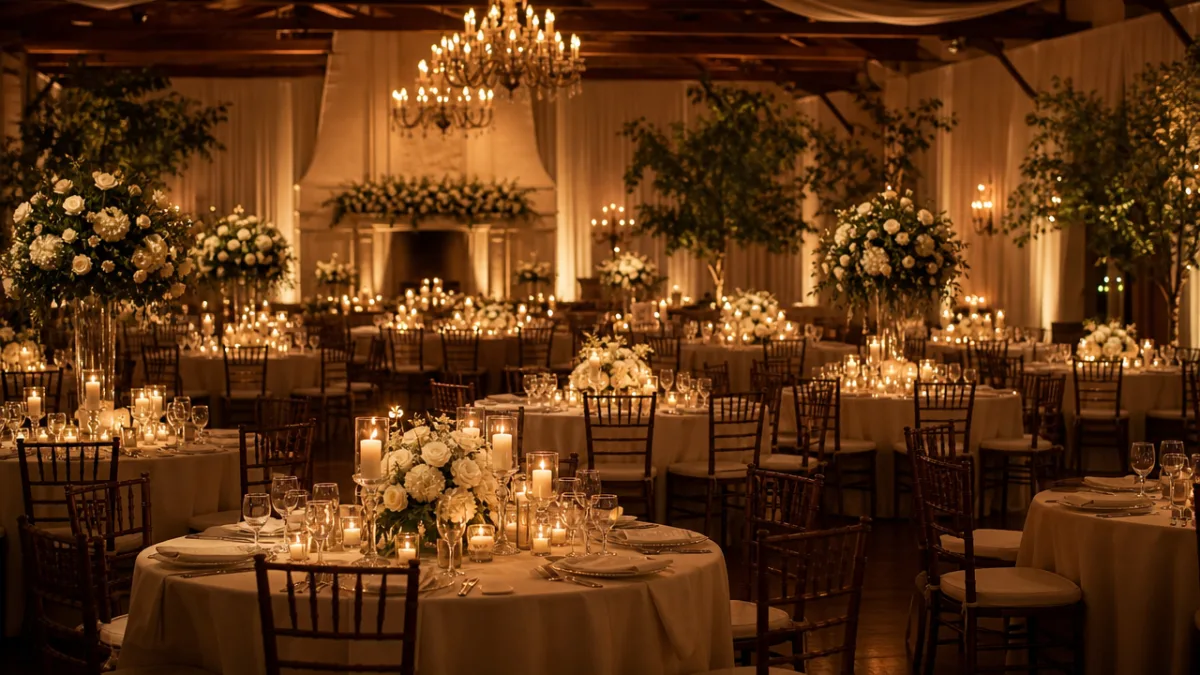
The candlelit wedding table with minimal white roses is, at its heart, an exercise in trusting beauty to do its own work. It asks you to resist the very natural impulse to add, to embellish, to fill every visual gap, and instead to sit with a quieter, more patient kind of elegance. The couples who commit fully to this aesthetic — who choose each candle, each stem, each piece of tableware with genuine deliberateness — invariably find that their reception tables become some of the most admired and longest-remembered elements of their entire wedding day. Not because they were the most dramatic or the most expensive, but because they were, in every detail, precisely right.








What do you think?
It is nice to know your opinion. Leave a comment.