










Kerala Flora: Ellu (Sesame) — The Ancient Seed of Gods and Healing
Introduction to Ellu: Kerala’s Sacred Sesame
In the lush, verdant landscape of Kerala, where ancient traditions intertwine seamlessly with the rhythms of nature, the sesame plant — known locally as ellu (Sesamum indicum) — holds a position of remarkable reverence. This small yet extraordinarily powerful seed has been cultivated across the Indian subcontinent for thousands of years, and Kerala’s relationship with it is particularly deep-rooted, stretching back through centuries of Ayurvedic practice, culinary tradition, and spiritual observance. The sesame plant is far more than an agricultural crop in this context; it is a living symbol of prosperity, purity, and medicinal wisdom.
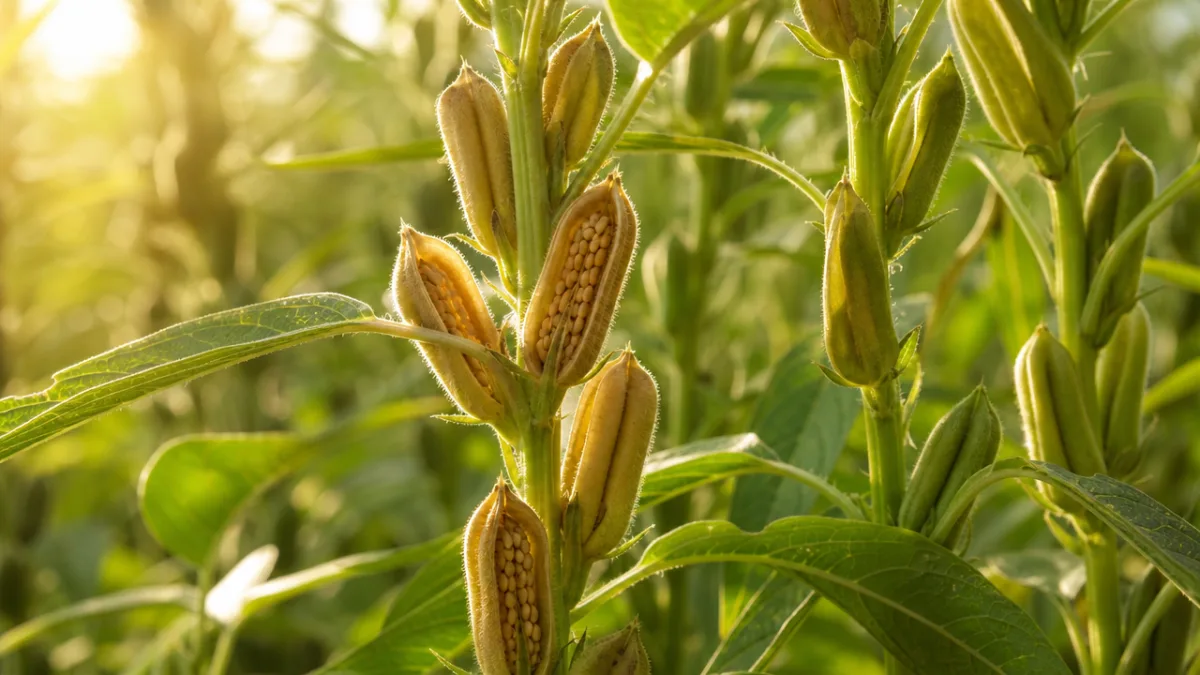
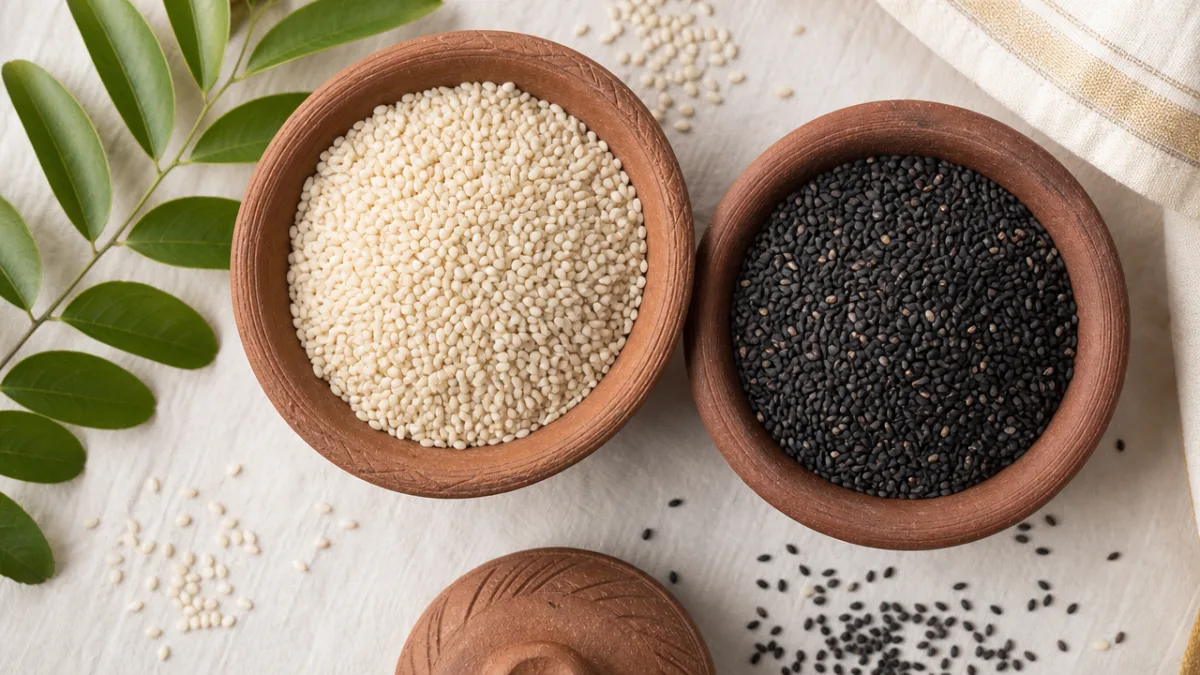
Kerala’s tropical climate, with its generous rainfall, humid air, and well-drained laterite soils, provides an environment in which the sesame plant can thrive with remarkable vigor. The plant grows to a height of roughly one to two meters, bearing elegant tubular flowers that range from white to pale lavender, and long capsule-shaped seed pods that split open at maturity to release their precious cargo of tiny, flat, oval seeds. These seeds may be white, brown, or black depending on the variety, and each carries its own distinct flavor profile and nutritional composition that Keralites have come to appreciate through generations of careful observation.
The cultural significance of ellu in Kerala cannot be overstated. It appears in the sacred rituals of Hinduism — offered to ancestors during the festival of Karkidaka Vavu and used in death rites as a symbol of liberation and the soul’s journey onward. It appears in the everyday kitchen, pressed into oil that forms the backbone of countless traditional recipes. And it appears in the dispensaries of Ayurvedic physicians, who have long understood its capacity to nourish the body, balance the doshas, and heal a wide spectrum of ailments. Understanding ellu is, in many ways, understanding the heart of Kerala’s indigenous knowledge system.
Botanical Profile of Sesamum Indicum in Kerala
Sesamum indicum belongs to the family Pedaliaceae, a small but botanically interesting group of flowering plants whose members are found predominantly across tropical Africa and Asia. The sesame plant is an annual herb, meaning it completes its full life cycle — from seed germination through growth, flowering, fruiting, and the production of new seeds — within a single growing season. In Kerala, this typically spans approximately 90 to 120 days depending on the variety cultivated and the local microclimatic conditions of the region in which it is grown. The plant’s entire life cycle reflects a kind of urgent, abundant generosity.
The leaves of the sesame plant are notably variable in shape, which is one of its more intriguing botanical characteristics. Lower leaves on the stem tend to be broad and may appear lobed or even toothed along their margins, while upper leaves become progressively narrower and more lance-shaped as the plant reaches upward toward the light. The surface of the leaves is covered with fine, glandular hairs that contribute to the plant’s distinctive musky, slightly earthy fragrance — a scent that anyone who has walked through a sesame field in full growth will find instantly recognizable and deeply evocative of the Kerala countryside.
The flowers of ellu are among the most charming features of the plant. They emerge singly from the leaf axils — the angles formed between the leaf stalk and the main stem — and display a delicate, bell-shaped corolla that is typically white or very pale pink, sometimes flushed with a soft lavender hue toward the throat. These blossoms attract a variety of pollinators, including bees and small moths, that play an essential role in fertilization. Once pollinated, each flower gives way to a narrow, ribbed capsule that elongates as it matures and eventually splits open along its seams, releasing the seeds in a process that requires timely harvesting to prevent significant crop loss.
- Family: Pedaliaceae
- Common name: Sesame (English), Ellu (Malayalam), Til (Hindi)
- Plant type: Annual herb
- Height: 1–2 meters at maturity
- Flower color: White to pale lavender
- Seed colors: White, brown, or black depending on variety
- Growing season in Kerala: Approximately 90–120 days
Cultivation Practices and Agricultural Traditions in Kerala
The cultivation of sesame in Kerala follows patterns that have been refined across many generations of agricultural knowledge, adapting ancient methods to the specific demands of the state’s terrain and climate. Farmers traditionally sow sesame seeds in the months of March through May, taking advantage of the pre-monsoon warmth, or alternatively during the post-monsoon period of September through November when the land is moist but not waterlogged. The seeds require relatively well-drained soil, as excessive moisture around the roots can lead to fungal disease and root rot — a challenge that Kerala’s famously abundant rainfall can occasionally present in lower-lying paddy regions.
Soil preparation for ellu cultivation in Kerala typically involves thorough plowing and harrowing to create a fine, loose seedbed, followed by the incorporation of organic matter such as composted farmyard manure or green leaf mulch. Traditional farmers in districts like Palakkad, Thrissur, and Ernakulam have long understood that sesame is a relatively undemanding crop in terms of soil fertility, capable of yielding reasonably well even in soils of moderate quality, which has made it an attractive choice for smallholder farmers working with limited agricultural inputs. This inherent resilience has ensured its survival as a cultivated species across periods of economic hardship.
Harvesting sesame is a labor-intensive process that demands careful timing and attentive observation of the crop. Farmers watch for the lower seed capsules on each plant to begin turning yellow and beginning the process of dehiscence — the natural splitting open that releases the seeds. At this precise moment, whole plants are cut at the base, bundled together, and stood upright in the field or stacked under shade to allow the remaining capsules to ripen and dry uniformly. The bundles are then beaten against a clean surface to release the seeds, which fall free and are gathered, cleaned of plant debris, and dried further before storage or processing into oil.
Nutritional Wealth: The Remarkable Composition of Ellu Seeds
Sesame seeds are, by any nutritional standard, among the most richly endowed of all plant-based foods. Their most prominent feature from a nutritional perspective is their exceptional oil content, which typically constitutes between 45 and 55 percent of the seed’s total weight. This oil is composed largely of monounsaturated and polyunsaturated fatty acids — primarily oleic acid and linoleic acid — in a ratio that nutritionists and Ayurvedic practitioners alike regard as highly beneficial for cardiovascular health, skin nourishment, and the overall lubrication of the body’s tissues and joints. The oil extracted from Kerala’s sesame seeds has been a cornerstone of both cooking and therapeutic practice for millennia.
Beyond their remarkable fat content, sesame seeds are an impressive source of protein, typically providing between 17 and 25 grams of protein per 100 grams of seeds — a figure that places them among the most protein-dense plant foods available to traditional rural communities. This protein is composed of a favorable array of amino acids, including particularly high concentrations of methionine and tryptophan relative to other plant protein sources, which historically made sesame an invaluable nutritional complement to the pulse-and-grain-based diets common across Kerala’s rural interior. The seeds also deliver meaningful quantities of dietary fiber, which supports digestive health and helps regulate blood sugar levels over time.
The mineral profile of ellu is equally impressive and deserving of careful attention. Sesame seeds are one of the richest known dietary sources of calcium — a single 30-gram serving of unhulled sesame seeds can provide more calcium than a comparable quantity of cow’s milk — making them particularly valuable in communities where dairy consumption is limited. They are also rich in magnesium, phosphorus, iron, zinc, and manganese, along with significant amounts of B-complex vitamins including thiamine, niacin, and folate. Perhaps most remarkably from a modern health perspective, sesame seeds contain unique lignans — sesamol, sesamin, and sesamolin — that function as powerful antioxidants and have attracted considerable interest from biomedical researchers worldwide.
- High oil content (45–55%) rich in oleic and linoleic acids for heart health
- Excellent plant-based protein source with favorable amino acid composition
- One of the richest dietary sources of calcium among plant foods
- Rich in magnesium, iron, zinc, phosphorus, and B-complex vitamins
- Contains unique antioxidant lignans: sesamol, sesamin, and sesamolin
- Good source of dietary fiber supporting gut and metabolic health
Ellu in Ayurveda: The Healing Science of Kerala’s Traditional Medicine
Within the elaborate and sophisticated framework of Ayurvedic medicine — which has its most intense and institutionalized expression in Kerala through the tradition of Ashtavaidya families and the widespread practice of Panchakarma therapy — sesame occupies a position of extraordinary therapeutic importance. The classical Ayurvedic texts, including the Charaka Samhita and Sushruta Samhita, praise ellu at considerable length, describing it as the finest of all oils for medicinal use and attributing to it qualities that make it uniquely suitable for balancing Vata dosha — the principle of movement, air, and dryness — which governs bodily functions including the nervous system, circulation, and the health of bones and joints.
Sesame oil, known in Ayurveda as tila taila, is the basis of an enormous proportion of Kerala’s traditional therapeutic preparations. It serves as the primary carrier oil in abhyanga — the systematic full-body massage that forms the centerpiece of Ayurvedic detoxification and rejuvenation protocols. When warm sesame oil is applied to the body and massaged deeply into the tissues, Ayurvedic practitioners understand it to penetrate through the layers of the skin and musculature to nourish the deeper dhatus (body tissues), calm the nervous system, mobilize accumulated toxins for elimination, and restore vitality and softness to the joints and connective tissues. This practice is so central to Kerala Ayurveda that it has become an internationally recognized wellness tradition.
The therapeutic applications of ellu in Kerala’s Ayurvedic practice extend well beyond external oil massage. Sesame oil is used in shirodhara, the meditative practice of continuously pouring warm oil over the forehead to calm the mind and treat conditions of the nervous system including insomnia, anxiety, and chronic headache. It features prominently in karnapurana, the practice of filling the ear canal with warm oil to address tinnitus, vertigo, and auditory nerve imbalances. It is used in kavala (oil pulling for oral health) and in medicated enema preparations known as basti, which form one of the most important tools in Ayurvedic detoxification therapy. The versatility of sesame within this system reflects its remarkable compatibility with human physiology as Ayurveda conceives it.
Cultural, Ritual, and Culinary Dimensions of Ellu in Kerala
The presence of sesame in Kerala’s cultural and spiritual life is pervasive, threading through the fabric of religious observance, seasonal festivals, death rituals, and everyday communal eating in ways that reveal how deeply this plant has become woven into the Keralite sense of identity and continuity with the past. In Hindu tradition as practiced across Kerala, sesame seeds — particularly the black variety — are regarded as especially sacred to Lord Vishnu and to the ancestors. During the annual observance of Karkidaka Vavu, which falls on the new moon day of the Malayalam month of Karkidakam, families gather at rivers and seashores to perform tarpanam, offering balls of rice and sesame seeds mixed together as a libation to the souls of departed ancestors.
In the culinary traditions of Kerala, ellu appears in forms that span the full range of flavors and textures from savory to sweet. Ellu sadam — a simple preparation of cooked rice mixed with roasted and ground sesame seeds, dried red chilies, and a tempering of mustard seeds and curry leaves — is a dish of extraordinary fragrance and deeply satisfying richness. Ellu urundai, small balls or laddoos made from roasted sesame seeds bound together with jaggery, are among the most beloved of Kerala’s traditional sweet preparations, eaten as a snack, offered at temples, and distributed during harvest celebrations and other auspicious occasions. The nutty, warm flavor of roasted sesame permeates Kerala’s culinary memory in a way that connects generations of cooks and eaters across time.
Sesame oil extracted from Kerala’s locally grown ellu is a fundamentally different culinary experience from the refined, neutral-tasting oils that have increasingly dominated the modern marketplace. Cold-pressed or traditionally stone-milled sesame oil carries a rich, deep, amber color and a full-bodied flavor that speaks directly of the seed from which it came. This oil was historically used for deep frying in Kerala kitchens, particularly for preparing fish and banana-based dishes, because of its high smoke point and its remarkable oxidative stability — a quality conferred by the lignans it contains — which kept it from becoming rancid even in the heat and humidity of a tropical kitchen without refrigeration.

Conservation, Modern Challenges, and the Future of Ellu in Kerala
Despite its deep roots in Kerala’s agricultural and cultural heritage, the cultivation of sesame has declined significantly over the past several decades, squeezed between changing economic incentives, the availability of cheaper imported oils, and the gradual displacement of traditional food systems by globalized patterns of production and consumption. Many of the traditional varieties of ellu that once flourished across Kerala’s diverse agroclimatic zones — varieties that had been selected over centuries for their specific flavor characteristics, oil content, and resilience to local disease and pest pressures — have been lost or are critically endangered as farmers shift to more commercially lucrative crops or to cultivating improved but less regionally adapted varieties.
Agricultural researchers at institutions including the Kerala Agricultural University have been working to document and conserve the remaining genetic diversity of Kerala’s traditional sesame varieties, recognizing that this diversity represents an irreplaceable treasury of traits that may prove invaluable as climate change alters the conditions under which crops must be grown. Efforts to collect, characterize, and preserve traditional ellu germplasm are ongoing, and some researchers have been working with farming communities in Palakkad and Wayanad districts to revive the cultivation of heritage varieties through participatory seed-saving programs that place the knowledge and the seeds back in the hands of the farmers who have traditionally been their custodians.
The growing global interest in superfoods, traditional oils, and natural wellness has created new economic opportunities for Kerala’s sesame farmers that, if appropriately channeled, could support both the conservation of traditional varieties and the economic resilience of the farming communities that grow them. Artisanal cold-pressed sesame oils from Kerala are beginning to find markets among urban health-conscious consumers in India and abroad, and there is increasing awareness among culinary professionals of the distinct flavors and nutritional advantages that traditionally processed Kerala ellu offers over its mass-produced counterparts. Strengthening these value chains while ensuring that the benefits flow equitably to smallholder producers represents one of the most promising pathways for securing ellu’s future in Kerala’s living agricultural landscape.
Ultimately, the story of ellu in Kerala is a story about the enduring power of plants that have co-evolved with human cultures over thousands of years, developing relationships of mutual dependence and deep symbolic resonance that cannot be easily replicated or replaced by more recently domesticated crops or synthetic alternatives. The sesame plant has fed Kerala’s people, healed their bodies, honored their dead, and sweetened their celebrations for longer than written records can trace. Ensuring that this relationship continues into the future requires not only agricultural conservation efforts and market development, but also the intergenerational transmission of knowledge — the stories, recipes, rituals, and reverence — that give ellu its true and irreducible meaning within Kerala’s living culture.








What do you think?
It is nice to know your opinion. Leave a comment.