










Osmanthus: The Queen of Winter
Introduction to Osmanthus: A Fragrant Royal Heritage
Few plants in the botanical world command the reverence and admiration that Osmanthus does in East Asian culture, and for good reason. Known affectionately as the “Queen of Winter,” Osmanthus fragrans has captivated gardeners, poets, and perfumers for over two thousand years. Its delicate clusters of tiny flowers release one of the most intoxicating fragrances in the natural world, a scent so powerful that a single mature tree can perfume an entire garden with sweet apricot-like notes carried on the cool autumn breeze.
Osmanthus belongs to the Oleaceae family, making it a relative of olives, lilacs, and jasmine. Native to Asia, particularly China, Japan, and the Himalayan regions, the plant has been cultivated in Chinese gardens since at least the Han Dynasty. Ancient texts describe the fragrance of osmanthus as representing purity, nobility, and good fortune, and the tree became deeply intertwined with mythology, poetry, and royal court culture across centuries of Chinese civilization. Its Chinese name, Guìhuā, also carries associations with the word for “precious,” reinforcing its elevated cultural status.
Despite being celebrated in Asia for millennia, Osmanthus arrived in Western gardens relatively late, gaining popularity in Europe and North America primarily during the eighteenth and nineteenth centuries. Today it is prized both as an ornamental landscape plant and as a source of one of the most expensive natural essences used in high-end perfumery. Understanding this plant fully means appreciating both its horticultural character and its deep cultural roots, and this article aims to explore both dimensions with the depth this remarkable plant deserves.
Varieties and Botanical Characteristics
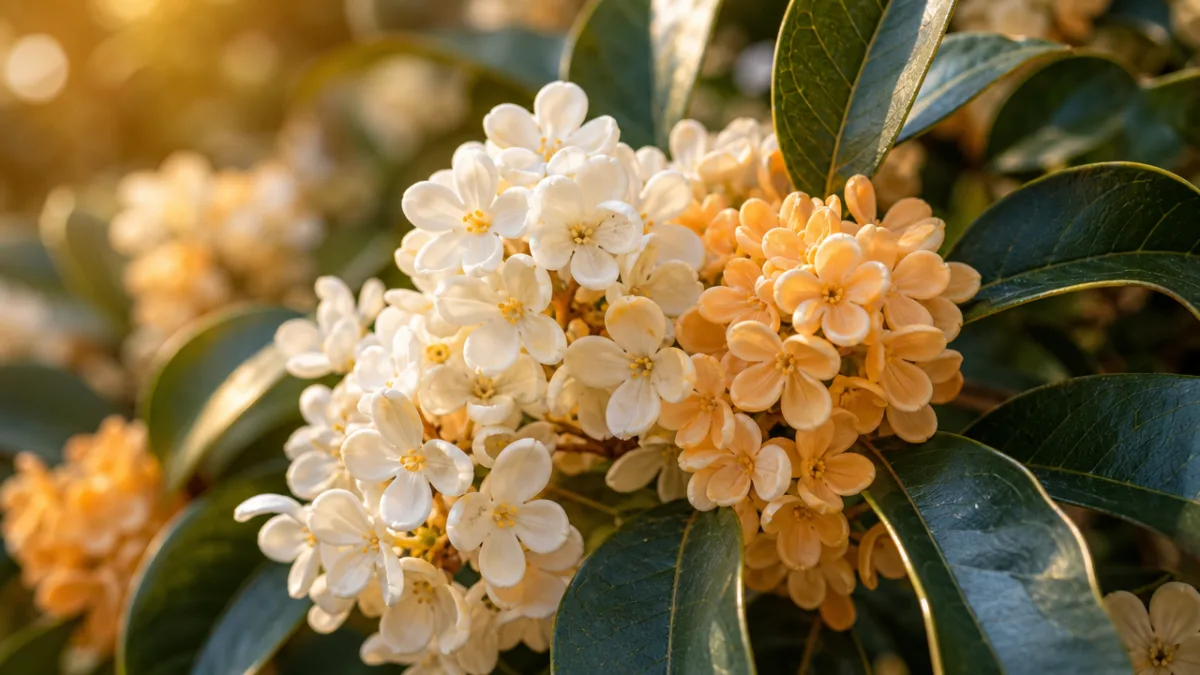
The genus Osmanthus encompasses roughly thirty species, but it is Osmanthus fragrans that earns the royal epithet. Within this species, horticulturists have developed four primary cultivar groups that differ in flower color, blooming season, and fragrance intensity. The Aurantiacus Group, known as the orange osmanthus, produces deep apricot-orange flowers and is considered by many fragrance experts to carry the most complex and potent scent. The Albus Group bears pure white flowers and tends to bloom in early autumn, while the Latifolius Group is recognized by its larger leaves and pale yellow blooms.
Osmanthus fragrans is an evergreen shrub or small tree that typically grows between three and twelve meters in height under ideal conditions, though many garden specimens are kept smaller through careful pruning. The leaves are glossy, dark green, and slightly leathery, with margins that can be either smooth or finely serrated depending on the variety. The flowers themselves are extraordinarily small, barely three to four millimeters across, yet they are produced in such abundant clusters along the leaf axils that they create a visual haze of color throughout the canopy, and their cumulative fragrance is overwhelming in the best possible sense.
One of the most remarkable botanical features of Osmanthus is its extended and sometimes irregular blooming pattern. While it is primarily associated with autumn, certain varieties bloom multiple times per year, and in mild climates some specimens produce flowers through winter and into early spring. This persistence earns it its “Queen of Winter” designation, as it continues to offer beauty and fragrance during the months when most other flowering plants have retreated into dormancy. The contrast of sweet perfume against cold, crisp winter air creates an almost magical garden experience.
Beyond Osmanthus fragrans, several other species deserve recognition in the gardener’s consideration. Osmanthus heterophyllus, sometimes called holly osmanthus or false holly, is valued for its distinctive spiny leaves and exceptional cold hardiness. Osmanthus delavayi is a smaller, more refined species prized in formal gardens for its arching habit and prolific white spring flowers. Osmanthus burkwoodii, a garden hybrid, combines the best qualities of O. delavayi and O. decorus, offering remarkable fragrance with improved vigor and adaptability to temperate climates.
Growing Osmanthus: Climate, Soil, and Site Selection
Successfully cultivating Osmanthus begins with understanding its native habitat preferences. In the wild, these plants grow on well-drained hillsides and forest margins in subtropical and warm temperate regions, often where the soil is slightly acidic and rich in organic matter. Replicating these conditions in a garden setting is the foundation of success. Osmanthus fragrans is generally hardy in USDA zones 7 through 11, though some cultivars tolerate brief cold snaps into zone 6 when planted in sheltered positions against a south-facing wall or within a protected courtyard setting.
Soil preparation is critically important for establishing a healthy Osmanthus. The plant prefers well-drained, moderately fertile soil with a slightly acidic to neutral pH, ideally between 6.0 and 7.5. Heavy clay soils that retain moisture around the roots can lead to root rot and gradual decline, making it worthwhile to amend the planting site generously with coarse grit, perlite, and composted organic matter before planting. Raised beds are an excellent option in gardens with naturally poor drainage. Conversely, very sandy or nutrient-poor soils should be enriched with slow-release organic fertilizers to support steady growth.
Light requirements for Osmanthus are somewhat flexible, though full sun to partial shade produces the most vigorous plants and the most abundant flowering. In hotter climates, afternoon shade prevents leaf scorch and extends the blooming period by keeping the flowers cooler. In cooler temperate regions, maximizing sun exposure encourages more prolific blooms and helps the plant build the energy reserves needed to survive cold winters. Wind protection is also important, particularly for Osmanthus fragrans, as strong winds can desiccate evergreen foliage during winter and physically damage the brittle flower clusters during autumn bloom.
When selecting a planting site, consider the relationship between the fragrance and the intended use of the garden space. Osmanthus planted near seating areas, pathways, windows, or garden entrances will allow the fragrance to be enjoyed most fully. The scent is carried well on cool evening air, making placement near outdoor dining areas or bedroom windows particularly rewarding. Many experienced gardeners also recommend planting Osmanthus at a slight distance from the viewer rather than immediately adjacent to a path, as the fragrance intensifies delightfully as one approaches the plant and the anticipation becomes part of the sensory experience.
Care, Pruning, and Seasonal Maintenance
Once established, Osmanthus is a remarkably self-sufficient plant that requires relatively little intervention to thrive and flower abundantly. Watering requirements are moderate; newly planted specimens need consistent moisture during their first two growing seasons while root systems develop, but established plants are reasonably drought tolerant and only require supplemental irrigation during extended dry spells. Overwatering is a far more common cause of Osmanthus decline than underwatering, so erring on the side of less water is generally the wiser approach once the plant is settled into the landscape.
Fertilization should be approached with measured restraint. Osmanthus benefits from an annual application of a balanced, slow-release fertilizer applied in early spring as new growth begins. In acidic soils, supplementing with a fertilizer formulated for acid-loving plants ensures adequate iron and magnesium availability, preventing the yellowing between leaf veins known as chlorosis. Excessive nitrogen fertilization should be avoided as it promotes lush leafy growth at the expense of flower production, potentially reducing the very quality that makes this plant so desirable in garden settings.
Pruning Osmanthus requires timing awareness above all else. Because flowers are produced on wood grown in the previous season, pruning at the wrong time will remove the buds that would have become that year’s blooms. The safest time to prune is immediately after the main flowering flush ends, allowing the plant a full growing season to produce new flowering wood before the next bloom period. Light shaping can be done more freely, but any major structural pruning should be carefully timed to avoid sacrificing the fragrant flower display. Osmanthus responds well to pruning and can be maintained as a formal hedge, a standard tree, an espalier, or a naturalistic shrub.
The following seasonal maintenance checklist summarizes care priorities throughout the year:
- Spring: Apply slow-release fertilizer, check for and treat any pest infestations that may have established over winter, and begin light shaping if needed after any late-season blooms have finished.
- Summer: Monitor soil moisture during hot dry spells, apply mulch to conserve moisture and regulate soil temperature, and watch for signs of spider mites in hot dry conditions.
- Autumn: Enjoy the primary bloom season; avoid any pruning that would remove flower-bearing wood; consider collecting fallen flowers for culinary or aromatic use.
- Winter: Protect marginally hardy specimens with horticultural fleece or a thick mulch over the root zone during periods of hard frost; in severe climates, container-grown specimens can be moved to a cool, frost-free greenhouse.

Osmanthus in Culture, Cuisine, and Perfumery
The cultural significance of Osmanthus in China and Japan is difficult to overstate. In Chinese tradition, the osmanthus tree is one of the ten famous flowers, holding a position of symbolic importance alongside the peony, lotus, and chrysanthemum. The Mid-Autumn Festival, one of the most celebrated holidays in the Chinese calendar, is traditionally associated with osmanthus fragrance, and the mythological moon goddess Chang’e is said to tend an osmanthus tree in her lunar palace. This connection between osmanthus, the moon, and autumn permeates Chinese poetry, painting, and decorative arts across many dynasties.
In the culinary world, osmanthus flowers occupy a unique and delightful niche. Their sweet, apricot-honey flavor translates beautifully into an impressive range of food and beverage applications. In Chinese cuisine, osmanthus flowers are used to make guìhuā gāo, a sweet glutinous rice cake perfumed with the blossoms, and guìhuā jiǔ, a traditional osmanthus flower wine that has been produced for over a thousand years. The flowers are also infused into honey, incorporated into mooncakes during the Mid-Autumn Festival, stirred into congee, and used to flavor teas and desserts throughout the Yangtze River delta region where Hangzhou and Guilin, the city literally named after the osmanthus, celebrate the flower as a civic symbol.
The perfumery applications of osmanthus are equally extraordinary and arguably even more economically significant. The absolute extracted from osmanthus flowers is one of the most expensive and sought-after natural ingredients in fine fragrance, with prices regularly exceeding several thousand dollars per kilogram. The scent profile is exceptionally complex, combining notes of ripe apricot and peach with undertones of leather, tea, and a faint animalic warmth that gives it unusual depth and sophistication. Major perfume houses including Guerlain, Hermès, and many niche artisan perfumers have built entire fragrances around the osmanthus note, and it appears as a key ingredient in countless classic and contemporary compositions.
In traditional medicine across East and Southeast Asia, osmanthus has a long history of use beyond its culinary and aromatic applications. Traditional Chinese medicine practitioners historically used osmanthus flowers to warm the stomach, dispel cold, and soothe coughs. The bark and roots of certain species were employed in preparations intended to address pain and promote circulation. While these traditional uses should not be confused with modern medical treatment, they reflect the deep integration of this plant into Asian material culture and the observation across centuries that its components have bioactive properties worth investigating through contemporary research.
Osmanthus in the Modern Garden: Design and Companion Planting
Contemporary garden designers have enthusiastically embraced Osmanthus for its combination of evergreen structure, reliable fragrance, and relative low maintenance. In formal garden design, Osmanthus fragrans and its hybrids make outstanding specimens for clipped hedges that provide year-round privacy screening while delivering seasonal floral perfume. The dark glossy foliage serves as an excellent backdrop for colorful flowering perennials, and the dense evergreen canopy creates important microhabitats for garden wildlife including nesting birds and overwintering insects. Few other plants offer such a comprehensive package of horticultural virtues.
In informal and naturalistic garden styles, Osmanthus works beautifully as part of a mixed shrub border where it can grow into its natural rounded form without the constraints of formal clipping. Placing it alongside other autumn-interest plants amplifies the seasonal display magnificently. Consider pairing osmanthus with Japanese maples for a dramatic autumn composition combining incandescent foliage color and heady fragrance, or with ornamental grasses whose movement and texture complement the osmanthus’s solid mass. The following plants make particularly rewarding companions in terms of both aesthetic and growing condition compatibility:
- Camellia japonica and Camellia sasanqua — Share similar soil preferences and provide complementary winter and early spring flower color in shades of pink, red, and white.
- Mahonia species — Fellow winter-interest shrubs with architectural form, yellow flowers, and blue berries that create a multi-season display alongside osmanthus.
- Nandina domestica — Offers brilliant winter foliage color in warm reds and oranges, contrasting beautifully with the dark green osmanthus leaves.
- Helleborus hybrids — Ground-level companions that bloom in late winter and early spring when many osmanthus varieties still hold fragrant flowers.
- Japanese forest grass (Hakonechloa macra) — A graceful companion whose cascading golden foliage brightens the base of osmanthus without competing for visual attention.
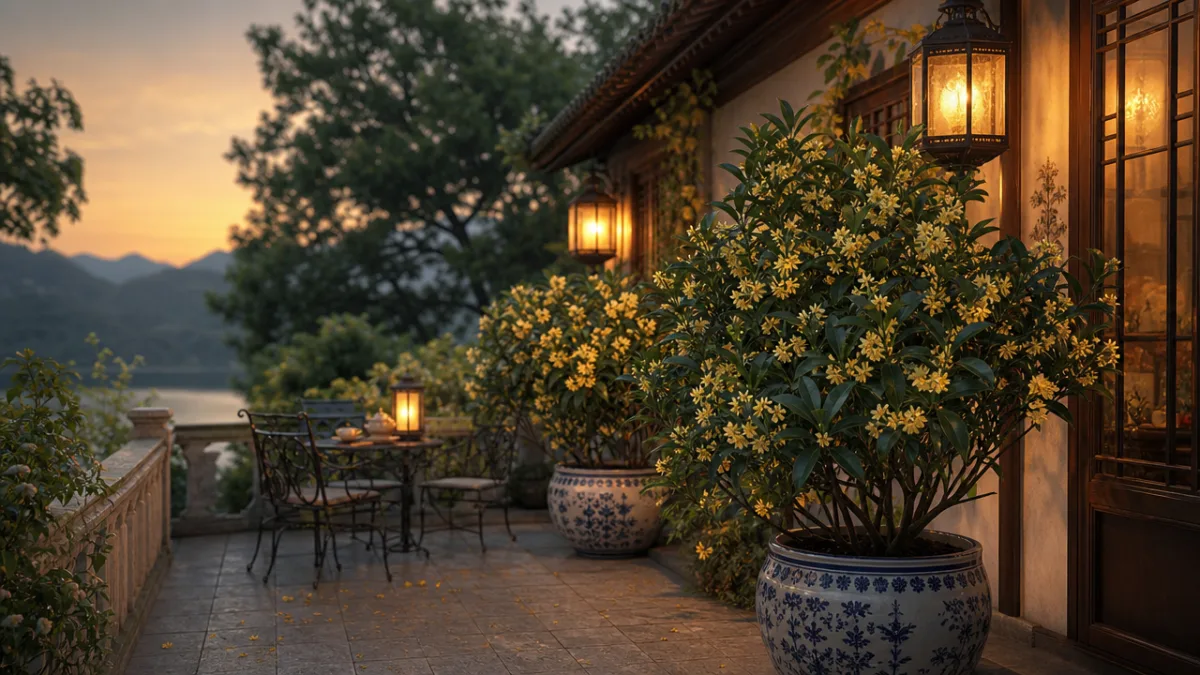
Container cultivation of Osmanthus has gained significant popularity among urban gardeners and those in colder climates seeking to grow frost-tender varieties. Large terracotta or glazed ceramic containers provide an elegant growing environment, and placing potted osmanthus on a terrace, rooftop garden, or balcony brings the fragrance into otherwise paved urban spaces. Container specimens require more frequent attention to watering and feeding than their garden-planted counterparts, and they benefit from annual repotting or at minimum a top dressing of fresh compost to replenish depleted nutrients. In cold climates, containers should be moved to protected but cool and well-lit locations before hard frosts arrive.
The ecological value of Osmanthus in garden settings deserves recognition alongside its aesthetic and cultural contributions. The flowers, though small, are rich in nectar and attract numerous pollinating insects including honeybees, bumblebees, hoverflies, and butterflies during autumn when many other nectar sources have already finished. The dense evergreen canopy provides year-round shelter for birds, and the occasional production of small dark fruits by some species offers an additional food source for wildlife. In an era when gardeners are increasingly conscious of ecological responsibility, Osmanthus stands out as a plant that gives back to the garden ecosystem as generously as it gives to the senses of its human admirers.
Sourcing, Propagation, and the Future of Osmanthus Cultivation
Acquiring Osmanthus plants has become considerably easier in recent decades as demand from Western gardeners has encouraged specialist nurseries and mainstream garden centers to stock a broader range of species and cultivars. When purchasing, look for plants with healthy, unblemished dark green foliage, a well-developed root system that fills the container without being excessively pot-bound, and a compact, well-branched habit. Avoid specimens showing yellowing leaves, which may indicate root problems, waterlogging, or nutrient deficiency that could persist and limit the plant’s performance after planting. Buying from reputable specialist nurseries with a focus on fragrant or Asian plants often yields superior cultivars not available through mass-market retail channels.
For gardeners interested in propagation, Osmanthus can be grown from semi-hardwood cuttings taken in mid to late summer with moderate success. The cuttings should be approximately eight to twelve centimeters long, taken from healthy non-flowering shoots, stripped of lower leaves, dipped in rooting hormone, and inserted into a well-draining propagation medium such as equal parts perlite and coir. Maintaining high humidity with a propagation tent or misting system and providing bottom heat at around twenty degrees Celsius accelerates rooting. Patience is required, as Osmanthus cuttings can take several months to develop a robust enough root system for potting on, and not all cuttings will succeed even under ideal conditions.
Growing Osmanthus from seed is possible but rarely the preferred approach for home gardeners due to the extended time required and the uncertainty of the resulting plants’ characteristics. Seeds require a period of cold stratification to break dormancy and typically take two or more years to germinate reliably. Seedlings grown from named cultivars will not necessarily inherit the parent plant’s best characteristics, as cross-pollination can introduce genetic variability. For this reason, vegetative propagation through cuttings or layering remains the standard method for perpetuating named cultivars with known fragrance quality and flower color.
Looking to the future, Osmanthus cultivation is likely to expand significantly as climate zones shift and a wider range of temperate regions become suitable for growing currently marginal species. Plant breeders are actively developing new cold-hardy cultivars that can survive winters in zones 5 and even 4, potentially opening osmanthus culture to vast areas of North America, northern Europe, and other cooler temperate regions where it has previously been impractical. There is also growing commercial interest in developing more efficient methods of osmanthus absolute production for the perfume industry, which currently relies almost entirely on hand labor in China for the delicate harvest of the tiny blossoms. Biotechnological approaches to producing the fragrant compounds found in osmanthus flowers may eventually supplement traditional extraction, though connoisseurs of natural fragrance will undoubtedly continue to prize the genuine botanical material above any synthetic approximation.








What do you think?
It is nice to know your opinion. Leave a comment.