










Jasminum officinale: The Classic Common Jasmine
Introduction and Botanical Overview
Jasminum officinale, commonly known as common jasmine, true jasmine, or poet’s jasmine, is one of the most celebrated and beloved flowering vines in the horticultural world. Native to the Caucasus, northern Iran, Afghanistan, Pakistan, the Himalayas, and western China, this deciduous to semi-evergreen climbing shrub has been cultivated for centuries across temperate and subtropical regions. Its graceful, arching stems and lush green foliage serve as the perfect backdrop for its legendary blossoms, making it a cornerstone plant in gardens both formal and informal around the globe.
Belonging to the olive family Oleaceae, Jasminum officinale is a genus member that includes over 200 species of shrubs and vines. What distinguishes officinale from its many relatives is a combination of hardiness, extraordinary fragrance, and remarkable adaptability. The plant typically reaches heights of 3 to 10 meters when allowed to climb freely, producing pinnate leaves composed of five to nine leaflets that create a delicate, feathery texture throughout the growing season. The stems are slender, slightly angular, and a rich shade of green, twining readily around support structures.
The species has a long and distinguished history in cultivation, with records of its use dating back more than two millennia. It was introduced to Britain in the sixteenth century, where it quickly became a garden staple prized by royalty and commoners alike. The name “officinale” itself is a botanical designation indicating that the plant was once officially recognized for its medicinal and commercial uses, a distinction shared with other historically important plants such as rosemary and lavender. This linguistic heritage speaks volumes about the plant’s deep integration into human culture and commerce over the centuries.
Flower Characteristics and Fragrance
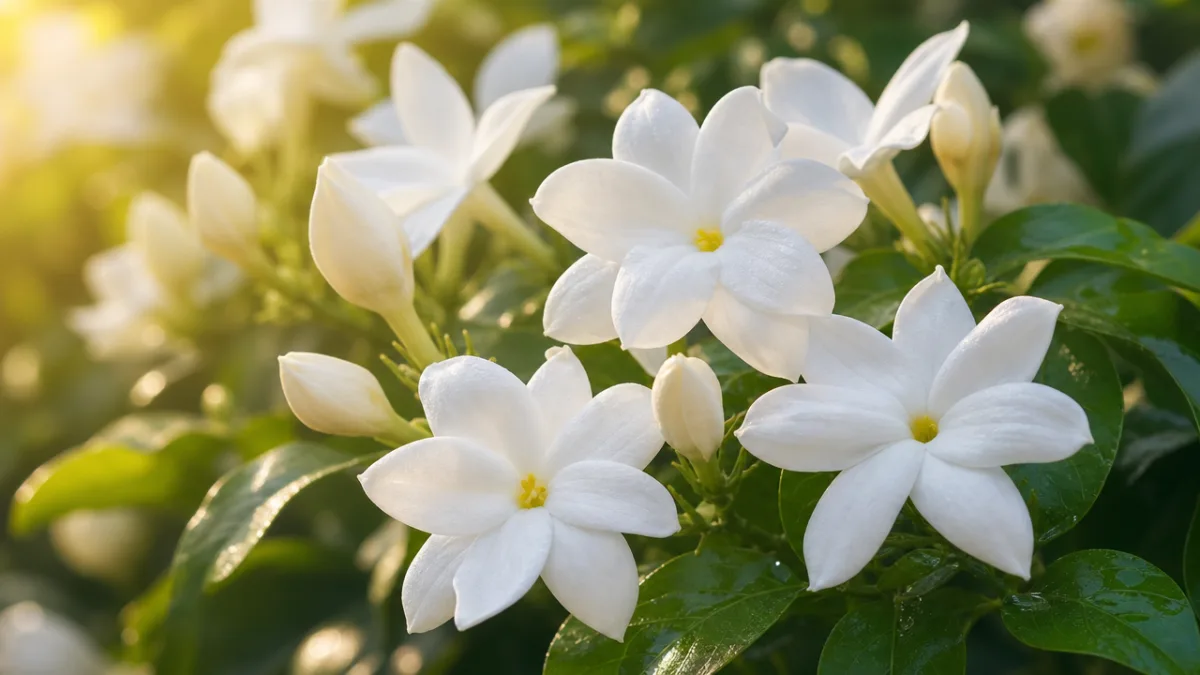
The flowers of Jasminum officinale are among the most iconic in the floral world. Appearing from early summer through to autumn, they emerge in loose clusters of small, star-shaped blossoms that measure approximately 2.5 centimeters across. Each flower opens from a slender, tubular calyx to reveal five or sometimes more delicate white petals that radiate outward in a perfectly symmetrical arrangement. The blossoms are often tinged with a blush of pink on the exterior before they fully open, adding a romantic, two-toned quality to the unopened buds.
What truly elevates Jasminum officinale above many other flowering plants is its extraordinary fragrance, which is widely considered one of the finest natural scents in the plant kingdom. The aroma is sweet, rich, and intensely floral, with complex undertones that perfumers have long described as simultaneously warm and fresh. The fragrance is especially potent during the evening hours and on warm, humid days, as higher temperatures encourage the volatilization of the aromatic compounds contained within the petals. Gardens planted with jasmine near windows, terraces, or pathways benefit tremendously from this characteristic, allowing the scent to drift into living spaces and outdoor entertaining areas.
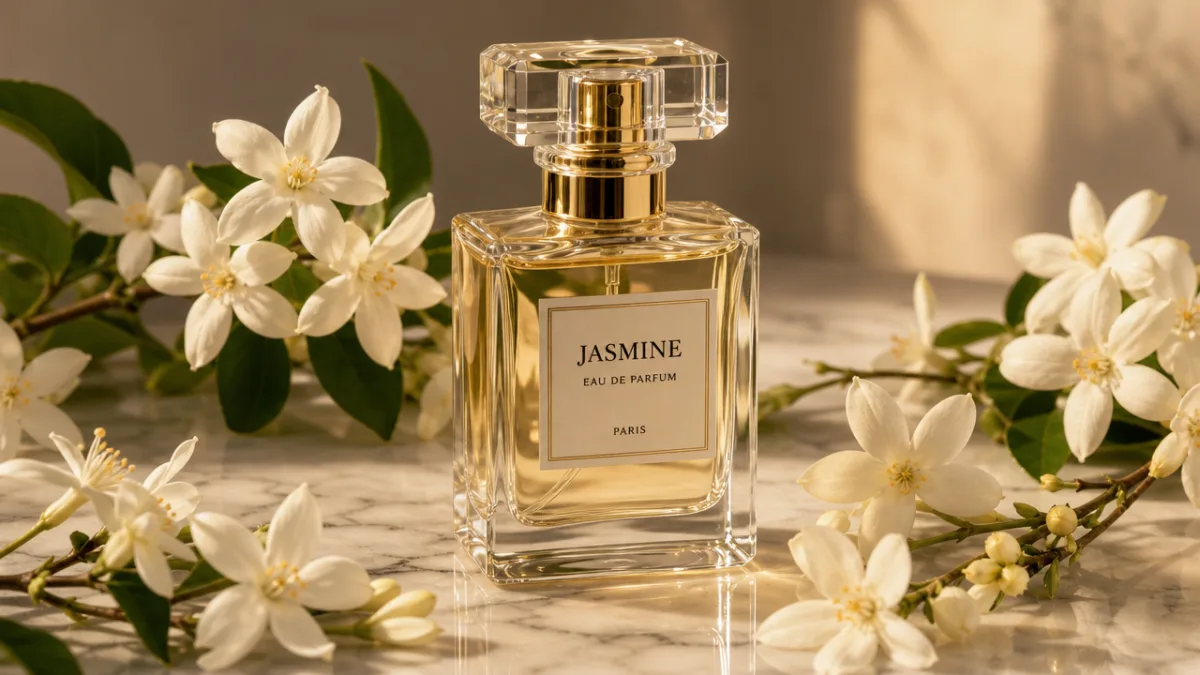
The chemical composition of jasmine’s fragrance has been extensively studied by the perfume industry, which has relied on Jasminum officinale and its close relative Jasminum grandiflorum for centuries. The essential oil extracted from jasmine flowers contains a complex array of compounds including linalool, benzyl acetate, indole, cis-jasmone, and eugenol. Together, these molecules create the characteristic jasmine accord that underpins countless fine fragrances. Historically, the collection of jasmine flowers for perfume production was performed by hand at night or early morning when the blossoms release their scent most abundantly, a practice that continues in some traditional perfume-producing regions of France, India, and Morocco to this day.
Growing Conditions and Cultivation
Jasminum officinale is a rewarding plant to cultivate, provided its fundamental requirements are met. It thrives best in a position that receives full sun to partial shade, with at least six hours of direct sunlight per day being ideal for abundant flowering. While the plant can tolerate some shade, flowering will be reduced significantly in deeply shaded conditions, and the characteristic fragrance will be less pronounced. In regions with very hot summers, some afternoon shade can actually be beneficial, protecting the foliage from scorching and extending the blooming period.
In terms of soil preference, common jasmine is relatively adaptable but performs best in a well-drained, moderately fertile soil with a slightly acidic to neutral pH ranging between 6.0 and 7.0. Waterlogged or compacted soils should be avoided, as Jasminum officinale is susceptible to root rot in poorly drained conditions. Amending heavy clay soils with grit, perlite, or organic matter before planting will significantly improve drainage and encourage healthy root development. Conversely, very sandy or nutrient-poor soils benefit from the addition of well-rotted compost or a slow-release balanced fertilizer applied at planting time.
Watering requirements are moderate, with newly planted specimens needing regular irrigation to establish a healthy root system during their first growing season. Once established, Jasminum officinale demonstrates a reasonable degree of drought tolerance, though consistent moisture during hot, dry spells will encourage more prolific flowering. During the growing season, a monthly application of a potassium-rich fertilizer, such as tomato feed, can promote vigorous bloom production. In autumn, feeding should cease to allow the plant to harden off appropriately before the onset of cooler temperatures.
Hardiness, Training, and Pruning
One of the great strengths of Jasminum officinale is its notable cold hardiness compared to many other jasmine species. It is generally rated as hardy to USDA zones 7 through 10, tolerating temperatures as low as -15 degrees Celsius (5 degrees Fahrenheit) when given some protection. In borderline climates, planting against a south or southwest-facing wall provides the additional warmth and shelter needed to see the plant through cold winters. A thick layer of mulch applied around the base in autumn can also protect the root system from hard frosts, even when the top growth suffers some winter dieback.
As a vigorous climbing plant, Jasminum officinale requires some form of support structure to display itself to best advantage. Suitable options include:
- Wooden or metal trellises fixed to a wall or fence, offering the plant a firm framework for its twining stems
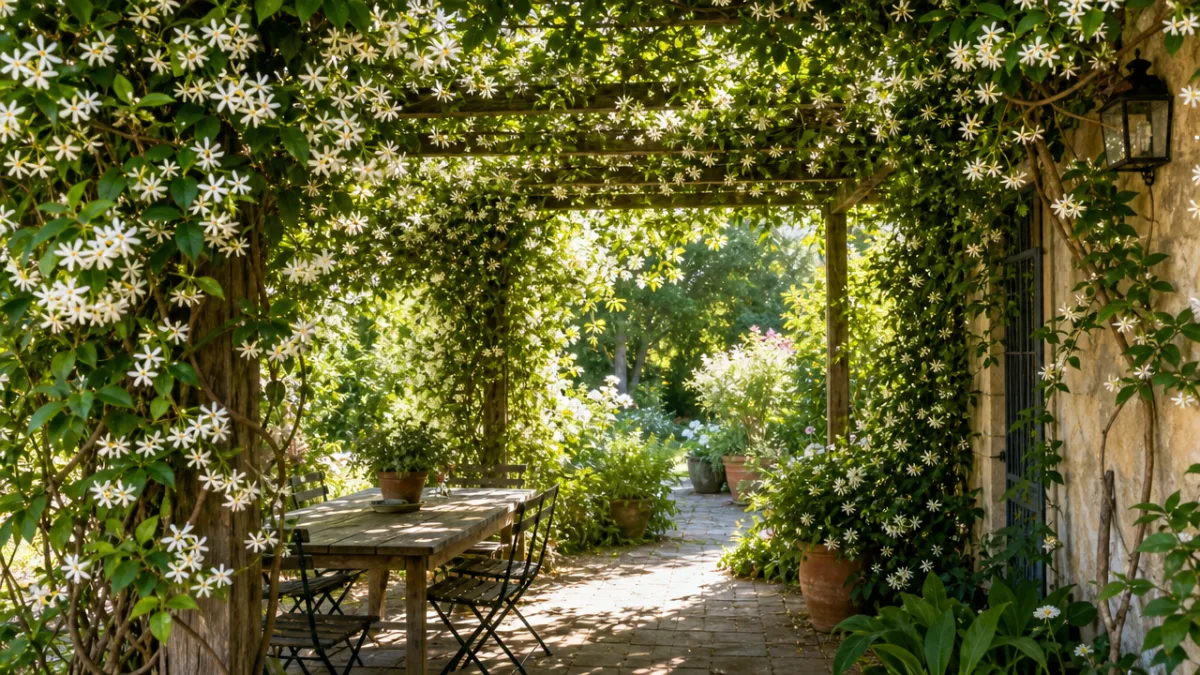
- Pergolas or arbors, where the plant can be trained overhead to create a fragrant, flowering canopy for seating areas
- Obelisks or decorative plant supports within borders, providing a vertical accent in mixed planting schemes
- Existing trees or large shrubs, through which the jasmine can scramble informally in a naturalistic setting
- Wires attached horizontally to walls, spaced approximately 30 centimeters apart to guide and support the spreading stems
Pruning is an essential practice for maintaining a tidy, productive plant and is best carried out immediately after flowering, typically in late summer or early autumn. At this time, dead, damaged, or overcrowded stems should be removed entirely, and any long, unruly shoots that have grown beyond their allotted space can be trimmed back. Hard renovation pruning can be undertaken every few years if the plant becomes overly woody and congested, cutting stems back significantly to encourage a flush of vigorous new growth from the base. This rejuvenation approach is highly effective and demonstrates the plant’s remarkable resilience.
Varieties and Cultivars
Over the centuries of cultivation, several notable cultivars and forms of Jasminum officinale have been selected and developed by horticulturists, each offering a distinctive variation on the classic species. These selections allow gardeners to choose a plant that best suits their specific aesthetic or practical requirements, whether the priority is more vigorous growth, enhanced fragrance, variegated foliage, or compact habit. The diversity within the species reflects both its genetic versatility and the enduring enthusiasm of plant breeders for this exceptional climber.
Among the most widely grown cultivars, a number stand out for their particular qualities and garden merit:
- Jasminum officinale ‘Argenteovariegatum’ — This cultivar features attractive cream and green variegated foliage that provides interest even when the plant is not in flower, and produces the characteristic white blooms throughout summer
- Jasminum officinale ‘Aureum’ — Known for its golden-yellow splashed leaves, this form adds warmth and brightness to shaded walls and brings year-round visual interest to the garden
- Jasminum officinale f. affine — Sometimes known as the large-flowered jasmine, this form produces flowers that are slightly larger than the species and often have a more pronounced pink flush on the bud exterior
- Jasminum officinale ‘Inverleith’ — A cultivar selected for its rich pink flower buds and particularly strong fragrance, prized by fragrance enthusiasts and cottage garden designers alike
- Jasminum officinale ‘Clotted Cream’ — Noted for its creamy, ivory-toned flowers rather than pure white, lending a softer, more romantic quality to the plant’s floral display
Each of these cultivars shares the fundamental cultural requirements of the parent species but may vary slightly in vigor and hardiness. Variegated forms, for example, tend to be slightly less vigorous than the straight species and may benefit from a more sheltered, sunny position to maintain the clarity and vibrancy of their foliage coloration. When selecting a cultivar for a specific garden situation, it is worth considering both the plant’s eventual size and the year-round ornamental value offered by any additional leaf color or pattern, particularly for smaller gardens where each plant must earn its place in every season.
Uses in Perfumery, Medicine, and Culture
The relationship between Jasminum officinale and human civilization extends far beyond the garden fence, reaching deep into the history of perfumery, traditional medicine, and cultural symbolism across numerous societies. In the world of haute parfumerie, jasmine is considered one of the essential floral notes, forming the aromatic backbone of some of the most famous and enduring fragrances ever created. The absolute extracted from jasmine flowers is among the most expensive raw materials used in perfumery, rivaling rose and iris in its cost and prestige, owing to the enormous quantity of flowers required to produce even a small amount of extract.
In traditional medicine systems across South and Central Asia, Jasminum officinale has been employed for a wide range of therapeutic purposes. Ayurvedic medicine has long used jasmine preparations to address conditions including skin disorders, eye inflammation, and oral health concerns. In Chinese traditional medicine, the plant’s flowers and leaves have been used in formulations intended to promote relaxation, reduce anxiety, and support general wellbeing. Modern scientific research has begun to examine some of these traditional claims, with studies suggesting that jasmine’s aromatic compounds may indeed have mild anxiolytic effects, supporting the folk wisdom that the plant’s scent promotes calm and reduces nervous tension.
Culturally, jasmine holds a position of remarkable prominence in the symbolic vocabularies of many nations and peoples. It is the national flower of Pakistan, where it is known as “chambeli” and carries deep associations with love, beauty, and purity. In India, jasmine garlands play a central role in wedding ceremonies, religious offerings, and festival decorations, their fragrance considered auspicious and spiritually uplifting. In the Western poetic tradition, jasmine has long served as a symbol of grace, elegance, and sensual pleasure, appearing in the verses of poets from Shakespeare to Keats and beyond. This extraordinary breadth of cultural significance across vastly different civilizations speaks to the universal human response to this plant’s extraordinary beauty and fragrance.
Ecological Value and Companion Planting
Beyond its considerable ornamental and cultural value, Jasminum officinale makes a meaningful contribution to garden ecology. Its flowers are a valuable nectar source for a wide range of pollinating insects, including bees, hoverflies, and butterflies, which are attracted by both the abundant nectar and the strong floral scent. The extended blooming season, stretching from early summer through autumn, provides a sustained food source during a period when many other garden plants have ceased flowering, making common jasmine a genuinely wildlife-friendly choice for the ecologically conscious gardener.
The dense, leafy growth habit of established jasmine plants provides useful nesting habitat and shelter for small birds and beneficial insects. In gardens where wildlife-friendly planting is a priority, training jasmine plants over larger structures to create thick, multi-layered cover will maximize their value as habitat. The developing seeds produced after flowering are occasionally taken by birds, adding a further dimension to the plant’s ecological contribution. While jasmine is by no means a specialist habitat plant in the way that some native species are, its versatility and accessibility make it one of the more wildlife-supportive ornamental climbers available to gardeners in temperate regions.
In terms of companion planting, Jasminum officinale associates beautifully with a wide range of garden plants. Its fragrant white flowers combine particularly well with climbing roses, creating a classic cottage garden combination of intertwining blooms and complementary scents. Purple-flowered climbers such as wisteria or clematis provide a striking color contrast when planted alongside jasmine on the same support structure. In mixed borders at the base of a wall-trained jasmine, lavender, salvias, and other aromatic herbs create a cohesive, fragrant planting scheme that maximizes the sensory impact of the garden space throughout the warmer months. The plant’s adaptability makes it one of the most versatile tools in the gardener’s planting palette.
Propagation and Long-Term Care
Propagating Jasminum officinale is a satisfying and relatively straightforward process that allows gardeners to increase their stock of plants, share them with friends, or replace aging specimens with vigorous new ones. The most reliable propagation method is stem cuttings, taken during the growing season using semi-ripe material from the current year’s growth. Cuttings of approximately 10 to 15 centimeters in length, taken just below a leaf node, should be stripped of lower leaves, dipped in rooting hormone powder or gel, and inserted into a free-draining propagating mix. Maintained under a humid environment with gentle bottom heat, cuttings typically root within four to eight weeks.
Layering is another highly effective propagation technique for jasmine that requires minimal equipment and expertise. A long, flexible stem is selected and bent gently toward the ground, where a shallow trench has been prepared in the soil. The stem is pegged firmly into this trench at a point where a leaf node contacts the soil, and the remaining stem tip is left upright and staked. Roots typically develop at the buried node within a single growing season, at which point the new plant can be severed from the parent and transplanted to its permanent position. This method is particularly suitable for producing a limited number of large, well-rooted plants relatively quickly.
For the long-term health and productivity of established plants, annual attention to feeding, watering, and pruning will yield the best results. As the plant ages, it may develop a tendency to produce significant quantities of woody, unproductive stems at the base while flowering occurs predominantly on the outermost growth. Periodic thinning of these old interior stems, combined with the encouragement of new basal growth, will maintain the plant’s vigor and floral productivity over many years. With proper care, Jasminum officinale is a long-lived garden plant capable of thriving in the same position for decades, becoming an increasingly beautiful and important structural feature of the garden landscape with each passing year.








What do you think?
It is nice to know your opinion. Leave a comment.