










Fire Shields, No-Fines Concrete, and Living Fences: Ancient and Modern Strategies for Resilient Landscapes
Introduction: Building with Nature’s Logic
In an era defined by climate uncertainty, wildfires, flooding, and ecological collapse, the search for truly resilient building and landscaping strategies has never been more urgent. Across the globe, designers, farmers, and homeowners are returning to time-tested techniques and blending them with modern engineering insights to create properties that can withstand environmental extremes. Three of the most compelling approaches gaining renewed attention are fire shields, no-fines concrete, and living fences — each remarkable on its own, and together forming a coherent philosophy of design that works with natural systems rather than against them.
These strategies share a common thread: they treat the landscape not as a static backdrop to be controlled, but as a dynamic partner in building safety, comfort, and beauty. Fire shields use carefully selected plants and spatial arrangements to slow the advance of wildfire. No-fines concrete, a porous aggregate-based material, manages stormwater and reduces heat islands while maintaining structural integrity. Living fences replace inert barriers with thriving biological corridors that provide shelter, food, and ecological services. Together, they represent a toolkit for the 21st-century land steward.
Understanding these methods requires looking at both their historical roots and their contemporary applications. Indigenous peoples around the world managed fire-prone landscapes through deliberate planting and burning for thousands of years. Traditional agriculturalists built living hedgerows across Europe and Asia long before the concept of biodiversity entered the modern vocabulary. And porous concrete, though it feels cutting-edge, has analogues in ancient Roman construction. By revisiting and refining these traditions, we can build landscapes that are not only more resilient but also more alive, more beautiful, and more deeply connected to their ecological context.
Fire Shields: Designing Landscapes That Protect Against Wildfire
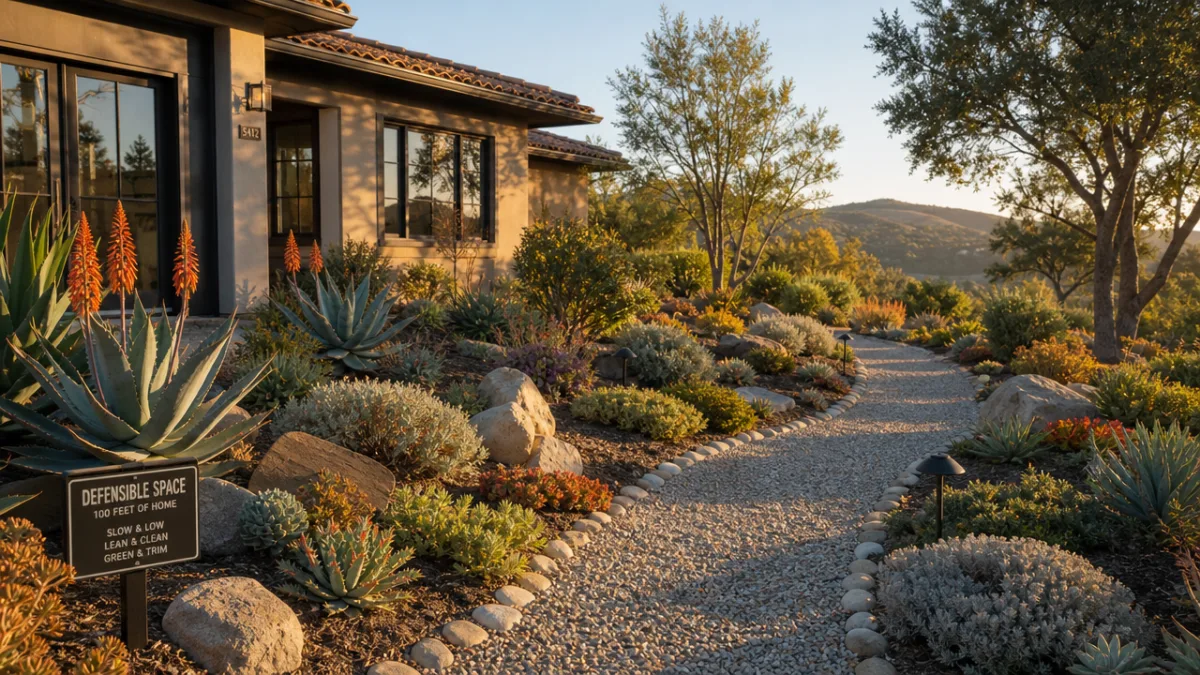
A fire shield is not a single wall or a moat — it is a thoughtfully designed zone of vegetation, hardscape, and open space that reduces a fire’s fuel load and slows its advance toward structures. The underlying principle is simple: fire needs fuel, heat, and oxygen to spread. By manipulating the types, densities, and arrangements of plants within the defensible space around a home or property, a landowner can dramatically reduce the energy a fire brings to bear on their buildings. The key lies in selecting fire-resistant species, maintaining appropriate spacing, and creating layered zones that interrupt fire’s horizontal and vertical path.
Effective fire shield design typically divides the area around a structure into concentric zones. The innermost zone, closest to the building, uses non-combustible groundcovers, gravel, and highly fire-resistant succulents or native groundcovers with high moisture content. Moving outward, the next zone allows for more diverse plantings but emphasizes low-growing, well-irrigated species that are kept free of dead material. The outermost zone transitions into the broader landscape and focuses on reducing the density of tall, resinous trees and shrubs that can act as fire ladders, carrying flames from ground level into the canopy.
Plant selection is everything in a fire shield. Species with high water content in their tissues, smooth bark, and low resin or oil content are strongly preferred. Examples include certain oaks, aloes, agaves, lavender in controlled quantities, and many Mediterranean natives adapted to fire-prone climates. Conversely, highly flammable species like rosemary, juniper, eucalyptus, and most ornamental grasses should be avoided near structures, or placed only in the outermost zones where they can be managed. A fire shield is also a living system requiring ongoing maintenance — removing dead leaves, pruning lower branches, and keeping plants well-watered through dry seasons.
Beyond private property, fire shield thinking is reshaping community planning. Entire neighborhoods in California, Australia, and southern Europe are being redesigned with defensible space corridors, community firescapes, and firebreak gardens that double as public green spaces. These shared landscapes reduce the risk for entire districts while creating amenity for residents and habitat for wildlife. The lesson emerging from decades of catastrophic wildfire is that no building material alone can protect a structure if the surrounding landscape is a tinderbox — the landscape itself must become part of the defense.
No-Fines Concrete: Porous, Permeable, and Surprisingly Beautiful
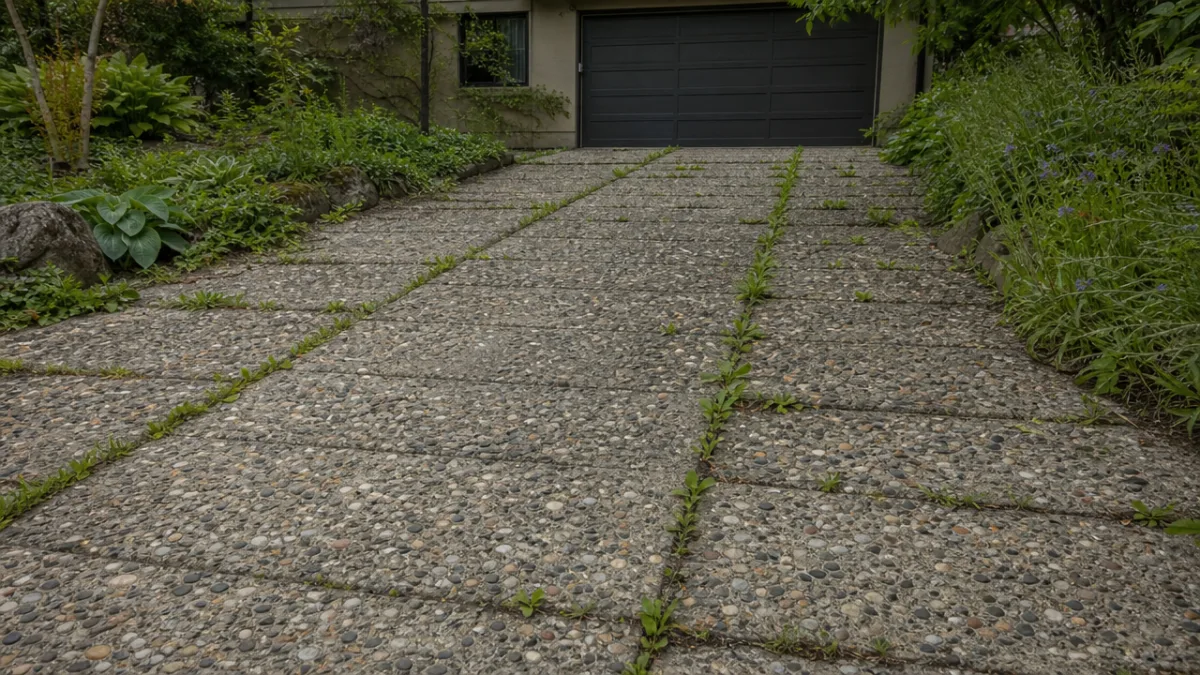
No-fines concrete is one of those building materials that sounds deeply technical but is, at its core, elegantly simple. Traditional concrete is made by mixing cement, sand, aggregate, and water, producing a dense, relatively impermeable slab. No-fines concrete eliminates the fine particles — specifically the sand — leaving only coarse aggregate bound together by a thin cement paste. The result is a material riddled with interconnected voids, giving it a porosity of between 15 and 35 percent. Water passes straight through it, percolating into the soil below rather than running off across the surface.
The environmental benefits of this approach are substantial and well-documented. Conventional impervious surfaces — driveways, car parks, patios, and paths — are among the leading contributors to urban stormwater problems. When rain falls on sealed surfaces, it rushes off rapidly, carrying pollutants, sediment, and excess heat into drainage systems and waterways. No-fines concrete intercepts this flow, allowing water to infiltrate slowly and recharge groundwater supplies. In urban environments where impermeable cover has dramatically reduced natural infiltration, widespread use of porous concrete surfaces can help restore something close to the natural hydrological cycle.
No-fines concrete also has notable thermal properties. Because the surface contains so many air-filled voids, it absorbs and retains less heat than a conventional concrete slab. This makes it a meaningful tool in the fight against urban heat islands, where dense impermeable surfaces trap solar radiation and raise ambient temperatures by several degrees compared to surrounding rural areas. Installing porous concrete in driveways, paths, and parking areas can reduce surface temperatures, lower cooling loads for nearby buildings, and make outdoor spaces more comfortable during hot weather — a benefit that compounds as climate change intensifies urban heat.
From a structural standpoint, no-fines concrete is well-suited for light-to-moderate loading applications. It performs admirably in residential driveways, pedestrian walkways, parking areas, and garden paths. It is not appropriate for heavy vehicle traffic or applications requiring high compressive strength, but within its intended uses it provides excellent durability with surprisingly low maintenance requirements. Its open texture also means it is naturally slip-resistant when wet, a safety advantage over smooth, sealed surfaces. Some designers even find its rough, aggregate-exposed aesthetic appealing, giving landscapes a textured, natural quality that feels more in harmony with planted surroundings than the glossy finish of conventional concrete.
Installation of no-fines concrete requires attention to the subbase. Because the material depends on water passing through it, the soil or aggregate layer beneath must also have adequate permeability. In clay-heavy soils, a deep layer of permeable aggregate may be needed to prevent ponding below the surface. Maintenance is similarly straightforward but important — periodic vacuuming or pressure washing can clear fine particles that accumulate in the voids over time, maintaining the material’s permeability. With proper design and occasional upkeep, a no-fines concrete surface can function effectively for decades, providing lasting stormwater and thermal benefits throughout its service life.
Living Fences: Boundaries That Breathe
A living fence — sometimes called a hedge, a windbreak, a fedge, or a biohedge depending on the tradition and context — is simply a boundary defined by living plants rather than inert materials. The concept is ancient: farmers across every inhabited continent have used densely planted shrubs, trees, and climbing plants to mark property lines, contain livestock, block wind, and define space for millennia. What is new is the systematic understanding of how living fences function ecologically, and the growing toolkit of species and techniques available to the modern land manager seeking to maximize their benefits.
The ecological services provided by a well-designed living fence are extraordinary compared to those of a wooden paling, wire mesh, or masonry wall. A living fence provides habitat and food for birds, insects, and small mammals. It sequesters carbon both in its above-ground biomass and in the soil through its root systems. It intercepts wind, reducing erosion and the desiccating effects of constant air movement on adjacent plantings. It filters dust and particulates from the air. It moderates temperature by providing shade and releasing moisture through transpiration. And it is continuously self-repairing, growing and filling gaps over time in ways that a manufactured fence never can.
Species selection for a living fence depends heavily on climate, purpose, and the desired character of the boundary. In temperate climates, hawthorn, blackthorn, holly, elder, and field maple have been used for centuries to create impenetrable, stock-proof hedgerows that also provide extraordinary wildlife value. In subtropical and tropical climates, species like Gliricidia, Moringa, and various fig relatives can form rapid, dense barriers that also fix nitrogen or provide edible harvests. In drier climates, cactus and agave-based fences have served the dual purpose of marking boundaries and deterring intruders while requiring almost no irrigation once established.
The practice of pleaching and hedge laying — traditional techniques for weaving and interweaving hedge stems to create denser, more impenetrable barriers — is experiencing a quiet revival among permaculture designers and regenerative farmers. These methods produce extraordinary living structures that are both functionally superior to standard fencing and deeply beautiful in a way that changes with the seasons. A well-laid hedge in winter reveals its internal architecture: a lattice of interlaced wood that speaks to the skill of the person who shaped it. By spring, the same hedge erupts with leaf, flower, and the movement of wildlife attracted to its sheltered interior.
Integrating These Systems: A Holistic Approach to Resilient Land Design
The real power of fire shields, no-fines concrete, and living fences emerges when they are considered together as parts of an integrated landscape system. A property designed with all three can simultaneously manage fire risk, stormwater, temperature, biodiversity, and aesthetics in ways that no single intervention could achieve alone. The living fence defines the property boundary and provides a windbreak that reduces the fire risk from wind-driven embers. The fire-shield planting zones inside that boundary use moisture-retaining, fire-resistant species arranged to interrupt flame spread. And permeable concrete surfaces ensure that any water available — from rain, irrigation, or fire-suppression efforts — infiltrates quickly and remains available to plants rather than evaporating from sealed surfaces.
This kind of integrated thinking also produces significant economic benefits over time. Living fences require an initial investment in plant stock and establishment care, but they are far cheaper to maintain than manufactured fencing over a decade or more. No-fines concrete, while sometimes slightly more expensive to install than conventional concrete, eliminates the need for drainage infrastructure and reduces stormwater management costs. Fire-resilient landscaping can lower insurance premiums, reduce the risk of catastrophic property loss, and potentially increase property values in fire-prone areas where defensible space is increasingly recognized as a critical asset. The economics, like the ecology, favor investment in these integrated approaches.
Community-scale adoption of these principles can produce landscape-level change. When a critical mass of properties in a neighborhood or rural district adopts living fences, the result is a network of wildlife corridors linking otherwise isolated habitat patches. When no-fines surfaces replace impervious ones across a whole street or district, the aggregate effect on stormwater management can be dramatic. And when fire-shield design becomes the norm rather than the exception in fire-prone areas, the entire community’s vulnerability to catastrophic fire events decreases. These are not merely individual garden choices — they are contributions to the resilience of the broader ecological and social fabric.

Getting Started: Practical Steps for Homeowners and Land Managers
For homeowners interested in implementing any or all of these strategies, the most important first step is observation and assessment. Spend time understanding your site’s specific conditions: the direction and frequency of prevailing winds, the patterns of water movement across the land during rain events, the proximity of fire-prone vegetation, the existing soil type and its drainage characteristics, and the wildlife already using or moving through the property. This knowledge shapes every decision that follows, ensuring that the strategies you adopt are genuinely appropriate to your conditions rather than imported wholesale from a different climate or context.
When planning a fire shield, consult local fire authority guidelines, as many jurisdictions in fire-prone regions now publish detailed plant lists and zone specifications for defensible space. These resources reflect local conditions and species availability and can save considerable research time. For no-fines concrete, engage a contractor familiar with the material — improper mix ratios or subbase preparation are the most common causes of performance failure, and an experienced installer can avoid these pitfalls from the outset. For living fences, local native plant nurseries and permaculture networks are invaluable sources of both plant material and expertise tailored to your specific region.
Maintenance planning is as important as installation planning for all three of these systems. A fire shield requires seasonal clearing of dead material and careful monitoring of plant spacing as vegetation matures. No-fines concrete benefits from periodic inspection and occasional clearing of clogged voids. A living fence needs formative pruning in its early years, and periodic rejuvenation once established. None of these is particularly labor-intensive compared to the ongoing maintenance demands of a conventional garden or manufactured fencing, but each requires the kind of attentive, cyclical care that connects a land manager to their property’s rhythms in deeply satisfying ways.
The broader shift these practices invite is one of relationship — moving from seeing the land around our homes as something to be controlled, decorated, or sealed off, to understanding it as a living system in which we participate. Fire shields, no-fines concrete, and living fences are not merely technical solutions to technical problems. They are expressions of a different kind of intelligence about how human settlements can exist within rather than against the natural world. As the climate intensifies and the costs of conventional approaches become ever more apparent, this kind of intelligence is not just admirable — it is essential.
- Assess your site’s wind, water, and fire exposure before selecting any strategy
- Prioritize native and locally adapted species for both fire shields and living fences
- Ensure no-fines concrete subbases are appropriately permeable for your soil type
- Connect with local permaculture, native plant, and fire-safe landscaping communities for region-specific guidance
- Plan for long-term maintenance cycles — these systems reward ongoing attention and care
- Consider how your property connects to the wider landscape and community when designing boundaries and corridors
Ultimately, the landscapes we build around our homes and communities are statements about what we value and what kind of future we are trying to create. Choosing fire shields over conventional turf, no-fines concrete over sealed asphalt, and living fences over timber palings is a choice to invest in ecological function, long-term resilience, and the deep beauty of living systems. These are choices that reward not just the individual property owner but everyone and everything that exists within and beyond the boundaries of any given piece of land — and in a time of urgent ecological need, that kind of generosity of design may be one of the most important things any of us can offer.








What do you think?
It is nice to know your opinion. Leave a comment.