










Easy Guide to Growing Snapdragons
Introduction to Snapdragons: Nature’s Living Art
Snapdragons (Antirrhinum majus) are one of those flowers that just never get old. With their tall, colorful spikes and blooms that come in practically every shade you can think of — soft pastels, deep burgundy, vivid orange — they bring a real sense of drama to any garden bed or container. And of course, there’s that irresistible quirk: squeeze a blossom gently and it opens and closes like a little dragon snapping its mouth shut. Kids love it. Honestly, adults do too.
Originally from the rocky hillsides of Europe, North Africa, and parts of the United States, snapdragons are cool-season plants that actually thrive when the weather is mild — and can even shrug off a light frost. That makes them perfect for early spring or fall planting, giving you two chances a year to enjoy them. While plenty of annuals struggle and fade once summer heat kicks in, snapdragons hit their stride when temperatures are somewhere between 40°F and 70°F, making them natural companions for tulips, pansies, and other cool-weather flowers.
Whether you’re just starting out with your first garden or you’ve been growing things for years and want to add some height and cutting-garden staples to your landscape, snapdragons are a fantastic choice. They’re not hard to grow from seed or transplant, they reward a little regular attention with months of color, and they come in a wide range of sizes — from compact six-inch dwarf types that look great in pots or along borders, all the way up to three-foot giants that make a serious statement at the back of a bed or in a vase.
Choosing the Right Variety for Your Garden
Before you get your hands in the dirt, it’s worth taking a few minutes to think about which snapdragon variety actually fits your space and style. They’re generally grouped by height: dwarf or compact types stay between six and twelve inches and work beautifully in containers, window boxes, and front-of-border spots. Intermediate varieties grow twelve to twenty-four inches and are wonderfully versatile — they slot right into mixed beds and cottage-style gardens without any fuss. Tall varieties push two to three feet and make gorgeous backdrops or standout cut flowers.
Height isn’t the only thing that varies, though. The classic snapdragon has that signature closed “dragon mouth” bloom, but open-faced or azalea-type varieties have become really popular too, with a fuller, more ruffled look. Double-flowering types take it even further, layering up petals for a lush, almost peony-like effect. When you’re browsing seed catalogs or wandering the nursery, keep an eye out for well-loved series like Rocket, Chantilly, Madame Butterfly, and Twinny — each has its own personality in terms of form, fragrance, and how it performs in different climates.
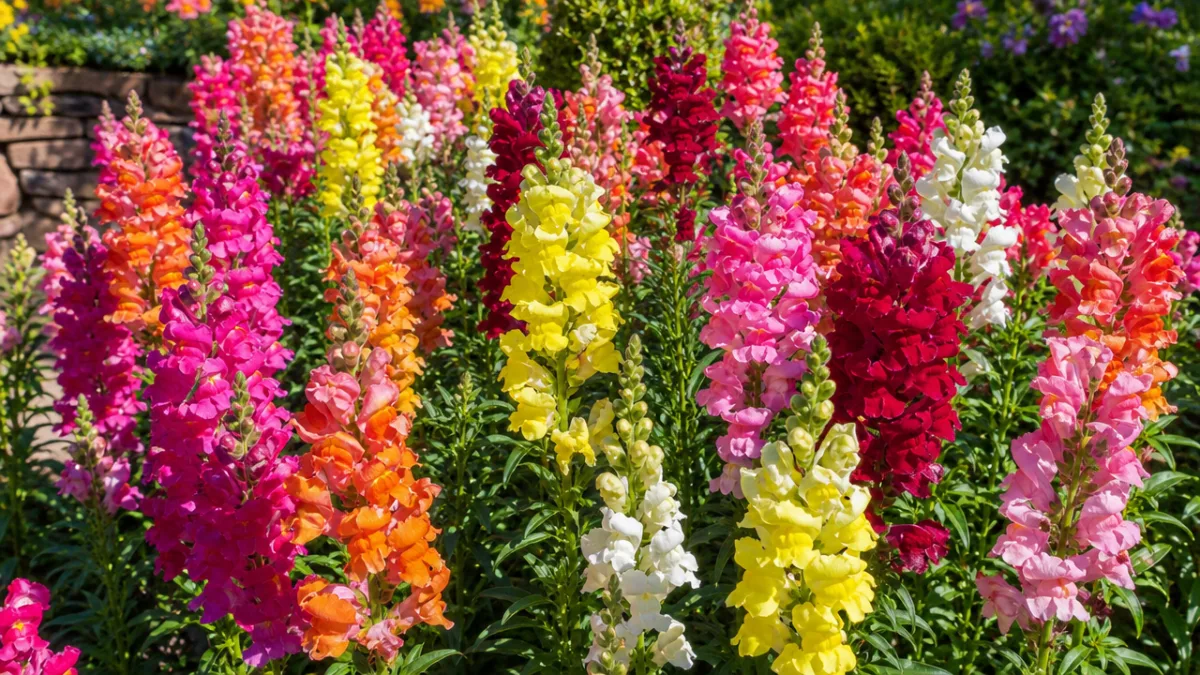
Choosing colors is honestly one of the most fun parts. Some gardeners go all-in on a monochromatic scheme — all white for a formal look, for instance — while others embrace a wild mix of yellow, pink, red, and purple for a cheerful cottage vibe. Bicolor and striped varieties add another layer of visual interest, and some newer cultivars have been bred with better heat tolerance or longer vase life specifically in mind. Just take a little time to read the plant tags and catalog descriptions, and you’ll have a much better shot at finding varieties that will really thrive in your particular garden.
When and How to Plant Snapdragons
Timing really does make a big difference with snapdragons. Since they’re cool-season plants, you want to get them going before summer heat arrives. In most temperate climates, that means starting seeds indoors six to eight weeks before your last expected frost date, then moving seedlings outside two to four weeks before that date. Once they’re established, snapdragons can handle light frosts down to about 25°F without much trouble. If you’re in a mild-winter area like Zone 8 or warmer, you can also plant them in fall for gorgeous color through winter and into early spring.
Starting from seed takes a bit of patience, but it’s genuinely satisfying. The seeds are tiny and need light to germinate, so just scatter them on the surface of moist, fine-textured seed-starting mix and press them down gently — don’t cover them. Set the tray under grow lights or in a bright, warm spot and keep the mix consistently moist. You should see sprouts in ten to fourteen days if temperatures are around 65°F to 75°F. Once seedlings have their first set of true leaves, thin them out or move them into individual cells, and start slowly introducing them to outdoor conditions — this gradual hardening-off process matters before you put them in the ground.
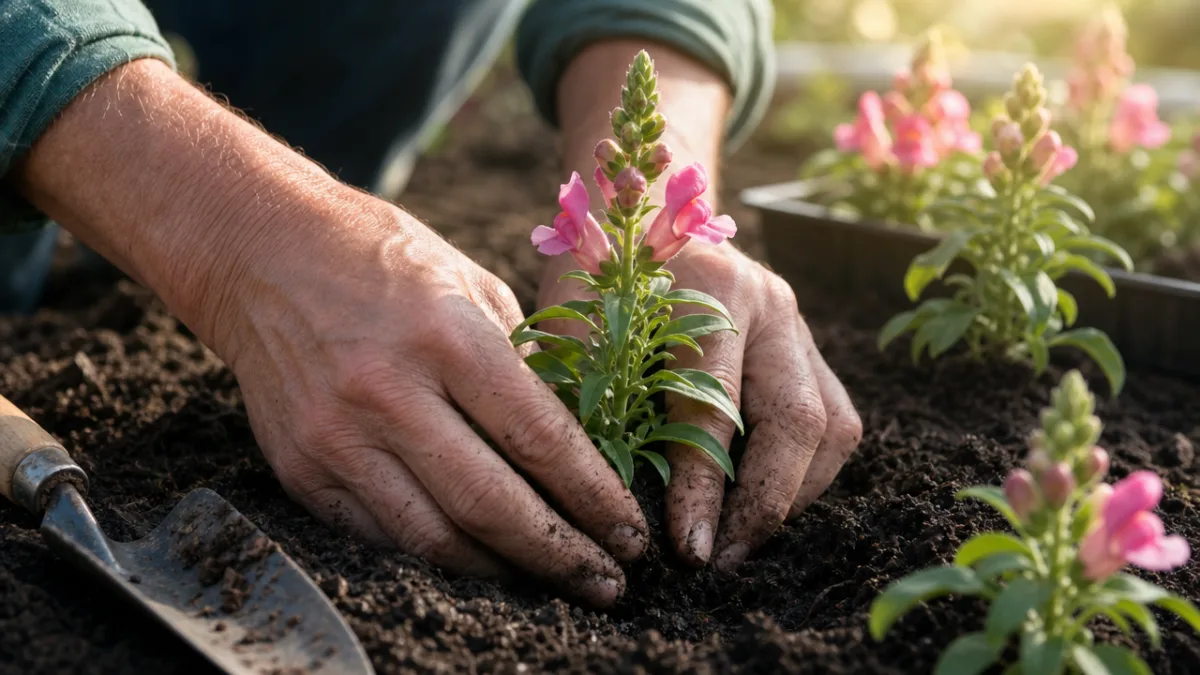
If you’re buying transplants from a nursery, the whole thing is much simpler. Look for stocky, compact plants that aren’t fully in bloom yet — those will settle in more easily and keep flowering longer. Loosen the soil about twelve inches deep and mix in some compost or a balanced granular fertilizer before planting. Space compact varieties roughly six inches apart and larger ones twelve to eighteen inches apart so air can move freely between them, which really does help keep fungal problems at bay. Water everything well after planting and add a light layer of mulch around the base to help hold moisture and keep the soil temperature steady.
Soil, Sun, and Water: The Essential Care Trio
Snapdragons aren’t particularly demanding, but they do have some clear preferences. When it comes to sunlight, they really want a spot that gets full sun — at least six hours of direct light a day. They’ll tolerate some shade, but less light tends to mean weaker, floppier stems and fewer flowers. In hotter climates, though, a spot with some afternoon shade can actually work in your favor by protecting plants from the most intense heat and stretching the blooming season a bit longer — worth considering if you’re in Zone 8 or above.
Good soil makes a noticeable difference too. Snapdragons prefer well-draining, fertile soil with a slightly acidic to neutral pH, somewhere around 6.0 to 7.0. If your soil is heavy clay, work in some compost, perlite, or coarse sand to improve drainage — waterlogged roots are one of the most common reasons snapdragons fail. Raised beds are a great solution if your native soil is stubborn, since they naturally provide the loose, fast-draining conditions these plants love. Either way, working a two-to-three inch layer of compost into the top twelve inches before planting gives you a solid head start.
Watering is really about finding a balance. You want the soil to stay consistently moist without ever getting waterlogged. Deep watering once or twice a week beats frequent shallow watering, since it encourages roots to grow deeper and makes plants more resilient during dry stretches. Always water at the base of the plant rather than from overhead — wet foliage is an open invitation to botrytis and other fungal problems. During hot, dry spells you may need to water more often; during cool, rainy stretches you can ease up. A couple of inches of organic mulch around the base goes a long way toward conserving moisture, keeping down weeds, and protecting roots from temperature swings.
Fertilizing, Deadheading, and Encouraging Repeat Bloom
Feeding your snapdragons regularly is one of the easiest ways to get the most out of them. At planting time, mixing a slow-release balanced fertilizer into the soil gives plants a steady supply of nutrients throughout the season. Once they’re actively growing and starting to set buds, switching to something higher in phosphorus — like a 5-10-5 formulation — really supports strong flowering. A water-soluble fertilizer applied every two to three weeks during the growing season keeps things humming along nicely, though stick to the package directions since over-fertilizing tends to produce lush, leafy growth at the expense of blooms.
Deadheading might be the single most impactful thing you can do to keep snapdragons putting out flowers. Once a spent spike is left on the plant, the plant reads that as “job done” and starts winding down reproduction — which means fewer new blooms for you. Snip or snap off faded flower spikes just above the next set of healthy leaves and you redirect all that energy back into making new buds. It’s easy to work into your regular garden routine — just check the plants every few days during peak bloom and clear off anything that’s faded.
There’s one more trick worth knowing: pinching back young transplants. When plants are about three to four inches tall, pinch out the growing tip with your fingers or a small pair of scissors. This nudges the plant to branch out from the base, which means more stems and ultimately more flowers than you’d get from an unpinched plant. You’ll push back the first flush of blooms by a week or two, but the payoff — a fuller, more floriferous plant — is absolutely worth it. This is especially useful for compact and intermediate varieties in containers or border plantings.
Managing Pests, Diseases, and End-of-Season Care
Snapdragons are pretty tough overall, but like any garden flower, they have their occasional trouble spots. Aphids are the most common pest to watch for — they like to cluster on new growth and flower buds, sucking plant sap and potentially spreading viral diseases. A firm blast from the garden hose is often all you need to knock out a small infestation. For anything more persistent, insecticidal soap or neem oil both work well and are easy on the environment. Get in the habit of checking plants regularly, especially on the undersides of leaves where pests like to hide.
Fungal diseases — mainly botrytis blight and snapdragon rust — can show up in cool, humid conditions or where plants are crowded together. Botrytis shows up as gray, fuzzy mold on stems and flowers; rust appears as orange or brown pustules on the undersides of leaves. Your best defense is prevention: space plants well, water at the base, promptly remove and toss any infected material, and try not to work around the plants when everything is wet. If a fungal problem gets bad enough, a copper-based fungicide used according to label directions can help get it back under control.
When summer heat arrives and your snapdragons start looking tired or stop blooming, you have a few options depending on where you live and what you’re after. In areas with cool summers, cutting plants back hard — down to about a third of their height — and giving them a dose of fertilizer can kick off a strong second flush of blooms in late summer and fall. In hot-summer climates, many gardeners simply treat snapdragons as cool-season annuals: pull them when the heat hits and swap in something more heat-tolerant. And where winters stay mild, leaving plants in place often leads to self-seeding, with new plants popping up the following cool season to start the whole beautiful cycle over again.
Snapdragons as Cut Flowers and Creative Uses
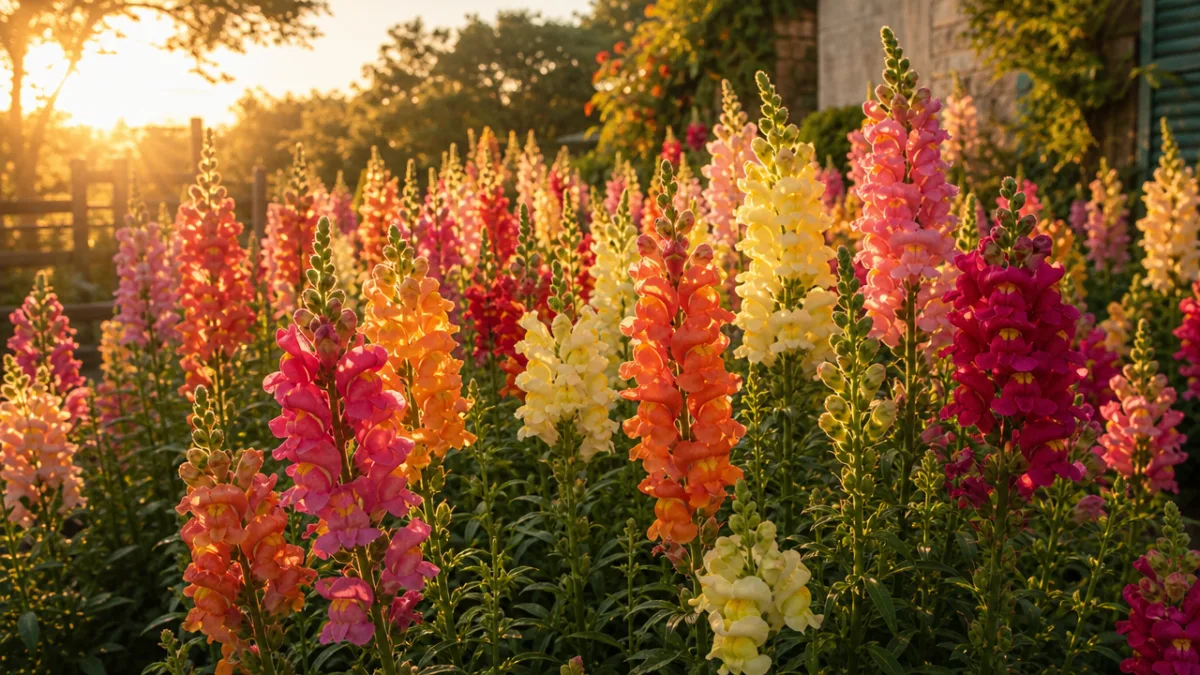
One of the best things about growing snapdragons is getting to cut them and bring them inside. A freshly cut snapdragon spike in a vase is genuinely stunning, and growing your own means you can harvest them at exactly the right moment — when the lower third to half of the florets on a spike are open and the upper buds are still closed. Cut in the early morning when it’s cool and the stems are full of water. Use clean, sharp scissors or floral snips and get the stems into a bucket of cool water right away. Strip off any foliage that would sit below the waterline in your vase, since submerged leaves quickly turn the water cloudy and funky.
To get the longest vase life, cut stems at a 45-degree angle — this gives more surface area for water uptake — and use water with floral preservative added. Change the water every two days and trim about half an inch off the stem ends each time. Keep them somewhere cool and out of direct sunlight, and away from ethylene-producing fruit like bananas and apples (yes, that really does shorten vase life). Treat them well and snapdragons will look beautiful for seven to ten days. Tall varieties like Rocket, Madame Butterfly, and Maryland Pink are especially popular with cut-flower growers thanks to their long, sturdy stems and generous florets.
But snapdragons aren’t just for vases. They’re great companion plants alongside cool-season vegetables like lettuce, kale, and Swiss chard, brightening up the kitchen garden while potentially keeping some pest insects away. In containers, mixing compact snapdragon varieties with trailers like bacopa or lobelia creates those gorgeous thriller-filler-spiller arrangements that make a patio or entryway feel welcoming all through spring. And if you want to preserve their beauty beyond the growing season, individual snapdragon florets press beautifully for use in botanical art, handmade greeting cards, and bookmarks — a lovely way to hold onto a little piece of the garden long after the season ends.








What do you think?
It is nice to know your opinion. Leave a comment.