










The Hamburger: America’s Most Beloved Culinary Icon
A Brief History of the Hamburger
The hamburger is one of the most recognized foods on the planet, but its origins are a lot more complicated and disputed than most people think. The story really gets going in the 19th century, when German immigrants carried minced beef patties over from the port city of Hamburg to the United States, bringing with them a culinary habit that would eventually become something entirely its own. Back then, it was just loose, cooked beef — no bread involved — but the seed had been planted for what would grow into a worldwide obsession.
By the late 1800s and into the early 1900s, American cooks and street vendors started tucking the cooked beef patty between two slices of bread, which made the whole thing a lot easier to eat on the move. Several cities and families have since claimed credit for that clever idea — New Haven, Connecticut; Athens, Texas; and Seymour, Wisconsin all have their own versions of the story. In each case, it comes down to some resourceful cook trying to solve a hungry customer’s problem. Whatever the true origin, the format spread across the country with surprising speed and a whole lot of enthusiasm.
The real rocket fuel for the hamburger’s rise was America’s love affair with the automobile. Drive-ins and roadside diners made it the go-to fast food, and when Ray Kroc turned McDonald’s into a national chain in the 1950s, the burger became practically inescapable. Today, Americans eat around 50 billion burgers a year, and what started as a simple immigrant food tradition has become a canvas for culinary creativity on every continent.
Anatomy of the Perfect Burger: Understanding Each Component
A truly great burger is more than just a patty slapped between two buns. It’s a carefully assembled stack of flavors, textures, and temperatures that all have to work together. It starts with the bun, which needs to walk a fine line between sturdy and soft. Too dense and it overwhelms everything else; too pillowy and it falls apart the moment the juices hit it. Brioche buns have become wildly popular for their buttery richness, while the classic sesame-topped white bun sticks around because sometimes nothing beats the nostalgic original.
The patty is the heart of the whole thing, and the decisions you make here shape every bite. An 80/20 blend of lean meat to fat is considered the sweet spot by most cooks — professional and home alike — because that fat is what gives you juiciness, flavor, and the gorgeous crust that forms in the pan. Thickness matters more than people realize. Go too thin and the patty overcooks in seconds; too thick and the outside burns before the inside is even close to done. Somewhere between three-quarters of an inch and a full inch tends to hit the mark.
Toppings and condiments are where a burger really gets its personality, and the options are almost endless. That said, the classic American combo of lettuce, tomato, onion, pickles, ketchup, and mustard has held up for a reason. Every piece earns its place: the lettuce adds crunch and freshness, the tomato brings acidity and a bit of moisture, the pickles cut through the richness of the meat with a sharp brine, and the condiments pull it all together with sweet, tangy, and savory notes. And when cheese melts properly over a hot patty? That layer of creaminess and umami takes the whole thing up a notch.

The Science Behind Cooking the Perfect Patty
Cooking a burger looks simple, but there’s actually quite a bit of science happening all at once. The moment ground beef hits a hot surface, the Maillard reaction kicks in — a fascinating chemical process between amino acids and sugars that generates hundreds of distinct flavor compounds and builds that dark, savory crust we all crave. The catch is that it only kicks off above around 285 degrees Fahrenheit, which is exactly why you need a ripping-hot pan or grill. A lukewarm surface just steams the meat, and you’ll miss out on that deeply flavored sear entirely.
Getting the temperature right is probably the most important skill in burger cooking. The USDA recommends hitting 160 degrees Fahrenheit internally for food safety, which puts you at well-done. A lot of chefs and enthusiastic home cooks prefer medium or medium-rare — around 130 to 145 degrees — where the meat stays juicier and holds onto a slightly pink center. An instant-read thermometer takes all the guesswork out of it and makes your results consistent every time.
One step a surprising number of people skip is resting the patty for two to three minutes after it comes off the heat. When meat cooks, the muscle fibers contract and drive moisture toward the center. Giving it a short rest lets those fibers loosen back up and reabsorb all that juice, so far less of it runs out when you take your first bite. Use that time to toast the cut sides of the bun on the same hot surface — it adds great flavor and creates a light barrier that helps keep the bun from going soggy.
The cooking method itself shapes the flavor in ways that really do matter. Charcoal grilling adds a smoky complexity that gas grills and stovetop pans genuinely can’t replicate, because fat dripping onto hot coals produces aromatic compounds that settle into the meat’s surface. Then there’s the smash burger approach — pressing the patty thin against a blazing hot flat-top griddle to maximize surface contact and push the Maillard reaction into overdrive. The result is a lacy, crispy-edged patty with a level of browning and texture that’s in a category of its own.
Regional and Global Burger Variations Worth Knowing
The classic American cheeseburger might be the world’s most recognizable burger, but cultures all over the globe have taken the format and made it their own in genuinely interesting ways. In Japan, burgers are often glazed with teriyaki sauce, topped with a fried egg, and served alongside rice instead of fries. Japanese chains have also leaned into the country’s love of seafood and umami, offering shrimp patties and buns seasoned with seaweed — combinations that feel completely natural once you taste them.
Even within the United States, regional variations show just how flexible the burger really is. The Oklahoma onion burger came out of the Depression, when cooks smashed thinly sliced onions directly into the patty as it cooked, caramelizing them into the meat to stretch the beef further and add real sweetness and depth. Minneapolis gave us the Jucy Lucy — a burger with cheese stuffed inside the raw patty, so when you bite into it, you get a molten pocket of melted cheese rather than a slice sitting on top. Out in California, burgers tend to lean lighter, with avocado or guacamole and fresh vegetables reflecting the state’s generally health-conscious approach to eating.
The plant-based burger boom of the 2010s and 2020s opened up a whole new chapter. Products like the Impossible Burger and Beyond Burger got remarkably close to the flavor and texture of beef by using clever food science — soy protein, coconut oil, beet juice for that reddish color, and compounds designed to mimic the taste of heme. The debate around their health benefits and environmental claims is still going, but the fact that they landed in major restaurant chains and grocery stores everywhere says a lot about how adaptable the burger format really is.
- Oklahoma Onion Burger: Caramelized onions smashed directly into the patty during cooking, originating from Depression-era resourcefulness and still beloved today for its deeply savory character.
- Jucy Lucy (Minneapolis): Cheese stuffed inside the raw patty before cooking, creating a gloriously molten, cheese-filled center that has made this regional specialty nationally famous.
- Teriyaki Burger (Japan): A sweet soy-glazed patty typically topped with mayonnaise and sometimes a fried egg, reflecting Japanese culinary sensibilities applied to a Western format.
- Truffle Burger (Upscale Restaurants): A luxury variation featuring truffle oil or shaved truffle, aged cheese, and premium toppings that transforms the humble burger into a fine-dining indulgence.
- Black Bean Burger (Vegetarian): A plant-based classic made from seasoned black beans, grains, and spices, prized for its satisfying texture and earthy, savory flavor when properly prepared.

Pairing and Serving: Completing the Burger Experience
A burger rarely shows up alone, and the sides, drinks, and condiments around it are a real part of what makes the meal work. The french fry is the burger’s most iconic companion — so consistent throughout the history of American food that the two feel inseparable at this point. Thin shoestring fries bring a salty, crispy contrast to a rich, meaty burger, while thick-cut steak fries feel more substantial and filling. Sweet potato fries have carved out their own following as a slightly more flavorful option that pairs especially well with spicier or more boldly flavored burgers.
What you drink alongside a burger matters more than you might expect. A cold cola is the classic choice, and there’s actually some science behind why it works so well — the carbonation helps scrub the palate between bites, and the sweetness plays nicely off all that salt and umami. Craft beers, especially IPAs and amber ales, have become popular at better burger spots, where the hop bitterness cuts through the fat and the malty undertones complement the char on the patty. And of course, a chocolate or vanilla milkshake alongside a burger is just one of those indulgent pairings that needs no justification.
As burger culture has gotten more serious, presentation has become part of the conversation too. Chefs think about the visual structure of a burger now — how high it stacks, whether you can see the contrasting colors of each layer, how the cheese hangs over the edge, whether it leans just enough to look generous without toppling over. Serving on a wooden board or wrapped in wax paper instead of a plain plate has become a shorthand for artisanal care in casual restaurants. Even where the pickle goes — on top, on the side, skewered through the whole stack — is a deliberate call.
The Hamburger’s Cultural Legacy and Enduring Popularity
Very few foods have woven themselves into everyday culture the way the hamburger has. It shows up in art, film, music, and literature as a kind of shorthand for American life — democratic, accessible, and comfortingly familiar. Artists like Andy Warhol and Claes Oldenburg made it a subject worth examining, recognizing something almost archetypal in its unassuming shape. In film after film, it’s the thing characters reach for in moments of joy, stress, comfort, or just ordinary Tuesday-ness. That kind of cultural saturation doesn’t happen by accident.
The economic scale of the burger industry is genuinely hard to wrap your head around. The global fast-food burger market generates hundreds of billions of dollars each year and supports millions of jobs across farming, processing, distribution, and restaurants. McDonald’s, Burger King, and Wendy’s have become some of the most recognized brand names on Earth, operating across nearly every country while adapting their menus just enough to feel local without abandoning the core format that made them household names. The burger isn’t just food — it’s an entire global economic ecosystem.
What’s really remarkable, though, is how the hamburger manages to be both dead simple and endlessly complex at the same time. At its most stripped-down, it’s ground meat between bread — cheap, filling, fast. But put that same format in the hands of a passionate chef or even just an enthusiastic backyard cook, and it becomes something that can genuinely surprise you. The same basic idea that feeds billions through drive-through windows can also be built with wagyu beef, aged cheese, house-made sauces, and a carefully sourced bun into something that earns a place on a serious restaurant menu. That range — from the value menu to the tasting menu — might be the burger’s greatest trick, and the clearest explanation for why it’s conquered so many appetites so completely.
- Cultural Symbolism: The hamburger has come to represent American values of accessibility, abundance, and informality, making it a powerful symbol far beyond its culinary significance in global popular culture.
- Economic Impact: The global burger industry generates enormous economic activity, from cattle ranching and grain farming to restaurant employment and packaging manufacturing across dozens of interconnected industries.
- Culinary Innovation: The burger format continues to inspire chefs worldwide, serving as the foundation for plant-based innovations, fusion experiments, and fine-dining reimaginings that keep the concept perpetually fresh and exciting.
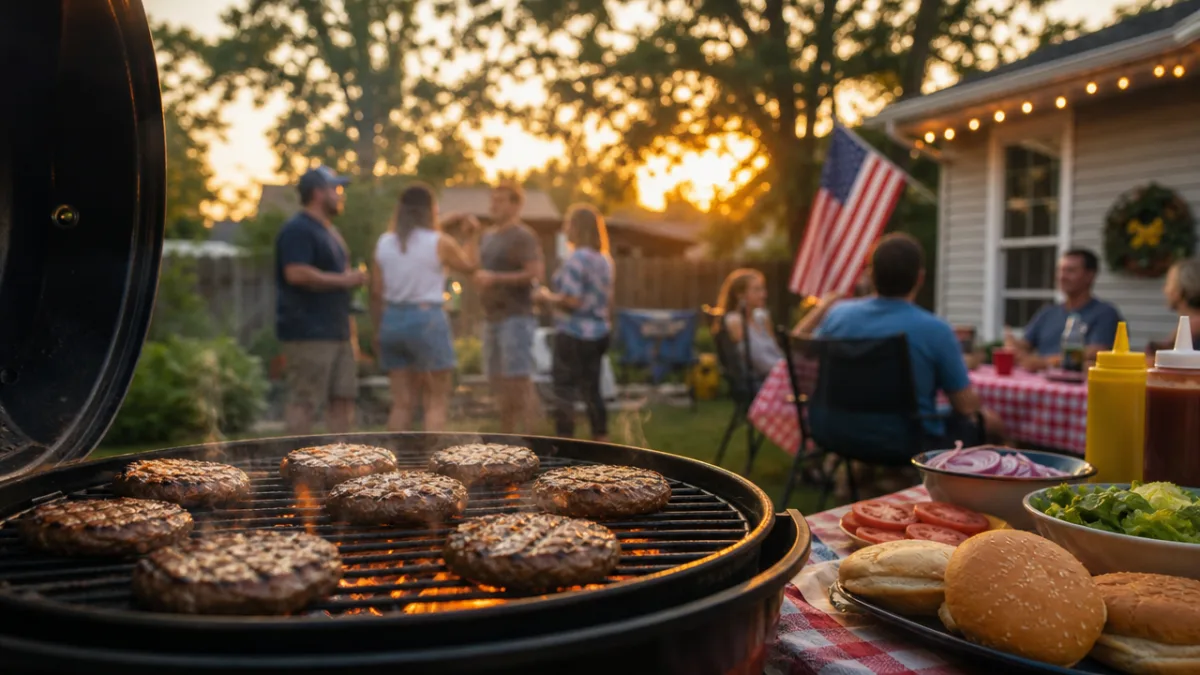
- Social Ritual: Backyard barbecues, sports-watching gatherings, and casual restaurant outings have all adopted the hamburger as a central ritual food, reinforcing communal bonds through shared enjoyment of a universally loved meal.
The hamburger’s journey from immigrant food tradition to global institution is one of the better stories in culinary history. It’s survived wars, economic downturns, shifting dietary trends, and waves of competition from every other cuisine imaginable — and it keeps coming back stronger. As new generations of cooks keep reinventing it with different proteins, unexpected flavors, and new cooking techniques, the burger proves that its appeal goes deeper than nostalgia. At its core, it taps into something genuinely human: the pleasure of a satisfying, flavorful meal enjoyed alongside other people.








What do you think?
It is nice to know your opinion. Leave a comment.