










Best 8 Sustainable Gardening Practices for a Greener Future
Why Sustainable Gardening Matters More Than Ever
Sustainable gardening is no longer a niche hobby practiced by a dedicated few — it has become one of the most accessible and impactful ways that individuals can contribute meaningfully to environmental health. As climate patterns shift, biodiversity declines, and soil degradation accelerates worldwide, the choices we make in our own backyards carry real consequences. Adopting sustainable practices allows gardeners to participate actively in ecological restoration rather than simply observing the planet’s challenges from a distance.
Conventional gardening, despite its good intentions, often relies on synthetic fertilizers, chemical pesticides, and water-intensive methods that quietly degrade the very systems they depend upon. These approaches can strip soil of its natural microbial communities, introduce toxins into local waterways, and reduce the habitat available to pollinators and other beneficial wildlife. By contrast, sustainable gardening works with natural processes rather than overriding them, building resilience into the landscape over time rather than demanding constant chemical intervention to maintain order.
Perhaps most importantly, sustainable gardening reconnects people with the rhythms of the natural world in a way that is both grounding and deeply practical. When you understand how water cycles through your soil, how companion planting confuses pests, or how compost transforms kitchen scraps into rich nutrition, you develop a relationship with your garden that goes far beyond aesthetics. This knowledge compounds over seasons, making your garden healthier, more productive, and more resilient with each passing year.
Practice 1 — Composting and Building Healthy Soil
Composting is widely considered the cornerstone of sustainable gardening, and for good reason. By diverting kitchen and yard waste from landfills and transforming it into a rich, biologically active amendment, composting closes the nutrient loop in a way that synthetic fertilizers simply cannot replicate. Finished compost introduces millions of beneficial microorganisms into your garden beds, creating a living soil ecosystem that feeds plants gradually, improves drainage in clay soils, and enhances moisture retention in sandy ones.
Starting a compost system requires very little investment and can be adapted to nearly any garden size or lifestyle. A basic backyard bin, a tumbling composter for faster results, or even a simple pile in a corner of your yard can accept vegetable scraps, coffee grounds, eggshells, grass clippings, dry leaves, cardboard, and untreated paper. The key is balancing carbon-rich “browns” with nitrogen-rich “greens” and keeping the pile moist enough to stay active without becoming waterlogged. Turning the pile every few weeks accelerates decomposition considerably.
Beyond traditional composting, practices like vermicomposting — using worms to process organic matter — and bokashi fermentation offer excellent alternatives for those with limited outdoor space. Vermicomposting bins can sit under a kitchen sink and produce both rich worm castings and liquid fertilizer within weeks. Whichever method you choose, the result is the same: a dramatic reduction in household waste and a steady supply of the finest soil amendment nature has to offer, entirely free of cost once your system is established.
Key Materials for a Healthy Compost Pile
- Fruit and vegetable scraps, coffee grounds, and tea bags
- Dry leaves, straw, and untreated cardboard for carbon balance
- Grass clippings and fresh plant trimmings for nitrogen
- Eggshells and wood ash in small quantities for minerals
- Avoid meat, dairy, oily foods, and diseased plant material
Practice 2 — Water Conservation and Smart Irrigation
Water is one of our most precious and increasingly strained natural resources, and the garden is one of the most significant sites of residential water consumption. Sustainable gardeners approach irrigation with intention, choosing methods and timing that minimize waste while keeping plants genuinely healthy. Overwatering is actually one of the most common gardening mistakes, leading to root rot, fungal disease, and the unnecessary depletion of water that could be conserved for drier periods or shared with local ecosystems.
Drip irrigation and soaker hoses are among the most effective tools for water-conscious gardeners, delivering moisture directly to the root zone where it is needed rather than broadcasting it across foliage and open soil where evaporation quickly claims a significant portion. Pairing these systems with a timer or a smart irrigation controller allows watering to occur early in the morning when temperatures are low and plants can absorb moisture efficiently before the midday heat arrives. This single adjustment can reduce garden water use by as much as fifty percent in hot, dry climates.
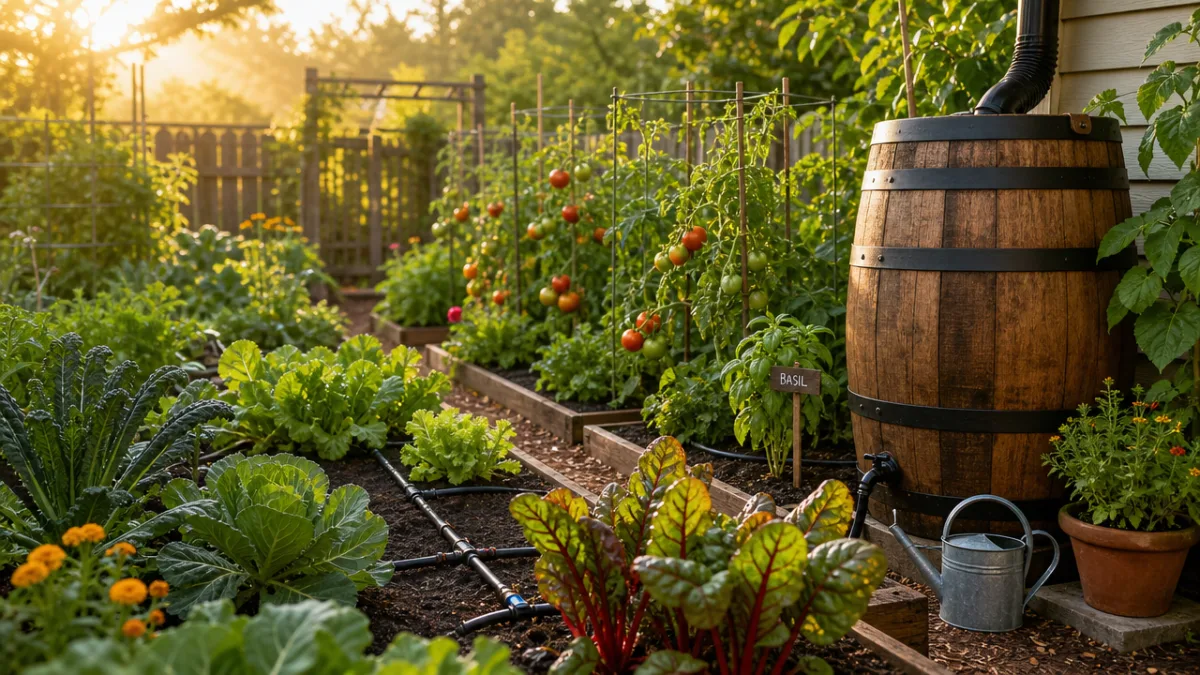
Rainwater harvesting is another practice that integrates beautifully into a sustainable garden system. Installing one or more rain barrels beneath a downspout captures runoff that would otherwise wash across impervious surfaces and carry pollutants into waterways. This stored water is free, naturally soft, and free of the chlorine and fluoride found in municipal supplies, making it particularly beneficial for sensitive plants and seed starting. In areas where rainfall is seasonal, a substantial storage tank can extend the harvest well into dry months, significantly reducing dependence on treated water supplies.
Practice 3 — Choosing Native Plants and Supporting Biodiversity
Few decisions in the garden have as far-reaching an impact as choosing to plant native species adapted to your local climate, soil, and ecology. Native plants have evolved alongside local insects, birds, and other wildlife over thousands of years, creating relationships of mutual dependence that exotic ornamentals simply cannot replicate. A native oak tree, for example, may support hundreds of species of caterpillars, which in turn feed nesting birds at precisely the time of year when protein-rich insects are critical for raising young. A decorative imported tree of similar size might support virtually none.
Incorporating native plants also dramatically reduces the maintenance burden on the gardener. Because these species are adapted to local rainfall patterns, soil types, and temperature swings, they generally require far less supplemental irrigation, fertilization, or pest management once established. A native meadow planting, for instance, may need nothing more than an annual mowing after its first or second year, whereas the equivalent area of lawn demands weekly mowing, regular watering, and periodic fertilization throughout the growing season. The labor and resource savings over a decade are substantial.
Beyond individual plant selection, the arrangement and diversity of your planting palette matters enormously for supporting local ecosystems. Aim to include species that flower across a wide range of the season, ensuring that early spring pollinators like bumblebee queens and native bees emerging from overwintering sites have access to food, and that late-season migrants and year-round residents can find energy-rich blooms through autumn. Including a variety of plant heights, from ground covers through shrubs to canopy trees where space allows, creates the layered habitat structure that supports the widest range of wildlife.
Practice 4 — Natural Pest Management and Companion Planting
Chemical pesticides present one of the most persistent challenges to sustainable gardening because they are so effective in the short term and so damaging over longer timescales. Even products marketed as broadly safe can devastate populations of beneficial insects, including the predatory beetles, lacewings, parasitic wasps, and hoverflies that naturally keep pest populations in check. When these populations are disrupted, pest species often rebound faster than their predators, creating a cycle of increasing chemical dependency that undermines the garden’s natural balance over time.
Companion planting is one of the oldest and most elegant solutions to pest management, using the natural properties of certain plants to deter, confuse, or trap pests while simultaneously attracting beneficial insects. Marigolds planted around tomatoes help repel nematodes and certain aphid species. Basil planted nearby is believed to improve tomato flavor while deterring thrips and whiteflies. Nasturtiums act as a trap crop for aphids, drawing them away from more valuable vegetables and concentrating them in a place where they can be managed easily without chemical intervention.
Physical barriers, beneficial insect habitat, and simple vigilance round out an effective natural pest management strategy. Row covers of fine mesh fabric can exclude most flying insects from vulnerable crops during peak risk periods. Installing insect hotels, leaving patches of bare ground for ground-nesting bees, or allowing a corner of the garden to grow a little wild all encourage the predatory and parasitic insect populations that do much of the garden’s pest control work invisibly and for free. The more you observe your garden closely over time, the more you learn to recognize early warning signs and intervene before populations reach damaging levels.
Effective Companion Planting Combinations
- Tomatoes and basil — pest deterrence and possible flavor enhancement
- Carrots and rosemary — confuses carrot fly with strong aromatic oils
- Brassicas and dill — dill attracts predatory wasps that control cabbage worms
- Beans and summer savory — repels bean beetles and improves growth
- Squash, corn, and beans — the traditional Three Sisters planting for mutual support
Practice 5 — Mulching to Protect and Enrich Your Soil
Mulching is one of those deceptively simple practices that delivers an extraordinary range of benefits simultaneously, making it one of the highest-return investments of time and material in the sustainable garden. A layer of organic mulch two to four inches deep across garden beds suppresses weed germination by blocking the light that weed seeds need to sprout, retains soil moisture by dramatically reducing surface evaporation, moderates soil temperature extremes that can stress plant roots, and gradually breaks down to feed the soil food web from the top down — exactly as leaf litter does in a natural forest setting.
The range of suitable mulching materials available to most gardeners is broad and often free or very low cost. Shredded leaves collected from your own yard in autumn represent one of the finest mulches available, combining good physical coverage with an excellent carbon-to-nitrogen ratio as they decompose. Wood chips, particularly aged chips from a local arborist service, are another exceptional choice for pathways and around shrubs and trees. Straw works beautifully around vegetable crops, keeping fruit off the soil and reducing splash-back of soilborne diseases onto lower foliage during rainfall.
It is worth noting that not all mulches are created equal for every situation, and a few common practices can actually cause harm if not applied thoughtfully. Piling mulch directly against the base of tree trunks or shrub stems — sometimes called “volcano mulching” — creates persistently moist conditions that invite rot and pest damage. Similarly, very thick layers of fine-textured mulch like grass clippings can mat together and form a surface that sheds rather than absorbs rainfall. Applied correctly with a small gap around plant stems and at an appropriate depth, however, mulch transforms the health and appearance of any garden with minimal ongoing effort.
Practice 6 — Seed Saving and Growing Heirloom Varieties
The practice of saving seeds connects today’s gardeners to an unbroken chain of agricultural stewardship stretching back thousands of years, and it remains one of the most meaningful and economical things a sustainable gardener can do. When you save seeds from your best-performing plants year after year, you are actively participating in the adaptation of those varieties to your specific microclimate, your particular soil, and your local pest pressures. Over multiple generations, saved seeds can produce plants noticeably better suited to your conditions than any commercially produced variety could be.
Heirloom varieties — those open-pollinated cultivars that have been grown and selected by gardeners for generations — offer a diversity of flavor, color, texture, and form that has largely been bred out of modern commercial varieties optimized for uniform appearance, mechanical harvest, and long shelf life rather than taste or nutrition. Growing heirlooms and saving their seeds helps preserve genetic diversity in our food crops, diversity that plant breeders and agricultural scientists depend upon to develop disease-resistant and climate-resilient varieties for the future. It is a form of living conservation with practical rewards in the kitchen.
Getting started with seed saving is straightforward for many common vegetables. Tomatoes, beans, peas, peppers, and lettuces are among the easiest to begin with, as they are largely self-pollinating and require minimal processing before storage. Seeds should be thoroughly dried before being stored in paper envelopes or glass jars in a cool, dark, dry location. Properly stored seeds of many species remain viable for three to five years or longer, giving you a meaningful reserve and the ability to share surplus with other gardeners in your community — one of the most generous and practical forms of gardening generosity there is.
Practice 7 — Reducing Garden Waste and Embracing No-Dig Methods
Traditional digging and tilling, long considered fundamental to garden preparation, is now understood to cause significant disruption to the complex fungal networks, earthworm populations, and bacterial communities that constitute a healthy soil ecosystem. Each time soil is deeply disturbed, these communities are fractured and must rebuild from scratch, a process that takes time and represents a real setback in the garden’s biological wealth. No-dig gardening, championed by growers around the world, demonstrates convincingly that plants can thrive — and often do better — when this disturbance is eliminated and soil structure is allowed to develop undisturbed over time.
The no-dig method typically involves smothering existing vegetation with cardboard or thick layers of newspaper and then layering compost, topsoil, or other organic matter on top to create an immediate planting medium. Worms and other soil organisms quickly work through the cardboard from below, incorporating the new material and further enriching the soil. Weeds that do emerge are typically far easier to pull because they are growing in loose, unconsolidated compost rather than compacted ground, and their populations diminish significantly after the first season as buried weed seeds exhaust their viability without being continually turned to the surface by digging.
Reducing garden waste more broadly involves rethinking what counts as waste in the first place. Plant trimmings that might otherwise go into a green waste bin can be chopped and dropped as mulch or added directly to beds to decompose in place. Spent annual plants can be pulled and composted or left to break down where they stand if they are disease-free. Woody prunings can be chipped for paths or stacked as habitat piles for beetles, hedgehogs, and other beneficial garden wildlife. Each of these small redirections keeps organic matter cycling within the garden system, building fertility rather than exporting it.
Practice 8 — Creating Wildlife Habitat and Nurturing Garden Ecology
A truly sustainable garden is one that functions as part of the broader ecological landscape rather than as an isolated, managed enclosure sealed off from the natural world around it. Welcoming wildlife into the garden — from birds and bats to hedgehogs, frogs, beneficial insects, and soil-dwelling invertebrates — creates a network of ecological services that greatly reduce the need for human intervention. Predators control pests, pollinators ensure fruit set, decomposers recycle nutrients, and the whole system becomes increasingly self-regulating as biodiversity increases.
Creating habitat features does not require a large or wild-looking garden. Even a small water feature such as a shallow dish of water kept clean and filled during dry weather can serve dozens of species. A log pile in a shaded corner provides habitat for stag beetles, centipedes, woodlice, and the many creatures that depend on them. A simple nest box or bug hotel installed on a fence or wall can house solitary bees, which are among the most effective pollinators in the garden. Leaving seed heads standing through winter provides food for finches and sparrows during the months when other food sources are scarce.
The mindset shift required to fully embrace wildlife-friendly gardening is perhaps the most transformative aspect of the sustainable gardening journey. It asks us to relinquish the impulse toward perfect tidiness and to find beauty instead in the caterpillar-chewed leaf, the self-seeded wildflower in the path crack, and the carefully constructed mud tunnel of a solitary bee in an exposed bank of bare earth. When you begin to see these signs of life not as problems to be corrected but as evidence of a thriving, healthy system working exactly as it should, your relationship with your garden — and with the natural world more broadly — shifts in ways that are difficult to fully articulate but are deeply and lastingly rewarding.
Simple Steps to Make Your Garden More Wildlife-Friendly
- Install a shallow wildlife pond or water dish and keep it clean year-round
- Leave a section of lawn unmowed through spring and summer for wildflowers
- Stack logs or woody debris in a quiet corner to create invertebrate habitat
- Plant a range of nectar-rich flowers that bloom from early spring to late autumn
- Avoid using slug pellets, pesticides, or herbicides that harm non-target species
- Install nest boxes for birds and solitary bees on walls, fences, or tree trunks
- Leave seed heads and hollow stems standing through the winter months
Sustainable gardening is not a destination but a continuous practice of observation, learning, and refinement. Each of the eight practices described here reinforces the others, creating a garden that becomes progressively more abundant, more resilient, and more deeply connected to the living world around it. Begin with one or two changes this season, observe what shifts in your garden, and let that growing knowledge guide you toward the next step. The rewards — in produce, in beauty, in wildlife, and in personal satisfaction — are well worth every thoughtful effort.








What do you think?
It is nice to know your opinion. Leave a comment.