










Atlanta Botanical Garden: A Living Masterpiece in the Heart of the City
A Garden Born From Vision and Community
The Atlanta Botanical Garden is one of those places that genuinely earns the word “beloved” — a spot where nature and artistry come together in a way that feels completely unlike any other urban green space in the country. It got its start in 1976, born from the dream of a small group of plant-obsessed Atlantans who thought their city deserved something truly special. What began as a grassroots passion project has grown into a 30-acre sanctuary tucked alongside Piedmont Park in Midtown Atlanta, welcoming more than half a million visitors every year from across the country and around the world.
The founding story is really one of persistence and civic pride. Back in the early 1970s, a determined group of volunteers started making the case for a permanent botanical garden that could serve Atlanta’s educational and recreational needs. They lobbied the city for land next to Piedmont Park, and after years of planning, fundraising, and a lot of stubborn optimism, the garden finally opened its gates. And it hasn’t stopped growing since — new collections, fresh exhibits, and expanded programming have kept things evolving in ways that continue to surprise and delight visitors of all ages.
Today the garden runs as a nonprofit, with a mission built around exploring, conserving, and preserving plant diversity. Its team of horticulturists, educators, scientists, and volunteers — numbering in the hundreds — collectively tend thousands of plant species from every corner of the globe. The garden has also built meaningful relationships with botanical institutions worldwide, contributing real scientific muscle to conservation research and the protection of endangered plant species. Walk through its gates and the message comes through loud and clear: plants aren’t just a backdrop to human life. They’re the foundation of it.
Iconic Collections and Garden Rooms
One of the things that makes the Atlanta Botanical Garden so interesting is how it breaks itself into distinct themed spaces, each with its own personality. The Dorothy Chapman Fuqua Conservatory is the undeniable showstopper — a stunning glass structure housing an incredible collection of rare tropical and desert plants. Step inside and the warm, humid air wraps around you while towering palms, vivid orchids, carnivorous plants, and ancient cycads make you feel like you’ve been teleported to a completely different part of the world. It’s a year-round destination no matter what Atlanta’s weather is doing outside, and it’s one of the most visited spots on the property for good reason.
Inside the conservatory, the Tropical Rotunda dazzles with a soaring canopy of lush greenery, and the adjacent Fuqua Orchid Center is home to one of the most significant orchid collections anywhere in the world. Orchid lovers travel from far and wide to take it in — the range runs from delicate miniatures to boldly theatrical blooms that seem almost too vivid to be real. The collection spans thousands of specimens and is curated with serious attention to seasonal display, so there’s always something extraordinary in bloom whenever you visit. Guided tours through these spaces layer in so much botanical knowledge that what feels like a pleasant stroll turns into something genuinely illuminating.
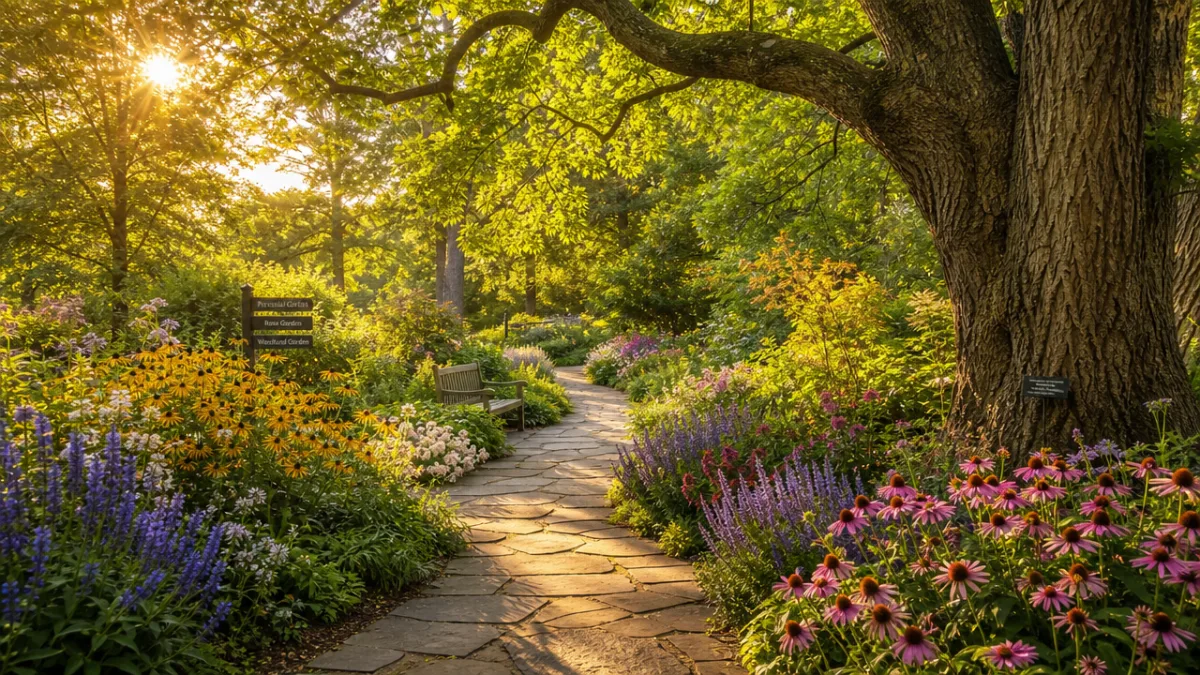
Out beyond the conservatory, the garden opens up into a series of outdoor rooms, each designed to tell a different story about plants and people. The Rose Garden explodes with color from late spring through autumn, showing off dozens of heritage and modern varieties in beautifully kept beds. The Herb Garden mingles fragrance with practical knowledge about culinary and medicinal plants, and the Children’s Garden hands younger visitors a shovel and an invitation to get their hands dirty. Every corner of the property feels purposeful — less like a display and more like a conversation about the deep, enduring relationship between humans and the plant world.
The Canopy Walk and Elevated Perspectives
If there’s one experience at the Atlanta Botanical Garden that tends to stop people in their tracks, it’s the Canopy Walk — a 600-foot suspended walkway that winds through the forest canopy of Storza Woods, the largest remaining urban hardwood forest in Atlanta. At heights up to 40 feet above the forest floor, you get a perspective on the natural world that’s hard to find outside of actual wilderness. The walkway sways a little beneath your feet as you pause to watch birds, spot insects, and take in the intricate structure of mature oak, hickory, and tulip poplar trees from a completely new angle. There’s something genuinely mind-shifting about looking down into the understory instead of always craning your neck up at the sky.
Storza Woods itself is a remarkable ecological gem sitting right in the middle of a major city. These hardwood trees have watched Atlanta grow and change around them for decades, and the garden’s careful stewardship has kept them healthy and thriving. Walking the forest floor trails beneath that canopy, even on the hottest Georgia summer day, you feel the temperature drop and the city noise fade in a way that seems almost impossible given how urban everything is just beyond the tree line. Interpretive signs throughout the woods explain the ecological role urban forests play in filtering air, managing stormwater, and supporting wildlife — things most city dwellers never really think about until they’re standing in the middle of one.
Together, the Canopy Walk and the ground-level forest trails create a layered experience that shifts between intimate close-up observation and broad, sweeping views across the treetops. Photographers absolutely love it up there in the early morning light, when mist sometimes drifts up from the forest floor and every leaf seems to glow. Families, couples, solo visitors — pretty much everyone consistently names the Canopy Walk among the highlights of their visit, and it’s one of the things that genuinely sets Atlanta’s botanical garden apart from others around the country.
Seasonal Exhibitions and Special Events
The Atlanta Botanical Garden has earned a serious reputation for putting on world-class temporary exhibitions and seasonal events that make the place feel brand new multiple times a year. The annual calendar revolves around a handful of marquee events, each one drawing big crowds and generating the kind of excitement you’d expect from a major cultural institution rather than a typical botanical garden. These events have been hugely effective at reaching people who might never think to visit a garden otherwise — families, art enthusiasts, foodies, and people just looking for a great night out have all found their way in through these doors.
Garden Lights, Holiday Nights is probably the most spectacular of the bunch. Each winter, the garden transforms into a glittering wonderland of millions of twinkling lights and elaborate illuminated installations, running from mid-November all the way through January. It has become one of Atlanta’s most cherished holiday traditions, routinely selling out weeks ahead and generating citywide buzz that rivals major arts events. Every pathway, tree, fountain, and architectural feature gets woven into the lighting design, creating an immersive nighttime experience that feels completely unlike anything you’d see during the day. Food and drink vendors scattered throughout the grounds make even the coldest evenings feel warm and festive.
Spring and summer bring their own magic. Blooms events celebrate peak flowering season with special exhibits, expert-led tours, and photography workshops that help visitors make the most of all that color. The garden has also become a celebrated stage for large-scale art installations — most memorably through its long-running partnership with glass sculptor Dale Chihuly, whose extraordinary works displayed among the plantings created some genuinely unforgettable moments. Outdoor concerts in the amphitheater, food and wine festivals, and educational symposia fill out a calendar so rich and varied that dedicated members can visit dozens of times a year and rarely feel like they’re repeating themselves.
The programming team works year-round to bring in performers, artists, speakers, and culinary partners who genuinely align with the garden’s values and its commitment to doing things well. Here’s a sense of what visitors can look forward to throughout the year:
- Garden Lights, Holiday Nights — millions of lights and illuminated sculptures transforming the garden each winter season from November through January
- Spring Blooms celebrations — special tours, workshops, and pop-up markets coinciding with peak flowering in March, April, and May
- Summer Concert Series — outdoor performances in the Patricia Yager Amphitheater featuring jazz, classical, and world music artists
- Art installations — rotating large-scale works by nationally and internationally recognized sculptors and installation artists
- Food and wine festivals — seasonal culinary events highlighting Southern cuisine, craft beverages, and garden-grown ingredients
- Orchid Daze — an annual winter celebration of the conservatory’s extraordinary orchid collection with special programming and displays

Conservation and Scientific Research
Underneath all that beauty, there’s a serious scientific operation quietly doing some of the most important work the garden undertakes. The conservation programs focus especially on the plants of the southeastern United States — a region with a staggering concentration of endemic species found absolutely nowhere else on earth. Georgia alone is home to over 3,400 native plant species, and many of them are under real pressure from habitat loss, invasive species, climate change, and development. The garden’s scientists are out in the field regularly, working to document, protect, and where possible restore populations of rare and threatened plants before it’s too late.
The approach combines two complementary strategies: in-situ conservation, which means protecting plants in their actual native habitats, and ex-situ preservation through the garden’s living collections and seed banks. Field biologists run regular monitoring surveys of rare plant populations across Georgia and neighboring states, gathering data that shapes management decisions and flags situations needing urgent attention. The seed bank, meanwhile, holds genetic material from hundreds of rare species — essentially an insurance policy against extinction and a foundation for future restoration work. It’s the kind of behind-the-scenes effort that rarely gets the spotlight a dazzling floral display does, but it may well be the most consequential thing happening on the property.
The garden’s conservation reach extends internationally through partnerships in Central America, the Caribbean, and beyond. Orchid conservation has been a particular area of focus — the garden has worked with partner institutions to document wild orchid populations, push back against illegal collection and trade, and develop protection strategies for the most vulnerable species. These international programs bring real expertise to ecosystems of global significance, and they have a direct connection to the living collections visitors enjoy every day. It’s a satisfying loop: the beauty in the conservatory and the science in the field are genuinely part of the same story.
Education, Accessibility, and Community Engagement
The Atlanta Botanical Garden takes education seriously — not as an afterthought but as a core part of what it’s there to do. The education department runs an impressive range of programming, from school field trips and summer camps for kids to master gardener courses and professional development workshops for adults. Every year, thousands of students from Atlanta-area schools visit the garden for curriculum-aligned field experiences that give classroom learning some real, living context. For many of those kids, it’s their first extended time spent in a genuinely green, natural environment — which makes it matter even more.
The garden’s approach to accessibility comes from a genuine belief that the benefits of botanical spaces belong to everyone, regardless of physical ability, economic circumstances, or background. The grounds are fully navigable for visitors using wheelchairs or mobility aids, with paved pathways throughout most of the property and accessible routes to every major attraction. A robust community access program offers deeply discounted or free admission to qualifying families and community groups, because the garden’s leadership understands that a price tag shouldn’t be the thing standing between someone and what this place has to offer. Partnerships with Atlanta public schools, community centers, and social service organizations extend that reach further, into communities that might otherwise have little connection to the garden at all.
Volunteers are also a huge part of the equation — hundreds of them contributing tens of thousands of hours every year to everything from horticultural maintenance to visitor education to special events. They come from remarkably diverse backgrounds: retired professionals, students, artists, lifelong plant lovers, and people who simply found something meaningful here and wanted to be part of it. That volunteer community creates a genuine sense of shared ownership that has been one of the garden’s quiet strengths for nearly five decades — the kind of grassroots connection that no marketing campaign can manufacture.
Looking ahead, the garden keeps expanding both its footprint and its ambitions. A second campus in Gainesville, Georgia, brings a focus on native plants and the ecology of the North Georgia mountains, pushing the conservation mission into new terrain. Ongoing capital projects are enhancing visitor facilities, growing educational spaces, and introducing new garden rooms that will bring underrepresented plants and stories into the collection. Through all of it, the founding vision holds: a community believed Atlanta deserved a place of extraordinary natural beauty and botanical excellence, and season after season, that vision just keeps getting more fully realized.








What do you think?
It is nice to know your opinion. Leave a comment.