










JUNE Beeswax Tumbler Candle: A Complete Guide to Nature’s Most Luxurious Flame
The Timeless Appeal of Beeswax Candles
There’s something really satisfying about lighting a candle made from one of the oldest materials humans have ever used. Beeswax goes back thousands of years — we’re talking Egyptian torches and medieval cathedral candles — and its staying power isn’t a coincidence. The JUNE beeswax tumbler candle takes that ancient tradition and gives it a modern, artisanal twist. When you hold one, you’re holding something that connects you to a long line of makers and candle lovers stretching way back through history.
Unlike paraffin candles — which come from petroleum and release all sorts of synthetic chemicals when they burn — beeswax candles burn with a cleanness that’s genuinely impressive. A quality beeswax candle like JUNE puts out a bright, warm, steady flame that casts this golden light that almost feels alive. That’s because beeswax burns hotter than other waxes, producing a full-spectrum light that’s closer to natural sunlight than just about anything else on the candle market. Once you’ve spent time in a room lit by beeswax, you really do notice the difference.
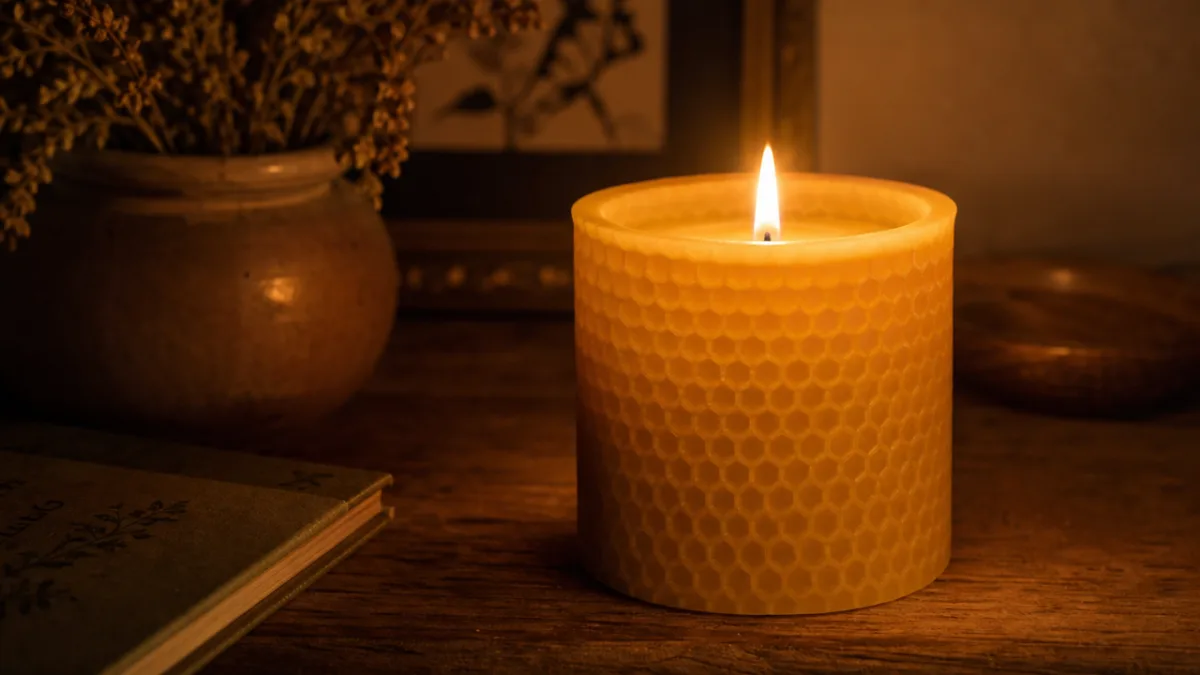
The tumbler format brings a contemporary elegance to this ancient material. A tumbler candle is poured into a glass or ceramic vessel that pulls double duty — practically, it contains the melted wax and protects your surfaces from drips. Aesthetically, the vessel becomes part of the candle’s whole identity, something worth displaying even after the wax is completely gone. The warm honey tones of beeswax paired with the clean lines of a quality tumbler create an object that works just as well as a piece of décor as it does a home fragrance product.
What Makes Beeswax Uniquely Special
Beeswax comes from a genuinely fascinating biological process. Worker bees eat honey and, through some impressive metabolic alchemy, secrete wax from glands on their abdomens. They use that wax to build the hexagonal cells of the honeycomb — the hive’s structural backbone and storage system for honey and pollen. It takes roughly six to eight pounds of honey for a colony to produce just one pound of beeswax, which gives you a real sense of the effort that goes into even a small amount of this stuff. That origin story is a big part of why beeswax candles feel special and worth paying a little more for.
One of the most beloved qualities of beeswax is its natural scent. Pure beeswax has a subtle, sweet, honey-like fragrance that’s entirely its own — no added perfumes or fragrance oils needed. When the candle burns, that scent fills the room with a warmth and gentleness that synthetic fragrances really struggle to match. If you’re sensitive to artificial scents, or you just prefer things to smell more natural, a pure beeswax candle like JUNE is kind of hard to beat. It’s never overwhelming or chemical — it’s more like the living memory of the hive, translated into light and warmth.
Beeswax also has exceptional burning properties that set it apart from every other candle material out there. It has the highest melting point of any natural wax, so it burns more slowly and cleanly than paraffin, soy, or coconut wax. A well-made beeswax tumbler will typically last two to three times longer than a comparable paraffin candle, making it not just a more luxurious choice but, over time, a more economical one too. And beeswax doesn’t release toxic byproducts when it burns — it actually produces negative ions that can help neutralize pollutants in the air, which is why beeswax candles have a real following among people who care about indoor air quality.
The Art of Crafting a JUNE Tumbler Candle
Making a high-quality beeswax tumbler candle takes patience, skill, and a real attention to detail at every step. It starts with sourcing the beeswax itself, ideally from small-scale, sustainable apiaries where the bees’ welfare and the health of the surrounding environment actually come first. The quality of the wax has a direct impact on the finished candle’s appearance, scent, and how it burns. Filtered beeswax — which has most of the impurities removed while keeping the natural color and fragrance compounds intact — is the go-to material for serious candle making.
Pouring a tumbler candle requires careful temperature management throughout the whole process. The beeswax has to be melted slowly and gently, usually in a double boiler setup to avoid scorching, which can damage both the color and the scent of the wax. Once it hits the right pouring temperature — typically somewhere between 145 and 165 degrees Fahrenheit, depending on the specific blend — it gets carefully poured into a pre-warmed tumbler to prevent the glass from cracking under thermal stress. The wick has to be centered precisely for an even burn, so it’s usually held in place with a wick bar while the wax sets. Since beeswax contracts as it cools, a second pour is often needed to fill in the depression that forms around the wick.
The wick is another element that’s easy to overlook but really matters. For a beeswax tumbler, the wick has to be carefully matched to the diameter of the vessel and the density of the wax. Too small, and it’ll tunnel straight down the center, leaving a ring of wax around the edges that never melts — basically wasted. Too large, and the candle burns too hot and fast, cutting the burn time short and potentially overheating the glass. The right wick creates a full, even melt pool that reaches the edges of the vessel within a few hours of burning, maximizing the scent throw and making sure every bit of beeswax actually gets used.
Caring for Your JUNE Beeswax Tumbler Candle
Getting the most out of a premium beeswax tumbler takes a bit more care than just striking a match and walking away. The first burn is especially important — candle makers often call it setting the candle’s “memory.” The first time you light it, let the candle burn long enough for the melt pool to reach the full diameter of the tumbler. Depending on the size, that could take two to four hours. If you blow it out before that happens, the wax can develop a tunnel that follows the shape of that first melt pool on every subsequent burn, leaving the outer wax permanently unmelted and cutting the life of your candle way short.
Keeping up with wick maintenance can also dramatically improve the look and performance of your candle. Before each lighting, trim the wick down to about a quarter of an inch. A wick that’s too long produces a bigger, flickering flame that throws off more smoke and soot, coats the inside of the tumbler with carbon, and burns through the wax faster than it needs to. Trimming only takes a second and makes a noticeable difference in every burn. Dedicated wick trimmers exist, but a regular pair of scissors works just fine, especially in wider vessels where the wick is easy to reach.
There are several other habits worth building to keep your JUNE beeswax tumbler looking and burning beautifully:
- Keep the candle away from drafts, open windows, and air conditioning vents. Moving air disrupts the flame, causes uneven burning, and kicks up a lot more soot than necessary.
- Try not to burn it for more than four hours at a time. Extended burns can overheat the glass tumbler and shorten the overall lifespan of the candle.
- Store it somewhere cool and dry, away from direct sunlight. Prolonged UV exposure can fade the natural honey color of the wax over time.
- If a white, dusty film appears on the surface, don’t worry — that’s called “bloom,” and it’s actually a sign of high-quality pure beeswax. You can buff it away gently with a soft cloth if you’d like, but it’s completely harmless.
- Always let the candle cool completely before replacing the lid, trimming the wick, or moving the tumbler. This prevents spills and keeps condensation from forming on the wax surface.
Once the wax has burned down to within about half an inch of the bottom of the vessel, it’s time to retire that candle — resist the urge to push it further. Burning too low risks overheating the glass, which can crack or even shatter, and that’s not a fun way for a great candle to end its life. But here’s the good news: the JUNE tumbler itself isn’t done. Once you’ve cleaned out any remaining wax residue, the vessel makes a lovely drinking glass, a small planter, a desk organizer, or just about anything else that gives the beautiful container a well-deserved second life.

The Sustainability Story Behind Beeswax Candles
As more people pay attention to where their products come from and what impact they have, beeswax candles hold up really well under that scrutiny — especially when they’re sourced responsibly. Beeswax is completely natural, renewable, and biodegradable. And its production is tied directly to the health of honeybee populations, which happen to be among the most ecologically important creatures on the planet. Bees pollinate roughly a third of the food crops humans depend on, plus a huge proportion of wild plant species, so their wellbeing is genuinely tied to the future of terrestrial ecosystems.
Buying beeswax candles from ethical sources means supporting beekeepers who put colony health first rather than chasing maximum wax and honey yield. Good beekeepers maintain hives in environments with diverse, abundant forage, minimize the use of pesticides and miticides that can compromise bee health, and harvest wax and honey in ways that leave the colony with enough resources to actually thrive. That’s a very different picture from industrial-scale operations, which can put bees under real stress in the name of commercial output. When you buy a candle made from ethically sourced beeswax, you’re supporting a chain of decisions that genuinely benefits one of the world’s most important and most vulnerable groups of insects.
It’s also worth putting beeswax up against its most common competitor: paraffin. Paraffin is a petroleum byproduct, which means its production is directly tied to the fossil fuel industry and all the environmental costs that come with it. When paraffin candles burn, they release compounds including toluene and benzene — both classified as hazardous air pollutants. Soy wax, often pitched as the natural, sustainable alternative, comes with its own complications, particularly around large-scale monoculture farming and deforestation linked to soy production in some parts of the world. Beeswax, by contrast, is produced through natural biological processes that, when well managed, actively support the ecosystems around them rather than degrading them.
Incorporating JUNE into Your Home and Lifestyle
A quality beeswax tumbler candle like JUNE is more than a light source or an air freshener — it’s an anchor for the kinds of small rituals that make everyday life feel a little richer. Lighting a candle at the start of an evening, whether during a bath, a meal, a reading session, or just as a way to shift gears from the busy part of the day to the quieter part, is a small but genuinely meaningful act of intention. The warm, honeyed glow of beeswax creates an atmosphere that electric lighting simply can’t replicate — it softens a room and seems to invite everyone in it to slow down a little.
From a home décor standpoint, a JUNE beeswax tumbler is surprisingly versatile. Its natural honey tones and clean, simple vessel work with a wide range of interior styles, from Scandinavian-inspired warmth and organic textures to bohemian maximalism to sleek minimalist modern spaces. Grouped together in varying heights on a mantelpiece, coffee table, or dining table, beeswax tumblers create a really compelling, cohesive arrangement. Set one alone on a bedside table or bathroom shelf, and it communicates a quiet kind of luxury that doesn’t need anything else around it to land.
Beeswax tumbler candles also make exceptional gifts for a surprisingly wide range of occasions. Here are a few situations where a JUNE candle would be a genuinely thoughtful choice:
- Housewarming gifts: A beautiful beeswax candle is a warm, practical welcome for anyone settling into a new home — comforting and atmospheric during what can be a stressful transition.
- Wedding and anniversary gifts: Candlelight and romance have always gone together, making a premium beeswax candle a natural fit for marking milestones in long-term partnerships.
- Thank-you gifts: For a host, a mentor, a caregiver, or anyone whose generosity deserves real acknowledgment, a quality candle says thank you with a warmth that generic gifts just can’t match.
- Self-care and wellness gifts: For the person in your life who prioritizes their wellbeing, a pure beeswax candle fits right in with values of naturalness, sustainability, and sensory nourishment.
- Seasonal and holiday gifts: The warm glow and honey scent of beeswax feel especially at home during autumn and winter, which is why beeswax candles are a perennial favorite for holiday gifting.
Beyond the sensory pleasure, choosing a JUNE beeswax tumbler candle is a small way of aligning what you buy with what you actually care about. Every time you choose something made from natural, sustainably sourced materials over a cheaper synthetic option, you’re nudging a market toward ethical production practices, environmental stewardship, and the kind of artisanal craft traditions that deserve to keep going. The JUNE beeswax tumbler candle is a beautiful object, a clean and natural flame, and a small but meaningful way of caring for the world we share — with bees, with each other, and with whoever comes after us.








What do you think?
It is nice to know your opinion. Leave a comment.