










New Zealand Tea Tree: Plant Care & Growing Guide
Introduction to the New Zealand Tea Tree
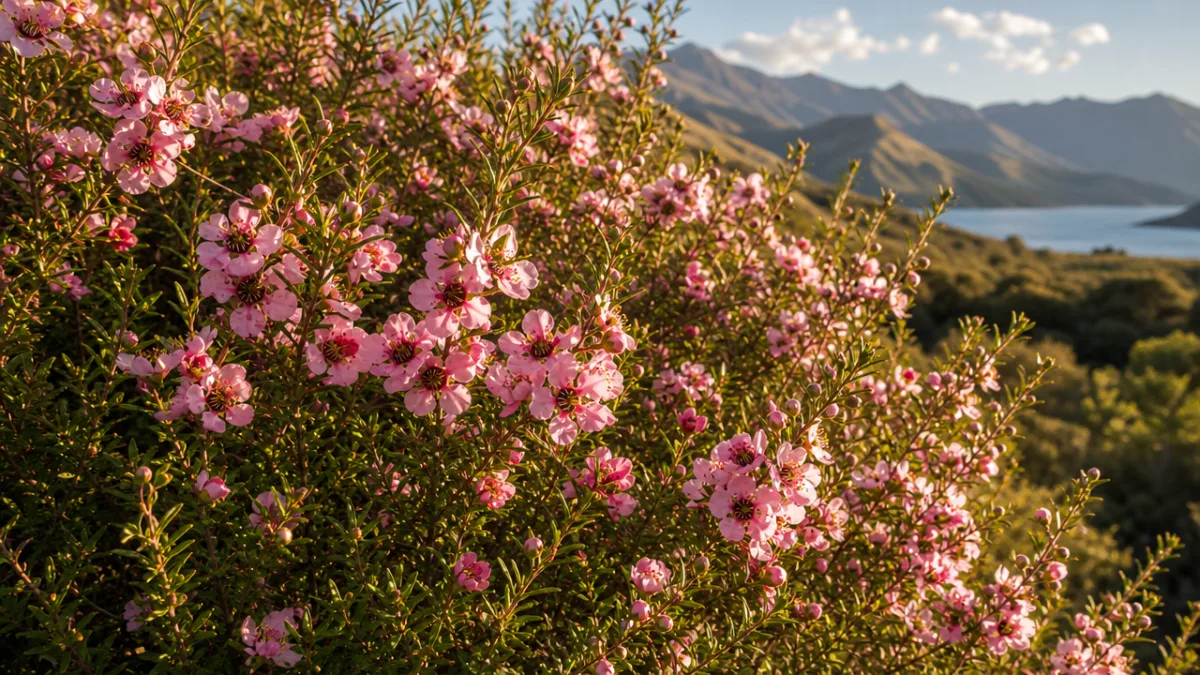
If you’ve never grown a New Zealand Tea Tree, you’re in for a treat. Known botanically as Leptospermum scoparium and called Mānuka by the indigenous Māori people of New Zealand and many Australians, this flowering shrub has built up a loyal fan base among gardeners all over the world — and it’s easy to see why. It blooms prolifically, handles a surprising range of growing conditions, and looks gorgeous whether it’s spilling out of a container on a sunny patio or doing its thing as a big, bushy coastal hedge. It’s one of those plants that always turns heads.
There’s also a lot more to Leptospermum scoparium than good looks. The Māori used nearly every part of this plant for medicinal purposes — brewing the leaves into a tea to bring down fevers, and using bark preparations on wounds and skin conditions. And you’ve probably heard of Mānuka honey, the incredibly popular health product made by bees that forage on the flowers. It’s one of the most studied natural antibacterial substances in the world and commands serious prices at health food stores. Knowing all that does add something to the experience of growing one in your garden.
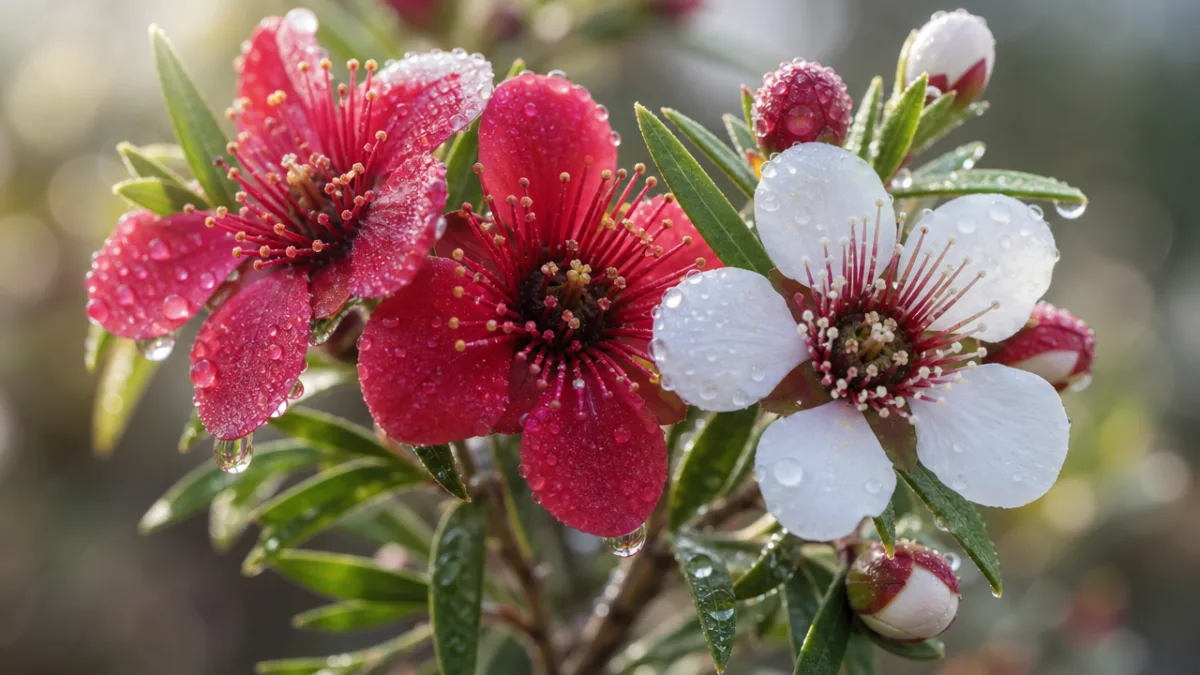
Botanically speaking, the New Zealand Tea Tree belongs to the family Myrtaceae, which puts it in the same family as eucalyptus, bottlebrush, and feijoa. It’s a big species in terms of variety — cultivars come in white, blush pink, vivid crimson, and deep burgundy, with both single and fully double flowers, the latter looking remarkably like tiny roses. Whatever your style or climate, there’s almost certainly a Mānuka cultivar out there with your name on it.
Understanding Growing Conditions and Climate Requirements
The New Zealand Tea Tree is happiest in USDA hardiness zones 9 through 11, though some of the tougher cultivars can manage in zone 8 if you give them a bit of protection when cold snaps roll through. In the wild, Mānuka grows in an impressively wide range of environments — from low-lying coastal scrubland all the way up to subalpine slopes — and that natural toughness carries over well into garden cultivation. It does particularly well in Mediterranean-climate regions, coastal California, parts of the Pacific Northwest, coastal Europe, and of course throughout Australia and New Zealand.
If there’s one thing this plant is non-negotiable about, it’s sunlight. New Zealand Tea Trees need full sun — at least six hours of direct sun per day, and they’re really at their best with eight or more. In shadier spots, you might keep the plant alive, but it’ll flower much less, grow in a looser and less attractive way, and become more prone to fungal disease because air circulation through the foliage suffers. When you’re choosing where to plant one, pick the sunniest spot you’ve got, especially if you’re in a cooler or cloudier part of the world where sunshine is at a premium.
Cold tolerance does vary quite a bit between cultivars. The species in general isn’t crazy about frost, but some cultivars bred specifically for cold hardiness can handle brief dips down to around 10°F (-12°C). If you garden somewhere that gets regular hard frosts, growing your Mānuka in a container you can bring indoors for winter is honestly the most stress-free approach. Humidity is generally fine, but good air circulation matters — especially in humid subtropical climates where still, moist air creates the perfect conditions for fungal problems to take hold.
Soil, Watering, and Fertilization
Getting the soil right before you plant is probably the single most important thing you can do for a New Zealand Tea Tree’s long-term health. It wants well-draining, slightly acidic to neutral soil — somewhere in the pH range of 5.5 to 7.0. Heavy clay that holds water around the roots is bad news and will almost certainly lead to root rot and a slow decline. If your garden has clay-heavy soil, mix in a generous amount of coarse sand, perlite, and organic matter before planting. You’ll be giving the roots the breathing room they need to really settle in and take off.
Watering needs shift quite a bit depending on where the plant is in its life. Newly planted specimens need consistent moisture through their first growing season while they’re getting established — deep watering once or twice a week is a good rhythm, adjusted based on rainfall. After that, though, the plant becomes genuinely drought-tolerant and actually prefers to dry out a bit between waterings. Overwatering is one of the most common ways people accidentally kill this plant. Waterlogged soil creates exactly the anaerobic conditions that root rot pathogens love, and it can do more damage more quickly than underwatering.
On the feeding side of things, Mānuka is pretty low-maintenance — which makes sense given that it evolved in New Zealand’s naturally nutrient-poor soils. A single application of slow-release, balanced fertilizer formulated for acid-loving plants in early spring is usually all it needs to grow well and flower freely. Skip the high-nitrogen fertilizers — those push leafy growth at the expense of flowers and can also make the plant more attractive to pests. A layer of composted bark mulch around the base each year is a nice addition; it gradually improves soil structure and releases nutrients slowly as it breaks down.
Pruning and Shaping Your New Zealand Tea Tree
Pruning your New Zealand Tea Tree regularly makes a real difference to both how it looks and how healthy it stays. The best window for pruning is right after the main flowering period ends, which usually lands somewhere in late spring to early summer depending on your climate and the cultivar you’re growing. Pruning at this point gives the plant the rest of the growing season to put on new growth that’ll carry next year’s flower buds — if you wait too long, you risk cutting off the buds before they even get a chance to form.
How you prune matters just as much as when you prune, because Mānuka has one important quirk: it really struggles to regenerate from old, bare wood. If you cut back hard into stems that have already lost their leaves, don’t expect new shoots to emerge from those bare sections — they probably won’t. The rule of thumb is to trim back the soft, leafy growth by no more than a third of its length, always cutting to a point where there’s still green foliage present. This keeps the plant dense and bushy, encourages fresh branching, and avoids the problem of dead stubs dotting the plant’s appearance.
If you’re aiming for a more formal hedge or topiary shape, light and frequent trimming through the growing season will serve you much better than the occasional heavy cut. A quick clip of the outer growth every four to six weeks during active growth keeps things tidy and dense, and it also helps with disease prevention by improving airflow through the canopy. One more tip: if you’re moving between multiple plants with your shears, give the blades a wipe with diluted bleach solution or rubbing alcohol between plants. It only takes a moment, but it stops fungal pathogens from hitching a ride from one plant to another.
Common Pests and Diseases
The New Zealand Tea Tree is a pretty tough plant overall, but it does have a few pest and disease issues worth keeping an eye out for. Scale insects are probably the most common problem you’ll run into — they show up as small, waxy or shell-like bumps on stems and leaves and slowly weaken the plant by sucking its sap. They also produce a sticky substance called honeydew that encourages sooty mold to grow, which coats the foliage in a dark layer and interferes with photosynthesis. Horticultural oil applied during dormancy is a solid fix, and systemic insecticides work well during the growing season if things get out of hand.
Webbing caterpillars — the larvae of various moth species — can also move in occasionally, spinning silky webs among the branches and eating away at leaves within their protective tents. Catching them early is key, before the population grows large enough to cause real defoliation. For small infestations, simply pulling off and destroying the webs by hand does the job. For bigger problems, a biological insecticide containing Bacillus thuringiensis (Bt) targets caterpillars effectively without harming the bees and other beneficial insects that your Mānuka depends on for pollination.
On the disease side, root rot caused by Phytophthora and related water molds is the most serious threat — and as with most things that go wrong with this plant, it comes down to overwatering or poor drainage rather than any inherent weakness in the plant itself. Above-ground fungal issues like powdery mildew and leaf spot can also crop up, especially in humid conditions or when plants are crowded together. Choosing disease-resistant cultivars, giving plants enough space to breathe, watering at the base rather than overhead, and keeping fallen debris cleared away from the base of the plant will go a long way toward keeping problems at bay.
Propagation Methods
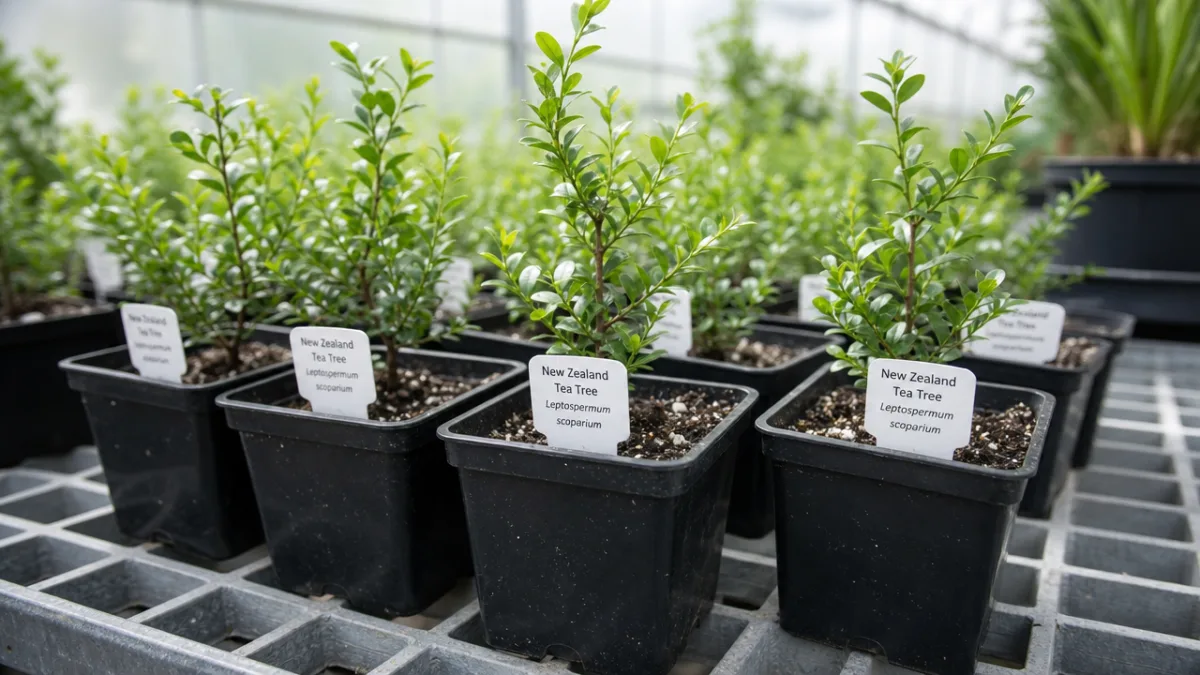
Propagating your own New Zealand Tea Trees is a great way to multiply a plant you love, fill out a hedge on a budget, or share specimens with other gardeners. The two main methods are growing from seed and taking semi-hardwood cuttings, and both have their place. Seed propagation is easy and cheap, and you can produce a lot of plants at once — the catch is that seedlings are genetically variable, so they might not come out looking exactly like the parent. If you’re working with a specific named cultivar and you want to preserve its exact flower color and growth habit, that’s where cuttings come in.
Cuttings give you plants that are genetically identical to the parent, which makes them the go-to method for propagating named cultivars. The best time to take them is mid to late summer, when the current season’s new growth has firmed up just enough to be in that semi-hardwood stage — not floppy and green anymore, but not fully woody either. Take cuttings about four to six inches long, strip the lower leaves, and leave a small tuft of foliage at the tip. Dipping the cut end in rooting hormone powder or gel is worth the extra step — it noticeably improves the success rate.
Pop your prepared cuttings into a well-draining propagation mix — equal parts perlite and coconut coir works really well — and cover them with a clear plastic bag or humidity dome to keep moisture levels high while the roots develop. A heat mat set to around 70°F (21°C) underneath the container will speed things up considerably. With that setup, you can typically expect roots to form within four to eight weeks. Once the cuttings have rooted, gradually ease them out of the humid environment over a week or so to let them acclimatize before potting them on into individual containers with a proper potting mix.
Landscape Uses and Design Ideas
One of the best things about the New Zealand Tea Tree from a design perspective is just how versatile it is. Larger cultivars that reach six feet or more are fantastic as informal hedges and screens — they give you year-round privacy and wind protection, and then reward you with a spectacular flush of flowers in season. In coastal gardens where salt spray and constant wind make life difficult for a lot of ornamentals, Mānuka is one of the most dependable options going. It can take the conditions that many plants simply can’t handle and still look great doing it.
Compact dwarf cultivars are a natural fit for container gardening on patios, balconies, and rooftop spaces where you can’t plant in the ground. In a pot, the plant naturally develops a tidy, rounded shape that needs very little pruning to maintain, and being able to move it around is genuinely useful — bring it front and center when it’s flowering, tuck it somewhere sheltered when cold weather rolls in. Pairing Mānuka containers with other Southern Hemisphere plants like agapanthus, phormium, and corokia creates a really cohesive look with a strong botanical theme.
In mixed borders and cottage-style plantings, the New Zealand Tea Tree earns its keep as a textural contrast plant as much as anything else. Its fine, needle-like foliage plays beautifully against bold-leaved plants like pittosporum and cordyline, and the flowers sit naturally alongside lavender, cistus, penstemon, and ornamental grasses. And don’t underestimate its value to wildlife — when Mānuka is in bloom, bees and butterflies show up in impressive numbers. It’s genuinely one of the better pollinator plants you can add to a wildlife-friendly garden.
- Informal hedge or windbreak: Use larger cultivars spaced three to four feet apart to create a dense, flowering privacy screen that also supports pollinators.
- Container specimen: Dwarf varieties thrive in large pots and can be moved to shelter in cold winters, making them ideal for patios and balconies in marginal climates.
- Mixed border anchor: Plant mid-sized cultivars as structural anchors in mixed perennial and shrub borders, providing both year-round foliage interest and seasonal floral color.
- Wildlife garden planting: Mānuka’s nectar-rich flowers attract bees, butterflies, and other pollinators, making it a valuable component of any garden designed to support biodiversity.
- Coastal garden planting: The species’ natural salt and wind tolerance makes it one of the best choices for exposed seaside gardens where many ornamentals struggle to establish.
If you’re drawn to low-maintenance, drought-tolerant planting schemes, Mānuka fits in beautifully alongside other water-wise plants from similar climates. Mediterranean staples like rosemary, sage, grevillea, and callistemon share its love of sharp drainage, full sun, and minimal watering, and together they create a layered, textural planting that looks great through the whole year without asking a lot of you. It’s a smarter way to garden — less work, less water, and a richer habitat for the insects and birds that make a garden feel truly alive.








What do you think?
It is nice to know your opinion. Leave a comment.