










15 Overlooked Mistakes When Pruning Peonies (And How to Avoid Them)
Why Pruning Peonies Correctly Matters More Than You Think
Peonies are among the most beloved perennial flowers in any garden, celebrated for their lush, fragrant blooms and their remarkable longevity. A well-established peony plant can thrive and flower for decades — sometimes even outliving the gardener who planted it. But this resilience can be deceptive. Many gardeners assume that because peonies are tough, they’ll bounce back from any pruning mistake without consequence. In reality, poor pruning practices can silently undermine the health of the plant, reduce bloom production, and in some cases cause damage that takes years to reverse.
Understanding why pruning matters begins with understanding how peonies grow. Unlike many perennials, peonies develop slowly and invest heavily in their root systems. The energy stored in those roots powers each spring’s spectacular flowering display. When you prune incorrectly — cutting at the wrong time, leaving disease behind, or removing too much foliage — you’re effectively robbing the plant of the energy it needs to perform. The consequences often don’t appear immediately, which is why so many gardeners repeat the same mistakes year after year without connecting the dots.
This article walks through fifteen of the most commonly overlooked pruning mistakes peony growers make, covering everything from timing errors to tool hygiene. Whether you’re a first-time peony grower or someone who has tended these flowers for years, there’s a good chance at least a few of these pitfalls are affecting your plants. The good news is that every single one of these mistakes is entirely avoidable once you know what to look for — and correcting them can make a dramatic difference in the quality and abundance of your blooms next season.
Timing Mistakes That Sabotage Your Blooms
Pruning Too Early in the Season
One of the most damaging timing errors is cutting back peony foliage before it has fully died down in autumn. Many gardeners, eager to tidy up their beds after the blooms have faded, reach for the shears too soon. The foliage may look spent and unattractive by midsummer, but it is still actively performing photosynthesis and sending energy back down into the roots. Cutting it away early deprives the plant of crucial reserves that it needs to produce next year’s flower buds.
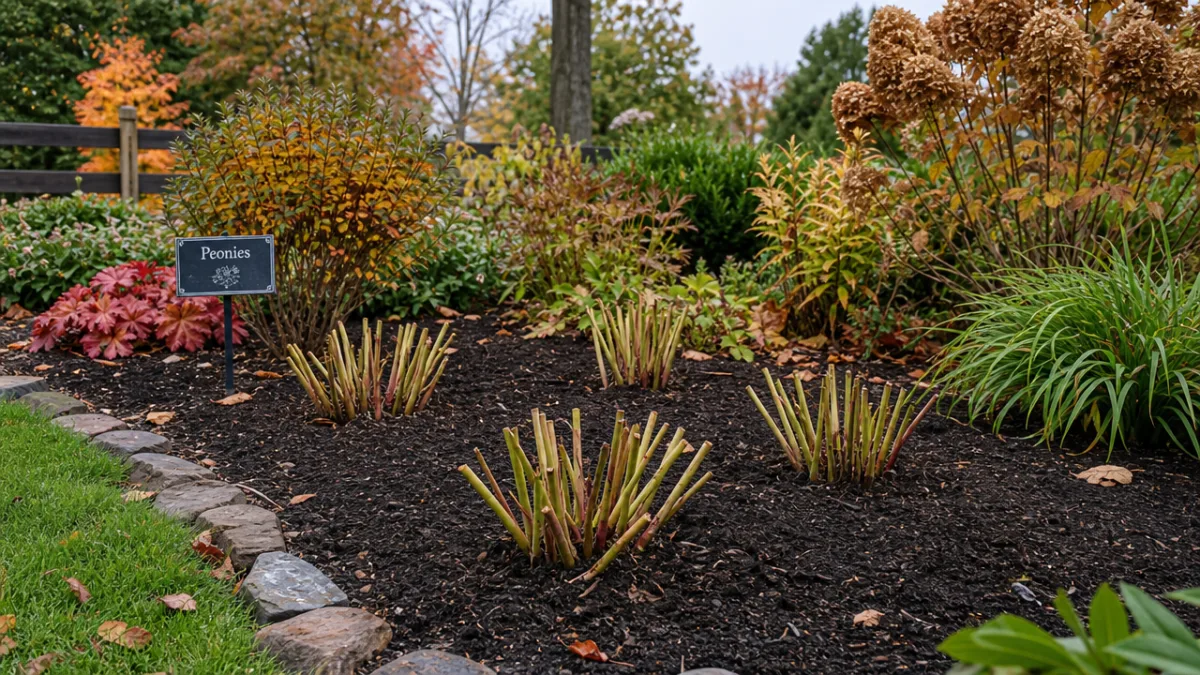
The correct approach is to wait until after the first hard frost of autumn, when the foliage has turned brown and collapsed on its own. At that point, cutting the stems back to within two to three inches of the ground is appropriate and beneficial. In most temperate climates, this means waiting until late October or November. Patience during this window is one of the simplest and most impactful things you can do to ensure a generous bloom the following spring.
It’s also worth noting that pruning too early in spring — before the red shoots have fully emerged — can lead to accidentally damaging those emerging eyes, which are the growth points from which new stems develop. Treat the garden bed as a no-go zone for aggressive tidying until the new growth is clearly visible and safely above ground level. Rushing the process out of eagerness to get the garden started is a mistake that costs gardeners far more time in the long run.
Deadheading at the Wrong Stage
Deadheading spent blooms is an important practice for keeping peonies looking their best and preventing them from putting unnecessary energy into seed production. However, many gardeners either skip deadheading entirely or do it incorrectly, cutting back too far down the stem. The right technique is to remove the spent flower head just below the bloom, leaving as many leaves on the stem as possible, since those leaves continue to fuel the plant through photosynthesis for the rest of the season.
Another common deadheading error is removing side buds along with the main bloom. Many peony varieties produce secondary buds alongside the central flower. If you remove these along with the spent main bloom, you’re cutting off flowers that haven’t had a chance to open yet. Take a closer look before you cut, and remove only what has clearly finished blooming. This simple adjustment can extend your peony’s flowering window by a week or more.
Deadheading should never be confused with the full autumn cutback. The two practices serve different purposes and occur at entirely different times of year. Deadheading happens during or just after bloom season — typically late spring through early summer — while the autumn cutback happens after frost. Conflating the two, or performing the autumn cutback in summer, is a surprisingly common mistake among newer gardeners who have read partial instructions and filled in the gaps incorrectly.
Tool and Technique Errors That Cause Hidden Damage
Using Dull or Contaminated Cutting Tools
Sharp, clean tools are non-negotiable when it comes to pruning any plant, and peonies are no exception. Dull blades crush and tear plant tissue rather than cutting cleanly through it, leaving ragged wounds that take far longer to heal and are significantly more vulnerable to infection. Many gardeners sharpen their tools at the start of the season and then forget about maintenance for the rest of the year, not realizing that blades can lose their edge surprisingly quickly, especially when cutting through thick peony stems.
Contaminated tools present an even more serious problem. Peonies are susceptible to a range of fungal diseases, most notably botrytis blight, and the pathogens responsible for these diseases can easily be transferred from one plant to another on unsterilized cutting blades. The solution is straightforward: wipe your blades with a solution of one part bleach to nine parts water, or use rubbing alcohol, between cuts — especially when moving between plants or when cutting into tissue that looks at all discolored or diseased.
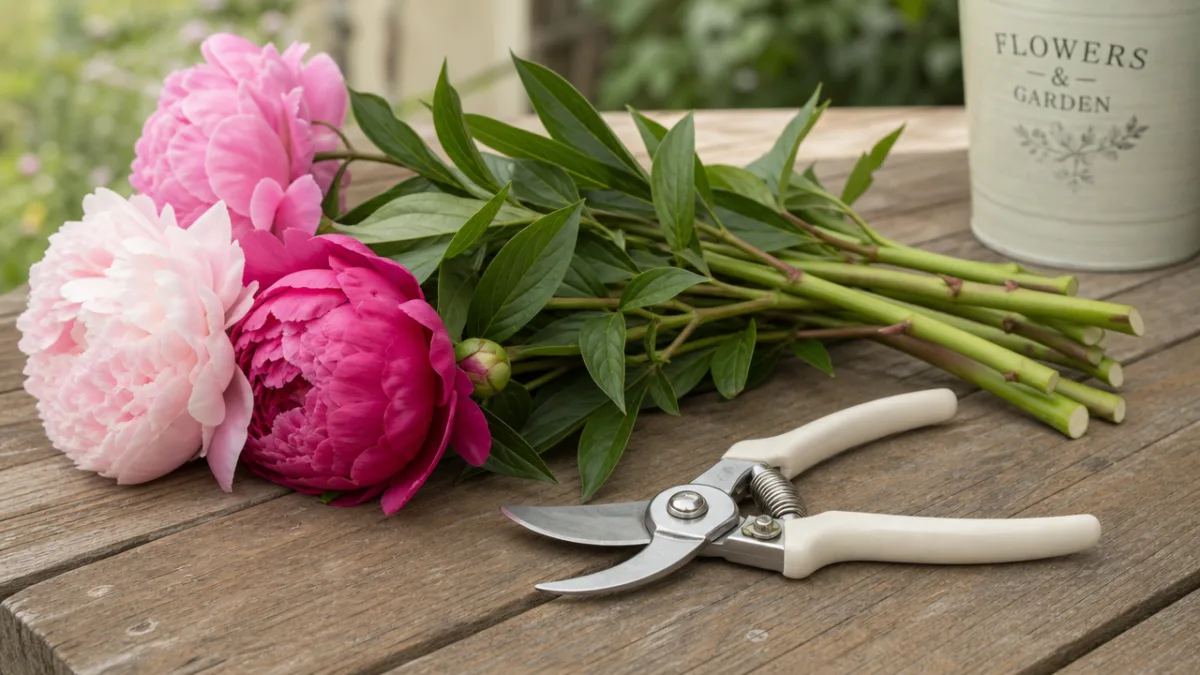
Beyond sanitation, the type of tool you use matters as well. For the slender stems of younger plants, a pair of sharp bypass pruners is ideal. For older, thicker stems, loppers may be necessary to make a clean cut without straining or twisting. Anvil-style pruners, which crush the stem against a flat plate, are generally less suitable for peonies because of the tissue damage they cause. Investing in quality bypass pruners and maintaining them properly will pay dividends in plant health over many seasons.
Cutting at the Wrong Angle or Location
Where and how you make your cuts on a peony stem has more impact than most gardeners realize. Cutting straight across the stem rather than at a slight angle can allow water to pool on the cut surface, increasing the risk of rot and fungal infection. A clean angled cut allows water to shed away from the wound more effectively. While this matters slightly less for the full autumn cutback (since the stems are being removed almost entirely), it becomes more relevant when deadheading or making selective summer cuts.
The location of your cut relative to a leaf node is also important during any pruning that leaves a portion of the stem intact. Cutting too far above a node leaves a stub of dead stem tissue — called a “stub” — that serves as an entry point for disease. Always make your cuts close to a node or lateral bud, within a quarter inch or so, to minimize the dead tissue left behind. This is a detail that separates careful, experienced pruners from those who simply snip wherever seems convenient.
During the autumn cutback, cutting too high above the soil line is another mistake worth mentioning. Leaving stubs of three or four inches rather than the recommended two to three inches gives fungal diseases like botrytis a foothold right at the base of the plant, where they can overwinter in the dead tissue and re-infect the new growth in spring. Err on the side of cutting closer to the ground, while still being careful not to damage the root crown or the dormant eyes just beneath the soil surface.
Disease and Debris Management Mistakes
Leaving Pruned Material in the Garden Bed
After completing the autumn cutback, one of the most important steps is thoroughly removing all of the pruned stems and foliage from the garden bed. This is a step that a surprising number of gardeners skip, either leaving the cuttings in place as a mulch or simply forgetting to gather them before moving on to the next task. Unfortunately, peony prunings are a prime habitat for overwintering fungal spores, particularly botrytis blight, which can devastate new growth the following spring.
The proper disposal of peony cuttings is equally important. Do not add peony prunings to your home compost pile, particularly if any of the plant material shows signs of disease such as discoloration, mold, or lesions. Most home compost piles do not reach temperatures high enough to reliably kill fungal pathogens, meaning the infected material will simply cycle back into your garden through the finished compost. Instead, bag the cuttings for municipal green waste collection or dispose of them in the trash.
Some gardeners choose to apply a fresh layer of mulch to their peony beds after the autumn cutback, which can help insulate the roots during cold winters. This is a reasonable practice, but it comes with an important caveat: do not pile mulch directly on top of the crown of the plant. Peonies notoriously dislike being planted too deeply, and a thick layer of mulch over the crown can mimic the effect of deep planting, suppressing or eliminating flowering the following year. Keep mulch a few inches away from the base of the plant.
Ignoring Signs of Disease During Pruning
Pruning time offers an invaluable opportunity to closely inspect your peony plants for signs of disease and pest damage. Many gardeners approach pruning as a purely mechanical task — cut here, remove that — without pausing to examine the plant tissue they’re removing. Inspecting stems and foliage for lesions, unusual discoloration, or fungal growth as you work can allow you to catch problems early, before they spread throughout the plant or to neighboring specimens.
Botrytis blight is the most common peony disease and typically presents as brown, mushy stem bases in spring, or gray fuzzy mold on stems and buds. If you encounter this during your autumn pruning, it’s a signal to be especially thorough about removing all infected material and to consider a preventive fungicide application early the following spring. Red blotch, another common peony disease, causes reddish-purple spots on stems and foliage. Both conditions benefit enormously from vigilant sanitation during pruning.
Aside from disease, check for signs of insect damage as you prune — particularly the telltale evidence of scale insects, which can cluster on stems. Unlike many pests, scale insects don’t flee when disturbed, so it’s easy to inadvertently carry them to new plants on pruned cuttings or on your gloves and tools. Wearing disposable gloves or sanitizing reusable ones between plants when you know disease or pests are present in your garden is a small habit with significant protective value.
Fertilization and Post-Pruning Care Mistakes
Fertilizing at the Wrong Time Relative to Pruning
The relationship between pruning and fertilization is one that many gardeners either overlook or misunderstand entirely. Applying a nitrogen-heavy fertilizer immediately after the autumn cutback can stimulate new growth at exactly the wrong time of year — just as the plant should be preparing for dormancy. This tender new growth is highly vulnerable to frost damage, and losing it can stress the plant and reduce the following year’s bloom count. Fertilization in late summer or early autumn, before cutback, should be approached with the same caution.
The most appropriate time to fertilize peonies is in early spring, just as the red shoots are beginning to emerge from the ground, and again immediately after blooming has finished. A balanced, low-nitrogen fertilizer or a formula specifically designed for flowering perennials works well for these applications. Some gardeners also work a slow-release granular fertilizer into the soil around the plant in early spring, which provides a steady nutrient supply throughout the growing season without the risk of overstimulation.
It’s worth emphasizing that peonies are not heavy feeders and respond poorly to over-fertilization. An excess of nitrogen in particular leads to lush, abundant foliage at the expense of flowers — a common disappointment for gardeners who assume that more fertilizer always means better results. If your peonies are producing plenty of healthy green growth but few or no blooms, over-fertilization is one of the first things to investigate, alongside planting depth and sun exposure.
Skipping Post-Pruning Mulching and Soil Care
After the autumn pruning is complete and all debris has been cleared away, the garden bed deserves some attention before winter sets in. In colder climates, a light application of compost worked gently around (not over) the crown of the plant can improve soil structure and provide a modest nutrient boost that will become available to the roots the following spring. This is also a good time to check whether the soil has heaved around the crown over the previous season, which can alter the planting depth and affect flowering.
In regions with severe winters, gardeners sometimes use pine boughs or evergreen branches laid loosely over the bed as a form of insulation, helping to protect the crown and shallow root system from extreme temperature fluctuations. This type of cover should be removed promptly in early spring as soon as temperatures begin to moderate, to avoid blocking the emerging new growth. A cover left in place too long in spring can cause the new shoots to etiolate — becoming pale and weak from lack of light — before they’ve had a chance to establish themselves properly.
Finally, do not overlook the importance of soil pH in the context of post-pruning care. Peonies prefer a slightly alkaline to neutral soil, with a pH in the range of 6.5 to 7.0. If your soil is significantly more acidic than this, nutrients become less available to the plant regardless of how much fertilizer you apply, and overall vigor — including the ability to recover well from pruning — is compromised. Testing your soil every few years and amending it with lime when necessary is a simple practice that can dramatically improve the long-term health and bloom performance of your peonies.
Structural and Long-Term Pruning Mistakes
Failing to Remove Weak or Crossing Stems
While peonies don’t require the same kind of structural pruning that shrubs and trees do, there is still value in selectively removing weak, spindly, or crossing stems during the growing season. Stems that are significantly thinner than the others rarely produce high-quality blooms and divert energy away from the stronger growth. Crossing stems rub against one another in wind, creating wounds in the bark that become entry points for disease. Taking a few minutes early in the season to thin out the weakest stems can noticeably improve bloom quality.
Thinning is especially valuable on mature, heavily established peony clumps that have developed dense, congested centers. When stems become too crowded, air circulation within the plant is reduced, creating the humid, stagnant conditions that fungal pathogens love. Removing a quarter to a third of the stems from an overcrowded clump can dramatically improve air circulation and reduce disease pressure, particularly for botrytis blight. This is not a step that needs to be taken every year, but it’s worth evaluating every two to three seasons on established plants.
Knowing which stems to keep and which to remove takes a small amount of practice and observation. In general, retain the thickest, most upright stems that are evenly spaced throughout the clump. Remove those that lean significantly outward, grow toward the center of the plant rather than outward, or are noticeably thinner and less vigorous than their neighbors. The goal is a plant with good structure and airflow — not a perfectly symmetrical shape, but a healthy, open arrangement that allows light and air to reach all parts of the plant.
Treating All Peony Types the Same Way
A mistake that catches many gardeners off guard is applying a one-size-fits-all pruning approach to a genus that actually encompasses several quite different plant types. The three main categories of peonies — herbaceous peonies, tree peonies, and intersectional (Itoh) peonies — each have different pruning requirements, and confusing them can lead to serious problems. Herbaceous peonies die back to the ground each winter and are cut back hard in autumn. Tree peonies, by contrast, are woody shrubs and should never be cut to the ground, as their branches are permanent structural elements of the plant.
Tree peonies require only light pruning to remove dead, damaged, or crossing wood, and this is best done in early spring just before the buds begin to swell. Cutting a tree peony to the ground the way you would an herbaceous peony can kill or severely set back the plant, as it removes years of established woody growth. If you’ve recently acquired a peony without knowing its type, take a moment to determine whether the stems die back naturally in winter (herbaceous) or remain standing as woody canes (tree peony) before reaching for your pruners.
Intersectional, or Itoh, peonies are hybrids between herbaceous and tree peonies, and they have their own quirks. Like herbaceous peonies, they die back to the ground in winter and can be cut back in autumn. However, some gardeners notice that Itoh peonies develop woody bases over time, and these woody crowns should be left intact rather than removed. The new growth emerges from these woody crowns each spring, and inadvertently cutting into them can reduce the following year’s bloom count. Knowing what type of peony you’re growing before you prune is one of the most important steps of all — and one of the most commonly overlooked.








What do you think?
It is nice to know your opinion. Leave a comment.