










Discover the Teapot Cozy: How It Works and Why Every Tea Lover Needs One
What Is a Teapot Cozy?
A teapot cozy is exactly what it sounds like — a snug little insulating cover that slips over your teapot and keeps your tea warm for way longer than it would stay hot on its own. Think of it like a cozy hat for your teapot: it wraps around the pot and traps the heat that would otherwise just drift off into the air. These charming accessories have been a staple of tea culture for centuries, especially in Britain and Ireland, where making a proper cup of tea is genuinely serious business.
Most teapot cozies are built with two or more layers of fabric and some kind of insulating material sandwiched in between. The outer layer is usually something decorative — quilted cotton, wool, knitted yarn — while the inside typically has heat-resistant batting or fleece. Together, these layers create a thermal barrier that slows down how fast the heat escapes, keeping your brew at a nice drinking temperature much longer than it would last sitting out uncovered.
What’s fun about teapot cozies is the sheer variety of them. You’ll find elegantly embroidered linen versions, whimsical knitted designs shaped like animals or little cottages, and everything in between. Some are custom-fitted to a specific pot, while others are made to work across a range of sizes. Either way, a good teapot cozy does double duty — it keeps your tea warm and adds a little personality to your tea table at the same time.
The History and Origins of the Teapot Cozy
Teapot cozies have been around for well over two hundred years, with their roots planted firmly in Victorian Britain. As tea became more affordable and accessible to people across all walks of life during the nineteenth century, there grew a real appetite for accessories that could make the ritual even better. The teapot cozy was a practical answer to a genuine problem: ceramic and porcelain pots lose heat fast, and in the drafty homes of Victorian England, keeping a pot of tea warm through a long afternoon gathering was actually a challenge worth solving.
The earliest cozies were typically handmade by women in the household, often stitched together from fabric scraps left over from dressmaking or upholstery. Needlework was a highly respected skill at the time, and a beautifully made teapot cozy was something to be proud of. Many of the earliest surviving examples are elaborately decorated with embroidery, beading, and patchwork — they weren’t just functional objects, they were genuine works of craft that showed off the maker’s skill and personality.
The teapot cozy had its ups and downs throughout the twentieth century. When electric kettles and teabags came along, the slow, leisurely pot of tea became less of a daily centerpiece, and the cozy went a bit out of fashion. But in recent decades, there’s been a real revival of interest in traditional tea culture, loose-leaf brewing, and the pleasure of doing things the slow way — and the teapot cozy has come right back along with it, beloved both as a practical tool and as a little symbol of intentional, unhurried living.
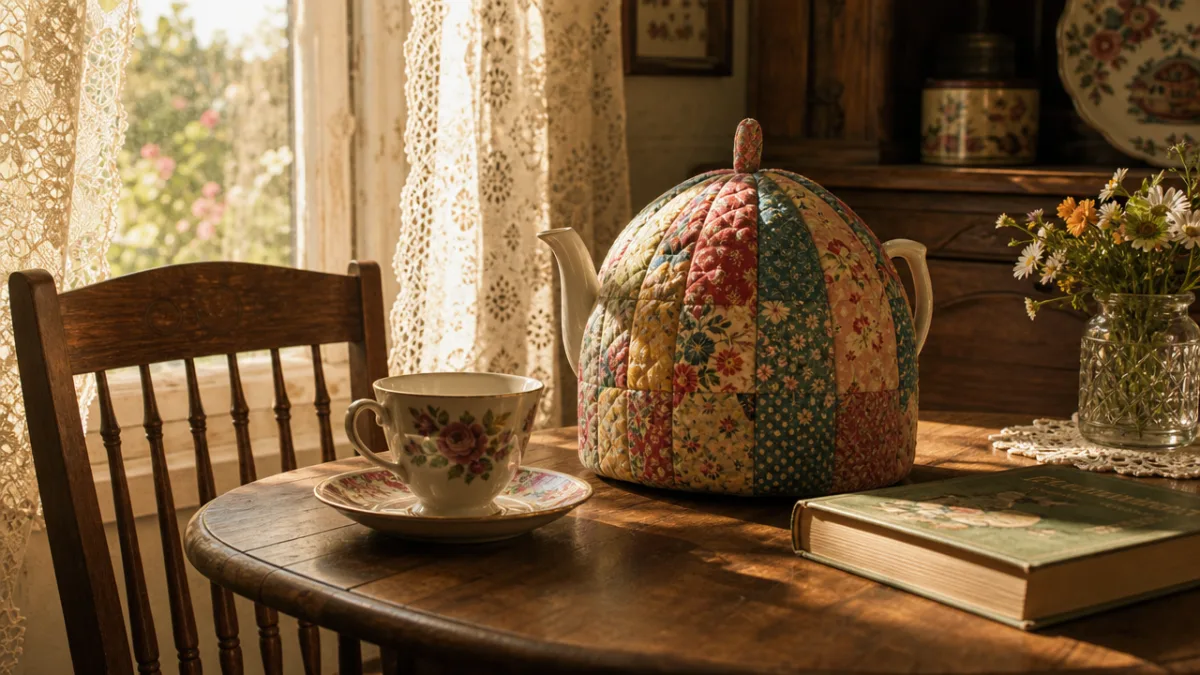
How a Teapot Cozy Actually Works: The Science of Heat Retention
To get why a teapot cozy works so well, it helps to know a bit about how heat actually escapes. Heat moves from warmer things to cooler things through three main pathways: conduction, convection, and radiation. When a hot teapot is sitting uncovered on your table, all three are happening at once. The pot’s body conducts heat out into the surrounding air, convection currents carry warm air away from its surface, and the pot radiates thermal energy into the room. That’s why a perfectly brewed pot of tea can slide from ideal to lukewarm before you’ve even finished your first cup.
A teapot cozy tackles all three of those heat-loss pathways at the same time. The fabric and insulating layers create a barrier between the hot pot and the cooler air around it, which slows down conductive heat loss significantly. The snug fit limits air movement around the pot’s surface, cutting down on convective cooling. And the insulating materials inside the cozy absorb and reflect radiated heat back toward the pot instead of letting it drift off into the room. Put it all together, and a good cozy can keep your tea warm for up to an hour longer than it would last uncovered.
Of course, not all cozies are created equal. A thick, double-layered wool cozy will outperform a thin single-layer cotton one, and a cozy that fits your pot snugly will always work better than one with big gaps where air can sneak in. It’s also worth knowing that ceramic and porcelain pots tend to get the biggest benefit from a cozy, since cast iron pots already retain heat remarkably well on their own thanks to the sheer thermal mass of the material.
Choosing the Right Teapot Cozy for Your Needs
With so many teapot cozies out there — and so many patterns for those who’d rather make their own — it can feel a little overwhelming at first. The most important practical thing to nail down is size. A cozy that doesn’t fit properly will leave gaps where heat escapes and won’t do its job nearly as well as one that fits right. Before you start shopping (or casting on stitches), measure your teapot — height from base to top of the lid, and circumference at its widest point. Most commercial cozies are sized by the number of cups the pot holds, which makes it easier to find a match.
Material matters a lot too, and different options suit different situations. Here’s a quick look at the most common choices:
- Knitted wool or acrylic yarn: Excellent insulation, stretchy and forgiving when it comes to fit, endlessly customizable in color and pattern, and with that wonderfully handmade, homey look. Wool in particular is a naturally great insulator because of all the tiny air pockets trapped within its fibers.
- Quilted cotton: Easy to clean, available in a huge range of prints and patterns, and nice and lightweight. Cotton on its own isn’t the warmest, but once it’s quilted with batting it becomes quite effective — and the bonus is that it’s usually machine washable.
- Fleece or felt: Both are inexpensive, easy to cut and sew without hemming, and reasonably warm. They’re a great starting point for anyone making their very first cozy.
- Linen: A more formal, elegant option that you’ll often see on beautifully embroidered cozies meant for display or special occasions. It’s not quite as warm as wool or quilted cotton, but its refined look makes it a popular gift choice.
Once you’ve sorted size and material, think about where and how you’ll actually be using it. If you want something to brighten up your kitchen and make you smile first thing in the morning, a bold, cheerful, or novelty-shaped cozy might be exactly right. If you’re outfitting a more formal tea service, something classic in a coordinating color will probably feel more at home. The great thing about teapot cozies is that there are enough options out there to suit just about any taste.
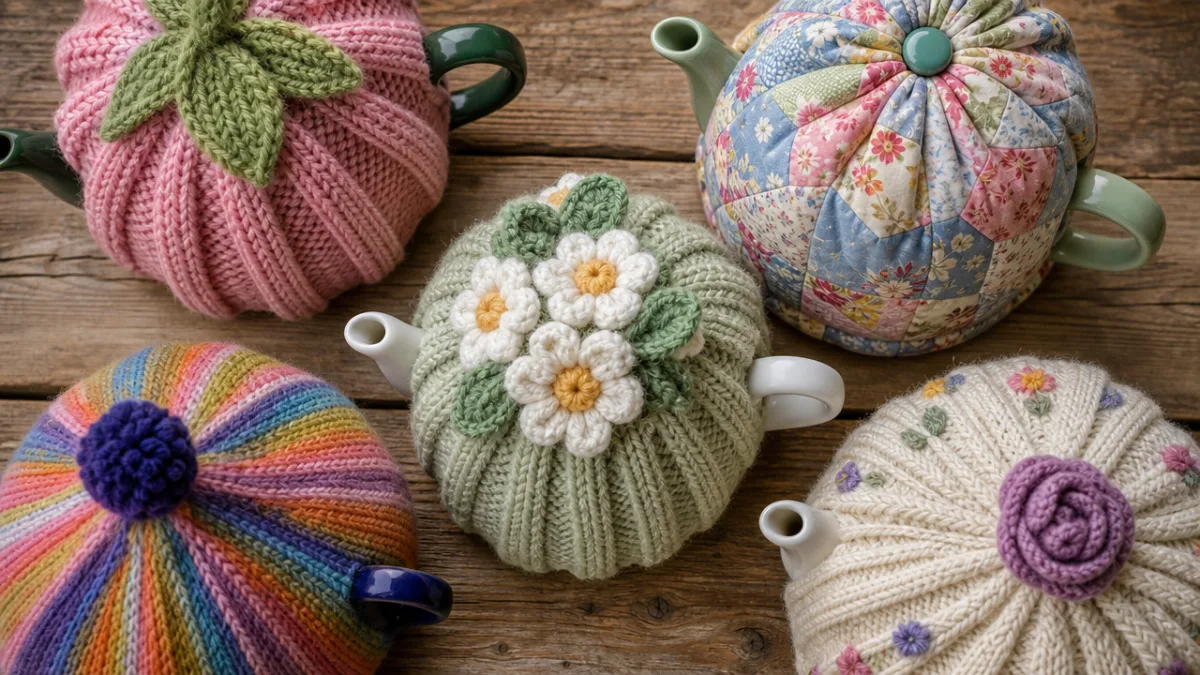
Making Your Own Teapot Cozy: A Creative and Rewarding Craft
One of the best things about teapot cozies is how beginner-friendly they are for home crafters. Whether you knit, crochet, sew, or quilt, there’s a teapot cozy project out there that’s the right fit for your skill level and your creative ideas. Knitters and crocheters often describe a basic teapot cozy as a great beginner project — the shaping is simple, it only uses a small amount of yarn, and you can easily finish one in an evening or a weekend. For sewers, a padded fabric cozy really only requires straight stitching and a few simple pattern pieces.
A couple of practical details are worth keeping in mind when you’re designing or picking a pattern. The cozy needs openings for the handle and spout — without those, you can’t pour your tea while the cozy is on, which rather defeats the purpose. Some designs include simple cutouts or side openings, while others use buttons or ties so you can fasten the cozy snugly around different pot shapes. It’s also worth adding a layer of thermal batting or fleece as a lining; it makes a real difference to how well the cozy insulates, and gives it a much more polished, finished feel.
The creative possibilities really are endless. You might knit a simple striped cozy in your favorite colors, take on a fair isle or intarsia design with motifs that mean something to you, or piece together a patchwork cozy from beloved fabric scraps. Felt crafters can cut and appliqué shapes onto a simple base. Whatever technique you go with, a handmade teapot cozy is something you’ll actually use every single day — and that makes the time and effort you put into it feel genuinely worthwhile.
Teapot Cozies and the Art of the Tea Ritual
A teapot cozy isn’t just about keeping your tea warm — it’s wrapped up in something bigger. For a lot of people, making a proper pot of tea is a genuinely mindful little practice: measuring out the loose leaves, warming the pot, letting the tea steep for exactly the right amount of time. It’s a small daily ritual that carves out a moment of calm in an otherwise busy day. The cozy is part of that. Placing it over a freshly brewed pot is a quiet signal that the tea is ready, that it’s being looked after, and that there’s no need to rush anything.
There’s also a social dimension to the teapot cozy that’s easy to overlook. It tends to appear on the table when guests are around, and it communicates something about the person who put it there — that they take tea seriously, that they care about their guests’ comfort, and that they think the simple act of sharing a pot of tea is worth a little extra thought and care. That’s part of why the teapot cozy has stayed relevant and cherished across so many generations and cultures, from British homes to Japanese tea ceremonies to teahouses across the Middle East.
The recent wave of interest in slow living, handmade crafts, and more intentional ways of consuming has given the teapot cozy a whole new moment in the spotlight. Online communities built around tea culture celebrate it as both a practical object and a small expression of a bigger philosophy — the idea that everyday things can be beautiful, that doing something properly is worth the time, and that the little rituals of home life have a real power to nourish you. Whether you buy one from an independent maker, knit one yourself on a quiet afternoon, or inherit one from someone you loved, a teapot cozy carries a kind of warmth that goes well beyond just keeping your tea hot.
Caring for Your Teapot Cozy
Like anything you use regularly, a teapot cozy will need a wash now and then to stay fresh and keep doing its job well. How you clean it depends mostly on what it’s made from. Most quilted cotton cozies can go in the washing machine on a gentle cycle in cool or lukewarm water — just check that the batting inside is colorfast and machine-washable first. Wool cozies are better off hand washed in cool water with a gentle wool detergent, or dry cleaned, so they don’t felt up or shrink out of shape.
A few simple habits will go a long way toward keeping your cozy in good shape for years. Let it dry completely between uses before putting it back on a pot — trapped moisture can lead to musty smells and, in some materials, mildew. When you’re not using it, store it somewhere cool and dry where it won’t get crushed for long periods, since compressed insulating material loses its effectiveness over time. And if you notice a snag or a loose thread, deal with it sooner rather than later to stop it from turning into something bigger.
For cozies that are more decorative than practical — delicate embroidered linen pieces or anything with beading or embellishments — hand washing with extra care, or even just spot cleaning, is probably the safest approach. Treat them the way you would any delicate textile: support them gently when wet, lay them flat to dry, and press with a cool iron if needed. With the right care, a well-made teapot cozy can last for decades — long enough to become a treasured household heirloom, picking up a warmth and richness of association that only makes it more special over time.








What do you think?
It is nice to know your opinion. Leave a comment.