










Crocheted Tarot Bag with Flap and Catch: A Complete Guide to Making Your Own Mystical Accessory
The Art of Crocheting for Tarot Practitioners
For centuries, tarot readers have sought beautiful, meaningful ways to store and protect their decks. A handcrafted crochet bag brings together the meditative practice of needlecraft with the spiritual intention of tarot reading, creating something deeply personal and functionally beautiful. When you make your own tarot bag, you infuse every stitch with your own energy, making it a genuinely sacred object that resonates with your practice in a way that a store-bought pouch simply cannot replicate.
Crocheting has experienced a remarkable renaissance in recent years, attracting crafters of all ages who appreciate both its accessibility and its creative potential. Unlike knitting, which requires two needles and more complex coordination, crochet uses a single hook and offers a more forgiving learning curve. This makes it an ideal craft for tarot enthusiasts who want to create their own accessories but may not have extensive fiber arts experience. The rhythmic nature of crocheting can itself become a meditative practice, aligning beautifully with the reflective spirit of tarot work.
The specific design of a tarot bag with a flap and catch closure is particularly practical and elegant. The flap protects the deck from dust and accidental exposure, while a button or toggle catch keeps everything securely closed during transport. This style of bag echoes the design of vintage clutch purses and envelope-style pouches, giving your tarot deck a sophisticated home that feels intentional and crafted with care. Whether you work with a standard Rider-Waite-Smith deck or an oversized oracle deck, this style can be adapted to fit your specific cards.
Why a Handmade Bag Enhances Your Tarot Practice
Many experienced tarot readers emphasize the importance of establishing rituals and boundaries around their practice, and the act of opening and closing a handmade bag becomes part of that ritual framework. The tactile sensation of a crocheted fabric, with its characteristic texture and slight give, creates a sensory cue that signals the beginning or end of a reading session. This small but meaningful transition can help you shift into the focused, open mental state that tarot reading requires, allowing intuition to flow more freely.
Beyond the spiritual dimension, a crocheted tarot bag offers genuine practical advantages. Crochet fabric is inherently three-dimensional and cushioning, providing a soft cradle for your cards that protects them from bending, warping, or edge damage during everyday carrying. A well-made bag with a secure flap and catch ensures that your deck stays contained even in a busy tote bag or backpack, preventing the nightmare scenario of tarot cards scattered across the bottom of your bag on the way to a reading circle or event.
Choosing to make your own bag also gives you complete creative control over every aesthetic decision. You can select yarn in colors that align with your personal symbolism, your favorite suits, or even the color palette of your specific tarot deck. You can choose between rustic, earthy textures for a grounded, traditional feel, or opt for shimmering, metallic threads for a more mystical, celestial aesthetic. The bag becomes an extension of your unique relationship with the cards, telling its own story every time it is placed on a reading table.
Materials and Tools You Will Need
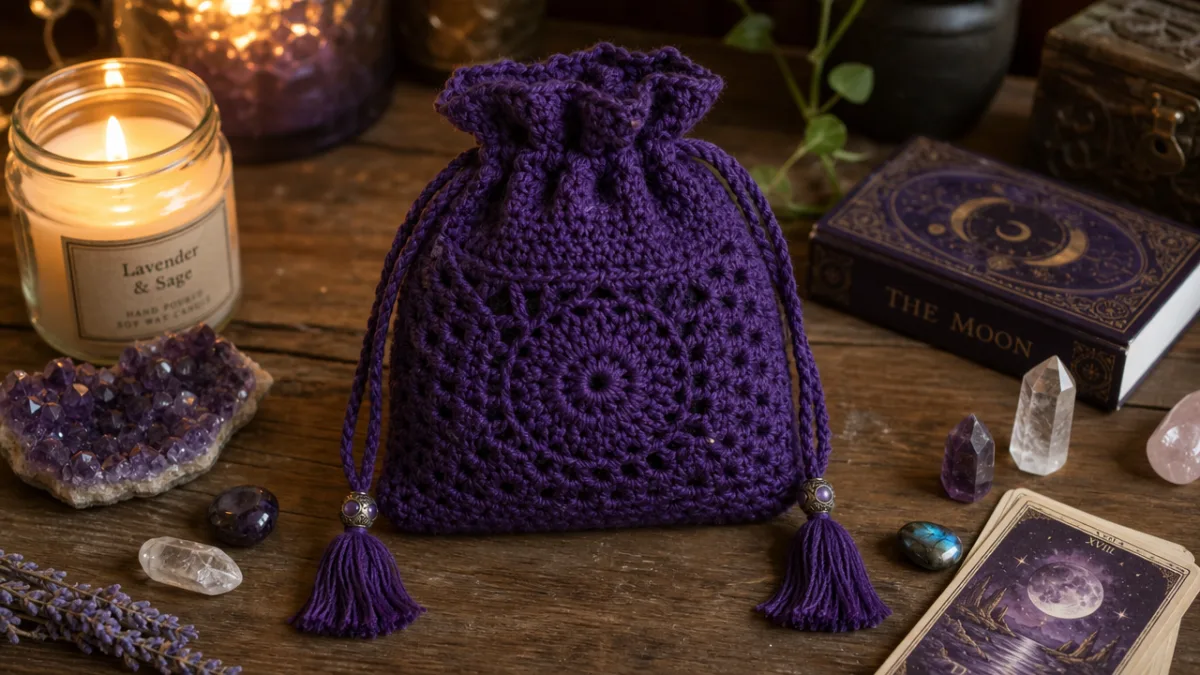
Selecting the right yarn is the single most important decision in this project, as it affects everything from the finished texture to the structural integrity of the bag. For a tarot bag intended to protect and contain cards, you want a yarn with some body and stiffness rather than a loosely spun, drapey fiber. Cotton yarn is an outstanding choice for this project because it holds its shape beautifully, washes well, and comes in a vast spectrum of colors. A medium-weight or DK-weight cotton gives the bag substance without making it heavy or bulky.
If you prefer a more luxurious feel, consider a cotton-acrylic blend or even a bamboo-blend yarn, which offers a subtle sheen and lovely drape while still maintaining enough structure for a functional bag. For those who want to add a touch of magic and visual depth, a thin strand of metallic thread held together with your main yarn can be worked throughout the piece, catching the light in a way that feels appropriately mystical. Always choose yarns that feel meaningful to you, because the tactile experience of working with them will be part of the creative journey.
In addition to your yarn, you will need a crochet hook sized appropriately to your chosen fiber, typically in the range of 3.5mm to 5mm for the yarn weights recommended here. Other essential supplies include a yarn needle for weaving in ends and seaming, sharp scissors, stitch markers to keep track of your progress, and a button, toggle, or decorative clasp for the catch closure. Consider choosing a button that carries personal meaning, such as a moon-shaped button, a carved wooden disc, or a vintage glass button that complements your yarn’s color and the overall aesthetic of the finished bag.
Estimating Yarn Quantity and Gauge
Before beginning any crochet project, working a gauge swatch is an essential step that many beginners are tempted to skip, often to their later regret. Gauge refers to the number of stitches and rows that fit within a specific measurement, typically a four-inch square, and it determines whether your finished bag will be the correct size to hold your deck. Standard tarot cards measure approximately 2.75 inches wide by 4.75 inches tall, so your bag should comfortably exceed these dimensions while remaining snug enough to keep the deck from shifting around inside.
A typical tarot bag of this style will require between 150 and 300 yards of yarn depending on the size of the deck, the stitch pattern chosen, and the length of the flap. Purchasing a slightly larger quantity than you estimate is always wise, as running out of a specific dye lot partway through a project can result in visible color differences in the finished piece. Most yarn manufacturers print dye lot numbers on the label, and matching these ensures color consistency across your entire project.
Beyond yarn quantity, thinking about additional embellishments early in the planning process saves time and effort later. Tarot bag makers often enhance their creations with surface crochet, embroidery, or appliquéd motifs drawn from tarot imagery: a crescent moon, a rising sun, a pentacle star, or the eye of providence. These decorative elements can be planned into the design from the beginning or added after the main construction is complete, giving you flexibility to adjust the aesthetic as the bag takes shape in your hands.
Step-by-Step Pattern Instructions
This pattern creates a bag worked in a simple rectangle from the bottom up, then folded and seamed along the sides, with the remaining upper portion forming the flap. Begin by chaining a number of stitches that corresponds to the width you want your finished bag to be, adding a small amount of ease beyond the actual width of your tarot deck. For a standard deck, a foundation chain of approximately 22 to 26 stitches in medium-weight cotton yarn, worked with a 4mm hook, will produce a bag width of roughly three and a half to four inches after the fabric relaxes slightly.
Work in your chosen stitch pattern — single crochet for a tight, sturdy fabric; half double crochet for a slightly softer result; or a textured stitch such as the moss stitch or linen stitch for added visual interest — until your piece reaches the desired total length. This total length should equal twice the desired bag height plus the length of the flap. For a bag meant to hold a standard deck with a two-inch flap, aim for a total length of approximately 14 to 16 inches before folding, though this will vary based on your gauge and personal preferences.
Once your rectangle is complete, fold it at the point where the body of the bag ends and the flap begins. Using a yarn needle and a length of your main yarn, seam both side edges of the bag body using a whipstitch or slip stitch seam. A slip stitch seam worked through the back loops only creates a neat, nearly invisible join that lies flat against the body of the bag. After seaming, weave in all ends securely, as a bag will experience regular handling and you want the construction to remain solid through many months or years of use.
Creating the Flap and Attaching the Catch
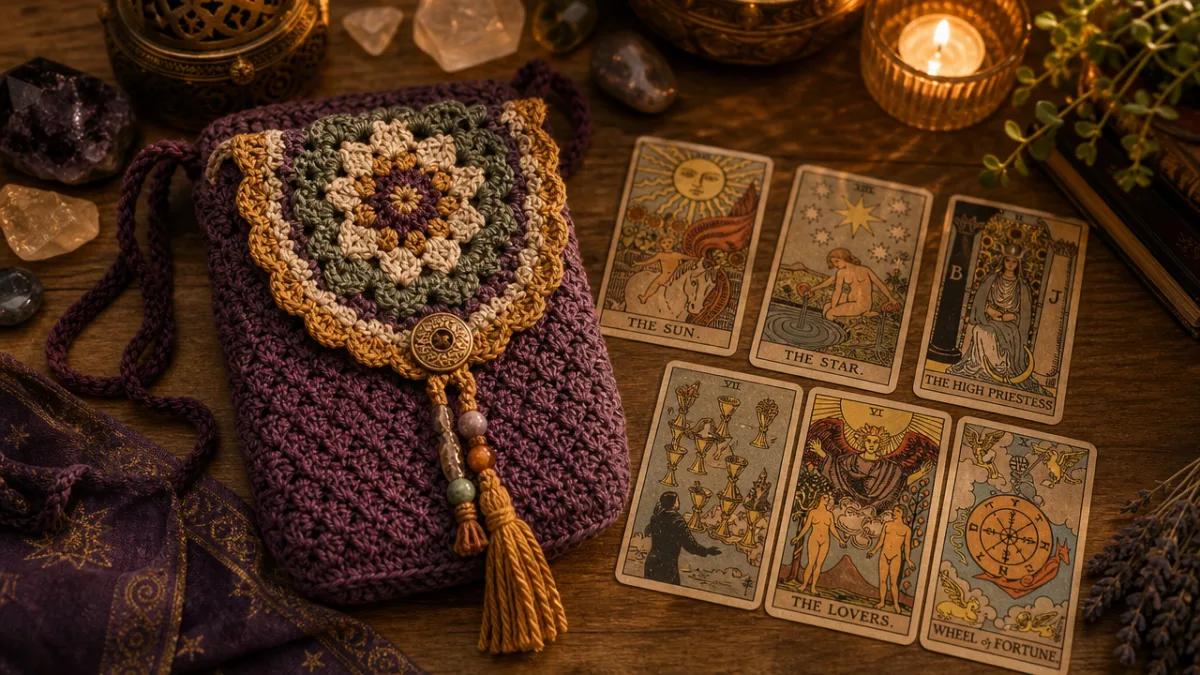
The flap is the portion of the rectangle that extends beyond the folded base of the bag, and it can be left as a simple straight edge or shaped into a more decorative form. Rounding the corners of the flap by working a simple slip stitch or single crochet edging around the entire perimeter creates a polished, professional finish that also prevents the corners from curling or drooping over time. An edging row worked in a contrasting color can add a delightful pop of visual interest and helps the flap read as a distinct design element.
Attach your chosen button to the front face of the bag body, positioning it carefully so that it will align with a buttonhole or loop worked into the underside of the flap. The buttonhole can be created during the final rows of the flap by working a chain space at the appropriate location and skipping the same number of stitches, then completing the remaining stitches of that row as normal. Alternatively, a crocheted button loop can be added to the finished flap edge by attaching yarn at the center point and working a small chain long enough to slip over your button, then joining it back to the flap edge with a slip stitch.
For a more elaborate catch, consider a toggle closure using a wooden or bone toggle and a crocheted cord loop. This style of closure has a satisfying tactile quality and gives the bag a bohemian, handcrafted character that suits the tarot aesthetic particularly well. Some crafters choose to work a magnetic snap into their bags by threading the prongs through the crochet fabric and securing them with the included backing plates, though this requires some care to ensure the snaps are positioned precisely so the flap closes neatly and without buckling or distorting the fabric.
Customization Ideas and Decorative Variations
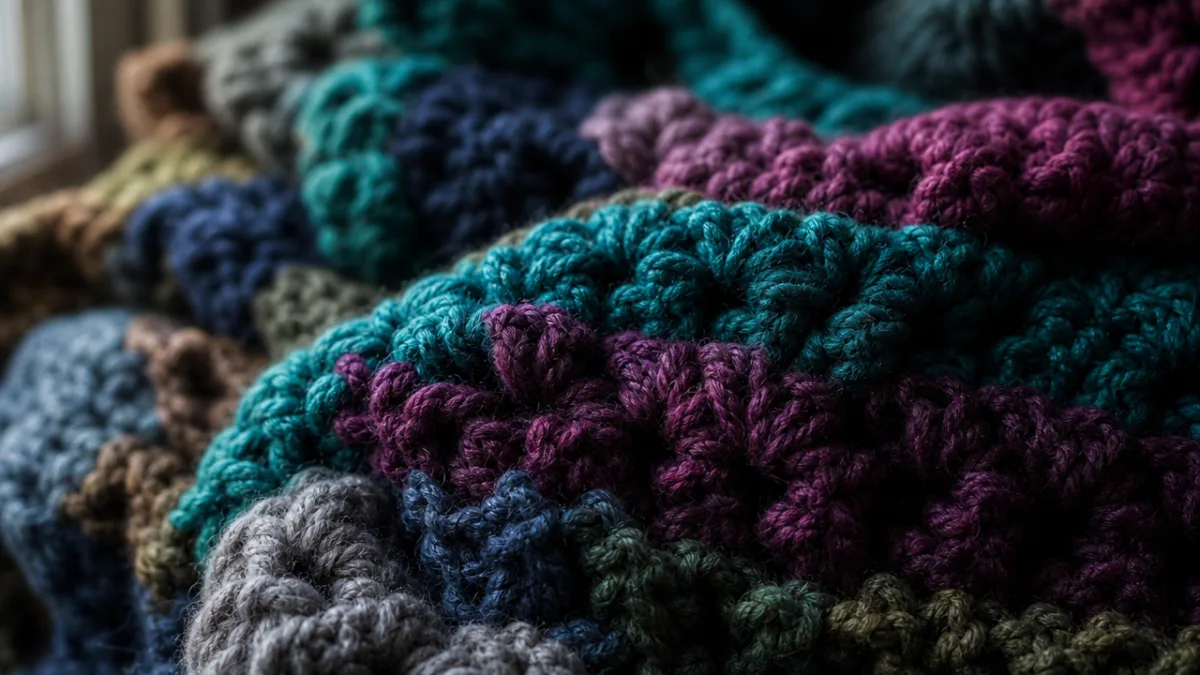
One of the greatest pleasures of making a crocheted tarot bag is the virtually limitless room for personalization. Color is the most immediate and accessible form of customization: deep indigo or midnight blue evokes the sky at the witching hour and resonates strongly with intuition and inner knowing; forest green connects to earth energies and grounded, practical wisdom; rich burgundy or claret carries associations with passion, depth, and the mysteries of the heart. Selecting a color that speaks to your personal symbolism or that complements your favorite deck’s artwork can deepen your sense of connection to the finished object.
Beyond color, the choice of stitch pattern dramatically alters the finished character of the bag. A simple single crochet fabric in a hand-dyed variegated yarn produces an organic, flowing color effect reminiscent of watercolor washes. A more structured stitch like the basketweave creates a tactile, woven appearance that feels grounded and sturdy. The shell stitch, worked in rows of fan-shaped clusters, gives the bag a decorative, lacy quality that suits decks with feminine or floral artwork. Experimenting with different stitch textures in your gauge swatch phase allows you to preview these effects before committing to the full project.
Adding crochet appliqués is another wonderful way to personalize your bag. Classic tarot symbols translate beautifully into small crocheted motifs: a crescent moon worked in rows of single crochet and then stitched onto the flap, a small crocheted star with five or six points, or even a miniature version of the sun card’s radiating circle. These appliqués can be worked flat and then sewn on, or they can be incorporated into the main fabric through surface crochet, where the hook is inserted directly into the finished fabric to create raised lines of chain stitches that draw the desired imagery.
Incorporating Beads, Fringe, and Other Embellishments
Beads can be pre-strung onto your yarn before you begin crocheting and then slid into position as you work each stitch, creating a glittering, embedded effect throughout the fabric. This technique works best with small seed beads or delica beads that have a large enough hole to accommodate your yarn, and it requires some planning to ensure the beads appear on the correct side of the fabric as you work. Used sparingly along the body of the bag or more densely across the flap, beads catch the light in a way that feels genuinely magical and gives the finished bag an almost jeweled quality.
Fringe is another popular embellishment for tarot bags, particularly along the bottom edge of the bag or along the lower edge of the flap. Cutting lengths of yarn roughly twice the desired fringe length, folding them in half, and pulling the folded loop through the edge of the crochet fabric with a hook before threading the ends through the loop and pulling tight creates a quick, satisfying fringe attachment. Adding small beads to the tips of fringe strands, or incorporating different yarn textures such as silk ribbon or eyelash yarn, creates a layered, bohemian effect that suits the mystical character of a tarot bag beautifully.
Embroidery worked over the finished crochet surface is perhaps the most versatile embellishment technique available to tarot bag makers. Because crochet fabric has a naturally open, grid-like structure, the stitches serve as a built-in guide for counted embroidery techniques. Cross stitch worked across the surface of the crochet fabric can render detailed imagery with surprising clarity, from simple geometric sigils to more complex representations of major arcana imagery. Chain stitch embroidery, worked with a contrasting thread and a tapestry needle, traces smooth curves and flowing lines that are ideal for depicting celestial bodies, botanical motifs, or abstract swirling designs.
Caring for Your Crocheted Tarot Bag and Integrating It into Your Practice
A well-made crocheted tarot bag, constructed from quality materials, will last for many years with appropriate care. Cotton and cotton-blend yarns are generally quite washable, making them a practical choice for an item that will be handled regularly and may eventually need cleaning. Hand washing in cool water with a gentle soap is the safest approach for any crocheted item, as it minimizes the risk of felting, stretching, or distortion that can result from machine washing, particularly on an agitation cycle. After washing, gently press the bag between two towels to remove excess water and then lay it flat to dry away from direct heat or sunlight.
If your bag incorporates embellishments such as beads, decorative buttons, metallic thread, or embroidery, spot cleaning is often preferable to full immersion washing. A soft cloth dampened with cool water and a tiny amount of gentle soap can address localized soiling without subjecting delicate elements to the stress of a full wash cycle. Allow the bag to air dry completely before storing cards inside it, as even slight residual moisture can cause paper cards to warp or develop mildew over time. This small precaution protects both your handmade bag and the deck it holds.
Blocking is a finishing technique that can significantly improve the appearance and drape of a crocheted item, and it is particularly worthwhile for a tarot bag if the fabric seems to be pulling, curling, or losing its intended shape. Wet blocking involves dampening the finished piece, shaping it carefully to the desired dimensions, and pinning it in place on a foam blocking mat or a clean towel while it dries. Once dry, the fabric retains the blocked shape, resulting in a flatter, more even surface and more precisely defined stitch definition. For bags with a decorative stitch pattern, blocking truly allows the texture to shine at its best.
Integrating the Bag into Daily Tarot Rituals
Once your bag is complete, the process of integrating it into your practice begins in earnest. Many tarot readers find it meaningful to cleanse a new bag before first use, placing it under moonlight overnight, passing it through incense smoke, or simply holding it in both hands and setting a clear intention for how it will serve you. This kind of simple, personal ritual acknowledges the care that went into making the object and consciously welcomes it into your spiritual toolkit. The same ritual can be revisited whenever you feel the bag needs refreshing or after periods of particularly intense reading work.
The daily act of opening the catch, drawing out the deck, conducting a reading, returning the cards to the bag, and closing the flap becomes a small but deeply grounding ritual when performed mindfully. These physical gestures create temporal and energetic boundaries around the reading practice, signaling to both the mind and the body that something meaningful is beginning or concluding. Over time, the bag becomes associated with a particular quality of attention and presence, so that simply holding it begins to evoke that focused, receptive state in which the best readings tend to occur.
A handmade crocheted tarot bag also makes a profoundly thoughtful and personal gift for fellow tarot enthusiasts in your life. Because the bag is made rather than bought, it carries the intention and care of its maker in every stitch, making it a genuinely unique offering that cannot be replicated by any commercially produced item. Tailoring the color, size, and embellishments to the recipient’s specific deck, aesthetic preferences, or personal symbolism transforms the act of gifting into its own form of reading — a loving, attentive response to everything you know and appreciate about another person’s relationship with the cards.
- Choose a yarn color that resonates with your personal symbolism or complements your favorite deck’s color palette for maximum aesthetic harmony.
- Work a gauge swatch before beginning the main project to ensure your finished bag will fit your specific deck without being too tight or too loose.
- Select a button or toggle that carries personal meaning, as this small detail will be touched every time you open and close the bag during readings.
- Consider blocking the finished bag to improve the evenness of the fabric and allow any decorative stitch patterns to display at their clearest and most defined.
- Incorporate embellishments such as beads, embroidery, or appliquéd motifs drawn from tarot imagery to deepen the personal and symbolic resonance of the finished object.
- Cleanse and set an intention for the bag before first use, welcoming it consciously into your practice as a sacred and functional tool.








What do you think?
It is nice to know your opinion. Leave a comment.