










Crochet Seashells: A Beach-Inspired Touch of Handmade Magic
The Timeless Appeal of Ocean-Inspired Crochet
There’s just something about the ocean that gets under your skin — the sound of waves, the smell of salt in the air, all those beautiful shells waiting to be discovered along the waterline. If you happen to love both the sea and making things with your hands, crochet seashells are kind of a dream project. They take something you’d find on a morning beach walk and turn it into something you can keep forever, made from nothing more than yarn and a hook and a little bit of patience.
Crochet seashells have gotten really popular over the last few years, and honestly, it’s not hard to see why. Crafters are looking for projects that actually mean something — things that are easy to take with you, that feel personal, that reflect who you are. The seashell motif hits all of those notes. Whether you work them up in soft sandy beiges, deep moody blues, or clean sun-bleached whites, there’s a handmade quality to these little pieces that you just can’t buy in a store. They’re the kind of object people pick up off your shelf and turn over in their hands without even thinking about it.
What’s also great about seashell crochet is that it genuinely works for every skill level. If you’re just starting out, you can get a satisfying result with only a handful of basic stitches. If you’ve been crocheting for years, there’s a whole world of complex sculptural forms to explore — tight spirals, realistic ridges, shells that look almost too good to be yarn. It’s one of those corners of the craft where a total beginner and a seasoned pro can both find something to love.
Understanding the Stitches Behind the Shell
What makes crocheted seashells so interesting to work up is that they’re not flat. You’re building something three-dimensional, which requires you to think a little differently than you would for, say, a dishcloth or a scarf. Most seashell patterns rely on a mix of magic rings, strategic increases and decreases, and slip stitches placed just so to pull the fabric inward and create those satisfying natural ridges.
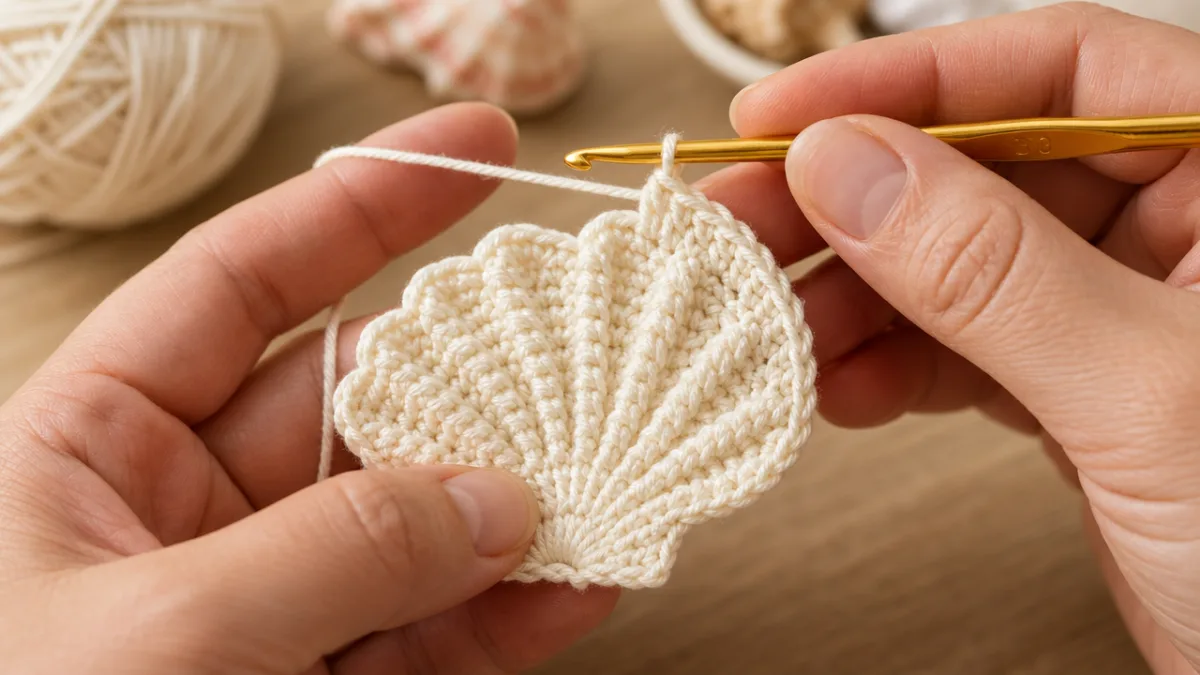
The go-to stitches for these projects are single crochet, half double crochet, and double crochet, often layered within a single round to get that tapered, fan-like shape real shells have. The shell stitch — where you work several double crochets into one stitch — is especially well-suited here, giving you that lovely scalloped look that immediately reads as a clam or scallop. Add in some bobble stitches or raised post stitches and suddenly you have a lot of texture to play with.
Most seashell patterns work in the round, building outward from a central starting point the same way a real shell spirals out from its tip. Some use a continuous spiral, others use joined rounds with turning chains, and each approach gives you a slightly different result. The best way to figure out which you prefer is just to try both. After a while, you start to feel the shell taking shape under your hook almost instinctively, which is one of the genuinely fun parts of getting comfortable with these patterns.
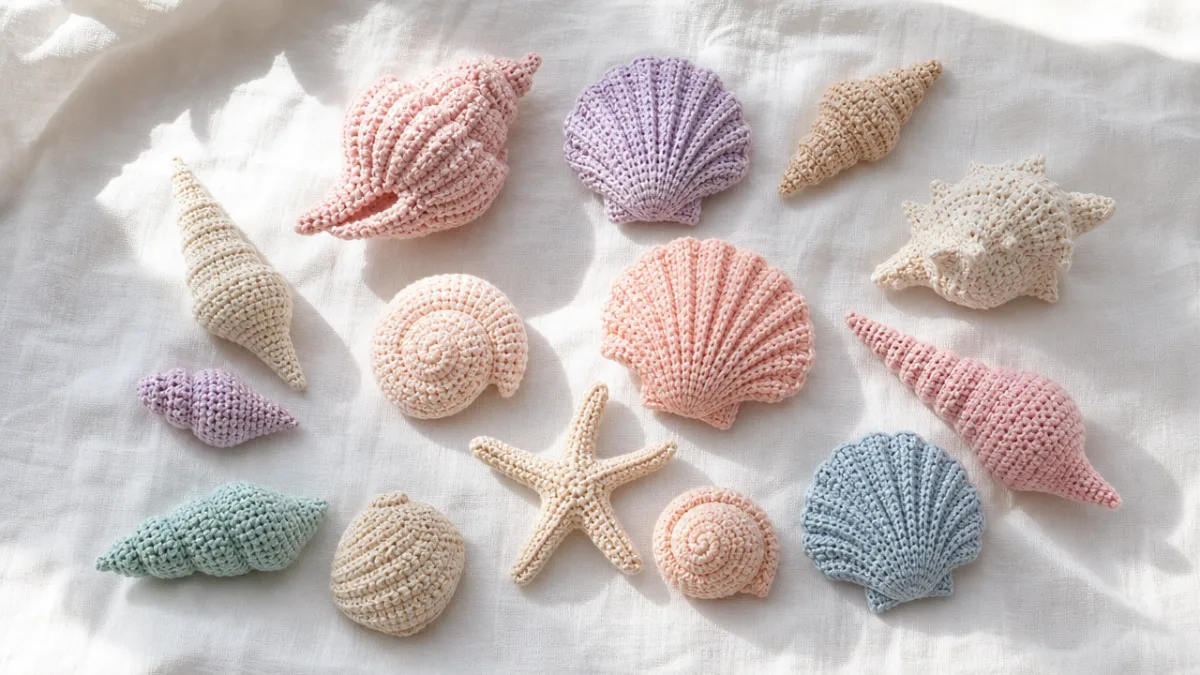
Choosing the Right Yarn and Hook for Your Seashells
With seashell projects, your material choices really do matter — maybe more than with bigger projects where small variations get lost. Because the pieces are so detail-oriented, the weight and fiber of your yarn will have a big impact on how the finished shell looks and feels. Finer yarns like sport or fingering weight give you crisp stitch definition and delicate, lightweight shells that work beautifully as jewelry, garlands, or decorative fillers in a bowl. Thicker yarns in the DK or worsted range produce something chunkier and more sculptural, which is great if you want something substantial enough to prop up on a shelf.
Fiber content is worth thinking about too. Cotton is probably the most popular choice for seashell crochet, and for good reason — it holds its shape well, shows off stitch definition clearly, and comes in basically every color you could want, from natural undyed ecru to bright tropical tones. It’s also a sensible pick for pieces that will be handled a lot or displayed somewhere with a bit of humidity. If you want something a little more refined, try blending cotton with linen or bamboo yarn. The subtle sheen you get from those fibers is genuinely lovely and reminds you of the way a wet shell catches the light.
For hook size, the usual advice is to go one or two sizes smaller than what the yarn label recommends. A tighter gauge means a denser fabric that holds its shape on its own, without needing to be stuffed — which matters a lot when you’re making something designed to stand upright or keep a specific form. It’s always worth doing a quick gauge swatch before you dive in, because even small tension differences can affect how well your finished shell keeps its structure.
Creative Ways to Use Crocheted Seashells
One of the best things about crocheted seashells is how many things you can actually do with them once they’re finished. These aren’t just decorative objects destined to sit in a drawer — they’re genuinely versatile, and whether you’re decorating your home, making accessories, or putting together a handmade gift, there’s almost always a way to work them in.
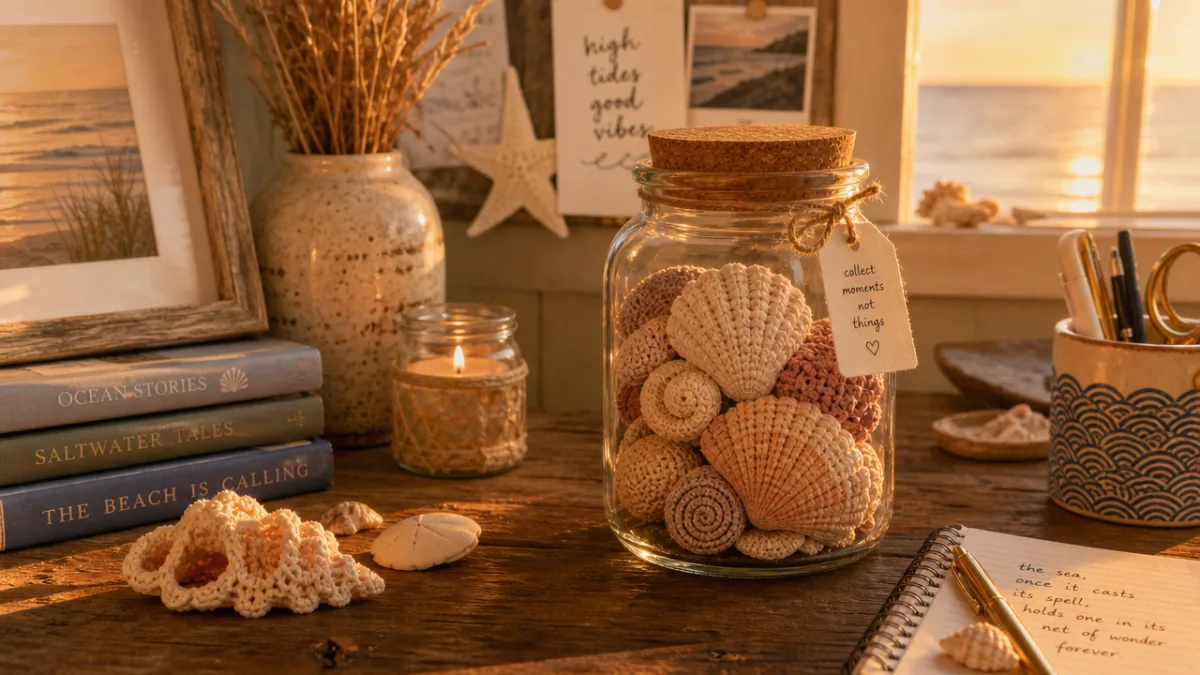
Home décor is probably where most finished seashells end up, and it’s easy to see why. A glass bowl filled with an assortment of crocheted shells in different sizes and soft neutral tones makes for a really lovely centerpiece on a coffee table or mantel. You can also string them together into garlands or bunting for that relaxed beach cottage feel, or mount them on a piece of driftwood-toned linen and frame them as wall art. Every arrangement is one-of-a-kind, which is part of the appeal.
Beyond the home, crocheted seashells translate beautifully into wearable and giftable items. Consider some of the most popular uses crafters have found for these little works of art:
- Earrings and pendants crafted from miniature shells worked in metallic or silk thread, perfect for a subtle oceanic accessory
- Hair clips and headbands adorned with small shells in soft coastal colors, ideal for summer styling
- Bookmarks featuring a single elegant shell at the top, a charming gift for any avid reader
- Keychains and bag charms made from slightly sturdier cotton or jute yarn for everyday use
- Gift toppers or package decorations that add a handcrafted finishing touch to any wrapped present
- Appliqués sewn onto tote bags, hats, or summer tops for a playful beachy embellishment
As gifts, crocheted seashells carry a kind of weight that store-bought things just don’t have. A small collection of shells tucked into a linen pouch or arranged in a shallow box feels genuinely thoughtful — like you’re giving someone a little piece of the ocean that you made yourself. For people who love the sea, that means something real.
Patterns for Every Skill Level
There are seashell patterns out there for literally every level of crocheter, which is one of the things that makes this such an accessible niche to get into. If you’re just getting started, flat two-dimensional shell motifs worked in rows are a great place to begin — you get a feel for the shapes and color combinations without having to worry about three-dimensional shaping yet. They’re also perfect for practicing even tension and understanding how shell-stitch clusters create that distinctive scalloped edge.
Intermediate patterns start bringing in the fun stuff: working in the round, shaping with increases and decreases, adding ridges and texture through surface slip stitches. At this level you can tackle shells you’d actually recognize — a classic conch, a spiral auger, a fan-shaped scallop. Many intermediate patterns also introduce color changes, so you can replicate the natural banding that real shells have. It takes a bit of extra attention, but the results are genuinely beautiful.
Advanced patterns are where seashell crochet becomes something closer to fine art. We’re talking sculptural stuffed forms, wire armatures for stability, incredibly detailed surface work. You might encounter specialized techniques like Tunisian entrelac, the crocodile stitch, or complex layered shell constructions that produce an almost lifelike object. These are the pieces that make people stop mid-conversation and say, “Wait — you made that?”
When searching for patterns, there are several excellent resources worth bookmarking:
- Ravelry — the largest online database of crochet and knitting patterns, with hundreds of seashell designs ranging from free to paid
- Etsy — a rich marketplace for independent designers selling original seashell crochet patterns as instant PDF downloads
- YouTube — invaluable for visual learners, with countless video tutorials walking through seashell techniques stitch by stitch
- Pinterest — an endlessly inspiring visual library for discovering new designs and linking through to their original pattern sources
- Craft books — several dedicated crochet books focusing on ocean and nature themes include beautiful seashell chapters with professional photography
Bringing the Beach into Your Crafting Practice
There’s something quietly meditative about making seashells that goes beyond just enjoying the craft. A lot of crafters describe the process as genuinely calming — the repetitive rhythm of the stitches, the slow emergence of a recognizable form, the soft yarn working through your fingers. For people who love the ocean but don’t get to spend much time near it, seashell crochet becomes a kind of anchor, a way to stay connected to that feeling of the shore even when you’re miles away from it.
You can also lean into the atmosphere while you work, and it genuinely makes the sessions more enjoyable. Try playing recordings of ocean waves in the background, lighting a salt air or driftwood candle, or keeping a small dish of real shells on the table for reference. Some crafters take their projects outside when the weather cooperates — natural light makes it easier to see your stitches, and there’s something fitting about making ocean-inspired things while you’re sitting in the sun.
There’s also a slow, accumulative pleasure in building up a collection over time. Watching a bowl or jar gradually fill with shells of different sizes, colors, and textures is its own reward — each one a small record of an afternoon, a particular skein of yarn you fell in love with at the craft store, a mood you were in on a rainy Tuesday. And unlike a lot of crochet projects where you’re investing weeks before you have anything to show for it, a seashell can be finished in a single sitting. That combination of quick completion and long-term collection-building is genuinely satisfying in a way that’s hard to explain until you’ve experienced it.
Sharing these pieces with others matters too. Whether you’re gifting them, selling them, or just posting a photo online, crocheted seashells have a way of starting conversations and drawing people in. In a world that moves at a pretty relentless pace, there’s something quietly countercultural about a small handmade object — something that insists on slowness, on care, on the idea that things made with love are worth making.
Tips for Finishing and Displaying Your Creations
The finishing stage is where a good seashell becomes a great one, and it’s worth slowing down here rather than rushing through it. Once you’ve worked your last stitch and fastened off, take the time to weave in your ends properly — with small sculptural pieces like these, any loose tail has a much easier time working itself free than it would in a larger flat project. A yarn needle and a few careful passes through the body of the shell is all it takes, and it makes a real difference in how the finished piece holds up over time.
Blocking is another step that’s genuinely worth doing, especially if you’ve used cotton or linen yarn. Wet blocking — a quick soak in cool water, a gentle squeeze to remove excess moisture, then shaping by hand and leaving it to dry flat — can sharpen up your stitch definition noticeably and help the shell settle into the shape you want. If you need extra structure, a light spray of starch or craft stiffener after blocking works really well, particularly for display pieces that aren’t going to be handled much. For shells that need a bit more body, a small amount of polyfill stuffing before you close them up adds a nice roundness.
As for display, the options are really only limited by your imagination. A shallow ceramic dish or wooden tray filled with crocheted shells in different sizes, tucked in alongside a piece of real driftwood, some sea glass, or a few dried botanicals makes for a beautiful coastal vignette that looks completely intentional. Shells glued to a piece of reclaimed wood create a textured wall hanging, or you can hang them at different lengths from a weathered branch using natural jute twine for something a little more rustic. However you decide to show them off, the point is simply this: get them out where they can be seen. Handmade things belong in the world, bringing a little warmth and personality to the spaces where we actually live.








What do you think?
It is nice to know your opinion. Leave a comment.