










Kalanchoe Plant Care: Top Tips for Thriving Greenery
Introduction to Kalanchoe: A Beloved Succulent for Every Home
If you’re looking for a houseplant that actually makes you happy to walk into the room, kalanchoe might be exactly what you need. Originally from the tropical and subtropical regions of Madagascar and parts of Africa, this cheerful little succulent has found its way onto windowsills and office desks all over the world — and it’s not hard to see why. The blooms last forever, the plant is incredibly forgiving, and whether you’re a devoted plant parent or someone who tends to forget they even own plants, kalanchoe is genuinely hard to kill.
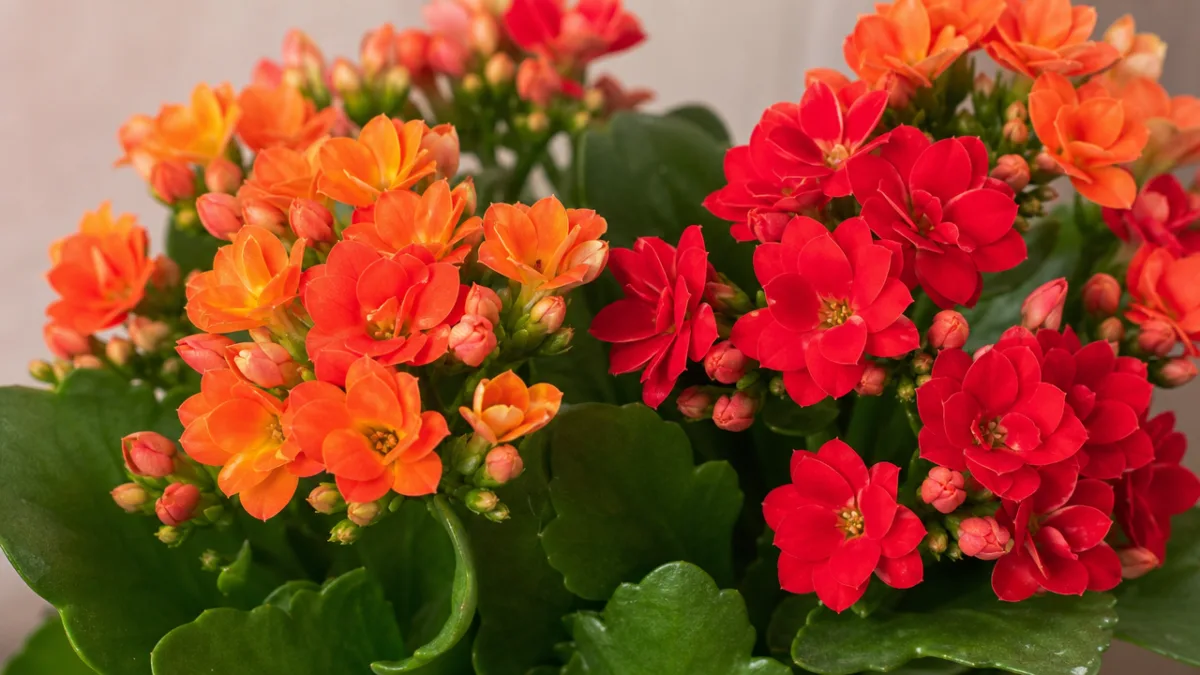
The name “kalanchoe” actually covers a whole genus of over 120 species, but the one you’ll almost always find at a garden center or florist is Kalanchoe blossfeldiana. It has thick, waxy, dark green leaves and clusters of small flowers in just about every warm color you can imagine — red, orange, yellow, pink, white, purple, you name it. Because it’s a succulent, the plant stores water in its leaves, which means it can handle a missed watering without throwing a fit. That alone puts it ahead of most flowering houseplants.
Kalanchoes are also just practical. They’re compact, they don’t cost a lot, and you can find them pretty much anywhere that sells plants. They’re happy in normal indoor conditions and don’t need a lot of fussing over to look great while they’re blooming. That said, understanding a little bit about where they come from goes a long way — once you know what conditions they naturally love, it becomes a lot easier to keep them thriving year after year.
Light Requirements: Finding the Perfect Spot for Your Kalanchoe
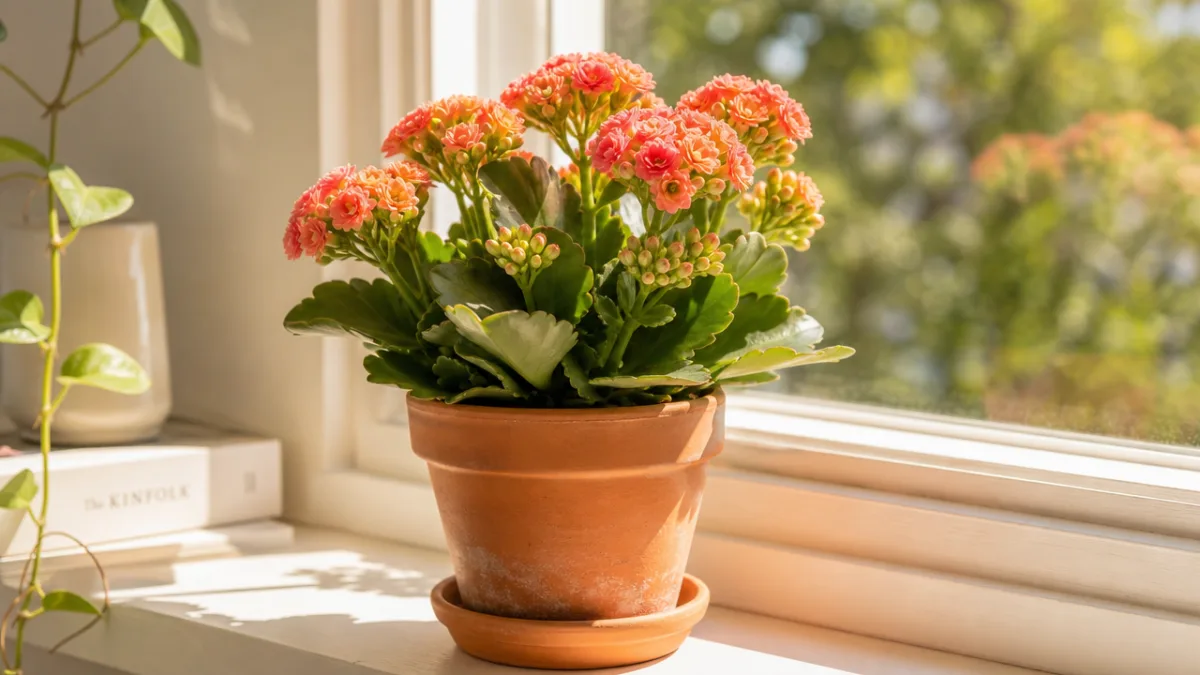
If there’s one thing that matters most when caring for a kalanchoe, it’s light. Get the lighting right and everything else falls into place more easily. Kalanchoes love bright light and do their best near a sunny window that gets several hours of sun each day. A south- or east-facing windowsill tends to be the sweet spot for most homes — warm, bright, and consistent without the brutal intensity of late-afternoon western sun, which can actually scorch those fleshy leaves.
In summer, you can absolutely move your kalanchoe outside to a sheltered patio or balcony to soak up some real sunlight and fresh air. Just don’t make the switch all at once. Going straight from a dimly lit living room to full outdoor sun is a shock to the plant, and you’ll end up with pale, bleached, or brown patches on the leaves. Start with just a couple of hours of gentle morning sun and build up over a week or two so it can adjust gradually.
Here’s something really interesting about kalanchoes: they’re what botanists call short-day plants, meaning they actually need long stretches of darkness to trigger blooming. In the wild, they flower in response to the shorter days of autumn and winter. So if your plant is sitting near a lamp that stays on until midnight, don’t be surprised if it never blooms again after its first round of flowers. To coax it into blooming again, give it at least 14 hours of complete darkness every night for about six weeks — and then watch those buds start to appear.
Watering Your Kalanchoe: The Art of Getting It Just Right
Because kalanchoe is a succulent, it’s built to handle dry spells — and the number one way people accidentally kill one is by giving it too much water. Overwatering leads to root rot, and root rot moves fast. The rule to remember is simple: water deeply, then wait. Let the soil dry out almost completely before you water again, and you’ll be in good shape.
The easiest way to check is just to stick your finger about an inch or two into the potting mix. Dry at that depth? Go ahead and water. Still cool and a little damp? Give it another day or two. When you do water, go slowly and evenly until you see water draining out the bottom of the pot, then immediately dump out whatever collects in the saucer. Sitting in that pooled water is exactly what the roots don’t want. This deep-then-dry approach matches the natural rain cycles of the plant’s homeland pretty well.
In winter, when there’s less light and things slow down a bit, your kalanchoe needs noticeably less water — sometimes as little as once every two to three weeks. In summer, particularly if the plant is outside or in a really bright spot, it might need water a bit more often. The best approach is to pay attention to the plant and the soil rather than watering on a fixed schedule. The plant will tell you what it needs if you’re checking in regularly.
Soil, Potting, and Fertilizing: Building a Strong Foundation
What your kalanchoe is growing in matters more than you might think, because the soil determines how fast water drains away from the roots. A cactus or succulent potting mix is the way to go — those blends are designed to drain quickly while still giving the roots something solid to hold onto. If you only have regular potting soil on hand, just mix in some perlite, coarse sand, or pumice (roughly one part to two parts soil) and you’ll get a much better result.
When it comes to pots, drainage holes are non-negotiable. Terra cotta is a great choice because the material itself is porous and lets extra moisture breathe out through the sides, which lowers the chance of root rot. Plastic and glazed ceramic pots hang onto moisture longer, which isn’t ideal if you have a habit of watering frequently. Whatever pot you go with, keep the size close to the plant’s root ball — too much extra soil stays wet too long and can invite fungal problems.
Fertilizing is worth doing during the growing season, but you don’t need to go heavy on it. A balanced, water-soluble fertilizer diluted to half the recommended strength, applied once a month from spring through summer, is plenty to keep growth healthy and flowering strong. Skip fertilizing in autumn and winter when the plant is naturally resting. If you want to give blooming a boost, a fertilizer higher in phosphorus just before or during flowering can help the flowers come in more vibrant and abundant.
- Use a cactus or succulent potting mix for optimal drainage and root health.
- Choose a pot with drainage holes, preferably terra cotta, to prevent waterlogging.
- Repot every one to two years in spring when roots begin to crowd the container.
- Fertilize with a diluted balanced fertilizer monthly during spring and summer only.
- Avoid feeding during the dormant winter period to prevent nutrient buildup in the soil.
Repotting is something you’ll want to do every year or two, ideally in spring. The signs are pretty easy to spot: roots poking out of the drainage holes, the plant tipping over because it’s top-heavy, or the soil drying out suspiciously fast after watering. When you repot, gently loosen the root ball, trim away any dead or rotted roots, and nestle it into fresh potting mix. It’s essentially a reset that gives the plant a nutritional refresh and room to grow again.
Temperature, Humidity, and Seasonal Care Throughout the Year
Kalanchoe is a tropical plant at its core, so it does best in the kind of warm, stable temperatures that most homes already have. Anywhere between 60°F and 85°F (15°C to 29°C) works well, which is pretty much just normal room temperature. Where things get dicey is cold drafts and frost — anything below 50°F (10°C) can cause real damage, from wilting and leaf drop all the way to the plant completely collapsing if it stays cold long enough.
The good news on humidity is that kalanchoe is not needy. It adapts easily to the dry indoor air that’s common in most homes, especially in winter when the heat is running and everything dries out. You don’t need to mist it or set up a humidity tray the way you would with ferns or orchids. In fact, keeping water off the leaves is actually better for it, since wet foliage can invite problems like powdery mildew.
Adjusting your care routine with the seasons makes a big difference over the long haul. Come spring, when days get longer and things warm up, you can start fertilizing again and water a little more regularly. Summer is a great time to move the plant outside if your weather allows. As fall rolls in, ease back on watering and stop fertilizing to let the plant wind down naturally. And winter is the time to start that short-day treatment if you’re hoping for another round of blooms come late winter or early spring.
Pruning, Deadheading, and Encouraging Re-Blooming
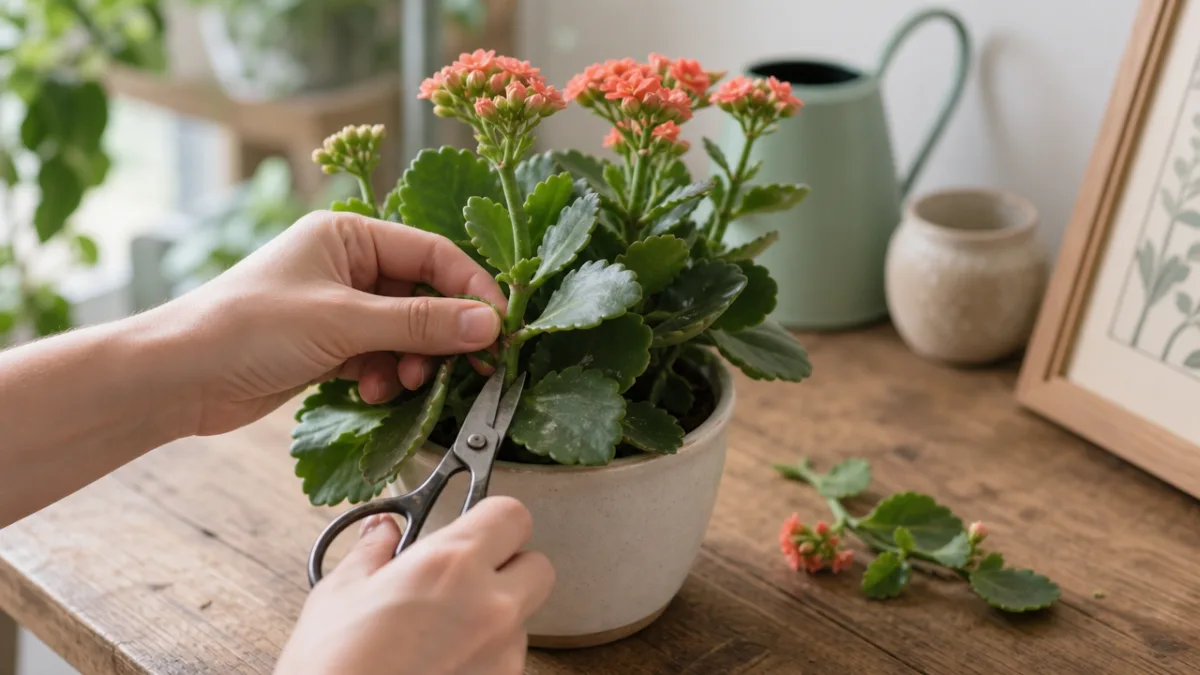
Getting a kalanchoe to bloom again after its first flowers have faded is genuinely one of the most satisfying things you can do as a plant owner. It won’t happen on its own under normal indoor conditions, but with a little effort it’s completely doable — and you can keep the same plant going for years. The first thing to do once the blooms start dying off is to cut or pinch off the spent flower stalks right down to the base of the stem. This is called deadheading, and it stops the plant from wasting energy trying to produce seeds, redirecting that energy into roots and leaves instead.
After deadheading, let the plant rest and recover for a few weeks. Keep watering sparingly and hold off on any fertilizer. Once it looks strong and healthy again, you can kick off the re-blooming process. Move it somewhere it’ll get no more than 10 hours of light a day and at least 14 hours of total darkness every night. A closet works, or any room that doesn’t get a lot of artificial light in the evenings. Stick with it consistently for six weeks, and you should start seeing tiny buds forming at the stem tips.
Pruning also just keeps the plant looking good. Kalanchoe stems can get quite leggy when they’re stretching toward light, and a sparse, floppy plant isn’t as appealing as a full, compact one. Pinching back the stem tips after flowering encourages more branching and fills the plant out nicely. Use clean, sharp scissors or pruning shears and cut just above a leaf node — a clean cut heals faster and is less likely to invite disease than a ragged one.
- Remove spent flower heads and stalks promptly after blooms fade to encourage recovery.
- Allow the plant to rest for several weeks before beginning the re-blooming process.
- Provide 14 hours of uninterrupted darkness each night for six consecutive weeks.
- Maintain consistent temperatures and reduce watering slightly during the dark treatment period.
- Return the plant to its bright spot and resume normal care once buds appear.
Common Problems, Pests, and How to Troubleshoot Your Kalanchoe
Even when you’re doing everything right, kalanchoes can run into trouble sometimes. Root rot is probably the most common issue, and it almost always comes down to overwatering or soil that doesn’t drain well enough. If you notice the lower leaves turning yellow, the base of the stem looking mushy or discolored, or the plant wilting even though the soil is wet, root rot is likely the culprit. Act quickly: pull the plant out of its pot, cut off any dark, soft, or bad-smelling roots with sterile scissors, let the plant air out for a day, then repot it in fresh dry succulent mix. Hold off on watering for a week or two to give the surviving roots a chance to settle before you start again.
Pests are less common but definitely worth watching for. Mealybugs are the most frequent offenders — they look like little white cottony blobs tucked into leaf joints and along stems. Aphids tend to cluster on new growth and flower buds, and spider mites show up in hot, dry conditions, leaving fine webs on the undersides of leaves and making the foliage look dull and stippled. For all of these, dabbing affected spots with a cotton swab dipped in rubbing alcohol works well for small infestations. A spray of insecticidal soap or even just a good rinse with lukewarm water can take care of larger ones.
Yellowing leaves are something a lot of kalanchoe owners worry about, and honestly the cause isn’t always obvious at first. Yes, overwatering is usually to blame, but insufficient light, a nutrient deficiency, temperature stress, or just the natural aging of older leaves can all cause yellowing too. Rather than changing everything at once and confusing the plant (and yourself), go through the possibilities one at a time — check the soil moisture, look at the light situation, consider the temperature. Tackling it methodically means you’re less likely to accidentally stress the plant further while you’re trying to help it.
One last thing worth mentioning is etiolation, which is just a fancy word for when the stems get long and stretched out because the plant is straining toward a light source. A kalanchoe that’s not getting enough light will start to look floppy and sparse, with unusually long gaps between the leaves. The fix is simple: move it somewhere brighter, just do it gradually over a week or two. The stretched stems won’t shrink back, but you can prune them and the new growth coming in will be much more compact and full — and the plant will look great again before long.








What do you think?
It is nice to know your opinion. Leave a comment.