










The Timeless Art of Crochet Lace Edging
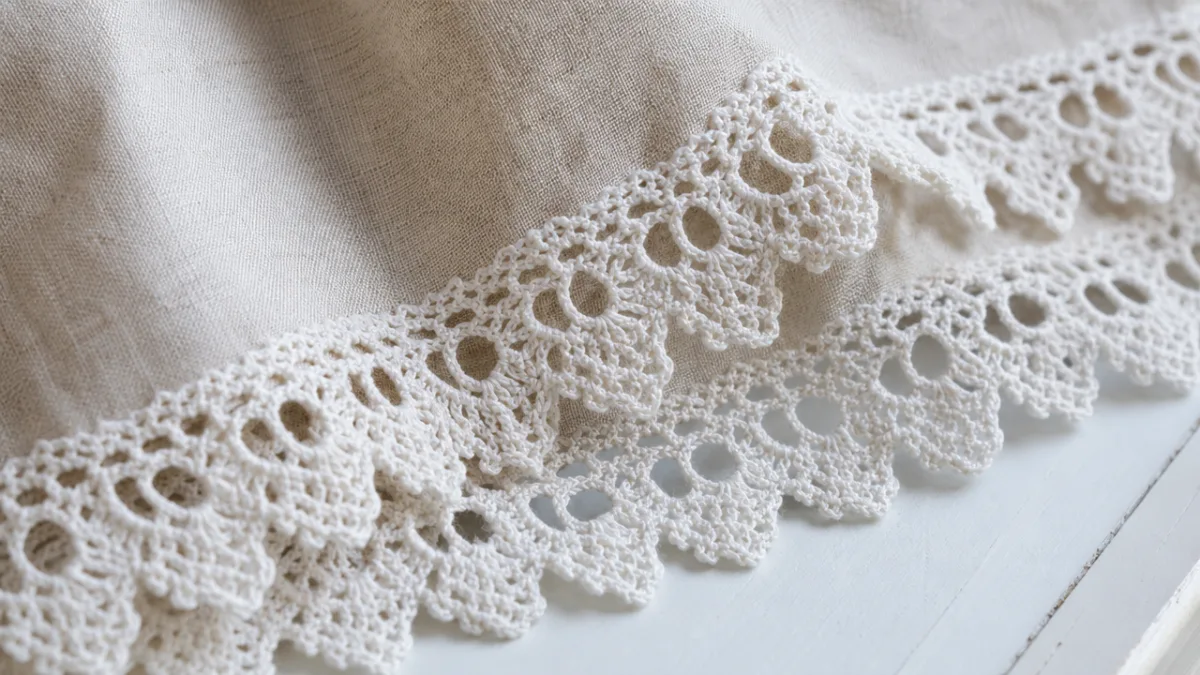
Crochet lace edging is one of those rare needlework techniques that has endured for centuries without losing even a trace of its appeal. From Victorian parlors to contemporary craft studios, the delicate interplay of yarn and hook has consistently produced some of the most breathtaking decorative details imaginable. Whether adorning a handmade blanket, a linen tablecloth, or a simple cotton dishcloth, lace edging transforms the ordinary into something genuinely extraordinary, adding a sense of craftsmanship and care that no machine-made trim can replicate.
What makes crochet lace edging so enduringly popular is its remarkable versatility. A single skein of thread and a fine steel hook can yield yards upon yards of intricate, airy trim that suits virtually any project or aesthetic. Whether your style leans toward the romantic and ornate or the clean and geometric, there is a lace edging pattern that speaks directly to your vision. This adaptability across styles, fiber weights, and skill levels is a significant reason why crafters from absolute beginners to seasoned experts return to lace edging again and again throughout their crocheting lives.
The history of crochet lace is deeply intertwined with the history of handcraft itself. Originating as a more accessible alternative to costly needle lace and bobbin lace, crochet lace became particularly prominent in nineteenth-century Ireland, where it provided income for countless families during times of hardship. That legacy of ingenuity and beauty lives on every time a crafter picks up a hook and begins working picots and chains along the edge of a cherished piece. Understanding this history enriches the experience, connecting modern makers to a long, meaningful lineage of creativity.
Understanding the Basic Techniques
Before embarking on any lace edging project, it is worth taking time to understand the foundational stitches that make lace possible. The chain stitch forms the skeleton of nearly every lace pattern, creating the open loops and arches that give lace its characteristic airiness. The slip stitch anchors the work and helps move yarn across the fabric without adding height. Together with the single crochet, double crochet, and the beloved picot, these basic building blocks combine and recombine in endlessly inventive ways to create patterns ranging from simple shell borders to elaborate floral medallion edges.
Tension is perhaps the single most important technical factor in successful lace edging. Because lace relies on open spaces as much as it relies on the yarn itself, consistent tension ensures that every loop, arch, and picot sits where it belongs, creating a uniform and elegant result. Many crafters find that working with thread and a fine hook requires a slight adjustment in how they hold their materials, and it is worth practicing on a small swatch before committing to a full project. A relaxed grip and smooth, even yarn feed make an enormous difference in the final appearance of the work.
Reading lace patterns is a skill that rewards patience. Crochet lace patterns may be presented as written instructions, charted symbols, or a combination of both. Learning to read a symbol chart opens up an enormous library of international patterns, since crochet symbols are largely universal across languages. Written instructions, on the other hand, offer clarity through words, which many beginners find reassuring. With practice, switching between these two formats becomes second nature, and the crafter gains access to the full breadth of lace edging traditions from around the world.
Choosing the Right Materials for Lace Edging
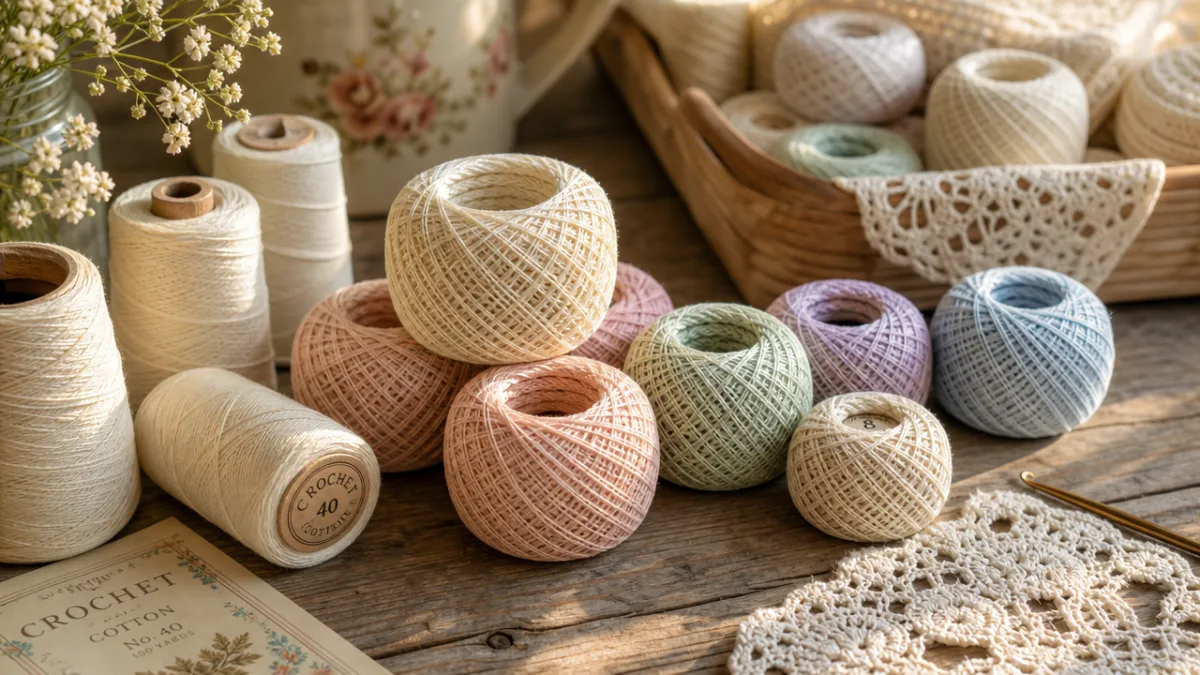
The choice of yarn or thread is one of the most consequential decisions a crafter makes when planning a lace edging project. Traditional crochet lace is worked in fine cotton thread, typically in sizes 10, 20, or even finer, which produces crisp, well-defined stitches and a beautifully translucent fabric. Cotton has long been favored for lace because it holds its shape after blocking, launders well, and has a slight sheen that enhances the intricate structure of the stitches. For heirloom pieces such as doilies, christening gowns, or treasured table linens, cotton thread remains the gold standard.
That said, modern crafters are by no means limited to traditional cotton thread. Fingering-weight wool or wool-blend yarns produce a softer, slightly hazy lace with a beautiful drape that works wonderfully for garment edgings on shawls, cardigans, and scarves. Silk thread adds an incomparable luminosity and a fluid quality that elevates any lace project to something truly luxurious. Even mercerized cotton, which has been treated to increase its luster and strength, offers properties slightly different from standard cotton, making it worth experimenting with different fiber types to discover which best suits a particular project’s requirements.
Hook selection is equally important and closely tied to the chosen thread or yarn. For fine cotton thread, steel hooks ranging from size 14 down to size 6 are standard, with smaller numbers indicating larger hooks in the steel hook sizing system — the opposite of standard aluminum hook sizing, which can initially confuse newcomers. The goal is always to achieve an open, airy fabric that is neither so loose it loses structure nor so tight it becomes stiff and difficult to work. A good rule of thumb is to test several hook sizes with your chosen thread until the resulting fabric feels flexible and the stitches are clearly defined.
Selecting Colors and Planning Your Project
Color choice in crochet lace edging deserves thoughtful consideration, because the color of the trim fundamentally affects the mood and character of the finished piece. Classic white and ecru are perennially popular for their crisp, traditional elegance and their ability to complement virtually any base fabric color. These neutral tones also photograph beautifully and age gracefully, which makes them ideal for heirloom projects intended to be passed down through generations. A white lace border on a simple cotton pillowcase transforms it into something that feels both timeless and lovingly made.
Color contrast, on the other hand, can be used boldly and deliberately to make a lace edging a true design statement. A deep navy lace border on a cream garment, or a soft blush trim on a gray knitted shawl, creates a sophisticated interplay that draws the eye and elevates the whole piece. Some crafters choose to work variegated or hand-dyed threads, allowing color to shift subtly along the length of the edging in ways that add depth and visual interest without requiring any color changes within the work itself. The range of possibilities is as wide as the color wheel.
Planning the layout of your edging before you begin stitching saves considerable time and frustration. Consider how the edging will attach to the base project — whether you will be working directly into the fabric’s edge, picking up stitches from a knitted border, or attaching a separately worked lace strip with whip stitches or slip stitches. Think about how the pattern will turn corners, since most lace patterns require a specific adjustment at corners to lie flat. Swatching a short section of edging and attaching it to your fabric before committing to the full piece is always a worthwhile investment of time.
Popular Crochet Lace Edging Patterns and Styles
The catalog of crochet lace edging patterns is wonderfully vast, spanning styles that suit every taste and skill level. Shell edgings, in which groups of double crochets fan out from a single stitch to create a scalloped effect, are among the most beginner-friendly and widely used. They work up quickly, lie flat without blocking, and add an immediately recognizable decorative touch. Shell edgings look particularly lovely on baby blankets, kitchen towels, and cloth napkins, where their simple elegance enhances everyday items without overwhelming them with complexity.
Picot edgings offer a similarly accessible starting point. A picot is simply a small decorative loop formed by chaining three or four stitches and slip-stitching back into the first chain, creating a tiny raised bead of yarn. Picots can be worked singly at regular intervals along a plain single-crochet border, or clustered and combined with arches to create more elaborate all-over lace patterns. Their understated charm suits garment necklines, cuffs, and hemlines beautifully, adding just enough decorative detail to elevate the piece without demanding enormous technical skill from the maker.
For those ready to embrace greater complexity, the world of filet crochet lace offers a treasure trove of edging possibilities. Filet crochet uses a grid of open and filled mesh squares to create figurative designs — flowers, birds, geometric motifs, and even text — within a lace structure. As an edging technique, filet strips can be worked lengthwise and then attached to a project, creating a border that tells a visual story. More advanced still are Bruges lace, Irish crochet lace appliqué, and hairpin lace, each with their own distinct aesthetic and their own committed communities of devoted practitioners.
Adapting Patterns Across Different Projects
One of the most satisfying aspects of crochet lace edging is how readily a single pattern adapts across wildly different projects. The same simple shell-and-picot edging that finishes a cotton baby blanket might also, worked in fine silk thread, adorn the collar of a delicate blouse or trace the hem of a vintage-style pillowcase. This adaptability stems from the scalable nature of crochet: by adjusting the weight of thread and the size of the hook, the scale of the lace expands or contracts while the essential character of the pattern remains intact. A pattern that produces tiny, intricate lace in size 20 cotton thread will yield a bolder, more graphic border in fingering-weight yarn.
Crafters who sew will find crochet lace edging opens an exciting creative dialogue between the two crafts. A length of crochet lace attached to the edge of a gathered skirt, the collar of a linen blouse, or the cuffs of a simple dress adds a handmade touch that commercial trims simply cannot replicate. The lace can be pre-worked as a long strip and then sewn or hand-stitched onto the fabric, making it accessible even to those who are not confident working crochet directly onto a sewn garment. This cross-craft application has a long history in folk textile traditions across Europe and Latin America.
Home décor applications for crochet lace edging are equally rich. Consider the following projects that benefit particularly beautifully from a lace border:
- Linen tablecloths and napkins, where lace edging adds an heirloom quality suitable for both everyday use and special occasions
- Pillowcases and cushion covers, transformed from plain household linens into decorative pieces with a few hours of work
- Curtain panels edged with a deep lace border, filtering light through both the fabric and the open crochet for a romantic effect
- Framed lace panels mounted as textile art, a way of displaying fine threadwork as the true art form it is
- Book covers, journal wraps, and decorative gift wrapping finished with a strip of handmade lace for a personal, thoughtful touch
Blocking and Finishing Your Lace Edging
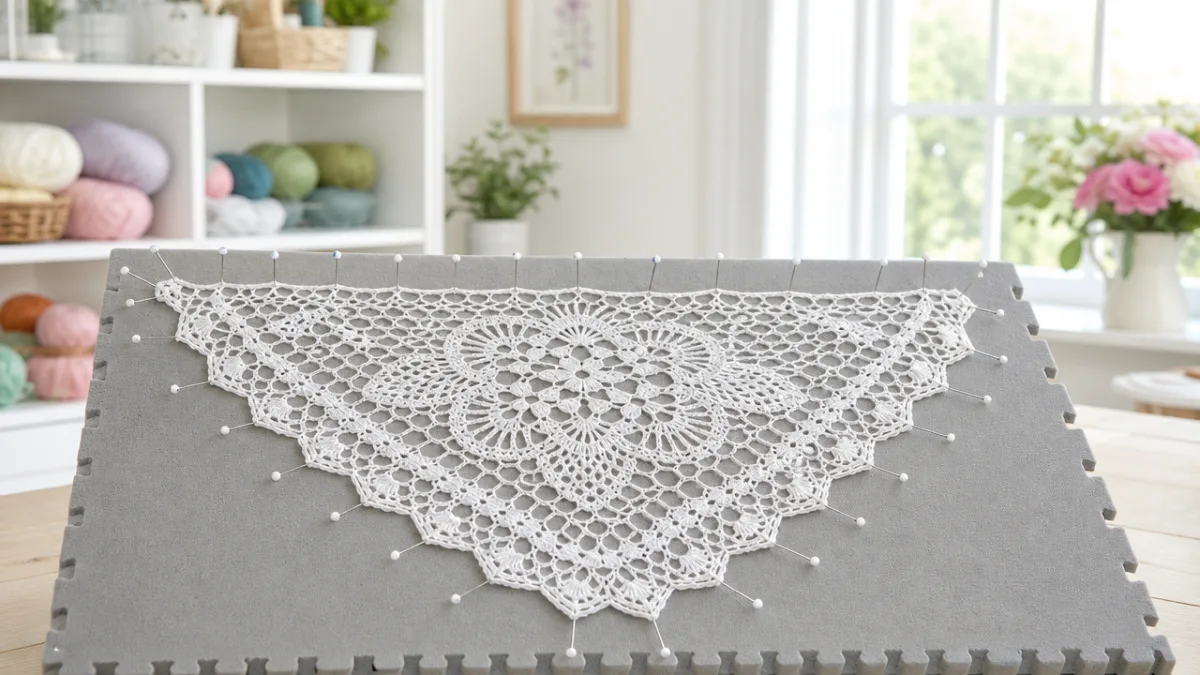
Blocking is the transformative final step that takes crochet lace from a slightly crumpled, uneven piece of finished work to a beautifully open, defined, and polished creation. The process involves wetting or steaming the finished lace and then carefully stretching and pinning it into its intended shape while it dries. The results can be dramatic: stitches that appeared uneven settle into their proper positions, picots stand up crisp and proud, and the overall dimensions of the work expand and clarify in ways that reveal the full beauty of the pattern. Blocking is not optional for quality lace work — it is essential.
For cotton and linen threads, wet blocking is generally preferred. The finished piece is fully submerged in cool water, gently squeezed (never wrung or twisted) to remove excess moisture, and then laid flat on a blocking board or foam mat. Using rust-proof blocking pins, the lace is stretched to its intended measurements and every picot, arch, and scallop is carefully pinned out to its fullest extension. The piece is then left to dry completely before the pins are removed. For wool or wool-blend yarns, steam blocking offers a gentler alternative that avoids the felting risk that comes with excessive agitation of wet wool fibers.
Finishing details beyond blocking also deserve attention. Weaving in yarn ends neatly and securely ensures that the finished lace will withstand washing and regular use without unraveling. When attaching lace edging to a base project, the method of attachment should be chosen with the end use in mind: a lace border on a frequently washed kitchen towel needs a firmer, more durable attachment than one on a decorative pillow that will rarely be handled. Taking care with these finishing details is what separates a professionally finished piece from one that looks homemade in the less flattering sense of the word.
Building Skills and Finding Inspiration
For crafters new to crochet lace edging, the learning curve, while real, is far less steep than it might initially appear. Starting with a simple single-row shell edging or a basic picot border allows beginners to build confidence with fine thread and small hooks before moving on to multi-row patterns with more complex stitch sequences. Many experienced lace makers recommend working a short practice strip — perhaps six inches long — with any new pattern before committing to a full project. This small investment of time reveals how the pattern repeats, where the tricky moments lie, and whether any adjustments are needed for tension or gauge.
The crochet community, both online and in person, is an extraordinarily generous source of guidance, inspiration, and encouragement for those learning lace techniques. Video tutorials offer the invaluable advantage of watching skilled hands work in real time, making it possible to see exactly how stitches are formed and how thread is managed. Crochet guilds, local yarn shop classes, and fiber arts festivals provide opportunities to learn directly from experienced makers, ask questions in the moment, and discover the particular pleasures of crafting in community with others who share the same passion.
Inspiration for lace edging designs is everywhere, once one begins to look. Architecture offers a wealth of motifs — arches, grids, floral carvings, and geometric repetitions — that translate beautifully into crochet patterns. Nature provides an equally rich source: the structure of snowflakes, spider webs, and flower petals all echo the geometric logic that underlies lace construction. Vintage pattern books, museum textile collections, and the rich archives of needlework magazines from the early and mid-twentieth century contain thousands of lace edging patterns, many of them freely available through digital archives and library lending programs.
Making Lace Edging Your Own Creative Signature
As skills develop, many crochet lace makers begin to move beyond following patterns and start creating or adapting designs of their own. This creative evolution might begin simply — perhaps substituting a different picot count in a familiar pattern, or adding an extra row to increase the depth of an edging — and gradually expand into designing original motifs and sequences from scratch. Understanding the mathematical logic of pattern repeats, how to calculate the correct multiple of foundation stitches for a given pattern, and how different stitch combinations interact opens the door to true design freedom. This is where lace making crosses fully from craft into art.
Combining lace edging with other textile techniques creates particularly exciting possibilities. A hand-knitted shawl with a crochet lace border, a woven table runner finished with a crocheted fringe and lace trim, or an embroidered linen with a matching crochet edging: these combinations honor and continue a long tradition of mixing needlework techniques within a single piece. The contrast of different textile textures — the smooth surface of woven linen against the open architecture of crochet lace, for instance — creates a visual and tactile richness that elevates both elements and produces something far more interesting than either alone.
Ultimately, crochet lace edging is an invitation to slow down, pay attention, and make something beautiful with your own two hands. In an era of mass production and disposability, there is something quietly radical about spending an afternoon working yards of delicate, handmade lace to trim a pillowcase or a child’s dress. The resulting piece carries within it the hours invested, the decisions made, the skill developed, and the care lavished upon it — qualities that no machine can replicate and no factory can manufacture. That is the true and lasting gift of handmade lace: it is, in the most literal and meaningful sense, irreplaceable.








What do you think?
It is nice to know your opinion. Leave a comment.