










Crochet Flower Lamp Free Patterns for Cozy Home Decor
The Charm of Crochet Lighting in Modern Home Decor
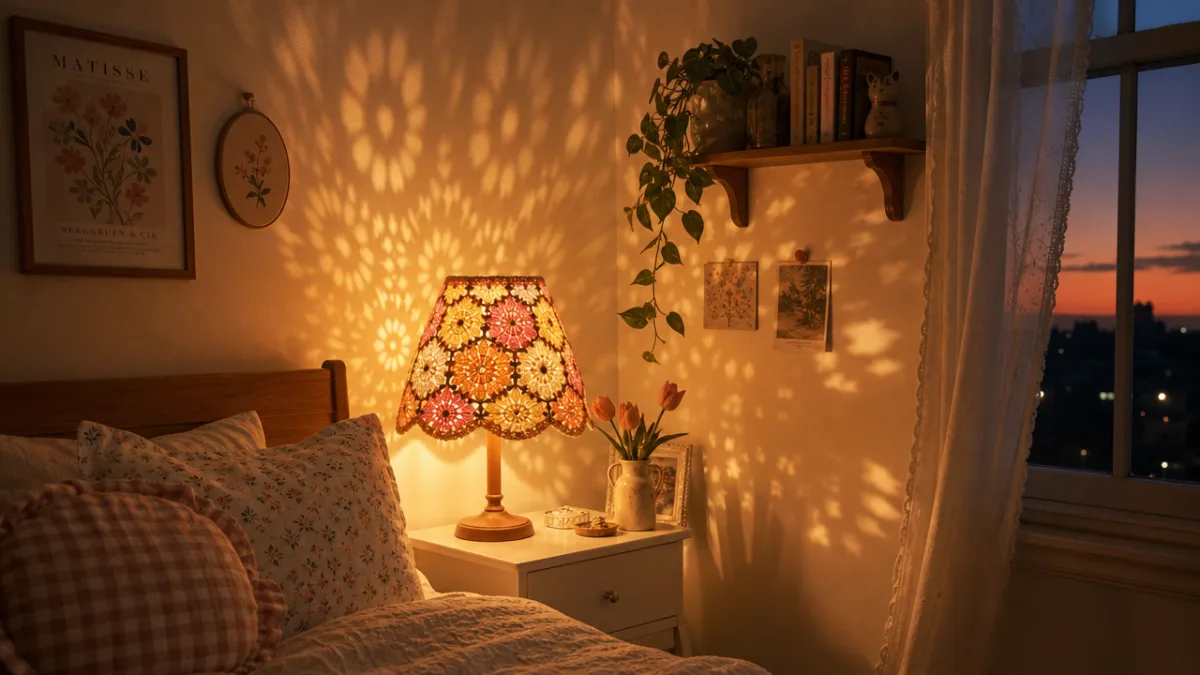
There is something undeniably magical about the way light filters through a handcrafted crochet lampshade. The delicate lacework creates dancing patterns on walls and ceilings, casting a warm, amber glow that no mass-produced fixture can replicate. Crochet flower lamps have surged in popularity among interior design enthusiasts and DIY crafters alike, offering a perfect marriage of textile art and functional home decor. Whether you are a seasoned crocheter or an ambitious beginner, these projects promise to transform any room into a cozy, personal sanctuary.
The resurgence of handmade home accessories has brought crochet lighting firmly into the spotlight. Interior designers and lifestyle bloggers have embraced the trend wholeheartedly, showcasing lampshades adorned with intricate floral motifs in bohemian living rooms, rustic bedrooms, and even modern minimalist spaces. The versatility of crochet flower patterns means you can adapt colors, yarn weights, and flower styles to suit virtually any aesthetic, from cottagecore and farmhouse to Scandinavian and Mediterranean-inspired interiors.
What makes crochet flower lamps particularly appealing is the accessibility of free patterns available online and through crafting communities. You do not need to invest in expensive kits or proprietary instructions to create a stunning piece. With a modest collection of yarn, a crochet hook, a basic wire or fabric lampshade frame, and a free pattern, you can produce a luminous centerpiece that guests will admire for years to come. The sense of accomplishment that comes with completing such a project adds an emotional warmth to the physical warmth of the light itself.
Why Handmade Lamps Outshine Store-Bought Options
Store-bought lampshades are designed for the broadest possible market, which means they inevitably sacrifice personality and uniqueness. A crochet flower lamp, by contrast, is an entirely individual creation shaped by your color choices, your tension, and the specific pattern you select. Even two crafters working from the same free pattern will produce lamps with subtle differences, ensuring that your finished piece is truly one of a kind. This uniqueness adds genuine value to your home decor in a way that a factory-produced shade simply cannot match.
Beyond aesthetics, handmade crochet lamps carry an intrinsic emotional resonance. They tell a story of time, skill, and intention. When you sit beneath the soft glow of a lamp you made yourself, or receive one as a gift from someone who spent hours crafting it, the object becomes far more than a functional light source. It becomes a meaningful artifact of human creativity and care, connecting the maker to the space and to the people who share it. This emotional dimension is increasingly valued in an era of disposable, fast-fashion home goods.
From a practical standpoint, making your own crochet flower lamp also allows complete control over materials. You can choose natural fibers like cotton or linen that are breathable and flame-retardant when treated appropriately, or opt for synthetic yarns with specific sheen and durability properties. You can ensure that the adhesives and stiffening agents you use are non-toxic and safe for your household. This level of control over every component is something no commercially manufactured product can offer, making the DIY approach both safer and more personally satisfying.
Essential Materials and Tools for Your Crochet Flower Lamp Project
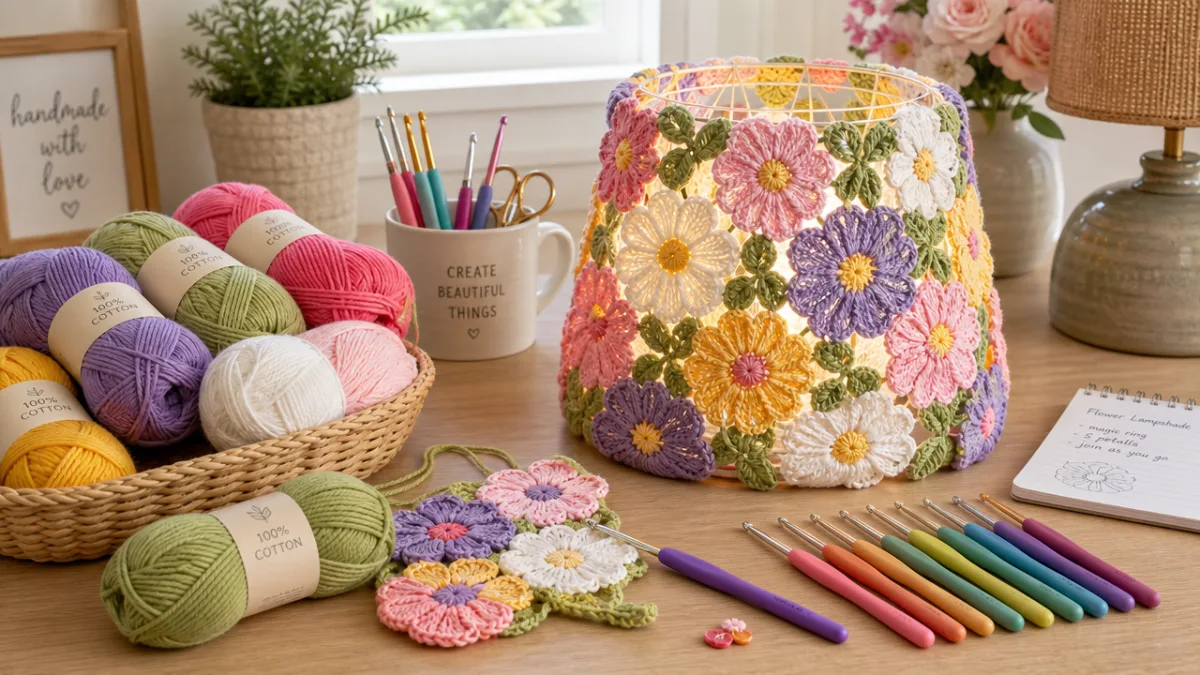
Before diving into any crochet lamp pattern, assembling the right materials will make the entire process smoother and more enjoyable. The foundation of your project is the yarn itself. For lampshades, cotton yarn is widely regarded as the best choice because it is naturally heat-resistant, holds its shape well when stiffened, and comes in an enormous range of colors. A DK weight or worsted weight cotton yarn works well for most flower lamp patterns, providing enough substance to create defined petals while remaining light enough to allow a beautiful glow to pass through the finished shade.
Your crochet hook size should match your chosen yarn weight, but many experienced crafters recommend going down one hook size from the yarn’s recommendation to create a tighter, more structured fabric. A tighter stitch produces a lampshade that holds its shape better and creates more precise light patterns on surrounding surfaces. Alongside your hook and yarn, you will need a lampshade frame, which can be purchased from craft stores or repurposed from an old shade. Wire frames offer the most flexibility for attaching crochet panels, while fabric-covered frames can be used as a base for gluing stiffened crochet motifs directly to the surface.
Stiffening agents are a crucial but often overlooked part of the crochet lamp-making process. Fabric stiffener spray, liquid starch, or a homemade mixture of white glue diluted with water can all be used to give your crocheted flowers and panels the rigidity needed to maintain their shape around the lamp frame. Once applied and dried, the stiffener locks the yarn fibers in place, ensuring your beautiful flower motifs stay dimensional and crisp even after prolonged exposure to the gentle heat of a low-wattage bulb. Always pair stiffened crochet lampshades with LED bulbs, which produce far less heat than incandescent alternatives and are therefore much safer for textile shades.
Recommended Tools for Beginners and Advanced Crafters
Beyond the basics, a few additional tools will elevate your crochet lamp project from good to exceptional. Tapestry needles are essential for weaving in yarn ends neatly, which is especially important on a lampshade where the interior is visible when the light is on. Stitch markers help you keep track of rounds and pattern repeats, particularly useful when working the repetitive sections of a flower motif pattern. A measuring tape ensures your crochet panel dimensions match your frame before you begin the time-consuming process of attachment.
For those working with wire frames, a pair of needle-nose pliers and thin floral wire or craft wire can be invaluable for securing the crocheted fabric to the frame structure. Some crafters prefer to use binding thread or thin cotton twine to lash the crochet work to the wire, which creates a more traditional and artisanal look. Hot glue guns are popular for quickly attaching individual flower motifs to fabric or solid lampshade bases, offering a fast and secure bond that holds up well under normal use conditions.
Investing in a good blocking mat and rust-proof T-pins will pay dividends when it comes to shaping your finished crochet pieces before stiffening. Blocking involves pinning your damp crocheted flowers and panels into their final shape and allowing them to dry flat, which dramatically improves the appearance of the finished lamp. Proper blocking makes petals look more natural and uniform, ensures that flat panels lie smooth without curling, and helps the stiffener set in the most aesthetically pleasing configuration. Even if you are new to blocking, the process is straightforward and the results are immediately and noticeably worth the extra effort.
Popular Free Crochet Flower Lamp Patterns to Try
The online crafting community has generated a wealth of free crochet flower lamp patterns suitable for every skill level. Among the most beloved beginner-friendly options is the classic granny square lampshade, in which individual granny square motifs featuring simple flower centers are joined together to form a cylindrical or drum-shaped shade. This pattern is universally familiar to crocheters and requires only basic stitches including chain, single crochet, double crochet, and slip stitch. The result is a charmingly retro lampshade that works beautifully in bohemian, farmhouse, and eclectic interiors.
For intermediate crafters, the African flower hexagon lamp pattern offers a more complex and visually striking result. The African flower motif, worked in the round with color changes to create a dimensional petal effect, produces a hexagonal tile that can be joined edge-to-edge to cover a lampshade frame completely. The dimensional quality of the finished flower tiles means that light passes through the gaps between petals, creating an intricate, dappled glow on surrounding surfaces. Pairing bold jewel-toned yarns with a warm-white LED bulb transforms this lamp into a genuine statement piece worthy of any living space.
Advanced crocheters seeking a real challenge might explore the Irish lace flower lamp pattern, which uses fine thread and a small steel hook to create delicate, interconnected flower and leaf motifs reminiscent of traditional Irish lace tablecloths. The resulting lampshade is extraordinarily delicate in appearance yet surprisingly sturdy when properly stiffened. The fine thread allows for a very high level of detail in each flower motif, and the overall effect when lit is breathtakingly beautiful, resembling a lantern made of solidified lace. Free versions of this pattern are available through several well-known crochet pattern websites and YouTube tutorial series.
Adapting Patterns for Different Lamp Styles
One of the greatest advantages of working from free crochet patterns is the ease with which they can be adapted to suit different lamp styles and sizes. A pendant lamp, a table lamp, and a floor lamp all present different structural challenges and aesthetic opportunities, and most flower patterns can be modified to work beautifully in all three contexts. For pendant lamps, consider working a single large, dimensional flower motif that hangs directly over the bulb, creating a dramatic floral crown effect when viewed from below. This approach uses minimal yarn and produces maximum visual impact.
Table lamp shades typically require a full cylindrical or tapered cover, which means joining multiple motifs or working a continuous panel. When adapting a flower motif pattern for a table lamp, calculate how many repeats of your chosen flower will fit around the circumference of your frame at the widest point, then work panels or joined motifs accordingly. Do not be afraid to mix different flower sizes within the same shade, using larger statement blooms at even intervals surrounded by smaller filler flowers. This approach creates a natural, garden-inspired texture that is particularly lovely when the lamp is illuminated.
Floor lamp shades benefit from larger-scale patterns worked in heavier yarn, simply because the greater surface area demands a motif that reads clearly from a distance. A bold four-inch flower motif that looks exquisite on a small table lamp shade might appear lost and insignificant scaled to a large floor lamp. Conversely, increasing yarn weight to bulky or super bulky and using a correspondingly larger hook allows you to work up a full floor lamp shade relatively quickly while maintaining a strong visual presence. The chunky texture of thick yarn flower motifs also creates wonderful shadow play on walls and floors when lit from within.
Step-by-Step Guide to Making Your First Crochet Flower Lamp
Beginning your first crochet flower lamp project is most approachable when you break the process into clearly defined stages. The first stage is planning, which involves choosing your pattern, selecting your yarn and color palette, measuring your lampshade frame, and calculating how many motifs or pattern repeats you will need to cover it. Spending time in this planning phase prevents the frustration of running out of yarn mid-project or discovering that your crocheted panel does not fit the frame once completed. Sketch a simple diagram showing how your motifs will be arranged, and keep it nearby as you work.
Once your planning is complete, begin by crocheting a test swatch or sample motif using your chosen yarn and hook. This serves two purposes: it allows you to check that your tension produces the desired size and appearance, and it gives you a sample piece to test your stiffening method before committing to the entire project. Apply your chosen stiffener to the test piece, shape it while damp, and allow it to dry completely before assessing the result. If the motif is too stiff and brittle, dilute your stiffening solution. If it is too flexible and does not hold its shape, increase the concentration or apply a second coat.
With your tension confirmed and stiffening method refined, begin working your flower motifs or panels in earnest. Work in comfortable sessions to avoid hand fatigue, which can cause tension inconsistencies that will be visible in the finished piece. Join or arrange your completed motifs as directed by your chosen pattern, checking the arrangement against your lampshade frame regularly to ensure a proper fit. When all pieces are crocheted and joined, apply your stiffening agent, shape everything carefully on a blocking mat, and allow to dry fully before attaching to the frame.
Attaching the Crochet Cover to Your Frame
Attaching the crocheted cover to the lampshade frame is perhaps the most satisfying stage of the entire project, as it is where your hours of careful stitching finally take the shape of a finished lamp. The attachment method you choose will depend on your frame type and the look you wish to achieve. For wire frames, the traditional approach is to use the same yarn or a complementary binding thread to stitch or lace the crochet work directly to the wire, wrapping the yarn around each wire segment and through nearby stitches in a neat whipstitch or blanket stitch. This creates a clean, fabric-like edge that is particularly elegant on drum-shaped shades.
For solid fabric or plastic frames, a hot glue gun offers the most straightforward attachment method, particularly when working with individual flower motifs rather than continuous panels. Apply a thin bead of hot glue to the back of each motif and press firmly against the frame surface, holding for a few seconds until the bond sets. Work methodically around the frame, ensuring even spacing and alignment of your flower motifs. Step back regularly to check the overall arrangement and make adjustments before the glue cures completely, as repositioning is possible within the first minute or two of application.
Once your crochet work is fully attached, install the shade on its lamp base and insert a suitable LED bulb. A warm-white bulb with a color temperature of around 2700 to 3000 Kelvin will complement most yarn colors beautifully, enhancing warm tones and creating the cozy, golden atmosphere that makes crochet flower lamps so beloved. Turn the lamp on for the first time in a dimmed room and take a moment to appreciate the patterns your work casts on the surrounding walls and ceiling. That first illuminated reveal is one of the most rewarding moments in any textile craft project.
Care, Safety, and Styling Tips for Your Crochet Flower Lamp
Caring for a crochet flower lamp is simpler than many crafters expect, provided a few basic precautions are observed from the outset. The most important rule is always to use LED bulbs exclusively with crochet lampshades. LED bulbs generate very little heat compared to incandescent or halogen alternatives, making them the only genuinely safe choice for textile shades. Even with LED bulbs, it is wise to choose a wattage that keeps the lamp running cool to the touch after several hours of use. As a general guideline, a bulb drawing no more than ten watts is appropriate for most crochet lampshade sizes.
Dusting your crochet lamp regularly will keep it looking fresh and prevent the accumulation of debris within the yarn fibers. A soft, dry paintbrush or a hair dryer set to the cool air setting are both effective tools for removing dust without disturbing the stiffened structure of the shade. Avoid using damp cloths or spray cleaners on stiffened crochet work, as moisture can dissolve or compromise the stiffening agent and cause the shade to lose its shape. If a thorough cleaning becomes necessary, the safest approach is to remove the shade from the frame, gently hand-wash with mild soap, re-stiffen, re-block, and reattach once fully dry.
When styling your crochet flower lamp within a room, consider the broader color palette and textile story of the space. Crochet flower lamps work best as part of a layered, texture-rich interior rather than a stark, minimal one. Pair your lamp with other handmade or natural elements such as a woven throw, a macrame wall hanging, potted plants, or wooden furniture to create a cohesive, artisanal aesthetic. The lamp does not need to match every other element precisely; rather, it should feel like part of a thoughtfully curated collection of objects that reflect your personal taste and creative sensibility.
Inspiring Variations and Advanced Customizations
Once you have completed your first crochet flower lamp, the creative possibilities for future projects are genuinely endless. Experiment with ombre color effects by gradually transitioning your yarn color through a range of shades as you work from top to bottom on the lampshade, creating a sunset or ocean-inspired gradient. Try incorporating different flower species into a single shade, mixing daisy-like flat flowers with dimensional roses and tiny forget-me-not clusters for a wildly abundant garden effect. Each new variation deepens your crochet skills while producing a completely distinct finished piece.
Beads and embellishments offer another avenue for personalization. Tiny glass seed beads threaded onto yarn before crocheting can be incorporated into flower centers or petal tips, catching the light and adding a subtle sparkle to the finished lamp. Metallic thread woven alongside standard cotton yarn creates a shimmering effect that makes the lamp feel glamorous and festive. Some crafters even incorporate pressed dried flowers beneath a thin layer of resin on a solid base frame before adding their crochet cover, creating a layered botanical artwork that is both a lamp and a decorative object when unlit.
Sharing your completed crochet flower lamp projects within online crafting communities is a wonderful way to inspire others and receive encouragement for your own creative journey. Platforms dedicated to crochet, DIY home decor, and handmade crafts are filled with communities of makers who celebrate one another’s work generously. Contributing your own variations, tips, and photographs to these communities helps grow the collective knowledge available to crafters of all skill levels, ensuring that the tradition of handmade crochet lighting continues to flourish and evolve in homes around the world for many years to come.








What do you think?
It is nice to know your opinion. Leave a comment.