










Give Your Four-Legged Friend a Handmade Upgrade: The Complete Guide to DIY Dog Accessories
There is something truly special about crafting something by hand for the ones you love most, and that sentiment extends just as warmly to the furry members of your family. Handmade dog accessories have surged in popularity among pet owners who want to offer their companions something more personal, more intentional, and often more durable than what you might find mass-produced on a store shelf. Whether you are a seasoned crafter or someone picking up a hot glue gun for the first time, the world of DIY pet projects is welcoming, rewarding, and endlessly creative.
Dogs give us unconditional love every single day, greeting us at the door with wagging tails and asking for nothing more than our time and affection in return. Creating something handmade for them is a beautiful way to reciprocate that devotion. It transforms a simple weekend afternoon into an act of care, and the finished product carries meaning that no store-bought item ever could. When your dog wears a collar you braided yourself or curls up in a bed you sewed from scratch, there is a quiet pride in knowing every stitch was made with love.
This guide will walk you through everything you need to know to get started with handmade dog upgrades, from choosing the right materials to tackling your first project with confidence. We will explore a wide range of ideas, practical tips for safety and durability, and inspiration to keep you motivated long after your first creation is complete. Get ready to treat your best friend to something genuinely one of a kind.
Why Handmade Is Better: The Case for DIY Dog Accessories
When you walk through the pet supply aisle of any big-box store, the options can feel overwhelming and yet oddly uninspiring at the same time. Most commercially made dog accessories are designed for the average dog, which means they rarely account for the individual quirks, measurements, or personality of your specific companion. A handmade approach solves this problem entirely. You control every dimension, every color choice, and every material that touches your dog’s skin, which means the end result fits better, looks better, and suits your dog’s unique needs far more precisely.
Quality is another compelling argument for the handmade route. Mass-produced pet products are often manufactured with cost-cutting in mind, meaning the hardware might corrode quickly, the fabric may pill after a few washes, or the seams could give out under normal use. When you make something yourself, you choose the canvas weight, the solid brass or stainless steel hardware, and the thread thickness. You are not cutting corners because the only person you are answerable to is the wagging creature looking up at you with complete and total trust. That accountability tends to produce far superior results.
There is also an environmental and ethical dimension worth considering. Handmade goods typically involve fewer supply chain intermediaries, less plastic packaging, and the opportunity to source materials from small, ethical suppliers or even repurpose things you already own. An old flannel shirt can become a cozy bandana. Leftover upholstery fabric can be transformed into a plush dog bed insert cover. Choosing the handmade path is not just good for your dog; it is often a gentler choice for the planet as well, and that is a benefit worth celebrating alongside every finished project.
Essential Materials and Tools to Get You Started
Before you dive into your first project, it pays to spend a little time assembling a foundational toolkit. The good news is that you do not need an elaborate or expensive setup to create beautiful, functional dog accessories. Many of the best handmade pet projects require only basic tools that most craft enthusiasts already have at home, and the specialty materials you do need are widely available at fabric stores, hardware stores, and online retailers at very reasonable prices.
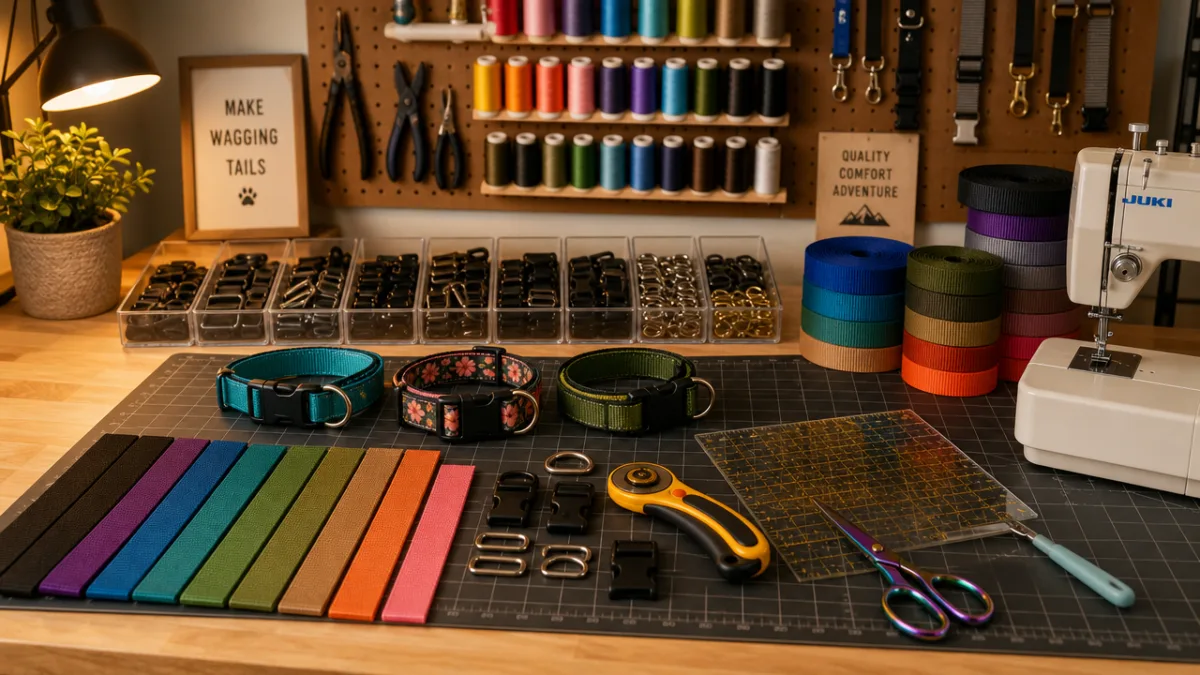
For fabric-based projects like beds, bandanas, and soft collars, a mid-weight cotton canvas, denim, or fleece will serve you well across a wide variety of applications. These materials are durable, washable, and available in an extraordinary range of colors and prints. If you plan to sew, a reliable sewing machine with a denim or heavy-duty needle will handle most pet projects without complaint. Hand-stitching is also a perfectly valid option for smaller items, and a good set of embroidery needles and strong upholstery thread will get you through most challenges. Fabric scissors, chalk or a water-soluble marker for tracing patterns, and a cutting mat will round out the basics.
Hardware and notions deserve special attention when crafting for dogs, because functionality and safety are non-negotiable. For collars and leashes, invest in quality side-release buckles, D-rings, and tri-glide slides rated for your dog’s weight. These are typically sold in packs and are inexpensive, but the difference between a decent buckle and a cheap one becomes very apparent when your dog spots a squirrel and bolts. Webbing nylon in half-inch, three-quarter-inch, and one-inch widths is the standard material for functional collars and leashes, and it comes in dozens of colors for easy customization.
- Mid-weight cotton canvas or denim for beds, bandanas, and soft accessories
- Fleece or sherpa for cozy liners, sweaters, and winter accessories
- Nylon webbing in various widths for collars and leashes
- Side-release buckles, D-rings, and tri-glide sliders in appropriate weight ratings
- Strong upholstery thread or heavy-duty polyester thread for sewing
- Water-soluble fabric marker and measuring tape for accurate sizing
- Hot glue gun for non-structural embellishments and quick crafts
- Sharp fabric scissors and a rotary cutter with a self-healing mat
Top Handmade Projects to Try: From Simple to Impressive
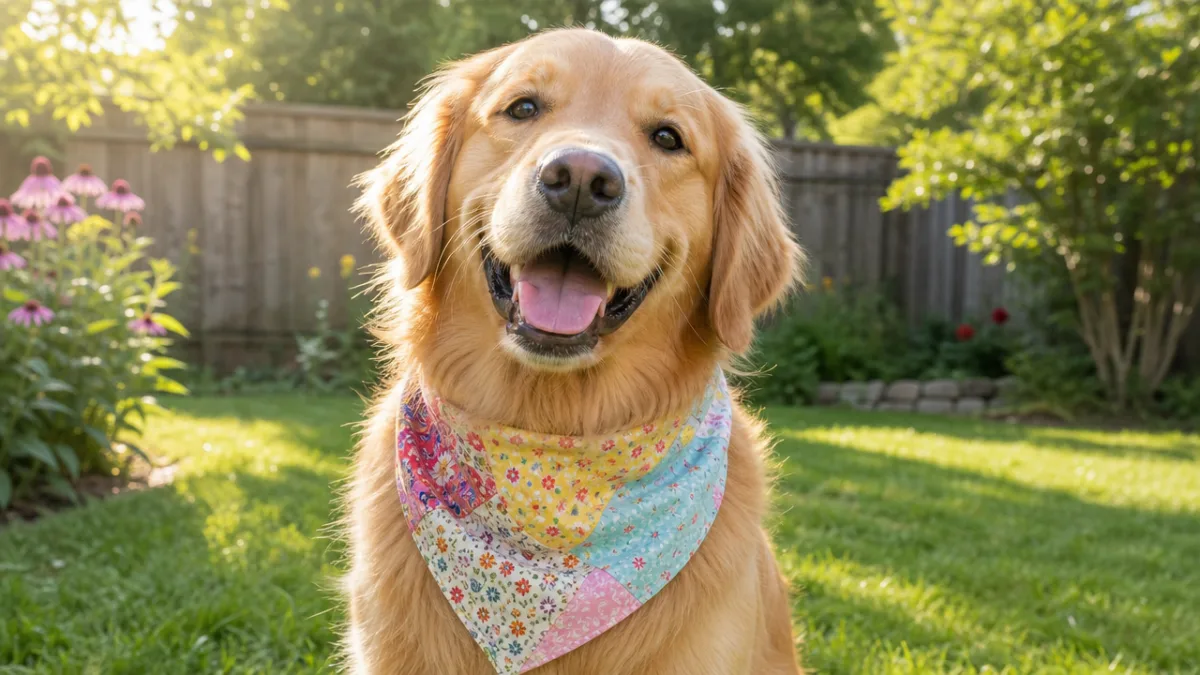
If you are brand new to crafting for your dog, the best place to start is with a project that delivers a big visual payoff with a manageable time investment. The classic dog bandana checks every box in this category. It requires nothing more than a piece of fabric, a pair of scissors, and optionally a bit of hemming, yet the result is an instantly charming accessory that suits dogs of every shape, breed, and temperament. Choose a print that reflects your dog’s personality, whether that is a bold geometric, a seasonal floral, or a cheeky novelty print, and you will have a finished accessory in under an hour.
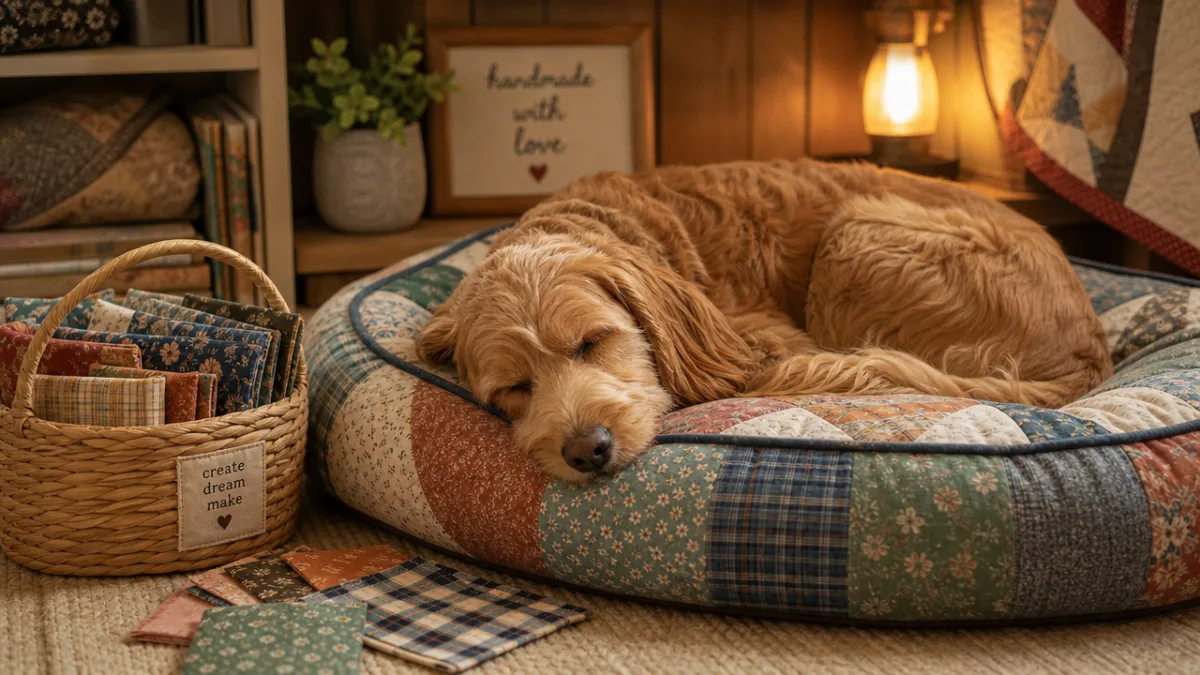
Once you have built a little confidence with simpler projects, a no-sew or beginner-sew dog bed is a wonderfully satisfying next step. The simplest version involves cutting two pieces of thick fleece into matching rectangles, cutting fringe around the edges, and tying the fringe together to form a self-contained envelope that can be stuffed with polyfill or a repurposed pillow insert. For those comfortable with a sewing machine, a boxed-corner dog bed made from upholstery-weight fabric with a removable, washable cover is a project that genuinely rivals anything you might find in a boutique pet shop, and it costs a fraction of the price.
For the crafter who wants to take on a genuine challenge, a handmade dog collar with a custom width, color-blocked webbing design, and hand-stamped leather nameplate is an extraordinarily rewarding project. It requires a bit of practice to thread the hardware correctly and to melt the webbing ends cleanly with a lighter to prevent fraying, but once you have made one, you will find it difficult to stop. Matching leashes, harness chest patches, and even embroidered tags can follow, turning your handmade practice into a full custom kit that is as functional as it is beautiful.
- Dog Bandana — Cut a triangle or square from cotton fabric, hem the edges if desired, and tie around your dog’s neck for instant charm.
- Fleece No-Sew Bed — Layer two pieces of fleece, cut and tie fringe around the perimeter, and stuff with polyfill for a cozy, washable bed.
- Rope Toy — Braid thick cotton rope into a tug toy using a simple four-strand braid, knotting generously at each end for grip and durability.
- Nylon Collar — Thread webbing through a buckle, D-ring, and slider for a fully adjustable, personalized collar in your chosen colors.
- Treat Pouch — Sew a small zippered or drawstring bag from canvas to carry training treats on walks, with a belt loop or carabiner clip for easy attachment.
- Dog Sweater — Use a free knitting or crochet pattern scaled to your dog’s measurements for a warm, stretchy sweater perfect for smaller or short-haired breeds in colder months.
Safety First: What Every Pet Crafter Needs to Know
Handmade dog accessories are wonderful precisely because you control the materials, but that control also comes with responsibility. Safety should always be the first consideration in any pet project, because dogs interact with their accessories in ways that differ meaningfully from how humans wear clothing or use tools. Dogs chew, tug, scratch, and roll, and any accessory you create needs to be able to withstand that kind of enthusiastic use without breaking down into components that could be swallowed or cause injury.
When selecting embellishments, buttons, beads, or decorative elements, always consider whether they are firmly attached enough to resist a determined chewer, and whether they would pose a choking or obstruction hazard if swallowed. As a general rule, avoid small decorative elements on any accessory that your dog wears unsupervised, and opt instead for embellishments that are deeply embedded in the fabric through embroidery or heat transfer rather than glued or sewn on the surface. If you are making a toy, skip the squeakers that can be easily extracted and the crinkle inserts that can be torn out, in favor of solid braided constructions that are inherently more durable and safer under rough play.
Sizing is another critical safety factor that deserves careful attention, particularly for anything that goes around your dog’s neck. A collar that is too tight can restrict breathing or cause chafing; one that is too loose can slip over the head and allow an escape that puts your dog in danger. The gold standard rule is the two-finger test: you should be able to comfortably slide two fingers between the collar and your dog’s neck, with no more than that amount of slack. Always measure your dog carefully before cutting and assembling, and build in an adjustable range of at least two inches to account for weight fluctuations and different coat thicknesses across seasons.
Personalizing Your Creations: Color, Pattern, and Custom Touches
One of the greatest joys of the handmade approach is the limitless opportunity for personalization. Your dog’s accessories do not have to match anyone else’s aesthetic or conform to whatever happens to be trending in the pet market this season. They can reflect your dog’s name, your household’s color palette, your favorite season, or simply the particular combination of colors and textures that makes you smile every time you look at them. This freedom is something no mass-market product can offer, and it is at the heart of what makes handmade gifts for pets so deeply satisfying to create and to give.
Color blocking is one of the most impactful and beginner-friendly customization techniques available to pet crafters. By combining two or three coordinating colors of nylon webbing, you can create a collar or leash that looks intentionally designed and visually dynamic without requiring any advanced skill. Similarly, mixing a solid-colored fabric base with a patterned fabric trim on a dog bed or bandana creates a finished look that reads as polished and thoughtful. Learning a few basic color theory principles, such as the appeal of complementary colors or the calm harmony of analogous palettes, can elevate even your simplest projects considerably.
For those who want to take personalization even further, adding your dog’s name or initials is a meaningful touch that also serves a practical identification function. Hand-stamped leather name tags can be made at home with a basic leather stamping kit, a small piece of vegetable-tanned leather, and a hammer. Embroidered names on collars, bandanas, or beds add a beautifully crafted, heirloom-quality element that will draw compliments from every dog lover who sees it. Iron-on or heat transfer vinyl letters are a quicker option for those who are not yet ready to tackle embroidery, and they produce clean, legible results on fabric accessories of all kinds.
Building a Handmade Routine: Gifting, Sharing, and Growing Your Skills
Once you have made your first few handmade items for your own dog, you may find that the urge to create does not stop there. Friends with dogs will admire your work. Family members will ask if you can make something for their pets. The natural next step for many pet crafters is to expand their practice into a small gifting tradition, creating custom accessories for the dogs in their lives as birthday presents, holiday gifts, or welcome-home celebrations for newly adopted pets. There is perhaps no more personal or thoughtful gift you can give to a dog-loving friend than something made specifically for their animal companion.
Sharing your work online is another dimension that many handmade pet crafters find deeply rewarding. Platforms like Pinterest, Instagram, and dedicated crafting communities are filled with enthusiastic audiences who love to see beautiful, creative work and who are genuinely supportive of beginners learning and sharing their progress. Photographing your finished projects with your dog as the model is a delightful way to document your growth as a crafter, and the feedback and encouragement from other pet lovers can be wonderfully motivating when you are just getting started or pushing yourself to try a more ambitious project.
Perhaps most importantly, treat your handmade practice as exactly that: a practice. No first collar will be perfect, and no first dog bed will be flawlessly sewn. Embrace the learning curve as part of the joy, and resist the temptation to compare your early work to the polished projects of experienced crafters who have been making things for years. Every project teaches you something new about material behavior, hardware function, or your own preferences as a maker. With each creation, your confidence grows, your skills sharpen, and your ability to envision and execute more complex projects expands. Your dog will not care about imperfect seams. They will simply feel the warmth of something made just for them.
Where to Find Inspiration and Patterns for Every Skill Level
The handmade dog accessory community is one of the most generous creative communities online, with thousands of free patterns, tutorials, and video guides available to crafters at every level. Pinterest alone is an extraordinary resource, offering a virtually endless stream of visual inspiration organized by project type, skill level, material, and dog breed. Saving pins to organized boards allows you to build a personalized library of ideas that you can return to whenever you are ready to start something new, making it easy to plan projects ahead and gather materials efficiently.
YouTube tutorials are particularly valuable for beginners working with hardware and webbing for the first time, because watching someone thread a buckle, burn a webbing end, or box a corner in real time is far clearer than any written instruction could be. Many experienced pet crafters run dedicated channels with playlists organized by project difficulty, and the comment sections are often active communities where you can ask questions and get answers from both creators and fellow crafters. Ravelry is the go-to platform for knitting and crochet patterns, including an extensive library of dog sweater, bootie, and hat patterns scaled to dozens of standard breed measurements.
Do not overlook books as a resource, particularly for foundational skills that will serve you across many different types of projects. A solid general sewing reference, a basic leather-working guide, and a beginner’s book on macramé or braiding can collectively equip you to tackle the vast majority of handmade dog accessory projects you will ever want to attempt. Combining the structured learning of a well-organized book with the visual inspiration of Pinterest and the community connection of social platforms creates a rich, multi-layered creative environment that supports growth, experimentation, and the ongoing joy of making beautiful things for the dogs who deserve nothing less than our very best.








What do you think?
It is nice to know your opinion. Leave a comment.