










Introduction to Peacock Crochet Patterns
Peacocks have long been celebrated as one of nature’s most breathtaking creatures, and it is no surprise that they have become a beloved subject in the world of fiber arts. The iridescent blues, greens, and golds that shimmer across a peacock’s plumage translate beautifully into yarn, making them an endlessly inspiring muse for crochet artists of all skill levels. Whether you are a seasoned crocheter or someone just beginning to explore the craft, peacock-themed projects offer a wonderful opportunity to experiment with color, texture, and technique in ways that feel both challenging and deeply rewarding.
The wonderful news for budget-conscious crafters is that a wealth of free peacock crochet patterns exists across the internet, waiting to be discovered and brought to life with your hook and yarn. These patterns range from beginner-friendly amigurumi peacock toys to elaborate wall hangings, shawls, and blankets that would make even the most experienced crafter pause in admiration. The accessibility of free patterns means that you can explore this vibrant theme without spending a single dollar on instructions, leaving more of your budget for the gorgeous yarns that will make your finished pieces truly shine.
This guide is designed to walk you through the exciting world of peacock crochet, from understanding the color palettes that capture the essence of these magnificent birds to exploring specific pattern types and the techniques that make them possible. We will look at project ideas for every skill level, discuss the best yarns and hooks for achieving that iconic peacock shimmer, and offer tips for customizing patterns to make them uniquely your own. By the end, you will have everything you need to dive confidently into your next colorful peacock crochet adventure.
Why Peacocks Inspire Crochet Artists
The peacock’s visual drama is unmatched in the animal kingdom, and this makes it an irresistible subject for creative expression. The way a peacock spreads its tail feathers into a massive, jewel-toned fan is an image so striking that it practically begs to be recreated in fiber form. Crochet, with its ability to mimic intricate textures and blend colors seamlessly, is arguably the perfect medium for capturing the layered complexity of those famous tail feathers, each one featuring the distinctive eyespot pattern that has fascinated humans for millennia.
Beyond their visual appeal, peacocks carry rich symbolic meaning in many cultures around the world. In Hinduism, the peacock is associated with the goddess Saraswati and represents wisdom, beauty, and grace. In Christianity, the peacock has historically symbolized immortality and the all-seeing eye of God. In general Western culture, the bird is often linked to confidence, abundance, and the courage to show one’s true colors. When you crochet a peacock piece, you are not simply making a decorative object — you are participating in a long tradition of human admiration for this extraordinary creature.
Crochet artists are also drawn to peacock patterns because they present a genuine creative challenge. Replicating the complexity of peacock feathers requires thoughtful color changes, careful stitch selection, and sometimes the incorporation of specialty yarns or embellishments. This makes peacock projects deeply satisfying to complete, offering the kind of accomplishment that simpler projects cannot quite match. For those who love to push their skills forward, a peacock crochet pattern is a natural and beautiful choice.
Understanding Peacock Color Palettes in Yarn
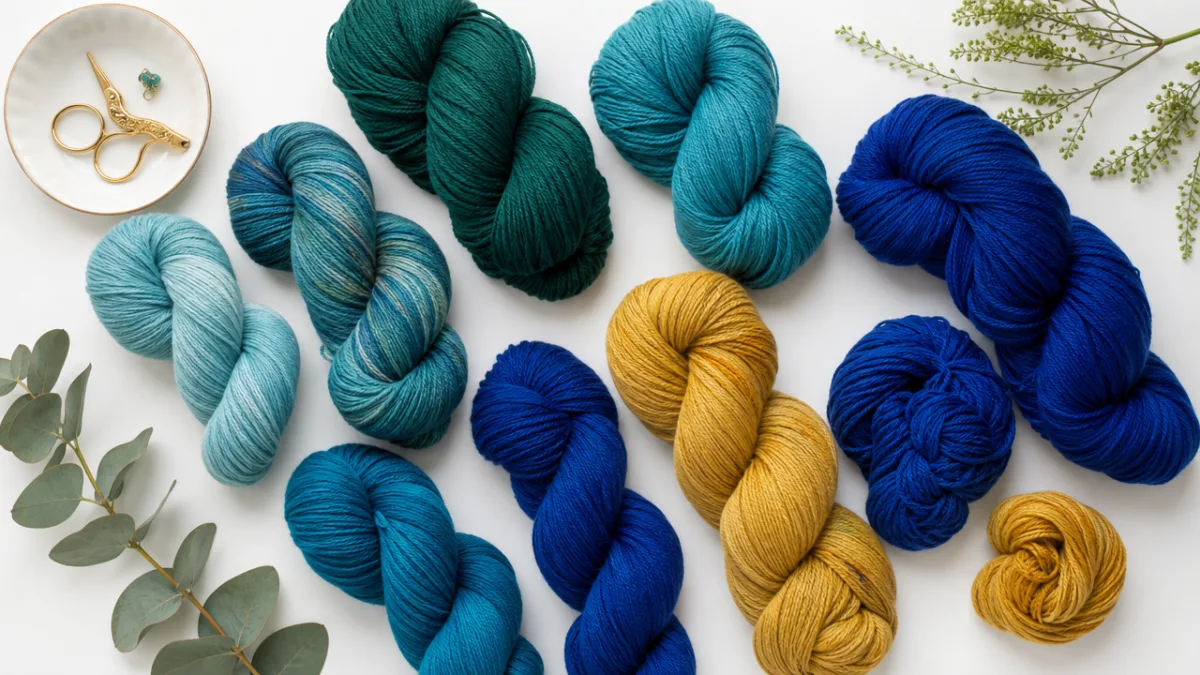
Getting the colors right is perhaps the most critical step in creating a peacock crochet piece that truly captures the magic of the bird. The classic peacock palette revolves around deep teal, rich cobalt blue, vivid emerald green, warm gold, and touches of deep purple or violet. These colors work together to create the iridescent, jewel-like quality that makes peacock plumage so visually stunning. When selecting yarns, look for shades that have some depth and variation to them, as flat, single-tone colors can sometimes fall short of capturing that characteristic shimmer.
One of the most exciting yarn options for peacock projects is variegated or self-striping yarn. Many yarn manufacturers produce colorways specifically designed to evoke peacock feathers, blending the signature blues, greens, and golds in gradients that flow naturally as you crochet. Brands like Lion Brand, Paintbox, and Scheepjes offer excellent options in this category, and independent dyers on platforms like Etsy frequently produce stunning hand-dyed skeins that are perfectly suited to peacock-themed work. Choosing a variegated yarn can dramatically reduce the complexity of color-changing while still achieving a richly layered final result.
For crafters who prefer complete control over their color placement, working with multiple solid-colored yarns is another excellent approach. This method requires more attention to detail and involves more yarn management, but it allows you to precisely replicate the specific color zones of a peacock feather, from the dark base through the graduated blues and greens to the brilliant gold of the eyespot. When working this way, it helps to sketch out your color plan before you begin, either on paper or using a digital tool, so that you have a clear roadmap to follow as your project develops.
Specialty Yarns and Embellishments for Extra Shimmer
To truly capture the iridescent quality of peacock feathers, many crochet artists turn to specialty yarns that incorporate metallic or shimmery fibers. Yarns that blend wool or acrylic with a small percentage of lurex or metallic thread can catch the light in ways that standard yarns simply cannot, adding an authentic shimmer that elevates the finished piece considerably. These yarns are widely available from both large retailers and independent dyers, and they are often affordable enough to use as accent colors even when your main yarn is a standard worsted weight.
Beyond specialty yarns, embellishments offer another route to achieving that peacock sparkle. Seed beads, sequins, and small gemstones can be incorporated into crochet projects either during the crocheting process or added afterward using a tapestry needle. Many peacock crochet patterns, particularly those designed as wall art or decorative pieces, suggest the addition of beads at the center of the eyespot motifs to simulate the brilliant gold of real peacock feathers. Even a modest scattering of beads can transform a nice finished piece into something truly spectacular.
Popular Free Peacock Crochet Pattern Types
The range of free peacock crochet patterns available online is truly impressive, spanning nearly every category of crochet project imaginable. Among the most popular are peacock feather motifs, which can be worked individually and then joined together to create larger pieces like blankets, shawls, or wall hangings. These feather motifs typically involve a combination of chain stitches, double crochets, and shell stitches to create the fan-like shape, with carefully planned color changes to build up the characteristic layers of a real peacock feather.
Amigurumi peacocks represent another beloved category, particularly popular with crafters who enjoy making plush toys and decorative figures. A well-designed amigurumi peacock pattern will guide you through constructing the rounded body, the distinctive crested head, and the magnificent tail separately before assembling them into the finished bird. These projects tend to be wonderfully forgiving for intermediate crafters because small imperfections in the individual pieces become invisible once everything is joined and stuffed. The finished amigurumi peacock makes an exceptional gift or home decoration that invariably draws compliments.
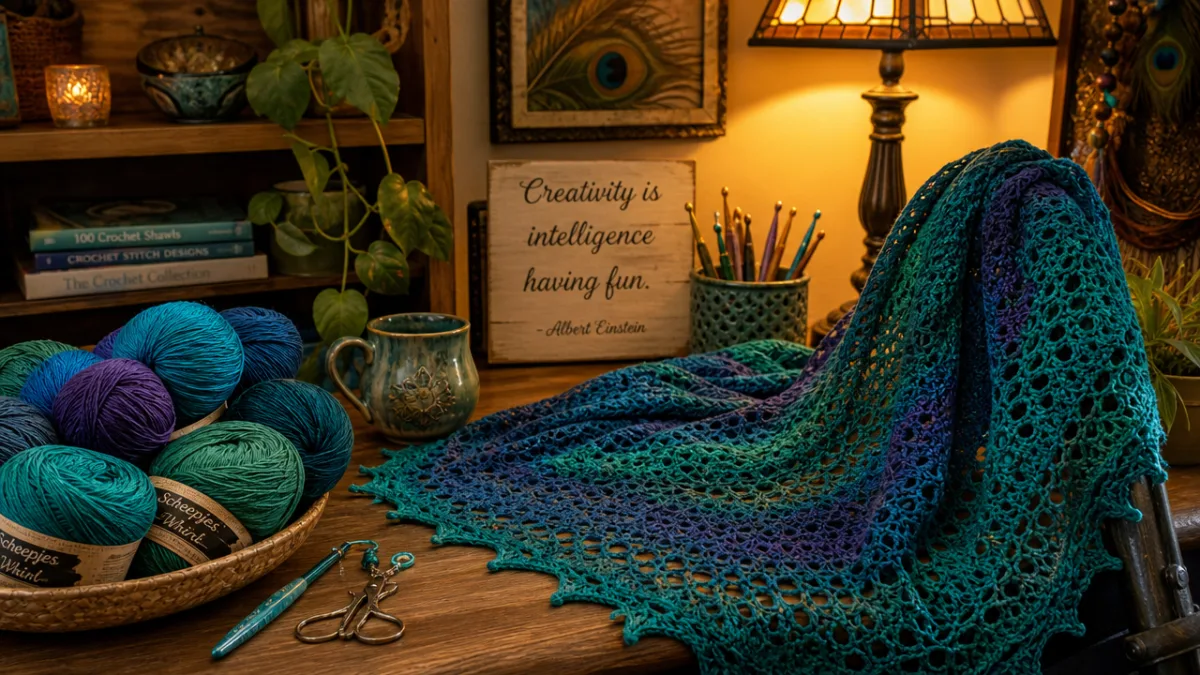
Wearable peacock crochet patterns are perhaps the most wearable wearable category of all, offering shawls, wraps, and cardigans that incorporate peacock feather motifs or color schemes. A peacock feather shawl, for example, might feature a repeating fan stitch pattern worked in graduated teal and blue tones, creating a garment that is as functional as it is beautiful. These wearable pieces allow you to carry the elegance of the peacock with you wherever you go, and because many of the best patterns are available for free, creating a stunning wardrobe addition need not be expensive.
Beginner-Friendly Peacock Projects to Start With
If you are new to crochet or new to peacock-themed projects, starting with a simpler pattern is a wise approach that will build your confidence and skills before you tackle more complex work. A single peacock feather bookmark is an excellent first project, requiring only basic stitches and a small amount of yarn in two or three colors. These tiny projects can be completed in an evening, give you practice with the color changes and stitch combinations common in peacock patterns, and result in a charming finished item that makes a lovely handmade gift.
Peacock coasters or small decorative squares are another wonderful starting point. Many free patterns for these items are designed with clear, step-by-step instructions that guide beginners through each row or round with confidence-building detail. Working a set of matching coasters allows you to practice the same techniques repeatedly, which accelerates your learning considerably. By the time you complete a set of four or six coasters, you will have developed a feel for the stitches involved that will serve you well when you graduate to larger, more ambitious peacock projects.
A simple peacock-colored granny square project is also a fantastic entry point for beginners. While not strictly a peacock pattern in the representational sense, a collection of granny squares worked in peacock-inspired colors — teal, cobalt, emerald, gold — can be joined into a stunning blanket or bag that captures the spirit of the bird beautifully. Granny squares are one of the most foundational crochet skills, and using them as a vehicle for peacock color exploration is a clever way to build skills while creating something genuinely gorgeous.
Advanced Peacock Crochet Techniques and Patterns
For experienced crocheters ready to challenge themselves, the world of advanced peacock patterns offers some truly spectacular possibilities. Tapestry crochet, also known as mosaic or intarsia crochet, allows crafters to create detailed pictorial images within their fabric, including lifelike peacock portraits with carefully rendered feathers, eyespots, and shading. This technique involves carrying multiple yarn colors simultaneously and working stitches over the non-working yarns to encase them in the fabric, resulting in a dense, reversible textile with a complex picture on its surface.
Bruges lace crochet is another advanced technique that lends itself beautifully to peacock feather designs. This Belgian lace tradition involves crocheting narrow strips of fabric and then joining them in curved, flowing arrangements to create intricate lace patterns. A peacock feather Bruges lace piece can be extraordinarily delicate and beautiful, resembling fine antique needlework while being entirely achievable with a crochet hook and fine thread. Free Bruges lace peacock patterns do exist online, though they require patience, precision, and a willingness to work with very fine crochet thread.
Three-dimensional crochet techniques open up another realm of possibility for the advanced peacock crafter. Using wire armatures, strategic increases and decreases, and carefully planned construction sequences, skilled crocheters can create sculptural peacock figures with realistic proportions and poseable features. Some patterns even incorporate moving parts, such as tail fans that can be spread or folded. These sculptural pieces represent the pinnacle of peacock crochet artistry, and while they demand significant skill and patience, the finished results are breathtaking works of fiber art that blur the line between craft and fine art.
Mastering the Peacock Feather Eyespot Motif
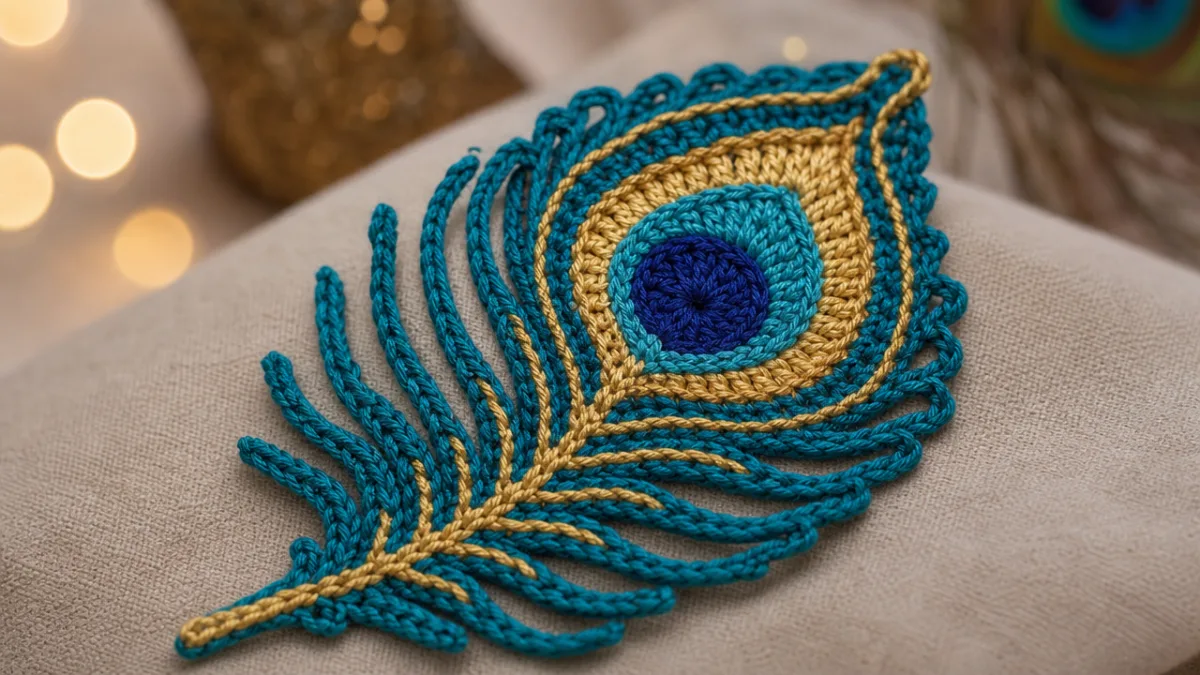
The eyespot, that iconic circular marking at the tip of each peacock tail feather, is arguably the most important and recognizable element of any peacock crochet pattern. Mastering the eyespot motif unlocks the ability to create convincing peacock feathers in almost any format, from individual decorative pieces to repeating patterns across larger projects. Most eyespot motifs are worked in the round, beginning with a small magic ring and building outward through concentric circles of different colors to replicate the layered rings of dark blue, teal, and gold found in the real feather’s eye.
The key to a successful eyespot is careful color management and attention to stitch count. Each color ring should be worked to a consistent height and width, and the transitions between colors should be smooth and even. Many patterns suggest using a slip stitch join at the end of each round to prevent the characteristic jog that can appear when changing colors in the round with a standing stitch. Practicing the eyespot motif separately before incorporating it into a larger pattern is highly recommended, as this allows you to troubleshoot any tension or color management issues in isolation before they affect a more complex project.
Once you have mastered the basic eyespot motif, you can begin experimenting with variations that add dimension and realism to your peacock feathers. Adding a French knot or a small bead at the very center of the eye creates a pupil effect that adds striking visual depth. Working the outer ring of the eyespot in a slightly textured stitch, such as a popcorn or bobble stitch, adds a three-dimensional quality that mimics the fluffy texture of real peacock feathers. These small refinements can elevate a competent peacock crochet piece to one that genuinely captures the extraordinary beauty of the living bird.
Tips for Finding and Adapting Free Peacock Crochet Patterns
The internet is home to an abundance of free peacock crochet patterns, but knowing where to look and how to evaluate pattern quality can save you considerable time and frustration. Ravelry remains the gold standard for free crochet pattern discovery, offering a searchable database of hundreds of thousands of patterns including a substantial collection of peacock-themed designs. Filtering by skill level, yarn weight, and project type allows you to quickly narrow down options to those that suit your current abilities and available materials. Reading the project notes left by other crafters who have completed a pattern is invaluable for identifying potential difficulties before you begin.
Pinterest is another powerful tool for peacock crochet pattern discovery, offering visually curated collections that make it easy to spot appealing designs at a glance. Many pins link directly to free pattern downloads on crafters’ personal blogs or on dedicated crochet pattern sites like AllFreeCrochet, Crochet.com, and Lion Brand’s free pattern library. When following a pattern link from Pinterest, always check the date of publication, as older patterns occasionally contain errors that have been identified and corrected in more recent versions. A quick search for the pattern name alongside the word “errata” can reveal whether any corrections have been published.
Adapting free patterns to better suit your vision is a skill that grows with experience, and peacock crochet patterns offer plenty of opportunities to practice creative modification. Changing the color scheme of an existing pattern is the simplest form of adaptation, allowing you to shift from the classic peacock palette to a more unusual interpretation in pinks and purples, for example, or in monochromatic blues. Resizing a pattern by changing yarn weight and hook size is another straightforward modification, allowing a shawl pattern to become a full blanket or a large decorative piece to become a smaller accent cushion.
Building Your Peacock Crochet Community
One of the great joys of crochet as a hobby is the warm, generous community of crafters that surrounds it, and the peacock crochet niche is no exception. Online communities on platforms like Facebook, Reddit’s r/crochet, and Instagram are filled with crafters who share their peacock-inspired projects, offer help with pattern questions, and celebrate each other’s achievements. Joining one or more of these communities can dramatically accelerate your learning, as experienced members are typically very willing to share tips, troubleshoot problems, and recommend their favorite free patterns.
Participating in crochet-alongs, known as CALs, is another wonderful way to build community while working on peacock projects. Many talented pattern designers organize CALs around peacock-themed designs, releasing sections of a larger pattern over a set period of weeks and encouraging participants to work through the project together. The shared experience of working the same pattern simultaneously with crafters from around the world, troubleshooting together and celebrating milestones as a group, adds a social dimension to the solitary act of crocheting that many people find deeply enriching and motivating.
Sharing your own finished peacock crochet projects online is both a generous contribution to the community and a valuable practice for your own development as a crafter. Documenting your process, noting any modifications you made to patterns, and being honest about the challenges you encountered helps other crafters who will come after you with the same project. Over time, building a portfolio of finished peacock pieces can also open doors to collaboration with pattern designers, yarn companies, and craft publications who are always looking for talented makers to feature and partner with.
Caring for Your Finished Peacock Crochet Pieces
After investing significant time and creativity into a peacock crochet project, proper care is essential to ensure that your finished piece remains beautiful for years to come. The care requirements for your item will depend largely on the fiber content of the yarns you used, so keeping a note of this information when you begin a project is a wise habit to develop. Wool and wool-blend items generally require hand washing in cool water with a gentle wool wash, while most acrylic yarns are machine washable on a gentle cycle, making them a more practical choice for items that will see frequent use or laundering.
Blocking is a finishing technique that can dramatically improve the appearance of a completed crochet piece, and it is particularly valuable for peacock projects where the precision of feather shapes and eyespot motifs benefits from careful shaping. Wet blocking involves thoroughly wetting the finished piece, gently pressing out excess water without wringing, and then pinning the item to a blocking mat in the desired final shape while it dries. For lace pieces or delicate shawls, blocking can open up the stitches beautifully and reveal the full elegance of the pattern in ways that an unblocked piece simply cannot match.
Storing and displaying your peacock crochet pieces thoughtfully will also help to preserve their beauty and integrity over time. Items that incorporate metallic or specialty yarns should be stored away from direct sunlight to prevent the metallic fibers from tarnishing or the colors from fading. Decorative pieces like wall hangings benefit from being taken down and gently washed periodically to remove dust accumulation. For amigurumi and sculptural pieces, storing them in a breathable fabric bag rather than a sealed plastic container helps to prevent moisture buildup that could damage the fibers over time. With proper care, a well-made peacock crochet piece can remain a cherished part of your home for decades.
Gifting and Selling Your Peacock Crochet Creations
Peacock crochet pieces make extraordinarily thoughtful and impressive gifts for a wide range of occasions and recipients. The universal appeal of peacock imagery means that a beautifully made peacock shawl, wall hanging, or decorative figure is likely to be treasured by almost anyone who receives it. When gifting a handmade item, including a small care card with washing and storage instructions is a lovely touch that helps the recipient keep the item in excellent condition, and it also subtly communicates the care and skill that went into its creation.
For crafters interested in selling their peacock crochet work, platforms like Etsy, local craft fairs, and artisan markets offer excellent venues. Peacock-themed items tend to be strong sellers because they appeal to a broad audience, photograph beautifully for online listings, and are perceived as luxurious and artistic by buyers who may not fully appreciate the time investment involved in creating them. When pricing handmade crochet items for sale, it is important to account for the full cost of materials, a fair hourly rate for your time, and any platform fees or packaging costs, as underpricing handmade work is a common mistake that ultimately undervalues the entire craft.
Some crafters choose to create and sell their own peacock crochet patterns rather than or in addition to selling finished items. If you have developed a unique peacock feather stitch combination, an original amigurumi design, or a novel approach to replicating peacock plumage in yarn, turning that innovation into a well-written, clearly photographed pattern is a wonderful way to share your creativity with the wider crochet community while generating a modest income. Many successful pattern designers began by offering a few free patterns to build an audience before transitioning to selling premium designs, a strategy that remains highly effective in today’s crochet market.








What do you think?
It is nice to know your opinion. Leave a comment.