










“`html
Moonlight: The Eternal Dance of Light, Mystery, and Human Imagination
The Science Behind Moonlight
Moonlight is one of those things that feels magical, even once you know the truth behind it — that the Moon doesn’t actually produce any light of its own. Every bit of that soft, silvery glow you see on a clear night is sunlight that bounced off the lunar surface and traveled roughly 384,400 kilometers through space to reach you. Simple enough in theory, but the way it interacts with our atmosphere and the world around us gets genuinely fascinating in a hurry.
One of the most surprising things about moonlight is how different it actually is from sunlight — and not just in terms of brightness. Sunlight is intense, broad-spectrum, and direct. Moonlight is roughly 400,000 times dimmer and has a cool, quiet quality all its own. That’s also why everything looks gray and silver under a full moon rather than full color. It’s not that the Moon drains the world of color — it’s that your eyes literally switch modes. In low light, your rod cells take over from your cone cells, and rods are much better at seeing in the dark but essentially can’t distinguish color. You’re not imagining the muted tones; that’s just your visual system doing its job.
The Moon’s surface itself matters more than you might expect. The lunar albedo — basically how reflective the surface is — averages around 12 percent, which means the Moon is actually pretty dark as far as rocks go, bouncing back only about one-eighth of the sunlight that hits it. Different regions reflect different amounts: the dark volcanic plains called maria absorb more light, while the pale, cratered highlands bounce back more. And during a full moon, when the Sun, Earth, and Moon line up just right, something called opposition surge kicks in and makes the Moon appear noticeably brighter than the geometry alone would suggest. Scientists are still actively working out exactly why.
The Moon’s Phases and Their Luminous Gifts
The lunar cycle runs about 29.5 days and moves through eight distinct phases, each one transforming how the night feels. It goes from the total darkness of a new moon through the thin crescent, the half-lit quarters, the swelling gibbous phases, and finally the full moon — and for most of human history, these transitions weren’t just pretty to look at. They were the calendar. They told people when to plant, when to harvest, when to hold festivals, when to travel. The Moon was genuinely useful long before electricity made all of that irrelevant.
The full moon gets most of the attention, and for good reason — on a clear night it’s bright enough to read by and throws actual sharp shadows across open ground. Ancient communities built entire event cycles around it. But the crescent moon has its own quiet power. A thin arc of light hanging in a dark sky has captivated artists and poets and architects from virtually every culture on Earth. And if you look closely at a crescent moon, you can often see the rest of the lunar disk glowing faintly — that’s earthshine, sunlight reflecting off Earth’s surface and lighting up the Moon’s night side just enough to be visible. It’s one of those small details that makes you feel the scale of the whole system.
Each full moon throughout the year has its own folk name, most of them rooted in the practical rhythms of life on the land. Here’s a handful of the most evocative ones:
- January — Wolf Moon: Named for the wolves that would howl outside villages during the deep cold of midwinter, when food was scarce and they were bold enough to come close.
- April — Pink Moon: Not actually pink — it’s named after wild ground phlox, one of the first widespread flowers to bloom each spring.
- August — Sturgeon Moon: A nod to the large freshwater fish that were easiest to catch in the Great Lakes region during this time of year.
- October — Hunter’s Moon: The bright moon that gave hunters enough light to pursue game well into the night, helping communities stock up food before winter hit.
- December — Cold Moon: Honest and to the point — just a name for the long, dark nights at the end of the year.
What these names really show is that moonlight wasn’t just something people admired — it was something they depended on. The Moon was a working part of everyday life before it became a romantic symbol. Knowing that history gives the light a little more weight when you look up at it now.
Moonlight in Art, Poetry, and Human Culture
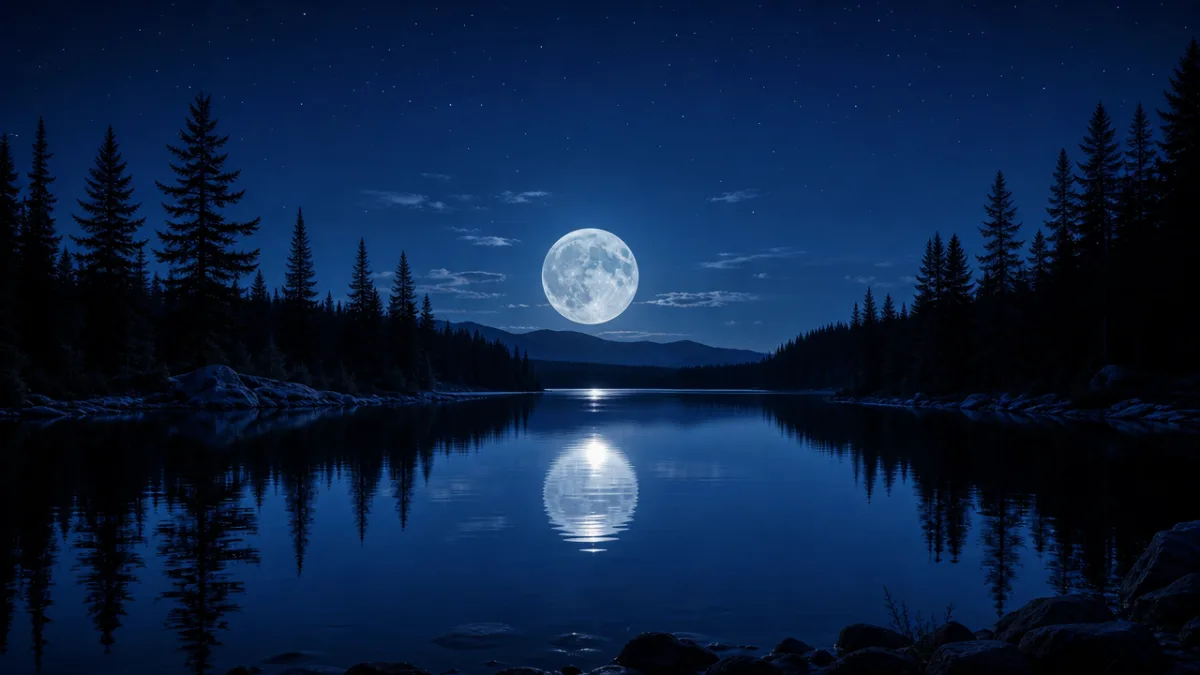
It’s hard to think of any natural phenomenon that has inspired more art, music, and literature than moonlight. From the earliest cave paintings — some of which may have been made or viewed by the combined light of fire and moon — through the Renaissance, the Romantic era, and right up to modern photography, moonlight has been both subject and symbol. There’s something about its ambiguity, the way it transforms things, that makes it uniquely powerful for carrying emotional weight.
Literature keeps coming back to moonlight when it wants to signal mystery, heightened emotion, or the sense of being on the edge of something. Shakespeare leaned on it constantly — in A Midsummer Night’s Dream, the Moon practically runs the show, presiding over the enchanted forest and all the irrational longing that comes with it. The Romantic poets were borderline obsessed: Keats, Shelley, Byron all used moonlight as a direct channel for melancholy and transcendence. Keats wrote of “the Moon, the Moon herself is there, full, lustrous, calm,” and there’s something about that line that still catches — the awe mixed with intimacy, the feeling of being seen by something indifferent and beautiful at once.
Music has been just as taken with it. Beethoven’s Piano Sonata No. 14 — the Moonlight Sonata — is one of the most recognized pieces of classical music ever written, and that opening movement really does capture something hard to name about how moonlight looks moving across still water. Debussy’s Clair de Lune has become practically synonymous with nocturnal beauty. And across jazz, blues, and folk traditions worldwide, moonlight shows up again and again as shorthand for romance, heartbreak, wandering, and longing. The Moon might genuinely be the most musically productive subject in nature.
Painters have wrestled with the specific technical problem of rendering moonlight for centuries. Caspar David Friedrich essentially built his career on nocturnal landscapes where tiny human figures stand before vast, luminous skies. The Hudson River School brought moonlit American wilderness to public attention, framing the landscape as something almost sacred. Today, photographers continue the tradition — using long exposures to reveal moonlit scenes in detail the naked eye can’t quite catch, uncovering a world that lives somewhere between day and night.
Moonlight’s Profound Effects on the Natural World
Here’s where things get really interesting. Moonlight isn’t just a beautiful backdrop — it has measurable, documented effects on an enormous range of biological processes. Animals have evolved sophisticated relationships with lunar light cycles, using the Moon’s phases to time reproduction, migration, feeding, and social behavior. We’re still in the early stages of understanding how far this goes, and new discoveries keep pushing the boundaries of what scientists thought was possible.
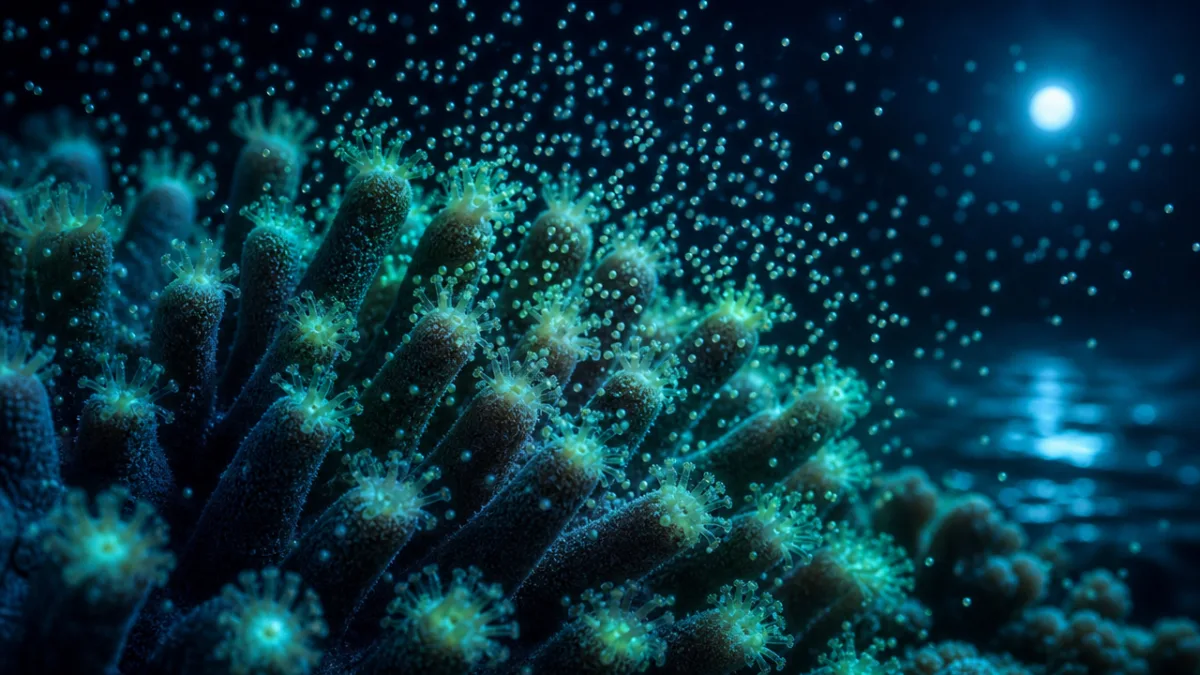
One of the most dramatic examples happens on coral reefs. Many coral species synchronize their spawning to specific lunar phases — releasing eggs and sperm simultaneously on nights shortly after the full moon. This isn’t a localized event; it happens across vast reef systems spanning hundreds of kilometers, triggered by a combination of moonlight intensity and water temperature. The result is an annual explosion of life that can turn the ocean white with biological material. Marine biologists can predict it months in advance using a lunar calendar. That’s how precise it is.
The list of species and behaviors shaped by moonlight is genuinely surprising in its range. Some of the better documented examples include:
- Sea turtle hatchlings using the brighter horizon over the open ocean — partly lit by moonlight — to find their way from the nest to the water.
- Nocturnal insects adjusting their flight activity by moon phase, with many species more active during new moon periods when the dark provides better cover from predators.
- Lions in Africa hunting more intensively during the dark nights that follow a full moon, when prey animals have let their guard down after several bright, high-alert nights.
- Dung beetles navigating by the Milky Way and the full moon — the only insects confirmed to use celestial navigation at night.
- Certain fish species spawning on lunar cycles so reliable that traditional fishing communities have used them to predict optimal catch times for generations.
Even plants get into it. Lunar gardening practices have been around forever and were mostly dismissed as superstition — but they’ve attracted enough scientific attention to reveal some real basis for the intuition. Water movement through plant tissues appears to follow lunar gravitational rhythms in some species, and seed germination rates in controlled experiments sometimes correlate with lunar cycles. The full picture is still contested, but the evidence is accumulating that the Moon has shaped Earth’s biosphere far more deeply than most people realize.
The Psychology of Moonlight: Why It Moves Us
There’s something about being in moonlight that shifts how you feel and think — and that’s not just poetic intuition. Psychologists, anthropologists, and neuroscientists have spent considerable effort trying to understand why moonlit environments produce such a consistent emotional response across cultures. What they’re finding suggests that our deep reaction to moonlight isn’t sentimental or arbitrary. It’s biological. It’s a legacy of millions of years of living under open skies.
Sleep research has turned up some striking findings. The lunar cycle correlates with measurable changes in human sleep patterns even in people in controlled lab environments who can’t see the Moon or know the date. Around the full moon, participants took longer to fall asleep, slept for shorter total periods, and showed reduced deep sleep. Melatonin — the hormone that cues sleep onset — appears sensitive to light in ways that moonlight may still partially trigger, even filtered through walls and windows. Our bodies, it turns out, haven’t fully adapted to artificial lighting and still carry ancient sensitivities to natural light rhythms.
The romantic and melancholic feelings that moonlight tends to evoke may also have neurological roots. The cool color temperature, the soft directionality, the way familiar environments become slightly strange and mysterious — all of it creates conditions that encourage introspection, emotional openness, and a kind of loosening of the ordinary, task-oriented mind. That’s also the mental state associated with creativity, processing deep emotion, and openness to new ideas. Which might explain why so much emotionally charged art gets made under, or at least inspired by, the Moon.
Across cultures, the Moon has been linked to the feminine, to cycles, to intuition and the unconscious. Jungian psychology built lunar symbolism into its framework as an archetype of cyclical transformation. You don’t have to accept every part of that framework to notice that it’s pointing at something real in collective human experience: moonlight invites a different quality of attention than sunlight. It softens edges — physical and psychological. It slows you down, makes you more willing to sit with uncertainty, and quietly amplifies whatever you were already feeling. There’s a reason people keep stepping outside to look at it.
Moonlight in the Modern World: Loss, Longing, and Preservation
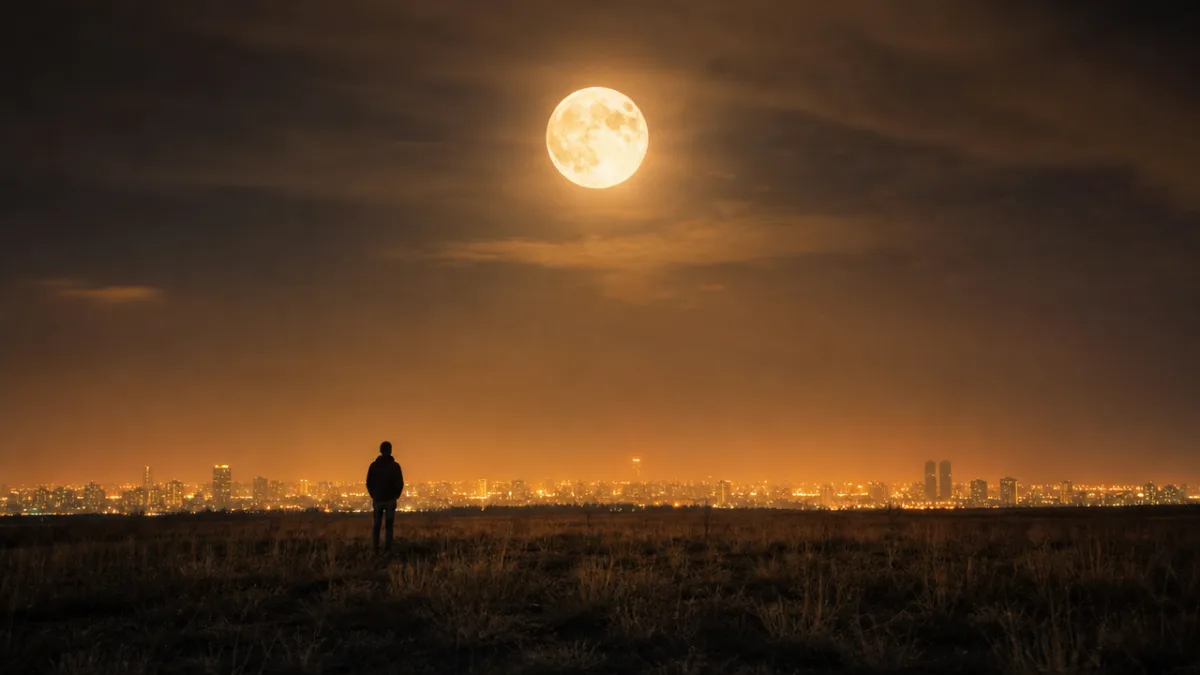
The electric light revolution changed humanity’s relationship with moonlight in ways we’ve barely begun to reckon with. For the first time in history, people could push back the dark indefinitely, and the social and economic benefits were real and enormous. But one of the quieter losses in that transformation was the near-total disappearance of true moonlit darkness from most people’s lived experience. Today, more than 80 percent of the world’s population lives under light-polluted skies that significantly wash out or overwhelm natural nighttime illumination.
Light pollution doesn’t just block our view of the stars — it actively disrupts the ecological processes that natural darkness and moonlight have governed for millions of years. The insects, birds, sea turtles, and coral reefs we talked about earlier all exist in environments that are now bathed in artificial light, throwing off the evolved rhythms they depend on. Scientists studying light pollution have documented real cascading effects: disrupted insect migration, disoriented sea turtle hatchlings, altered predator-prey dynamics, impaired coral spawning near coastal cities. The Moon’s ecological role, refined over hundreds of millions of years of evolution, is being quietly undermined by uncontrolled artificial light.
The dark sky preservation movement has grown substantially in response. It brings together astronomers, ecologists, and a broader coalition of people making the case that humans have a genuine need for real darkness and natural night. International Dark Sky Places certification now designates parks, reserves, and communities that commit to limiting light pollution, and these places have become significant destinations for people seeking something that used to be universal but has become genuinely rare: a truly dark sky with the full moon moving through it unobstructed.
There’s a philosophical dimension to this loss that’s worth sitting with. Every generation of humans throughout history shared an intimate, daily relationship with moonlight that shaped how they understood time, nature, beauty, and their place in the world. That shared experience has quietly faded, and it’s hard to quantify what’s been lost but easy to feel. People who visit dark sky reserves and see a full moon casting actual shadows across a landscape for the first time often describe the experience as overwhelming — not just beautiful, but deeply familiar, like reconnecting with something the body remembers even when the mind had forgotten it entirely.
Getting that relationship back doesn’t require any dramatic break from modern life. It really just takes stepping outside on a clear night, letting your eyes adjust, and paying attention to a quality of light that has accompanied human life since before our species first looked up and started wondering. Moonlight has guided hunters and lovers, inspired symphonies and paintings, synchronized coral spawning and bird migration, and hovered at the edge of human sleep for our entire history. It’s still up there above the city glow, patient and unchanged — just waiting to be noticed again.
“`








What do you think?
It is nice to know your opinion. Leave a comment.