










Yellow Anise Tree (Illicium parviflorum): A Southern Garden Treasure Worth Knowing
Introduction to Illicium parviflorum
The Yellow Anise Tree, known botanically as Illicium parviflorum, is one of those quietly remarkable native shrubs that garden enthusiasts often overlook in favor of showier specimens — yet those who plant it rarely regret the decision. Native to the southeastern United States, particularly the swampy, shaded woodlands of Florida and Georgia, this evergreen shrub carries a distinctive aromatic character that sets it apart from almost everything else you might grow in a Southern garden. Its foliage releases a rich, anise-like fragrance when crushed, making it a sensory delight as well as a practical landscape plant.
Pender Pines Garden Center, known for its thoughtfully curated selection of native and regionally appropriate plants, has long championed Illicium parviflorum as a go-to choice for homeowners and landscapers seeking low-maintenance beauty. The plant’s adaptability to challenging conditions — shade, wet soils, drought once established — makes it an exceptionally versatile addition to any garden plan. Whether you are designing a rain garden, a woodland buffer, or a privacy screen, Yellow Anise Tree consistently delivers performance that exceeds its modest reputation.
Understanding this plant begins with appreciating its origins. Illicium parviflorum belongs to the family Schisandraceae and is closely related to the star anise of culinary fame, though it is not the same plant and its parts are not edible — in fact, they are mildly toxic. Its small, inconspicuous yellowish flowers bloom in spring and are followed by star-shaped seed capsules that give the genus its name, from the Latin word for “alluring.” The plant’s quiet elegance lies not in dramatic blooms but in its rich, glossy foliage and year-round structural presence in the garden.
Botanical Characteristics and Identifying Features
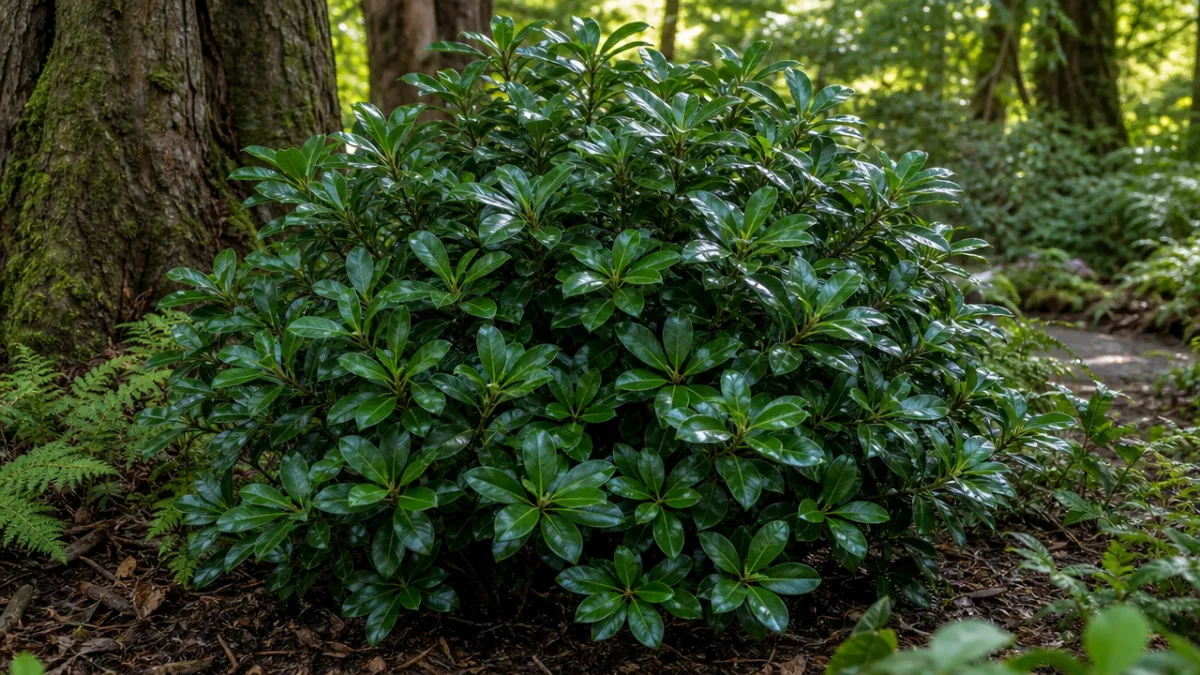
Illicium parviflorum is a medium to large evergreen shrub that typically reaches heights of eight to fifteen feet under garden conditions, though specimens in ideal natural habitats can grow considerably taller over many decades. The plant has a naturally upright, multi-stemmed growth habit that lends itself beautifully to use as a tall screen or informal hedge. Its branching structure is dense and slightly layered, giving the shrub a full, lush appearance throughout all four seasons — a quality that is especially prized in winter landscapes where many other plants have gone bare.
The leaves of Yellow Anise Tree are among its most distinctive features. They are elliptical to lance-shaped, measuring roughly two to five inches in length, with a smooth, glossy surface that reflects light in a pleasing way. The foliage is a deep, rich green on top and slightly paler beneath, and when held up to sunlight, the leaf margins appear almost translucent. Most importantly, any bruising or crushing of the leaf tissue immediately releases that characteristic anise or licorice-like fragrance — a volatile oil compound related to anethole — that gives the plant its common name and makes it instantly recognizable to those familiar with it.
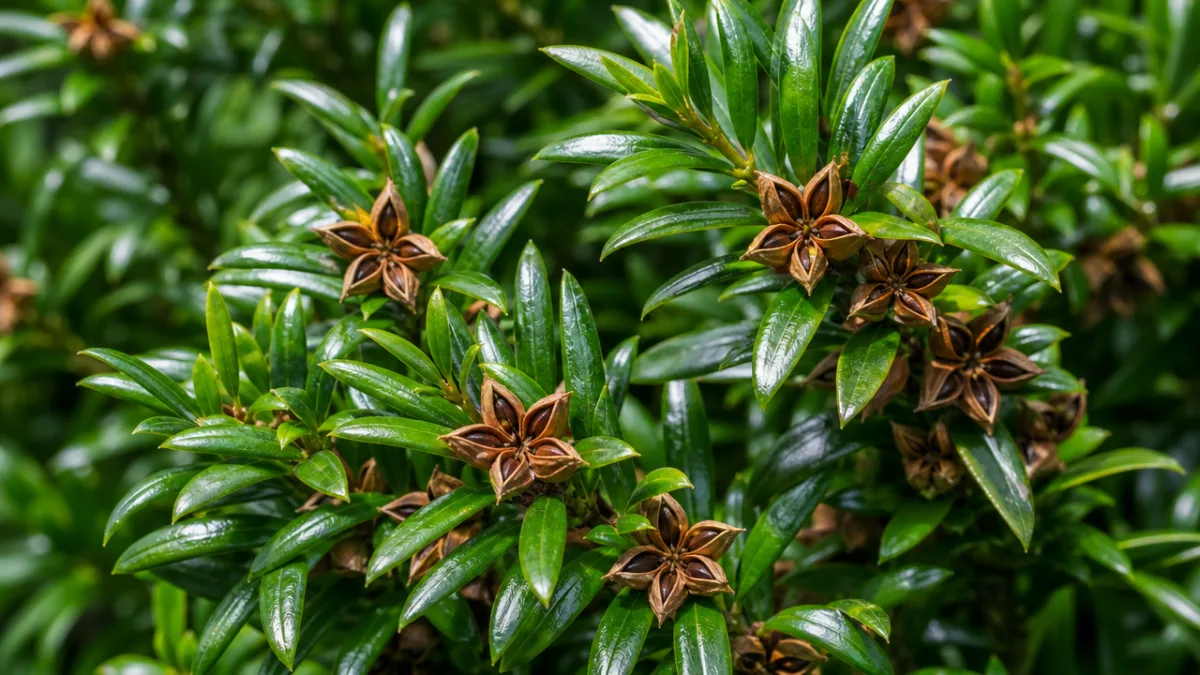
The flowers of Illicium parviflorum are small and somewhat inconspicuous compared to many ornamental shrubs, which is perhaps why the plant is sometimes underestimated in terms of visual interest. Blooming in late spring to early summer, the flowers are yellowish-green to pale yellow and measure only about half an inch across, with multiple narrow petals arranged in a star-like pattern. While they are not showy in the traditional sense, they are charming up close and produce a subtle fragrance. The seed capsules that follow are architecturally interesting — star-shaped and woody — providing textural interest into the fall and winter months.
- Height: typically 8–15 feet at maturity, occasionally taller in ideal conditions
- Spread: 6–10 feet wide, forming a dense, multi-stemmed clump
- Foliage: evergreen, glossy, deep green, strongly aromatic when bruised
- Flowers: small, yellowish-green, star-shaped, appearing late spring to early summer
- Fruit: distinctive woody star-shaped capsules, mildly toxic if ingested
- Bark: gray-brown and slightly aromatic on young stems
Growing Conditions and Cultural Requirements
One of the most compelling reasons to plant Illicium parviflorum is its remarkable tolerance for difficult growing conditions that would defeat many other landscape shrubs. It is native to wetland margins and the edges of swampy woodlands in northern and central Florida and southern Georgia, which means it has evolved to handle both waterlogged soils and periodic drought. This dual tolerance makes it an invaluable choice for sites with variable moisture levels, such as low-lying areas in a yard that collect rainwater seasonally but dry out between rain events.
In terms of light requirements, Yellow Anise Tree is a true shade-tolerant plant — one of the most shade-tolerant large shrubs available for Southern gardens. It performs admirably in full shade, dappled shade, and partial sun, though it tends to grow most vigorously with some morning sun and afternoon protection. In deep shade, the plant may grow more slowly and develop a slightly more open habit, but it remains healthy and attractive. This makes it an excellent choice for planting under mature tree canopies where many other shrubs struggle to thrive, filling in spaces that would otherwise remain bare and uninteresting.
Soil preferences are notably flexible for this species. Illicium parviflorum adapts well to a wide range of soil types, from rich organic loams to sandy soils to heavy clay, though it does best in moist, acidic, well-drained to moderately wet conditions. A soil pH in the range of 5.0 to 6.5 is ideal, aligning with the naturally acidic conditions of the Southeastern coastal plain. Amending planting sites with organic matter such as pine bark, leaf mold, or compost will encourage strong establishment, particularly in drier or heavier soils. Once established — typically after one to two growing seasons — the plant develops impressive drought tolerance for a woodland native.
Hardiness is another strong suit of this underutilized native. Illicium parviflorum is rated for USDA hardiness zones 6b through 10, making it suitable for a wide swath of the American South, from the mid-Atlantic states through the Deep South and into subtropical Florida. It handles moderate freezes without significant damage, though prolonged hard freezes below about 0°F may cause foliage damage. In the warmer portions of its range, it remains lush and evergreen year-round, while in the colder edges of its hardiness range it may experience some winter bronzing of the foliage that resolves as temperatures warm in spring.
Landscape Uses and Design Applications
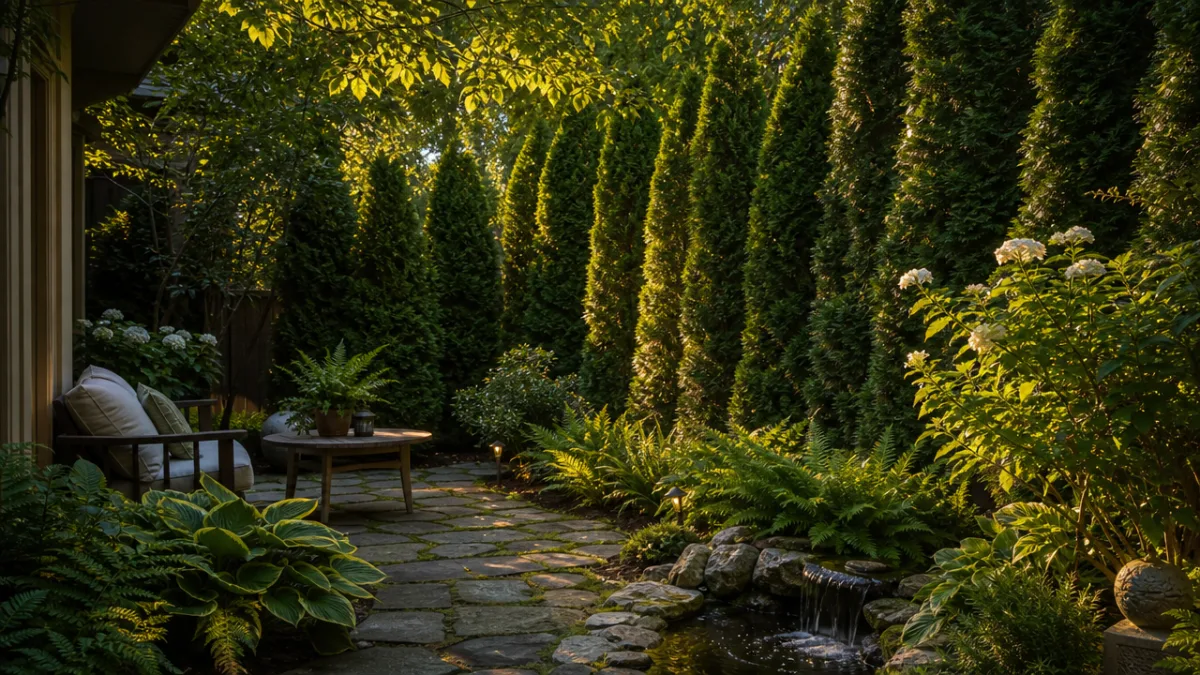
The design applications for Yellow Anise Tree in the landscape are genuinely broad, and this versatility is central to its appeal among professional landscapers and home gardeners alike. Its dense, upright habit and large mature size make it a natural choice for privacy screens and informal hedges, particularly in situations where a fast-growing, low-maintenance evergreen barrier is needed. Unlike many fast-growing screening plants — Leyland cypress, for instance — Illicium parviflorum rarely develops disease problems or structural weaknesses, making it a more reliable long-term investment.
In naturalistic and woodland garden designs, Yellow Anise Tree excels as a backdrop plant or understory accent. Its glossy dark foliage creates a rich, textured contrast against lighter-colored plants, flowering perennials, and ornamental grasses. It pairs beautifully with native ferns such as cinnamon fern and royal fern, with Louisiana iris and native azaleas, and with other shade-loving shrubs like oakleaf hydrangea and native viburnums. These combinations allow gardeners to create layered, ecologically rich plantings that support local wildlife while requiring minimal maintenance once established.
Rain garden and stormwater management designs represent another excellent opportunity for Illicium parviflorum. Given its tolerance for both wet feet and periodic drought, it is ideally suited to the fluctuating moisture conditions characteristic of engineered rain gardens and bioswales. Planting it at the edges of these water management features, where drainage occurs more slowly than in surrounding upland areas, allows it to perform beautifully while helping to stabilize soil, filter runoff, and absorb excess moisture. Few shrubs of comparable size offer this kind of hydrological flexibility alongside such reliable ornamental performance.
- Privacy screens and tall informal hedges along property boundaries
- Woodland and shade garden understory plantings
- Rain gardens and bioswale edges for stormwater management
- Foundation plantings on the shady sides of buildings
- Accent plants at the back of mixed shrub borders
- Buffer plantings along woodland edges and stream banks
- Deer-resistant mass plantings in rural or suburban settings
One frequently overlooked application for Yellow Anise Tree is as a deer-resistant planting in landscapes where deer pressure is significant. The aromatic oils present in the foliage make the plant strongly unappealing to deer, and it is rarely browsed even in areas with heavy deer populations. This characteristic, combined with its general pest and disease resistance, means that once planted, Illicium parviflorum tends to simply grow and thrive without requiring the protective measures or replacement cycles that plague more palatable landscape shrubs. For rural properties and suburban gardens at the woodland edge, this quality alone can justify the selection.
Planting and Establishment at Pender Pines
Pender Pines Garden Center has developed considerable expertise in sourcing and growing Illicium parviflorum, recognizing its value as a regionally appropriate native shrub that performs exceptionally well in the Carolinas and surrounding states. The center typically carries container-grown specimens in a range of sizes, from small starter plants in one-gallon containers to established specimens in five- and seven-gallon containers ready to make an immediate landscape impact. Shopping for Yellow Anise Tree at a reputable native plant nursery like Pender Pines ensures that you are getting plants that have been propagated from appropriate regional stock rather than specimens grown outside their natural climate range.
Planting technique plays an important role in the long-term success of Illicium parviflorum, as it does with any landscape shrub, but the process is straightforward for anyone with basic gardening experience. The planting hole should be dug two to three times as wide as the root ball but no deeper — a common mistake with container shrubs is planting too deeply, which can lead to crown rot and slow establishment. Backfilling with a mixture of native soil and organic amendment, then watering thoroughly and applying a generous layer of organic mulch two to three inches deep around the base of the plant, will give new installations the best possible start.
Irrigation during the first growing season is the most critical factor in successful establishment of Yellow Anise Tree. While the plant is ultimately quite drought-tolerant once its root system has spread into surrounding soil, newly planted specimens need consistent moisture to develop the deep root structure that enables that eventual independence. A general guideline is to water deeply once or twice per week during the first summer, adjusting based on rainfall and soil type. Sandy soils will require more frequent irrigation than clay-based soils, which retain moisture longer. After the first full growing season, supplemental irrigation can typically be reduced significantly or eliminated entirely.
Pruning, Maintenance, and Long-Term Care
One of the most appealing attributes of Illicium parviflorum from a practical standpoint is its genuinely low maintenance requirements once established in an appropriate site. Unlike many popular landscape shrubs that demand regular shearing, pest management, and soil amendments to look their best, Yellow Anise Tree largely takes care of itself. It does not require formal pruning to maintain an attractive form, as its natural growth habit is neat and well-structured without intervention. For most homeowners and landscape professionals, this translates to real time and cost savings over the life of the planting.
When pruning is desired — for size control, to rejuvenate an older specimen, or to shape the plant for a more formal effect — Yellow Anise Tree responds well to moderate trimming. The best time to prune is in late winter or very early spring, just before the flush of new growth begins. Hard pruning, removing as much as one-third of the plant’s total volume, can be used to rejuvenate an overgrown or leggy specimen, and the plant typically recovers vigorously within one or two growing seasons. For privacy hedges or formal screens, light shearing two to three times during the growing season will maintain a tidier appearance, though many gardeners prefer the more relaxed look of the plant’s natural form.
Fertilization requirements for Illicium parviflorum are modest, reflecting its origins in naturally nutrient-lean Southeastern soils. In most garden settings, an annual application of a balanced, slow-release granular fertilizer in early spring is sufficient to support healthy growth and rich foliage color. In particularly poor or sandy soils, a supplemental application of an acidifying fertilizer formulated for camellias or azaleas can be beneficial, as it simultaneously addresses both nutrient needs and pH maintenance. Avoid over-fertilizing with high-nitrogen products, which can promote excessive vegetative growth at the expense of the plant’s naturally dense, compact habit.
- Select an appropriate site with shade to partial sun and moist, acidic soil before purchasing.
- Dig a wide, shallow planting hole and avoid planting the root crown below grade.
- Water deeply and consistently during the first growing season to encourage root establishment.
- Apply two to three inches of organic mulch around the base to conserve moisture and moderate soil temperature.
- Prune in late winter if size control or shaping is needed, removing no more than one-third of the plant at once.
- Apply a balanced, slow-release fertilizer once per year in early spring to support vigorous growth.
- Monitor for scale insects and treat with horticultural oil if populations become significant.
Pest and disease problems are refreshingly rare with Illicium parviflorum. The plant’s aromatic oils appear to deter many common insect pests, and it is seldom troubled by the fungal diseases that plague other broadleaf evergreens such as gardenias and camellias. Occasional infestations of scale insects have been reported on plants growing in particularly warm, humid conditions with poor air circulation, but these are manageable with a dormant oil spray applied in late winter. Root rot can be an issue if plants are placed in poorly drained sites where water stands for extended periods, but this is easily avoided through proper site selection from the outset.
Ecological Value and Native Plant Significance
Beyond its ornamental and practical qualities as a landscape plant, Illicium parviflorum plays a meaningful ecological role in the native plant communities of the Southeastern United States. As a native species, it has co-evolved over millennia with the insects, birds, and other wildlife of the region, forming relationships and providing resources that non-native plants simply cannot replicate. Planting native shrubs like Yellow Anise Tree in home and commercial landscapes is increasingly recognized by ecologists and conservation organizations as one of the most impactful steps that individual gardeners and property owners can take to support regional biodiversity.
While Yellow Anise Tree’s flowers are small and somewhat inconspicuous, they do attract native bees and other pollinators during their spring bloom period. The dense, evergreen foliage provides important year-round cover for songbirds and small mammals, offering shelter from predators and weather in all seasons. In areas where native woodland has been fragmented or replaced by conventional landscaping, plantings of native shrubs like Illicium parviflorum can serve as critical habitat patches that help wildlife move through the landscape, maintain population connectivity, and access resources that may be scarce in heavily developed areas.
The conservation significance of Illicium parviflorum extends to the plant itself. While not currently listed as threatened or endangered, Yellow Anise Tree’s natural habitat — the wetland margins and moist hammocks of the Southeastern coastal plain — has been significantly reduced by development, drainage, and land conversion over the past century. Supporting native plant nurseries like Pender Pines Garden Center that propagate and sell species like Illicium parviflorum helps maintain the horticulture supply chain for native plants, creating economic incentives for their preservation and cultivation. Every plant purchased and grown in a home garden represents a small but meaningful act of regional ecological stewardship.
For gardeners interested in pursuing a more ecological approach to landscape design, Illicium parviflorum is an ideal starting point precisely because it asks so little of its caretakers while giving so much in return. Its requirements align naturally with the principles of sustainable landscaping — reduced irrigation, no pesticide dependence, minimal fertilization, and integration into the local food web. Whether your goal is to create a wildlife-friendly backyard, reduce your maintenance burden, or simply grow a beautiful, resilient shrub that belongs in the Southeastern landscape, Yellow Anise Tree from Pender Pines Garden Center is a choice you can feel confident about for years to come.








What do you think?
It is nice to know your opinion. Leave a comment.