










Lavatera Barnsley Baby: The Complete Guide to Growing Tree Mallow in Your Garden
Introduction to Lavatera Barnsley Baby
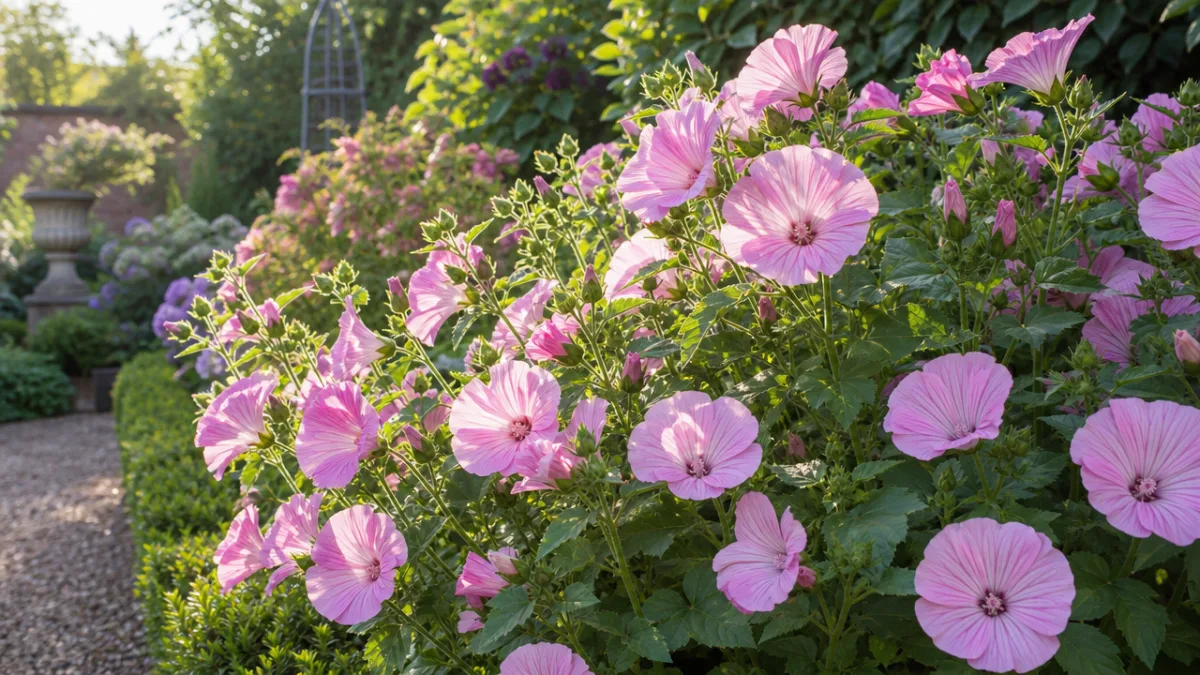
Lavatera Barnsley Baby, commonly known as Tree Mallow, is one of the most beloved flowering shrubs in contemporary British and European gardens. With its delicate pale pink blooms adorned with deeper rose-pink veining, this compact cultivar has captured the hearts of gardeners who want big visual impact without overwhelming their outdoor spaces. Originally developed as a more restrained version of the classic Lavatera Barnsley, the Barnsley Baby offers the same stunning floral display in a tidy, manageable form that suits modern garden styles perfectly.
The plant belongs to the Malvaceae family and is closely related to hibiscus, hollyhock, and even okra — a fact that becomes apparent when you examine the distinctive trumpet-shaped flowers up close. Each bloom features five overlapping petals in a soft blush white to pale pink, radiating from a central column of stamens that gives the flower its characteristic mallow structure. The flowers are produced in such abundance throughout the growing season that the plant rarely seems to pause for breath, making it an extraordinary value addition to any garden border or container planting scheme.
When purchased in 9 cm pots, Lavatera Barnsley Baby arrives as a young, well-rooted plant ready to be established in its permanent position. These compact starter pots are ideal because they allow the plant to develop a strong root system without transplant shock, and the smaller root ball settles into new soil quickly and efficiently. Buying three plants at once, as is common with this variety, gives you the opportunity to create a beautiful drift of colour or stagger them across a border for a naturalistic, cottage garden feel that looks entirely intentional and professionally designed.
Understanding the Growing Conditions and Requirements
Lavatera Barnsley Baby thrives in a position that receives full sun for the majority of the day. At least six hours of direct sunlight is recommended to encourage the prolific flowering that makes this shrub so desirable. In shadier conditions, the plant will still grow, but flowering will be noticeably reduced and the stems may become etiolated and leggy as they reach toward available light. Choosing the sunniest available spot in your garden — perhaps against a south-facing fence or wall — will yield the most spectacular results and keep the plant in robust health year after year.
Soil conditions are equally important for this Mediterranean-origin plant. Lavatera prefers well-drained soil that is not overly rich in nutrients. Paradoxically, growing this shrub in soil that is too fertile can actually encourage excessive leafy growth at the expense of flowers, so avoid heavily amended beds or those that have recently received large quantities of rich compost or manure. Sandy or loamy soils suit it well, and if your garden has heavy clay, it is worth either improving drainage with grit and organic matter or considering raising the planting area slightly to prevent waterlogging, particularly during winter months.
Hardiness is a consideration worth understanding before planting. Lavatera Barnsley Baby is rated as moderately hardy, generally tolerating temperatures down to around minus five degrees Celsius, though sustained hard frosts can cause significant damage or kill plants outright. In colder regions of the UK and Northern Europe, providing a protective mulch of bark or straw around the base during late autumn will help insulate the roots through the coldest months. In coastal and more southerly gardens, the plant typically performs as a long-lived shrub, but in inland areas it may behave more like a short-lived perennial that needs replacing every few years.
Planting Your Lavatera Barnsley Baby
The optimal time to plant your Lavatera Barnsley Baby from 9 cm pots is during spring, once the risk of hard frosts has passed and the soil has begun to warm. Late April through to early June represents the ideal planting window in most temperate climates. Planting during this period gives the young shrub an entire growing season to establish itself, develop a deep and extensive root system, and build the strength it will need to survive its first winter. Autumn planting is also possible in milder areas, though you should be prepared to offer some additional protection if temperatures drop sharply before the plant has fully settled in.
Preparing the planting hole correctly sets your Lavatera up for long-term success. Dig a hole that is approximately twice the width of the 9 cm pot but no deeper than the root ball itself — planting too deeply can cause the stem to rot at the base. Before placing the plant in the hole, water the pot thoroughly and allow it to drain for at least thirty minutes. This ensures the roots are well hydrated and the root ball holds together cleanly when you remove the pot, minimising disturbance to the fine feeder roots that will drive early establishment growth.
When you have positioned the plant in the hole and backfilled with the original excavated soil — perhaps mixed with a small amount of horticultural grit to improve drainage — firm the soil gently but firmly around the root ball to eliminate air pockets. Water in thoroughly with a full watering can and apply a light mulch of bark chippings around the base, keeping it clear of the main stem to prevent rot. If you are planting a group of three Barnsley Baby plants, space them approximately sixty to seventy-five centimetres apart. This gives each plant room to develop its natural rounded habit while allowing the group to knit together into a cohesive planting as they mature over two to three seasons.
Pruning, Maintenance, and Long-Term Care
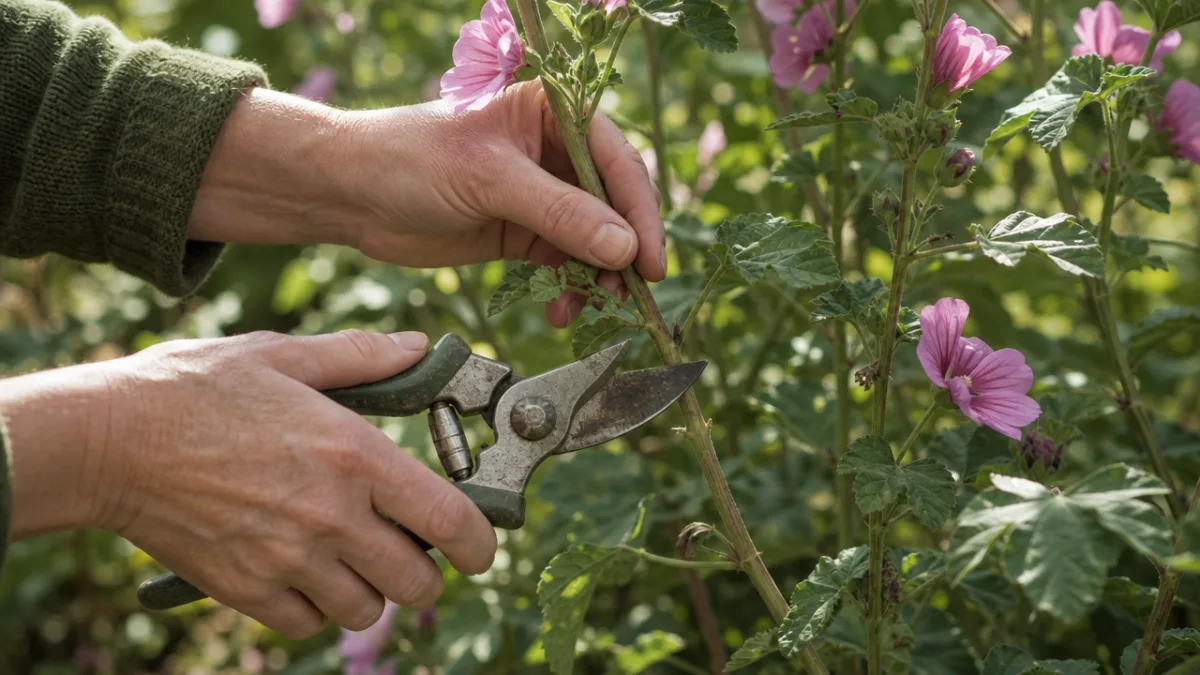
One of the most important aspects of keeping Lavatera Barnsley Baby healthy and productive is understanding how and when to prune it. Unlike many flowering shrubs that respond to light annual tidying, Lavatera benefits from a more substantial annual cut-back that keeps the plant compact, encourages the production of vigorous new flowering growth, and prevents the woody, open structure that can develop if the plant is left unchecked. Without regular pruning, older Lavatera plants tend to become top-heavy and hollow at the centre, reducing both their aesthetic appeal and their overall vigour.
The timing of this annual pruning is crucial. The general guidance for Lavatera is to cut back in spring, once the worst of the frosts have passed but before significant new growth has begun. Cutting back too early in winter exposes fresh cut stems to hard frost, which can cause dieback that works its way further down into the stem than you would want. A useful rule of thumb is to wait until you can see the first signs of new buds breaking along the lower stems — this signals that the plant is ready to respond energetically to pruning. Cut each stem back by approximately two thirds of its length, aiming for a clean cut just above an outward-facing bud.
Beyond the annual prune, Lavatera Barnsley Baby requires relatively little maintenance to perform well. Deadheading spent flowers during the growing season encourages the production of new buds and extends the flowering display, though the plant is sufficiently free-flowering that this is more of a refinement than a strict necessity. Feeding is best kept light — a balanced slow-release granular fertiliser applied once in spring is generally sufficient. Avoid high-nitrogen liquid feeds, which push lush leafy growth at the cost of flowers. Watering during prolonged dry spells in the first season after planting is important, but established plants are notably drought tolerant and rarely need supplemental irrigation in temperate climates.
- Spring pruning: Cut back by two thirds once new buds are visible on lower stems, promoting compact, vigorous regrowth.
- Deadheading: Remove spent blooms regularly through summer and autumn to maximise the continuous flowering display.
- Feeding: Apply a single balanced slow-release fertiliser in spring; avoid high-nitrogen formulations that reduce flowering.
- Watering: Water regularly during the first season to support establishment; established plants are largely drought tolerant.
- Winter protection: In cold regions, mulch the root zone with bark or straw in late autumn to insulate against hard frosts.
Design Ideas and Garden Combinations
Lavatera Barnsley Baby is an exceptionally versatile shrub when it comes to garden design, and its soft colouring makes it one of the easiest plants to work with in a mixed border scheme. The pale blush-pink of the flowers complements an enormous range of other plants, from the deep purples and blues of salvias, catmint, and agapanthus to the warm yellows and oranges of rudbeckias and heleniums. Because the Barnsley Baby flowers continuously from early summer well into autumn, it provides a reliable structural backdrop against which other plants can take their seasonal turns in the spotlight without the whole composition ever feeling empty or unfinished.
In a cottage garden setting, Lavatera Barnsley Baby feels entirely at home growing alongside traditional favourites such as roses, foxgloves, and delphiniums. The informality of its habit — slightly arching stems carrying clusters of papery blooms — suits the relaxed, abundant aesthetic that defines the cottage style. Pairing it with Rosa Ballerina, another soft-pink repeat-flowering shrub of similar scale, creates a harmonious combination that blooms in sympathy throughout the season. Adding alliums for a late spring display before the Lavatera reaches its peak, and then allowing hardy geraniums to weave around its feet during summer, builds a planting that is interesting across multiple months without requiring constant replanting.
For those working with smaller spaces, Lavatera Barnsley Baby can be grown successfully in large containers, provided these are at least forty centimetres in diameter and have adequate drainage holes. Use a loam-based compost such as John Innes No. 3, which provides the weight and structure that the plant needs for stability as it grows, and mix in a proportion of horticultural grit to ensure the free drainage that Lavatera demands. Container-grown specimens will need more frequent watering and an annual top-dressing of fresh compost, but the reward is a spectacular flowering shrub that can be positioned strategically on a terrace or patio to exactly where its colour is needed most in your outdoor design scheme.
- Pair with blue and purple salvias for a classic cottage border contrast that highlights the softness of the pink blooms.
- Combine with Rosa Ballerina or other soft-pink shrub roses for a harmonious, season-long flowering partnership.
- Use three plants spaced across a border to create a visual rhythm that ties together a mixed planting design.
- Grow in large containers on a patio or terrace, using loam-based compost mixed with horticultural grit for ideal drainage.
- Plant alongside silver-leaved plants such as artemisia or stachys to make the pink flowers appear even more luminous.
Pests, Diseases, and Common Problems
Lavatera Barnsley Baby is generally a robust and trouble-free shrub, but like all garden plants it has a small number of potential vulnerabilities that gardeners should be aware of. The most significant threat to established plants is Lavatera rust, a fungal disease caused by Puccinia malvacearum that produces distinctive orange-yellow pustules on the undersides of leaves and corresponding pale yellowish spots on the upper leaf surface. While this disease rarely kills plants outright, a severe infection can significantly weaken them, reducing flowering and causing extensive premature leaf drop. The disease spreads most rapidly during warm, humid conditions, so good air circulation around and between plants is an important preventative measure.
Managing Lavatera rust begins with cultural practices. Avoid overhead watering, which creates the wet foliage conditions that the fungal spores require to germinate and spread. Remove and dispose of infected leaves as soon as they are noticed, and never compost them — the spores can survive in compost heaps and reinfect plants the following season. In severe cases, a copper-based fungicide can be used as a protective spray applied to healthy foliage before infection becomes established. Some gardeners find that buying fresh young plants from 9 cm pots every few years, rather than maintaining aging specimens, is the most practical way of avoiding the cumulative build-up of rust in a garden where the disease is a regular problem.
Aside from rust, Lavatera Barnsley Baby occasionally attracts aphids in spring when the soft new growth first emerges. These can usually be dealt with by a strong jet of water from a hose, encouraging natural predators such as ladybirds and lacewings, or applying an insecticidal soap spray if infestations are heavy. Vine weevil can sometimes damage the roots of container-grown specimens, and incorporating biological nematode controls into your container compost in spring and late summer is an effective preventative strategy. Overall, however, this is a plant that rewards its growers generously, asking relatively little in return for its extraordinary season-long floral performance.
Propagation and Buying Tips
Growing your own Lavatera Barnsley Baby from cuttings is a wonderfully satisfying way to increase your stock of this plant and share it with fellow gardening enthusiasts. Softwood cuttings taken in late spring or early summer root readily and quickly, making this one of the easier shrubs to propagate at home. Select vigorous non-flowering shoot tips approximately ten to fifteen centimetres long, remove the lower leaves, and insert into a mix of equal parts perlite and multi-purpose compost in small pots or a seed tray. Cover with a clear polythene tent or place in a propagator to maintain humidity, and keep in a warm bright spot out of direct sun. Roots typically develop within three to four weeks, after which the cuttings can be potted on individually into 9 cm pots — exactly like the ones in which your original plants arrived.
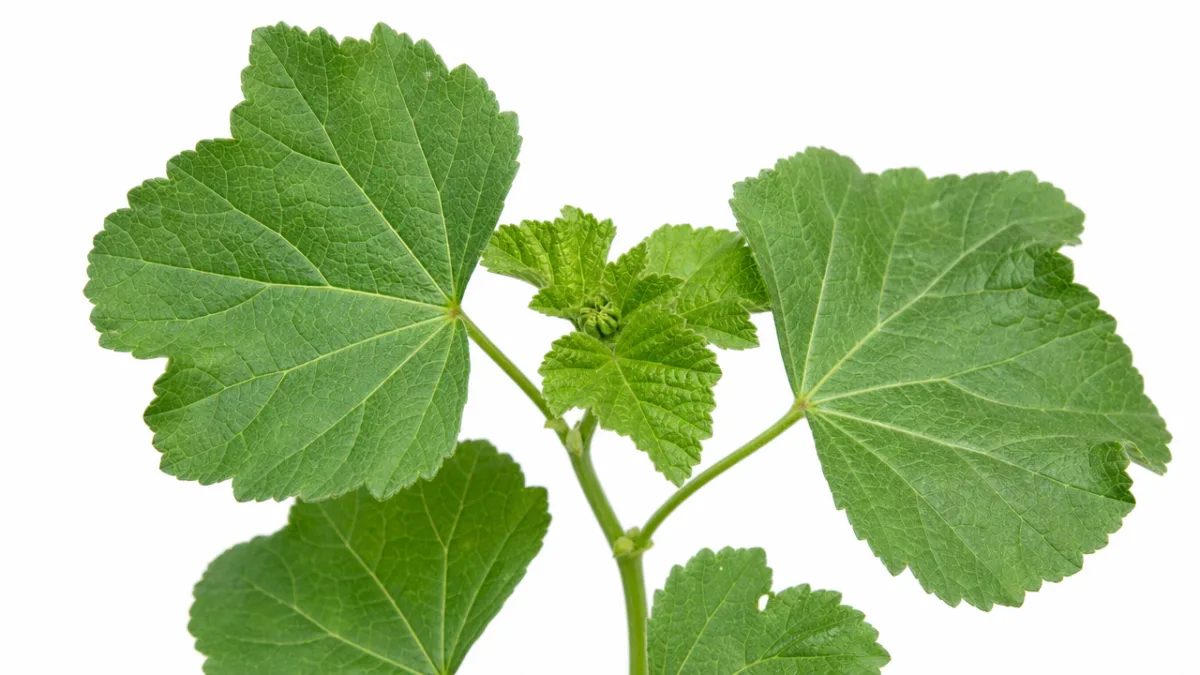
When purchasing Lavatera Barnsley Baby in 9 cm pots, there are several quality indicators worth checking before you buy. Healthy young plants should have a deep green, vigorous foliage colour with no yellowing, spotting, or signs of rust. The root system should be reasonably well developed — if you gently tip the plant out of its pot, you want to see white roots threading through the compost without the plant being so pot-bound that roots are circling densely around the outside. Avoid plants with very pale, thin stems or those that look stressed, wilted, or neglected on the nursery shelf. A well-grown young plant from a reputable nursery or garden centre will establish far more reliably and quickly than a stressed specimen sold cheaply.
Buying in multiples of three, as is typical with this variety when offered in 9 cm pot sets, represents excellent value and sound horticultural thinking. Three plants give you the critical mass needed to create a genuinely impactful display from the very first season, with each plant supporting and complementing its neighbours. As the plants mature and fill out over subsequent years, the group will develop into a substantial flowering feature that becomes one of the most reliably beautiful elements of your garden from late spring through to the first frosts of autumn. Whether you are a first-time gardener discovering the joys of easy flowering shrubs or an experienced plantsperson adding another refined variety to a mature border, Lavatera Barnsley Baby in 9 cm starter pots represents one of the garden centre’s most rewarding and dependable purchases.








What do you think?
It is nice to know your opinion. Leave a comment.