










How to Make Paper Squishies: A Complete Step-by-Step Tutorial
What Are Paper Squishies and Why Make Them?
If you’ve ever squeezed one of those satisfying slow-rise foam squishies and thought “I wish I could make one of these myself,” good news — you totally can. Paper squishies are handmade versions crafted from tissue paper, newspaper, or other soft paper materials stuffed inside a hand-drawn or printed outer shell. They give you that same deeply satisfying squish, and the best part is you get to design them however you want — cute food characters, little animals, whatever feels fun to you.
What makes paper squishies genuinely special isn’t just the price tag (basically free). There’s a real creative satisfaction that comes from designing, coloring, cutting, and assembling each one by hand. Kids and adults both tend to find the process surprisingly calming — it’s one of those crafts where time just kind of disappears. You’re in charge of every detail: the shape, the colors, the little cartoon face, the size. That means every squishy you make is completely one-of-a-kind. A lot of crafters love making them as gifts or party favors, or just lining them up on a shelf because they look adorable.
Paper squishies have also become a go-to activity for classrooms and craft clubs because the supply list is genuinely minimal. Chances are you already have almost everything you need — paper, markers, scissors, tape, and something soft for stuffing. That low barrier to entry makes them perfect for a rainy afternoon, a school holiday, or any time you want to make something you can actually hold and play with when you’re done.
Materials You Will Need
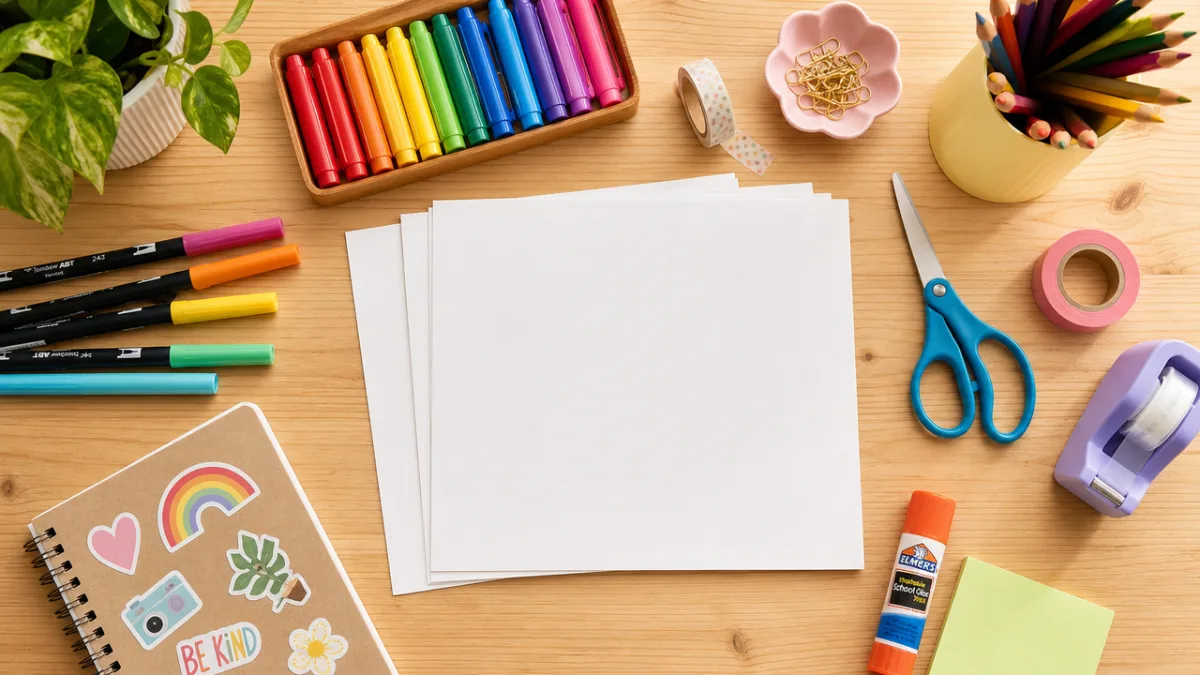
Before you dive in, it’s worth taking a few minutes to get everything together. Working with your supplies already laid out means you won’t lose momentum mid-project hunting for scissors or realizing you’re out of tape. The good news is the list is short, and everything on it is either cheap or already somewhere in your house.
Here’s everything you’ll need from start to finish. Each item has a specific job in the process, so it’s worth knowing what you’re working with before you get started.
- Thick white cardstock or drawing paper — This is the outer shell of your squishy. It needs to be sturdy enough to hold its shape once it’s stuffed.
- Tissue paper or soft scrap paper — Your stuffing. Crumple it loosely to create that soft, squishy interior feel.
- Markers or colored pencils — For decorating and coloring your design before you cut and assemble everything.
- Scissors — A sharp pair makes a real difference when you’re cutting smooth curves or detailed outlines.
- Clear tape or washi tape — This seals the edges of your squishy, with a small gap left open for stuffing.
- A pencil — For sketching out your design before you commit to marker.
- Optional: printed squishy templates — If you’re just starting out, printing a template is a totally valid shortcut rather than drawing freehand.
One optional addition that’s well worth trying: mix a small amount of white glue with water and brush it over the finished exterior using a foam brush. It gives your squishy a subtle sheen and helps the paper layers stick together more firmly, which means it holds up better over time. It’s not required, but if you plan to actually play with your squishies rather than just display them, it makes a noticeable difference.
Designing Your Squishy Shape
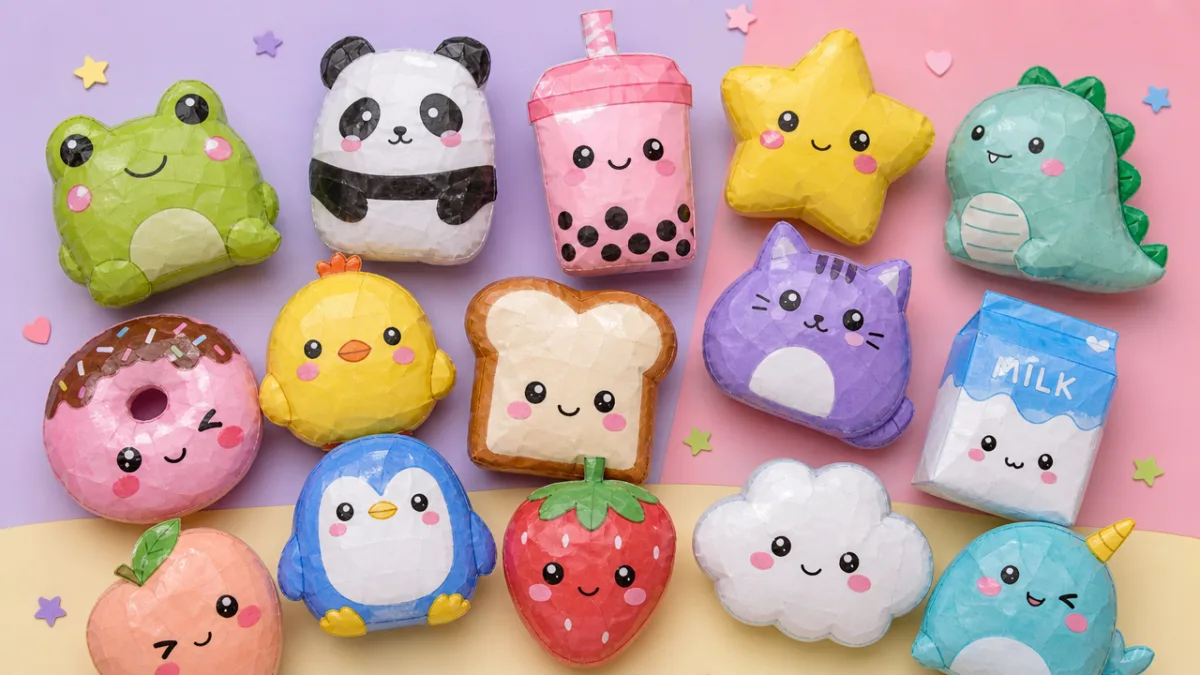
Honestly, the design phase is the most fun part of the whole project. This is where you get to decide exactly what your squishy is going to be. For beginners, simple round or oval shapes are a great starting point — think donuts, strawberries, slices of toast, little cakes, or buns. The smooth, gentle curves are much easier to cut neatly and stuff evenly than something with lots of tiny details or sharp angles. Once you’ve got a few under your belt, you can start attempting animal characters or more complex food scenes.
Start by lightly sketching your shape in pencil onto your cardstock. Make it bigger than you think you need — at least three to four inches across is a good rule of thumb for beginners, because small squishies are genuinely tricky to stuff and seal without tearing. Once you’re happy with the shape, go over the outline firmly with a black marker to create a clean, bold edge. That line will also be your guide when you cut everything out later.
Now for the fun part: color and details. Fill in your design with markers or colored pencils in whatever color scheme feels right to you. A lot of people love adding simple cartoon faces — little dot eyes, a small curved smile, some rosy blush circles on the cheeks — because they instantly give a squishy personality. You can also go wild with the decorative details: sprinkles on a donut, seeds on a strawberry, frosting swirls on a cupcake. The more you put into the design, the more satisfying it feels when the finished squishy is sitting in your hand.
When your front piece is done, flip it face-down onto a fresh sheet of cardstock and trace around the outline to create a matching back piece. The back can be plain, lightly colored, or decorated with a simple pattern — lots of crafters just add a wash of color or a small signature back there. Either way, you need two pieces that match each other closely, because they’ll be taped together to form the shell that holds all your stuffing in place.
Cutting and Preparing Your Pieces
Once both pieces are fully decorated, it’s time to cut. This part rewards patience — especially around curves and any spots with extra detail. Cut just outside your marker line rather than directly on it, so the outline stays visible on your finished squishy. Going slowly here really does pay off, because ragged or uneven edges are easy to spot on the final product and can make it harder to get a clean tape seal around the perimeter.
Try to cut both pieces to the same shape and size as closely as you can. Small variations are totally fine and honestly part of the handmade charm. But if one piece ends up dramatically larger than the other, they won’t line up properly when you go to tape them together, which leads to gaps that let stuffing escape or gives the finished squishy a lumpy, lopsided look. If that happens, just trim down the larger piece before moving on.
While you’ve got your scissors out, go ahead and prep your stuffing. Tear off several sheets of tissue paper — how many depends on the size of your squishy — and loosely crumple each one into a soft, airy little ball. The key word here is loosely. If you pack the tissue paper too tightly, you’ll end up with a squishy that feels stiff and barely compresses. What you want is stuffing that has enough volume to push the shell outward into a nice plump shape, but stays loose enough to gently compress when squeezed and then slowly spring back — just like a real foam squishy would.
Assembling Your Paper Squishy
This is the step where everything comes together, and it’s also the one that calls for the most care. Lay your back piece face-down on your work surface, then place the front piece face-up directly on top of it, lining up the edges as well as you can. Hold the two pieces together and start taping around the edge with clear tape or washi tape, pressing each strip down firmly so it bonds well and won’t peel apart later.
Work your way all the way around the outline, but leave one small gap — about two inches wide — somewhere along the bottom or another less-visible edge. That’s your stuffing opening. It needs to be wide enough to pass crumpled paper through, but not so wide that it compromises the tape seal on either side. The bottom tends to be the best spot since it’s mostly hidden when you’re holding or displaying the squishy.
Now comes the trickiest part: stuffing. Feed your crumpled tissue paper through the opening piece by piece, using the eraser end of a pencil to gently nudge stuffing toward the edges and corners. Be careful here — pressing too hard can tear the shell, but too little stuffing leaves you with a flat, sad-looking squishy that doesn’t spring back when you squeeze it. Add stuffing a bit at a time, pressing gently on the front to test the feel as you go. When it feels plump and soft and bounces back after a squeeze, you’re there. Seal up the opening with tape and you’ve got yourself a paper squishy.
Before you call it done, run your fingers along all the taped edges to check for weak spots. Corners and tight curves are the most likely places for tape to lift or gaps to form, so give those areas a little extra attention. If anything feels loose, lay another strip of tape over it and press it down firmly. Once every edge feels solid, your squishy is structurally finished and ready for any final touches you want to add.
Finishing Touches and Creative Variations
A finished paper squishy is already pretty great, but there are some easy ways to take it further. One of the most popular finishing touches is brushing the exterior with Mod Podge or a similar craft sealant. It gives the surface a glossy, almost plastic-like look that genuinely resembles a store-bought foam squishy, and it also protects the paper from wear with regular handling. Just make sure you let it dry completely before playing with or gifting it.
Another fun direction is making themed sets. Imagine a whole little dessert spread — a slice of cake, a macaron, a donut, a tiny coffee cup — each one individually made and decorated to look like it belongs together. Themed sets make really lovely gifts, especially for kids, and they look charming displayed together on a shelf or nestled in a small basket. Planning a collection also gives you the chance to coordinate colors and styles across all the pieces for a more pulled-together look.
You can also play around with different paper types for different effects. Watercolor paper as the outer shell, painted with actual watercolors instead of markers, creates a soft, blended look with beautiful gradients. Using newspaper or comic book pages as stuffing adds a fun little Easter egg if the squishy ever gets a tear. Kraft paper gives things a rustic, vintage feel, while metallic cardstock is perfect when you want something a little flashier — great for birthday or holiday gifts.
If you want to turn your paper squishy habit into an event, try making a blind bag experience. Wrap each squishy in tissue paper, toss a bunch of different designs into a bag, and let people reach in without looking. It’s a surprisingly exciting little moment, and it works brilliantly for birthday parties, classroom activities, or craft fairs. You can also turn any design into a keychain by punching a small hole near the top before sealing it and threading a keychain ring through. Once you’ve got the basic construction down, the variations are basically endless.
Tips for Success and Common Mistakes to Avoid
Like any craft, paper squishies come with a few beginner traps that are worth knowing about before you start. The most common one is overstuffing. It’s tempting to really pack that thing full, but too much stuffing makes it feel rigid and it won’t compress properly when you squeeze it. Think loosely packed cotton, not a tightly balled-up newspaper. Airy is what you’re going for.
Another frequent issue is paper choice. Too thin and it tears during stuffing or assembly; too thick and it’s hard to cut cleanly and doesn’t flex naturally when squeezed. Standard 80lb cardstock or thick drawing paper is the sweet spot for most projects and is easy to find at any office supply or craft store. Regular printer paper might seem like a convenient substitute, but it’s way too flimsy — skip it for the outer shell.
Here are a few more tips to keep in mind as you get more comfortable with the craft and start taking on bigger or more detailed projects.
- Start with simple shapes — Round and oval designs are much more forgiving when you’re learning. Anything with lots of angles or little protrusions is significantly harder to seal and stuff cleanly.
- Color before cutting — It’s always easier to color flat paper than to try and decorate a fully assembled 3D squishy, so finish all your coloring first.
- Use small pieces of tape — Lots of short strips give you much more control over alignment and create a cleaner result than trying to manage a few long, unwieldy pieces.
- Test your stuffing amount as you go — Add a little, squeeze it, add a little more. Don’t try to stuff it all at once.
- Let coatings dry fully — If you apply any kind of sealant, leave it alone until it’s completely dry. Handling it too soon leads to smudging and fingerprints in your finish.
One last thing worth saying: your first paper squishy probably won’t look exactly the way you pictured it, and that’s completely fine. Every one you make teaches you something — how the paper behaves, how much stuffing is actually enough, what works and what doesn’t. Most people who get into this craft describe their later squishies as dramatically more satisfying than their first, not because they got some secret tip, but just because they kept making them. The process builds up naturally with repetition. So keep going, try new designs, and have fun with it — that’s the whole point.








What do you think?
It is nice to know your opinion. Leave a comment.