










How to Make Beautiful Nature Dragonflies with Maple Seeds (Easy Kids Craft)
The Magic of Nature Crafts: Why Maple Seed Dragonflies Captivate Kids and Adults Alike
There is something genuinely enchanting about transforming a simple object found on the ground into a piece of art that looks like it belongs in a fairy garden. Maple seeds, those spinning helicopter seeds that drift down from trees every autumn, are one of nature’s most overlooked treasures. With their papery, translucent wings and perfectly shaped bodies, they are practically begging to be turned into something whimsical and beautiful. This craft taps into that natural magic in the most delightful way possible.
Nature crafts hold a special place in childhood memory-making because they connect children to the world around them in a tangible, creative way. When a child picks up a maple seed from the pavement and transforms it into a dragonfly with their own hands, they learn to see potential in ordinary things. This is not just a craft lesson — it is a lesson in observation, imagination, and the kind of slow, attentive relationship with nature that children increasingly need in a screen-dominated world. The finished dragonflies are genuinely stunning, and kids feel immense pride in creating something so lifelike from something so simple.
The craft is also wonderfully accessible. Maple seeds, known botanically as samaras, fall in abundance during spring and autumn depending on your tree species, meaning the primary material is free and plentiful for most people in temperate climates. The additional supplies needed are minimal, inexpensive, and likely already sitting in your craft drawer. Whether you are a classroom teacher planning a nature-themed art day, a parent looking for a rainy afternoon activity, or a summer camp counselor in need of a crowd-pleaser, maple seed dragonflies deliver on every front with minimal preparation and maximum reward.
Gathering Your Materials: Everything You Need to Create Maple Seed Dragonflies
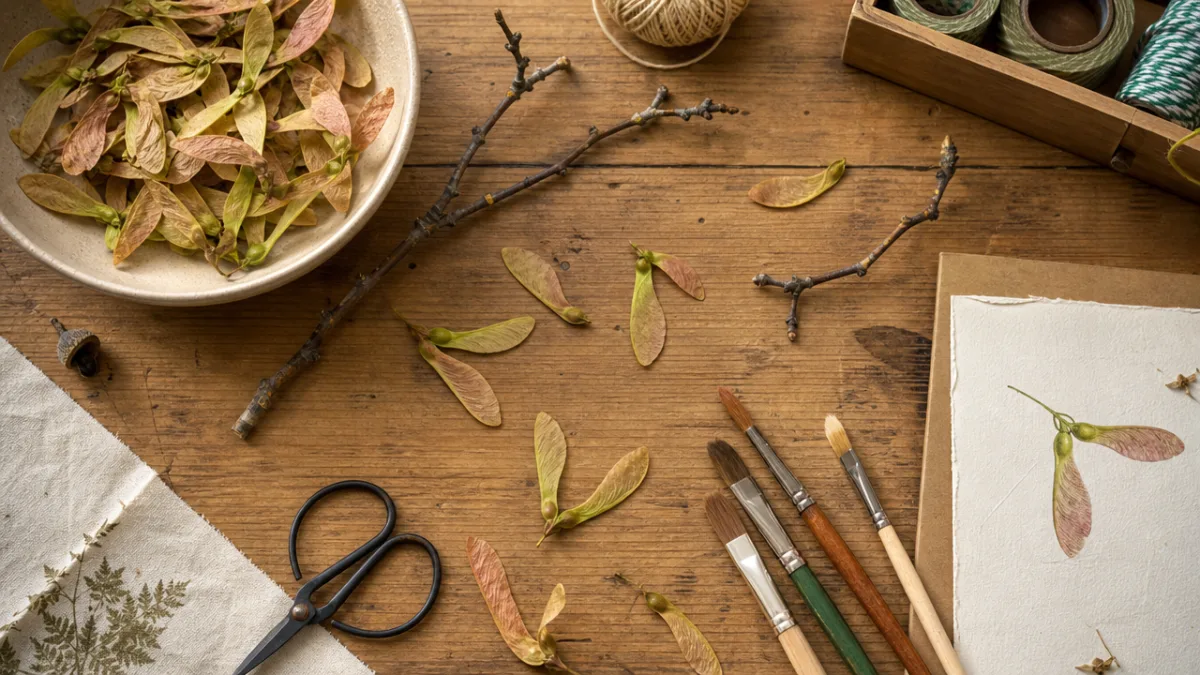
Before you begin crafting, it is worth taking a moment to properly gather and prepare your maple seeds. The ideal seeds for this project are dry and intact, with their papery wings still attached and undamaged. Fresh green seeds can work but tend to curl or warp as they dry, so if you collect them green, spread them out in a single layer on newspaper and allow them to dry naturally for a day or two before beginning the craft. Dried seeds that have turned brown are often the easiest to work with and tend to hold paint and glue most reliably.
For each dragonfly, you will need four maple seeds — two for the upper wings and two slightly smaller ones for the lower wings. If you can find seeds of varying sizes, this actually improves the realism of the finished insect, since real dragonflies have larger hindwings and slightly smaller forewings. Beyond the seeds themselves, gather a thin twig or sturdy dried stem to serve as the dragonfly’s body, craft glue or a low-temperature glue gun for older children and adults, and acrylic or watercolor paints in whatever colors inspire you.
Here is a simple checklist of everything you will need to complete this project:
- Four maple seeds per dragonfly (two larger, two slightly smaller if possible)
- One thin twig or dried stem approximately 3 to 4 inches long
- Craft glue or a low-temperature glue gun (adult supervision required for the glue gun)
- Acrylic or watercolor paints in your choice of colors
- Fine-tipped paintbrushes for detail work
- Clear glitter or iridescent glitter (optional, for a magical shimmery effect on the wings)
- Clear varnish or Mod Podge to seal and protect the finished dragonfly
- Googly eyes or small beads for the dragonfly’s head
- Newspaper or a drop cloth to protect your work surface
One of the joys of this project is that the material-gathering stage is itself an activity. Turn the collection of maple seeds into a nature walk, encouraging children to observe the trees, notice how the seeds spin as they fall, and collect a variety of sizes. This preliminary engagement with the natural world makes the finished craft feel even more personal and meaningful, because the child has a relationship with the materials from the very beginning of the process.
Step-by-Step Instructions: Assembling Your Maple Seed Dragonfly
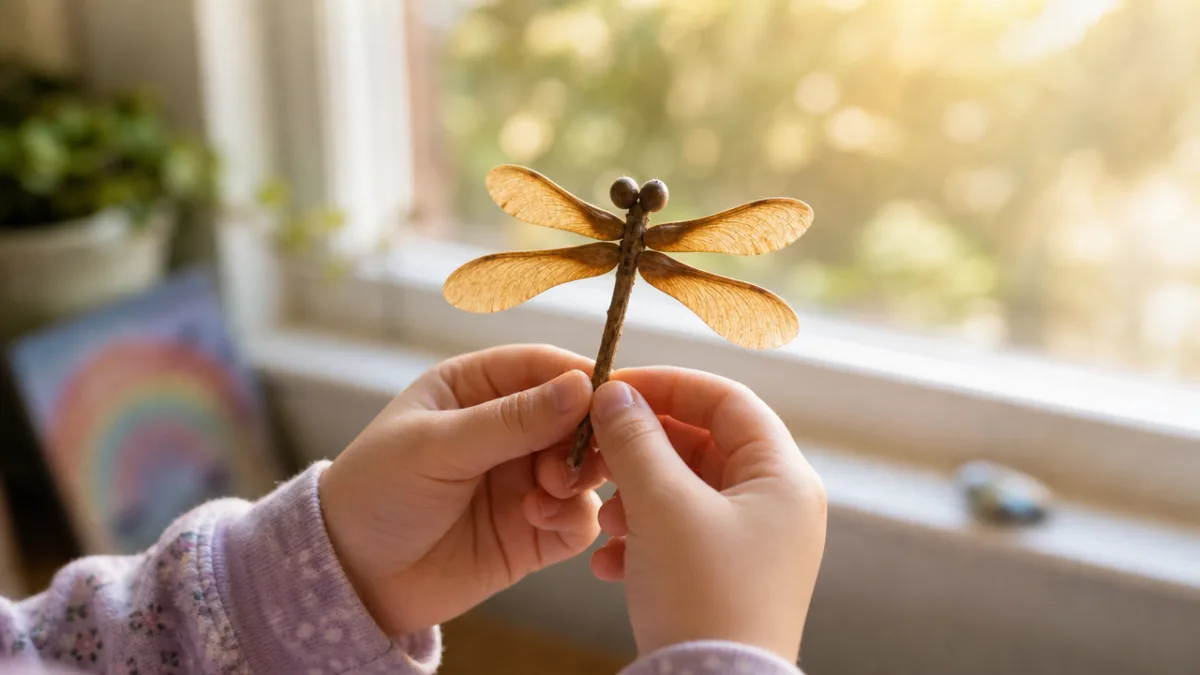
Begin by laying out your four maple seeds and your twig body to plan the composition before any glue is applied. Place the twig in the center and arrange the seeds around it, positioning the two larger seeds as the upper wings extending outward and slightly upward from the upper third of the twig, and the two smaller seeds as the lower wings extending outward and slightly downward from just below that point. Take a moment to look at the arrangement and adjust until it looks balanced and pleasing to you. This planning step is especially valuable for younger children who benefit from visualizing the finished product before committing to glue.
Once you are happy with the arrangement, begin gluing the wings to the twig body one at a time. If using craft glue, apply a generous dot to the base of each seed where it will contact the twig, press firmly, and hold for thirty seconds before moving to the next wing. Work from the upper wings down to avoid disturbing ones you have already placed. If using a glue gun, work quickly since the glue sets fast, and always have an adult manage the glue gun around children. Allow the assembled dragonfly to dry completely — at least twenty to thirty minutes for craft glue, just a few minutes for hot glue — before moving to the painting stage.
Follow these steps in sequence for the best results:
- Lay out and arrange all pieces before gluing to confirm the composition.
- Glue the two upper wings to the top portion of the twig body and allow to set.
- Glue the two lower wings just below the upper wings, angling them slightly downward.
- Attach a small bead or googly eye to the top of the twig to form the head.
- Allow the entire assembled dragonfly to dry completely before painting.
- Paint the body and wings with your chosen colors, working in thin layers.
- Add detail lines on the wings with a fine brush to mimic dragonfly wing veining.
- Sprinkle iridescent glitter onto wet paint or glue for a shimmery wing effect.
- Seal the finished dragonfly with a coat of clear varnish or Mod Podge.
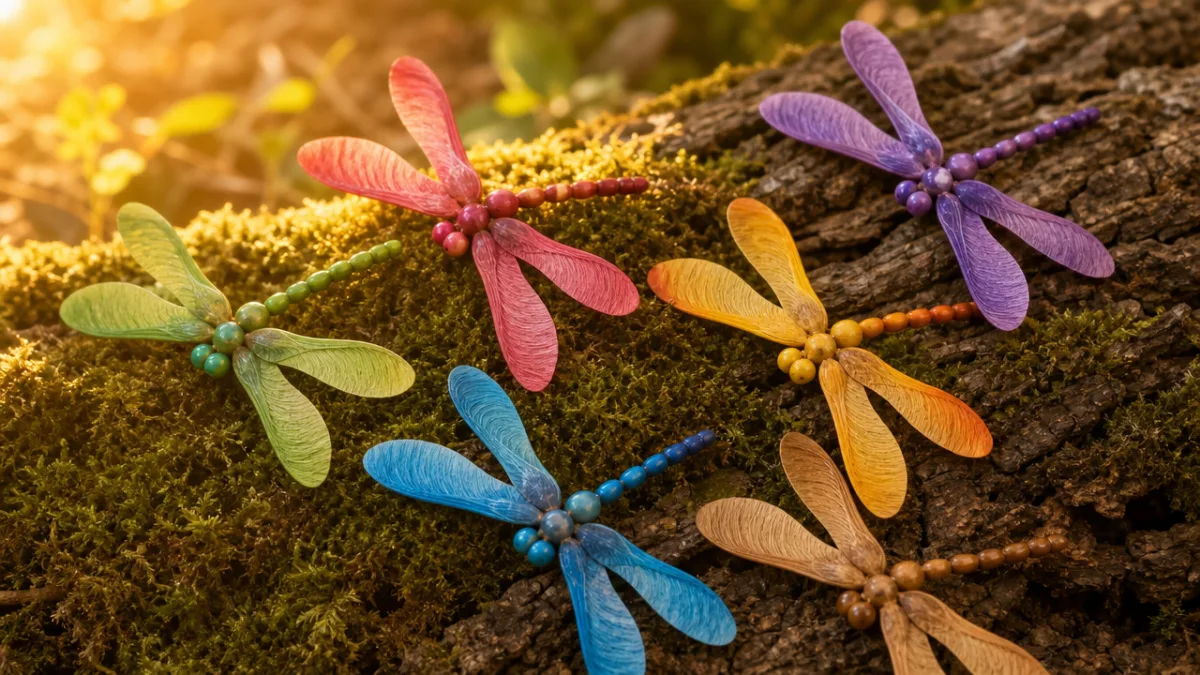
The painting stage is where the craft truly comes alive and where children have the most creative freedom. Dragonflies in nature come in extraordinary colors — brilliant turquoise, deep violet, fiery orange, emerald green — so there is no wrong color choice here. Encourage children to paint the body first, then the wings, and to consider adding small vein-like lines across the surface of the seeds using a very fine brush and a contrasting color. These simple details elevate the finished piece from a fun craft to something that genuinely resembles its natural counterpart, and the sense of accomplishment children feel is palpable.
Creative Variations: Taking Your Maple Seed Dragonflies to the Next Level
Once children have mastered the basic dragonfly, a world of creative variations opens up. One of the most popular adaptations is to create an entire scene or mobile using multiple dragonflies in different sizes and color combinations. String three to five dragonflies at varying heights from a thin branch using invisible thread or fishing line, and you have a nature mobile worthy of hanging in any room of the house. The dragonflies catch the light beautifully and spin gently in air currents, adding an almost meditative quality to the display.
Another wonderful variation is to incorporate other natural materials alongside the maple seeds to create a richer textured piece. Tiny pressed flowers can be glued onto the wings before varnishing, creating an effect that looks like the dragonfly has been decorated with miniature botanical prints. Small pieces of thin bark, interesting pebbles, or even pieces of dried grass can be incorporated into the body of the dragonfly to add texture and a more organic, earthy feel. Nature journalers and botanical artists particularly love this approach, as it blends fine craft with nature study in a single project.
For older children or adults looking for a more refined finished product, consider these elevated techniques:
- Use watercolor paint on the seeds for a translucent, stained-glass effect that lets light pass through the wing surface beautifully.
- Add tiny dot patterns using a toothpick dipped in metallic paint for an intricate, jeweled appearance.
- Seal wings with resin for a professional, glass-like finish that preserves the craft for years.
- Mount finished dragonflies on painted canvas panels or inside shadow boxes to create framed nature art.
- Create fairy tale scenes by pairing dragonflies with mushroom-shaped acorn caps and moss in a shallow tray.
The craft also adapts beautifully to different seasons and celebrations. For autumn, use warm amber, rust, and gold tones that match the falling leaves. For spring and summer, go for vivid jewel tones. For a Christmas or winter holiday version, paint the dragonflies in silver and white and dust them with silver glitter for a frost-kissed effect. They make extraordinarily thoughtful, handmade gifts or ornaments, and the fact that they are made from natural materials gives them an eco-conscious, meaningful quality that mass-produced gifts simply cannot match.
The Educational Value: What Children Learn Through Nature Crafting
Beyond the obvious creative development, maple seed dragonfly crafts offer a surprisingly rich educational experience that spans multiple subject areas. From a science perspective, the project naturally invites exploration of dragonfly anatomy — the four wings, the elongated abdomen, the large compound eyes — and children who have built one instinctively remember these features long after the craft session is over. Similarly, making the project requires children to handle and closely observe maple samaras, which can lead to discussions about seed dispersal, tree species identification, and the role of wind in plant reproduction. Learning becomes embodied rather than abstract when it involves making something with your hands.
From an art and design standpoint, the project introduces children to concepts of symmetry, balance, proportion, and color theory in an entirely practical, low-stakes environment. When a child arranges four wings around a central body and adjusts them until they look right, they are engaging intuitively with bilateral symmetry. When they mix colors to achieve the exact shade of turquoise they are imagining, they are exploring color relationships. When they choose to add glitter or vein lines or pressed flowers, they are making compositional decisions that develop their design sensibility over time. These are skills that serve children well far beyond the craft table.
The craft also supports fine motor development in a genuinely meaningful way. Handling small seeds, applying glue carefully, working with fine brushes, and adding tiny details all require and develop the kind of precise hand control that supports handwriting, musical instrument playing, and many other life skills. For children who resist traditional handwriting practice or fine motor exercises, nature crafts offer the same developmental benefits wrapped in a context that feels exciting and purposeful rather than remedial. Occupational therapists frequently recommend nature crafts for exactly this reason, noting that motivation dramatically improves outcomes in fine motor development.
Displaying and Preserving Your Maple Seed Dragonflies: Making Your Creations Last
A properly sealed maple seed dragonfly can last for years, making this a craft worth investing a little extra time in at the finishing stage. The most important preservation step is applying a thorough coat of clear varnish, Mod Podge, or craft sealant over every surface of the finished dragonfly. This protects the paint from chipping, prevents the natural seed material from becoming brittle or absorbing moisture, and gives the entire piece a lovely, unified sheen. For best results, apply two thin coats rather than one thick one, allowing each coat to dry fully before applying the next.
When it comes to display, maple seed dragonflies look wonderful in many different contexts. A single dragonfly glued to a magnet makes a charming refrigerator decoration. Several dragonflies mounted on thin wire stems and inserted into a pot of moss or stones create a beautiful desk or windowsill garden. Dragonflies threaded on invisible fishing line and suspended from a curtain rod or wooden dowel create a stunning window mobile that catches sunlight magnificently. For gifting, a small shadow box frame with a dragonfly mounted inside on a backing of handmade paper or pressed botanicals makes an heirloom-quality present that costs almost nothing to make.
For those who want to go even further with preservation, a simple resin coating applied over the finished piece creates an almost indestructible surface that maintains the vibrancy of the paint and the delicate structure of the seeds indefinitely. Resin work is best suited to older teens and adults and should always be done with proper ventilation, but the results are extraordinary — the finished dragonfly looks almost like a piece of professional jewelry or sculptural art. Whatever display and preservation method you choose, the most important thing is that the finished piece is somewhere it will be seen and appreciated, because these little creatures deserve to be admired.
Building a Nature Craft Practice: Making Maple Seed Dragonflies Part of Something Bigger
One of the most rewarding aspects of this craft is that it can serve as a gateway into a broader nature craft practice that enriches family life or classroom culture throughout the entire year. Maple seed dragonflies are just one possibility in a vast vocabulary of nature-based making. The same principles — collecting natural materials, observing their properties, and transforming them through simple craft techniques — can be applied to acorn cap fairy bowls, leaf print wrapping paper, pinecone owls, twig picture frames, and dozens of other projects. When children develop the habit of looking at natural materials as potential art supplies, the world becomes a constant source of creative inspiration.
Consider creating a nature craft basket or box in your home or classroom — a dedicated container for interesting natural finds that can be accumulated over time and drawn upon for future projects. Encourage children to add to it whenever they notice something beautiful: an unusually shaped pebble, a perfect dried leaf, an interestingly gnarled twig, a handful of colorful seeds. Over weeks and months, this collection becomes a kind of natural art supply store that sparks ideas and ensures there are always interesting materials ready when the creative impulse strikes. The maple seed dragonfly project is the perfect inaugural project for such a collection.
Nature crafting also offers a beautiful opportunity for intergenerational connection. Grandparents who grew up before screen entertainment was ubiquitous often have rich memories of making things from natural materials, and inviting them to join a maple seed dragonfly session can unlock stories, traditions, and techniques that might otherwise be lost. Parents and caregivers who sit down to make dragonflies alongside their children — rather than setting the child to work independently — find that the shared creative experience opens up conversation in a relaxed, unhurried way that is rare in busy modern family life. Some of the most meaningful conversations happen over crafts, when hands are busy and minds are gently occupied but not distracted. In this sense, a simple maple seed and a little glue can do something quite extraordinary: bring people together around the quiet, absorbing pleasure of making something beautiful with their own hands.








What do you think?
It is nice to know your opinion. Leave a comment.