










Fun Outdoor Activity For Kids: Water Gun Painting!
What Is Water Gun Painting and Why Kids Absolutely Love It
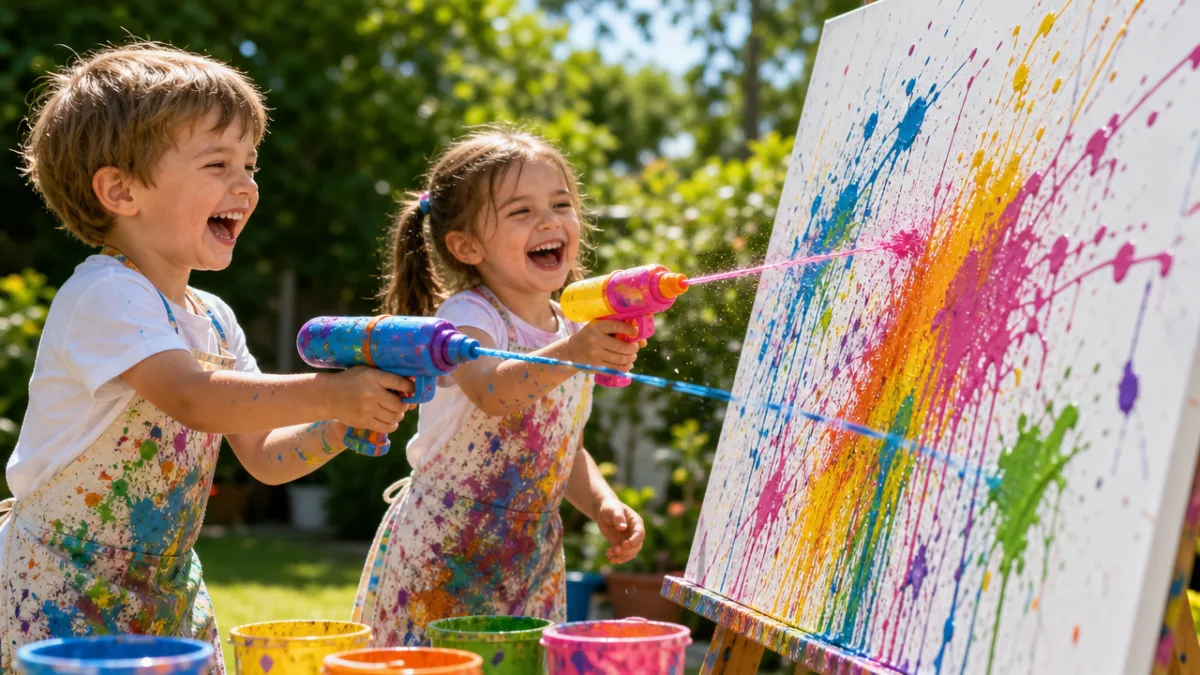
Water gun painting is exactly what it sounds like — a wonderfully messy, wildly creative outdoor activity where children load water guns or squirt guns with diluted paint and fire away at large paper or canvas targets. The result is a splattered, spontaneous work of art that every child can feel proud of, no matter their age or artistic skill level. It combines the irresistible thrill of squirting water with the joy of making something colorful and unique, which is why kids consistently rank it among their all-time favorite summer activities.
What makes this activity so special is its accessibility. Unlike traditional painting, which can sometimes feel intimidating for younger children who worry about making mistakes, water gun painting removes all those anxieties entirely. There is no wrong way to do it. Every squirt produces a beautiful and unexpected result, and the randomness of the paint splatters actually encourages children to embrace imperfection and celebrate creative chaos. This makes it not just fun, but genuinely confidence-building for kids of all temperaments and ability levels.
Beyond the creative benefits, water gun painting is an outdoor activity that gets children moving, laughing, and working together. Kids naturally end up running around, adjusting their aim, experimenting with distance, and collaborating on shared canvases. On a hot summer afternoon, the combination of cool water, vibrant colors, and the freedom to make a gloriously colorful mess is practically irresistible. Parents and caregivers often find themselves joining in, making it a genuinely memorable multi-generational experience that everyone talks about for years afterward.
Everything You Need to Get Started
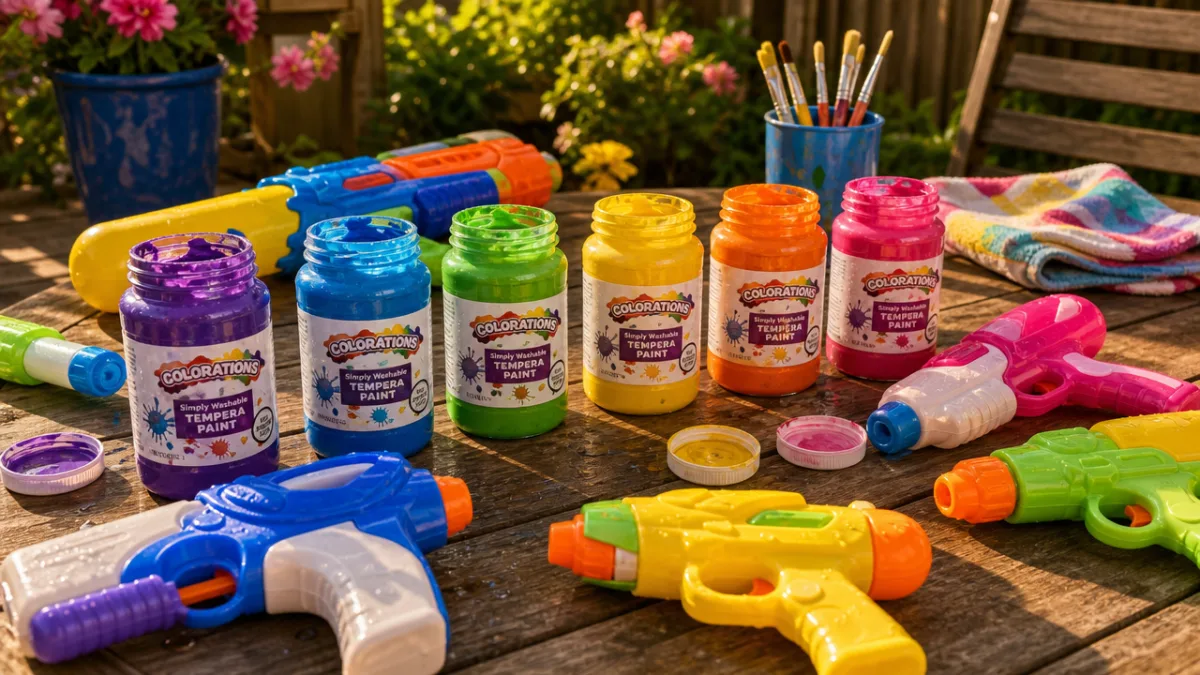
Gathering your supplies is half the fun, and the good news is that you likely already have most of what you need at home. The core supplies are simple: a collection of water guns or squirt guns in various sizes, washable tempera paint in as many colors as you can find, large sheets of paper or canvas, and a way to prop those surfaces upright so the paint can drip and run dramatically. Tempera paint is specifically recommended because it is water-soluble, non-toxic, and washes out of clothing and skin with ease, which dramatically reduces the stress level for supervising adults.
For the painting surface, you have a wonderful range of options depending on your budget and ambitions. Rolls of butcher paper or craft paper are inexpensive and can be taped to a fence, a large cardboard box, or even a clothesline. Canvas drop cloths from a hardware store offer a more durable and reusable surface that can actually be displayed afterward. Some families even use old bedsheets stretched between trees, creating enormous collaborative murals that become cherished keepsakes. The bigger the surface, the more dramatic and satisfying the results tend to be for children.
Here is a simple checklist of everything you will want to have ready before the activity begins:
- Squirt guns or water guns in multiple sizes (small pistols for detail, large soakers for big splashes)
- Washable, non-toxic tempera paint in at least four to six colors
- Water to dilute the paint (roughly one part paint to two parts water works well)
- Small cups, bowls, or buckets to mix and hold each color
- Large paper, canvas, cardboard, or fabric for the painting surface
- Tape, clips, or string to secure surfaces upright
- Old clothes or smocks for the kids — and yourself
- A garden hose or buckets of water nearby for easy cleanup
Step-by-Step Guide to Setting Up Your Water Gun Painting Station
Setting up the activity thoughtfully makes the whole experience go more smoothly and gives children more time to actually paint rather than troubleshoot. Begin by choosing your location carefully. A grassy backyard is ideal because paint drips wash away with rain over time, but a driveway or patio can also work if you lay down a tarp. Avoid setting up near anything you would not want accidentally splattered — this includes cars, outdoor furniture, and any plants that are particularly cherished. Give yourself and the kids plenty of open space to move around freely.
Once your location is set, prepare your painting surfaces by securing them to a stable backing. Leaning canvases or paper against a fence at a slight backward angle works beautifully — the angle allows paint to drip and run downward, creating those gorgeous streaky effects that make water gun paintings so visually striking. Use painter’s tape or binder clips to keep the paper from shifting mid-session. If you are setting up multiple targets side by side to allow several children to paint simultaneously, space them at least two to three feet apart so the children have comfortable room to move and aim.
Mixing the paint is a crucial step that is worth doing carefully for the best visual results. Dilute each color of tempera paint with water in its own small container, aiming for a consistency that is thin enough to flow through the squirt gun mechanism without clogging it, but still pigmented enough to leave a vibrant mark on the surface. A ratio of one part paint to two parts water is a reliable starting point, though some guns may need the paint slightly thinner. Test each gun before handing it to the children to ensure it sprays freely and does not leak or dribble unexpectedly. Label each container with its color using a sticky note to keep things organized as kids swap guns during the session.
Tips for Making the Most of the Experience
A little thoughtful facilitation from adults can transform a fun afternoon into a truly magical one. Start by giving children a brief, enthusiastic introduction to what they are about to do — show them how to load the paint into the gun, demonstrate a few test squirts at the canvas, and let their excitement build before they jump in. Allowing kids a short unstructured exploration period at the beginning, where they simply experiment without any guidance or goals, tends to produce the most genuine enthusiasm and the most creative results. Resist the urge to direct too much in those first exciting minutes.
Encourage experimentation by suggesting different techniques as the session progresses. Children naturally discover some of these on their own, but gentle prompts can open up new possibilities they might not think of. Ask them what happens when they stand very far away versus very close to the canvas. Suggest that they try holding the gun sideways, or moving it slowly in an arc while squirting. Invite them to layer colors on top of each other and observe what happens when wet paint mixes and bleeds together on the surface. These small invitations to explore transform the activity from simple play into genuine scientific and artistic inquiry that engages curious young minds.
Here are some creative variations and extension ideas that can keep the activity fresh across multiple sessions:
- Target painting: Draw simple shapes or targets on the canvas with a marker before the session and challenge kids to hit specific areas with specific colors.
- Collaborative murals: Have multiple children work on one giant shared canvas, then title and display the finished piece together.
- Color mixing challenge: Ask children to predict what will happen when two colors overlap, then test their hypotheses.
- Glow-in-the-dark evening session: Use fluorescent paint and set up a blacklight for a dramatic nighttime variation that older children especially love.
- Themed canvases: Tape off shapes (stars, letters, animals) before painting, then remove the tape to reveal crisp silhouettes in the finished piece.
The Developmental Benefits Hidden Inside All That Messy Fun
What looks like pure, glorious chaos to an outside observer is actually a remarkably rich developmental experience for the children involved. Water gun painting engages and strengthens fine motor skills as children grip, aim, pump, and trigger their squirt guns with increasing precision and control. The physical mechanics of operating different types of water guns — some requiring sustained squeezing, others a pump-and-trigger mechanism — challenge small hands and build the kind of hand strength and coordination that supports writing, drawing, and other detailed tasks. These benefits accumulate naturally through play, without any sense of effort or instruction on the child’s part.
The activity is also a surprisingly effective introduction to early scientific thinking. When a child notices that standing closer produces a concentrated burst of color while stepping back creates a wide, misted spray, they are observing cause and effect in real time. When they discover that yellow paint squirted over dried blue paint creates a greenish-yellow effect, they are encountering basic color theory through direct sensory experience. These are not abstract lessons being taught — they are discoveries the child makes independently, which research in early childhood education consistently shows are among the most durable and meaningful forms of learning available to young children.
Perhaps most importantly, water gun painting nurtures emotional development and self-expression in ways that more structured activities cannot always reach. Children who struggle to express themselves verbally often find great release and satisfaction in physical, expressive activities like this one. The act of choosing colors, deciding where to aim, and watching a personal mark appear on a shared surface gives children a powerful sense of agency and authorship. Displaying their finished artwork — even taping it to the refrigerator or hanging it on a fence for the neighborhood to admire — communicates to children that their creative voice matters and that what they make has real value in the world.
Cleanup, Safety, and Preserving Your Masterpieces
One of the most parent-friendly aspects of water gun painting is how manageable the cleanup process is when you plan ahead properly. Because washable tempera paint is water-soluble, a garden hose is genuinely all you need to clean up most surfaces, clothing, and skin. Have children strip off their painting smocks or old clothes immediately after the session ends and bring them directly to a laundry basin or washing machine. Rinse the squirt guns thoroughly with clean water until the water runs clear, then leave them open to dry completely before storing, which prevents any residual paint from drying inside the mechanism and clogging it for next time.
Safety is worth addressing directly, as it is a common concern among parents new to this activity. Tempera paint is non-toxic and completely safe for children, but it is still worth reminding kids not to aim at each other’s faces or eyes during the activity, as a high-pressure squirt of any liquid is uncomfortable and potentially irritating to eyes. Establish a simple rule at the start of the session: we only squirt at the canvas. Most children respect this boundary easily, especially when they understand it is about protecting their friends rather than limiting fun. Keep a first aid kit nearby as a general precaution for any outdoor activity, and ensure younger children are supervised throughout.
When the session is complete and the paintings have dried — typically within an hour or two in warm outdoor conditions — you have several wonderful options for preserving them. Tempera paint, once fully dry on paper or canvas, is surprisingly durable. You can roll paintings into tubes and store them, cut them into smaller pieces to use as colorful gift wrap, or frame particularly striking sections behind glass as genuine artwork. Many families find that photographing the paintings at their most vibrant, immediately after they dry, captures the colors most beautifully before any minor fading occurs. However you choose to preserve them, make sure the children are involved in the decision — giving them ownership over what happens to their art reinforces the message that their creative work is genuinely valued and worth keeping.

Making Water Gun Painting a Summer Tradition Your Family Returns to Every Year
The activities that become cherished family traditions are rarely the most elaborate or expensive ones. They are the ones that reliably produce laughter, togetherness, and a sense of shared accomplishment — and water gun painting delivers all three with remarkable consistency. Consider anchoring the activity to a specific time of year, such as the first weekend of summer vacation, the Fourth of July weekend, or a standing date on a hot August afternoon. When children know the tradition is coming, the anticipation becomes part of the joy, and the activity takes on a warmth and significance that a spontaneous one-off afternoon simply cannot replicate.
As children grow older, you can evolve the activity to keep it engaging and age-appropriate. Younger children delight in the pure sensory experience of colors and squirting water with no other agenda. School-aged children enjoy the added challenge of targets, themes, and collaborative murals with their friends. Teenagers, who might initially roll their eyes at what sounds like a “little kids’ activity,” often find themselves completely absorbed once they actually try it — especially when you introduce variations like fluorescent paint, night sessions, or the challenge of creating recognizable imagery through intentional squirt gun technique. The activity genuinely scales with the child, which is a rare and valuable quality in any family tradition.
Perhaps the greatest gift of water gun painting as a recurring tradition is the collection of artwork it produces over the years. Imagine a family with annual paintings stretching back a decade, each one reflecting the ages, color preferences, and personalities of the children at that particular moment in time. That collection becomes a kind of visual family history — a record not just of summers spent, but of children growing, changing, and always returning to the pure simple joy of making something colorful and new together outdoors. That is the real masterpiece: not the paint on the canvas, but the memories layered into every single squirt.








What do you think?
It is nice to know your opinion. Leave a comment.