










The Complete Guide to Billiards: History, Rules, Strategy, and Mastering the Game of Pool
A Rich History: The Origins and Evolution of Billiards
Billiards is one of the oldest and most enduring indoor sports in the world, with a history stretching back over five centuries. The game is believed to have originated in 15th-century France, evolving from an outdoor lawn game similar to croquet that was eventually moved indoors and played on a table covered in green cloth — a nod to the grassy origins of its predecessor. Over time, the crude wooden sticks used to push balls were replaced by refined cues, and the game began its long transformation into the sophisticated sport we recognize today.
By the 17th and 18th centuries, billiards had become a favored pastime among European royalty and aristocracy. King Louis XI of France is often cited as one of the earliest known enthusiasts of the game, and the sport spread rapidly through the courts of England and continental Europe. The invention of the leather cue tip in the early 1800s by a French soldier named François Mingaud was a pivotal moment in the game’s technical development, allowing players to apply spin and control to the cue ball in ways previously impossible. This single innovation fundamentally changed the strategy and skill ceiling of the game.
The 19th century saw billiards transition from an exclusive aristocratic hobby into a widely popular public recreation. Billiard halls and poolrooms became social institutions in both Europe and America, and the sport developed into numerous distinct formats including carom billiards, snooker, and pocket billiards — the version most commonly known today simply as “pool.” Each variation brought its own unique rules, table dimensions, and cultural identity, cementing billiards as a genuinely global phenomenon with diverse regional traditions.
Understanding the Different Games: Pool, Snooker, and Carom
While many people use the terms “billiards” and “pool” interchangeably, the broader category of billiard sports actually encompasses a wide family of distinct games, each with its own equipment, rules, and competitive culture. The three primary branches are pocket billiards (pool), snooker, and carom billiards. Understanding the differences between these games is essential for any serious enthusiast, as the skills and strategies involved differ quite significantly from one format to another.
Pool, the version most familiar to casual players in North America, is played on a table with six pockets — four corner pockets and two side pockets. The most popular pool games include 8-ball, 9-ball, 10-ball, and straight pool (also known as 14.1 continuous). In 8-ball, each player is assigned either solid-colored balls (1–7) or striped balls (9–15), and the objective is to legally pocket all of your assigned balls before sinking the 8-ball to win. Nine-ball is a faster, more dynamic game in which players must always contact the lowest-numbered ball on the table first, with the winner being whoever legally pockets the 9-ball.
Snooker, predominantly popular in the United Kingdom, Ireland, and parts of Asia, is played on a significantly larger table measuring approximately 12 by 6 feet, with much smaller pockets and tighter tolerances. The game uses 21 colored balls plus a white cue ball, and players must alternate between potting red balls and colored balls in a strict sequence to accumulate points. Carom billiards, meanwhile, is played on a pocketless table and involves scoring points by bouncing the cue ball off both the opponent’s cue ball and at least one other ball — a format that demands extraordinary precision and cushion play mastery.
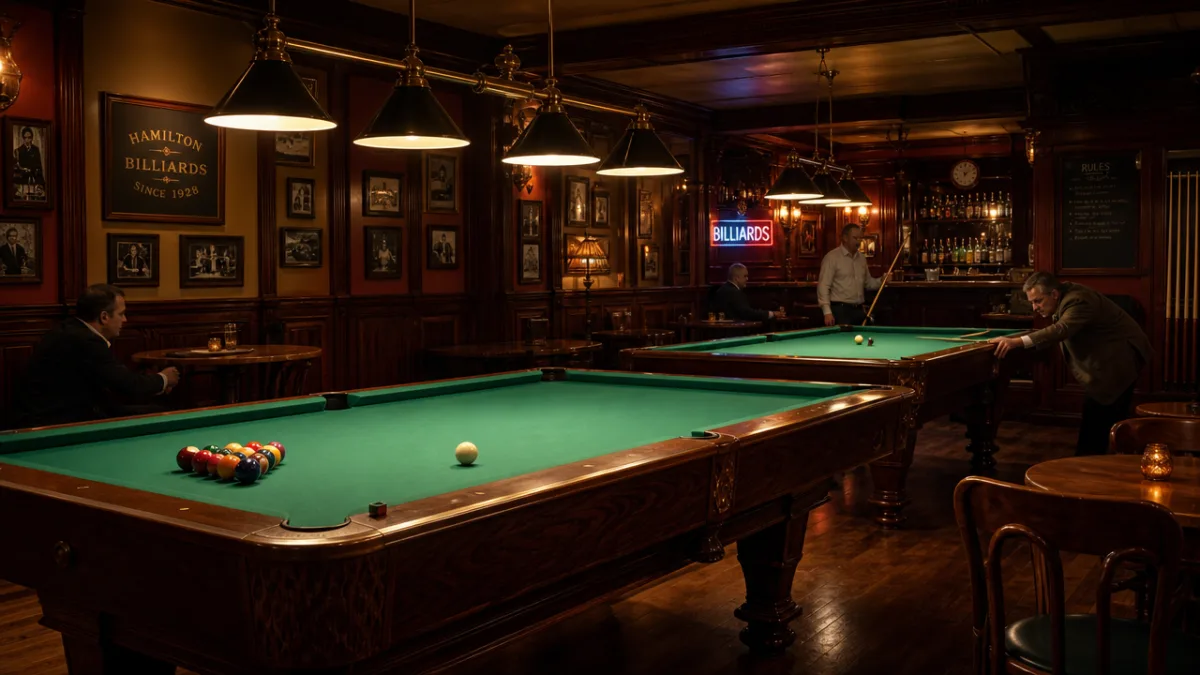
Essential Equipment: Choosing the Right Cue, Table, and Accessories
The quality of your equipment plays a meaningful role in your development as a billiards player, and understanding what to look for when selecting a cue, table, and accessories is an important part of getting serious about the game. A standard pool cue is typically between 57 and 59 inches in length and weighs between 18 and 21 ounces. Beginners are often advised to start with a one-piece or two-piece house cue until they have a sense of the weight and balance they prefer, before investing in a personal cue suited to their style.
When choosing a personal cue, several factors come into consideration. The shaft’s taper, tip hardness, ferrule material, wrap style, and overall weight distribution all influence how the cue performs. Low-deflection shafts, made from advanced composite materials or specially engineered wood, are popular among intermediate and advanced players because they reduce the amount the cue ball deflects off-axis when sidespin is applied. Cue tips range from soft to hard; softer tips grip the ball better and allow more spin, while harder tips provide a firmer, more consistent hit with less deformation over time.
A good pool table is a significant investment, and the characteristics of the table itself will have a profound effect on gameplay. Slate is universally regarded as the superior bed material due to its flatness, durability, and consistent roll. Most quality tables use either one-piece or three-piece slate, with three-piece being preferred for its ease of leveling. The cloth covering the table, sometimes called felt though more accurately referred to as baize or worsted cloth, also matters enormously — faster tournament-grade cloths allow balls to travel farther and more freely, while slower cloths are more forgiving for casual play.
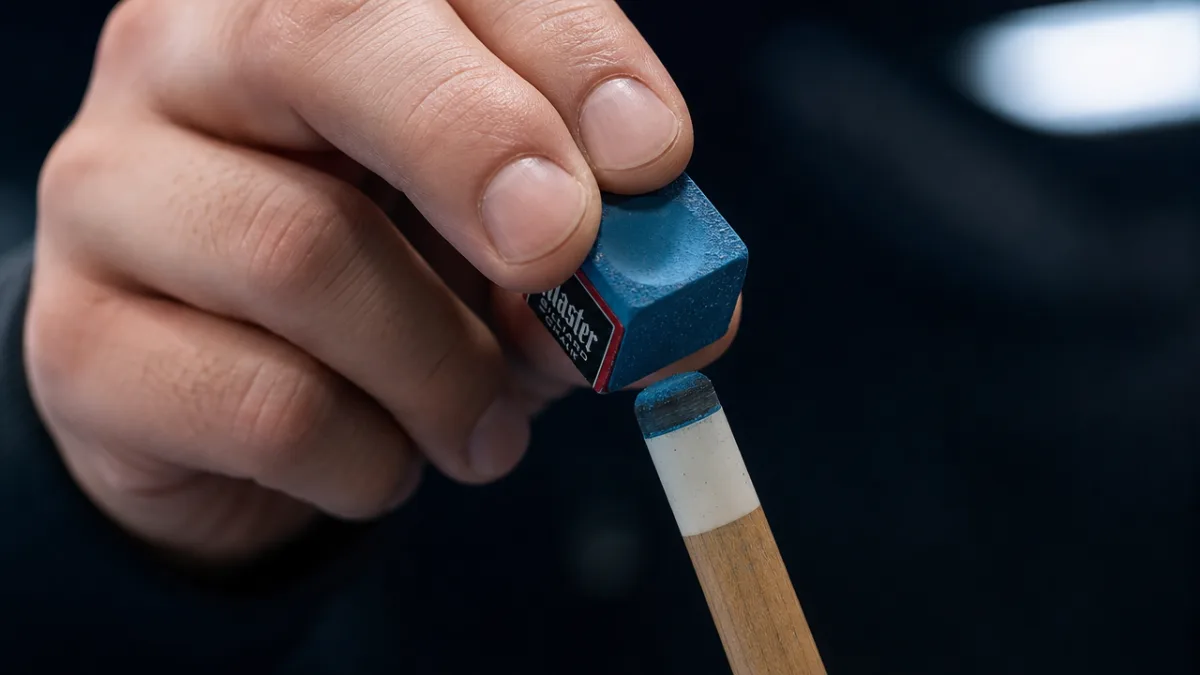
- Cue chalk: Applied to the tip before each shot to improve contact friction and reduce miscues — blue Master chalk is the industry standard used by professionals and amateurs alike worldwide.
- Bridge head: A mechanical aid attached to a shaft, used to support the cue when the cue ball is positioned too far from the player to form a comfortable hand bridge.
- Rack: A triangular or diamond-shaped frame used to position balls at the start of a game, available in plastic, wood, or template form for precise ball placement.
- Glove: Worn on the bridge hand by some players to reduce friction between the shaft and skin, ensuring a smoother, more consistent stroke delivery.
Fundamental Techniques: Building a Solid Foundation
No matter how naturally gifted a player may be, mastering the foundational techniques of billiards is non-negotiable for anyone who wants to improve meaningfully. The stance is where everything begins. A proper stance positions your body at roughly a 45-degree angle to the shot line, with your dominant foot forward and your weight evenly distributed for stability. Your head should be down low, almost touching the cue, so that your dominant eye is directly aligned with the cue and the intended path of the cue ball. Consistency in your stance is what allows muscle memory to develop reliably over time.
The grip and bridge are the two mechanical contact points between you and the cue, and both must be executed with care. The grip hand should hold the cue lightly — many coaches use the phrase “hold it like a bird” to convey the ideal light firmness — allowing the cue to swing freely like a pendulum without tension in the wrist or forearm. The bridge hand, placed on the table to guide the front of the cue, can be formed in several ways: the open bridge, which rests the cue in a V formed by the thumb and forefinger, is ideal for beginners; the closed or loop bridge, where the forefinger curls over the shaft, provides more directional control for advanced shots.
The stroke itself is perhaps the most critical element to develop. A smooth, straight, pendulum-like stroke is the gold standard, with the backswing being slow and controlled and the follow-through extending fully through the cue ball along the intended line. Many beginners make the mistake of jabbing or stabbing at the ball, which introduces inconsistency and makes it nearly impossible to control cue ball position. Practicing the pre-shot routine — taking several slow warm-up strokes before the final delivery — helps groove the stroke and eliminate rushing, one of the most common causes of missed shots even at higher levels of play.
Cue ball control, often called “position play,” is what separates intermediate players from truly skilled ones. Every shot you take should be planned not just to pocket the object ball, but to send the cue ball to an ideal location for your next shot. This requires understanding the physics of the game: how follow (topspin), draw (backspin), and sidespin (english) alter the cue ball’s path after contact. A player who can consistently pocket balls but leaves themselves in poor position after each shot will always be outperformed by a player with reliable position play, even if the latter makes the occasional miss.
Strategy and Shot Selection: Thinking Multiple Shots Ahead
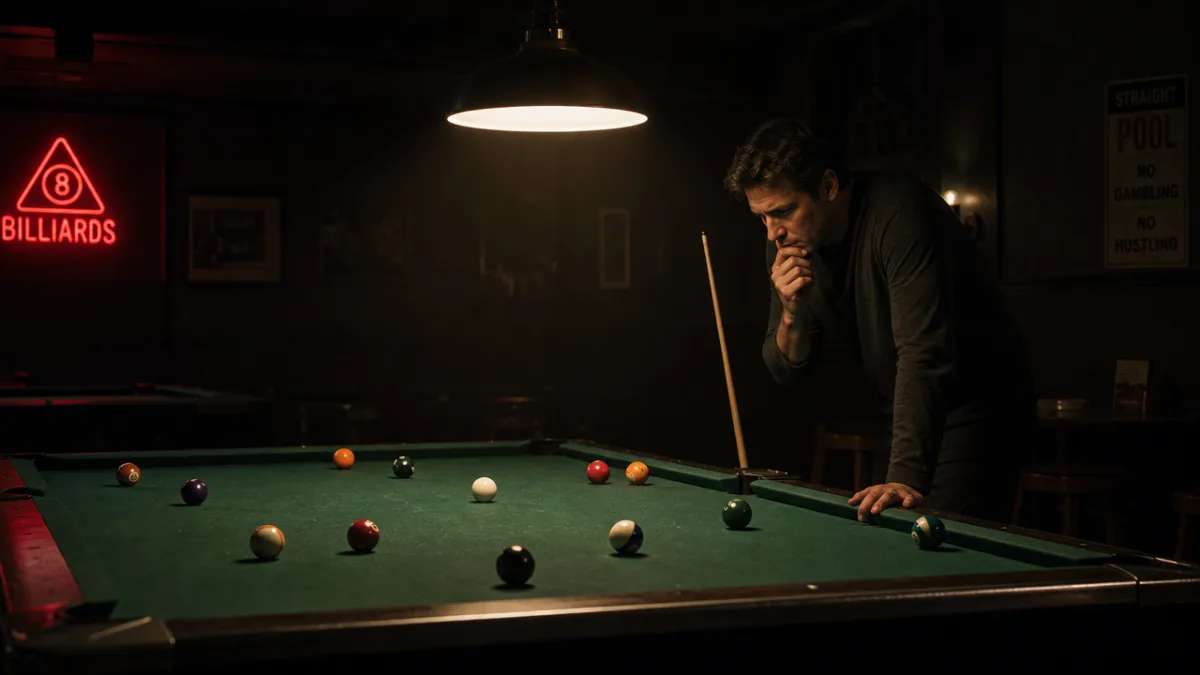
Billiards at its highest level is as much a game of mental strategy as it is physical skill. Professional players approach each shot with a comprehensive plan that extends several balls into the future, mapping out a sequence of positions that will allow them to clear the table efficiently and without getting stuck in difficult situations. This kind of forward thinking, often called “pattern play” or “run-out planning,” requires not just knowing where you want the cue ball to go after each shot, but understanding which sequence of shots gives you the most consistent and forgiving angles throughout a rack.
One of the most important strategic concepts in 8-ball is identifying the “key ball” — the last ball of your group that must be pocketed in a specific way to leave you with a clear, direct shot on the 8-ball. Thinking backwards from the 8-ball and working out which ball must precede it, then which ball must precede that one, is a powerful planning method. In 9-ball, players must always think about the break-and-run opportunity, hitting the 1-ball first on every shot while positioning the cue ball to move naturally through the lower-numbered balls toward the 9.
Defensive play, or “safety play,” is an often underappreciated aspect of billiards strategy. Rather than always attempting to pocket a ball, experienced players recognize when the correct move is to play a safety — a shot designed to leave the cue ball in a difficult position for your opponent while keeping yourself in good shape to continue. A well-executed safety can completely neutralize an opponent’s advantage, force errors, and shift momentum decisively. Learning to read the table and choose between offense and defense is one of the hallmarks of a mature, complete billiards player.
- Survey the entire table before shooting: Walk around the table before each turn to assess all available shots, clusters, and potential problem balls that could interfere with your run-out later.
- Always plan at least two shots ahead: Every shot you take should be chosen with your next shot’s position in mind, ideally mapping out a three-to-four ball sequence before you get down on the shot.
- Prioritize the most difficult shots early: If you have a cluster of balls or a difficult cut shot to manage, address it early in your run before you’ve pocketed the balls that could have helped with positioning.
- Control your speed: The speed at which the cue ball travels after contact with an object ball is the primary determinant of where it will end up — developing a finely tuned sense of speed is as important as accuracy.
- Know when to play safe: Attempting a low-percentage shot when a good safety is available is one of the most common and costly strategic errors in billiards at every level of play.
Improving Your Game: Practice Methods and the Path to Mastery
Deliberate practice is the engine of improvement in billiards, and the most effective practitioners approach their table time with specific goals rather than simply shooting balls aimlessly. Structured drills are far more valuable than casual play for building the technical skills required to compete. Classic drills include the “circle drill,” which involves placing object balls in a circle around the table and pocketing them in sequence while maintaining cue ball control, and the “ghost ball” method for improving cut shot accuracy by visualizing the exact contact point on the object ball before each shot.
Recording and reviewing your play is an underutilized but highly effective method of identifying weaknesses in your game. Even a simple smartphone video of your stroke from behind can reveal flaws in your alignment, grip, or follow-through that you would never notice in real time. Many dedicated players also keep a practice journal, logging which shots they worked on, what mistakes appeared repeatedly, and what adjustments helped. This kind of systematic self-analysis accelerates improvement far beyond what casual repetition alone can achieve, and mirrors the approach used by athletes in virtually every competitive sport.
Seeking coaching and playing against stronger competition are two of the most powerful accelerants for improvement. A qualified coach can identify mechanical issues in your technique that would take years to self-diagnose and correct, and can provide structured practice plans calibrated to your specific weaknesses. Playing against opponents who are better than you forces your game to adapt and rise — you will encounter defensive situations, shot selections, and pressure scenarios that you simply cannot replicate in solo practice. Local leagues, billiards clubs, and amateur tournaments provide invaluable competitive experience for players at every level.
The mental side of billiards — focus, composure under pressure, and managing the inevitable frustration of missed shots — is something that serious players must also cultivate deliberately. Billiards is unique in that a single lapse in concentration can immediately hand the game to your opponent, and the game demands sustained, shot-by-shot presence of mind. Techniques borrowed from sports psychology, such as deep breathing between shots, maintaining a consistent pre-shot routine, and developing a short memory for mistakes, help players stay in a productive mental state throughout a match. The best players in the world are not necessarily those who have never experienced doubt or nerves — they are those who have learned to perform consistently in spite of them.
The Culture and Community of Billiards: A Global Passion
Beyond the technical and strategic dimensions, billiards is sustained by a vibrant, global community of players, fans, and enthusiasts who share a deep passion for the game. From the smoky pool halls of American cinema to the packed arenas of the World Snooker Championship, billiards occupies a unique cultural space — simultaneously a working-class neighborhood pastime and an elite professional sport demanding the highest levels of skill and athleticism. This duality has given the game a richness of culture and tradition that few other sports can match.
Professional billiards has produced legends whose names are known even to casual observers of the sport. In pool, players like Efren “Bata” Reyes of the Philippines — widely regarded as the greatest player in the history of the game — Minnesota Fats, and Earl Strickland have become larger-than-life figures whose exploits are spoken of with reverence in poolrooms around the world. In snooker, players like Ronnie O’Sullivan, Stephen Hendry, and Jimmy White have achieved the kind of mainstream celebrity in the UK that rivals football stars. These figures have done immeasurable work in elevating the public profile of the sport and inspiring new generations of players.
The social dimension of billiards is one of its most enduring appeals. Unlike many sports, pool can be enjoyed by players of vastly different ages, physical abilities, and experience levels, making it a uniquely inclusive recreational activity. A game of 8-ball can be a relaxed social occasion between friends, a competitive practice session between teammates, or a high-stakes professional match — the same basic framework accommodates all of these contexts with equal grace. This versatility, combined with the game’s inherent depth and complexity, ensures that billiards will continue to attract new devotees for generations to come, preserving the legacy of a sport that has endured and delighted for more than five hundred years.








What do you think?
It is nice to know your opinion. Leave a comment.