










Introduction to Irish Crochet: A Timeless Art Form
Irish crochet lace is one of the most celebrated and historically significant textile traditions in the world. Originating in Ireland during the nineteenth century, this intricate needlework technique became a lifeline for countless families during the Great Famine, providing a source of income through the creation of delicate, lace-like fabric. Today, Irish crochet enjoys a vibrant revival among crafters who are drawn to its organic motifs, dimensional texture, and the meditative satisfaction of working each individual element by hand.
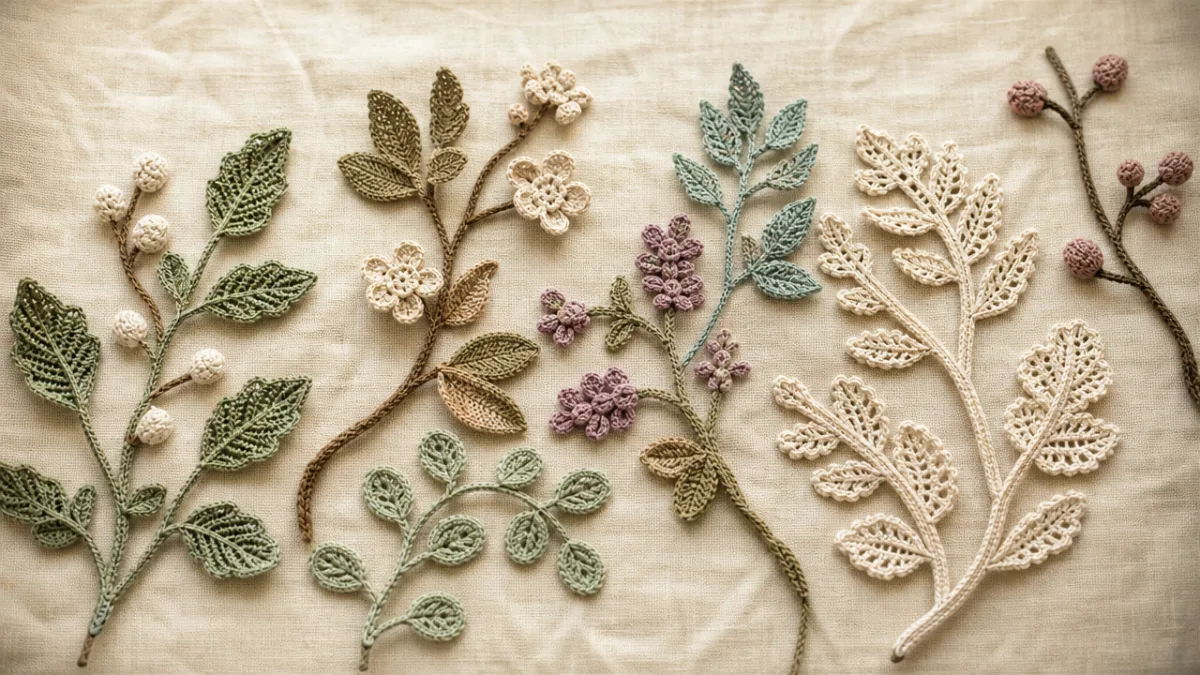
Among the many classic motifs that define Irish crochet, the branch motif holds a particularly special place. Simple yet strikingly elegant, the branch design captures the essence of nature’s beauty through careful stitchwork. It evokes imagery of slender twigs, trailing vines, and the quiet poetry of a woodland scene. Whether worked in fine cotton thread for a traditional heirloom piece or in modern yarn for a contemporary accessory, the branch motif adapts beautifully to a wide range of projects and skill levels.
This article is designed to guide you through everything you need to know about the Simple Branch Irish crochet pattern. From understanding the foundational history and techniques to step-by-step guidance on creating your own branch motifs, you will find all the knowledge necessary to begin your Irish crochet journey with confidence. Whether you are a complete beginner curious about this art form or an experienced crocheter looking to expand your repertoire, the branch pattern offers a rewarding and deeply satisfying project that connects you to a centuries-old tradition of craft and creativity.
Why the Branch Motif Stands Out
The branch motif is particularly beloved in Irish crochet because it serves both as a standalone decorative element and as a versatile connecting piece within larger, more complex lace compositions. Its elongated form makes it ideal for filling negative space between floral medallions or creating sweeping lines of movement across a fabric. Designers throughout history have used branch motifs to give their lace pieces a sense of natural flow, as though the entire composition were a living garden frozen in thread.
What makes the Simple Branch pattern especially appealing for modern crocheters is its accessibility. Unlike some Irish crochet motifs that require advanced techniques such as working over a padded cord or managing dozens of tiny picots simultaneously, the branch pattern can be mastered with a solid understanding of basic crochet stitches. This makes it an excellent entry point for those new to Irish crochet, while still offering enough nuance and character to engage and challenge more experienced hands. The result is always a piece that looks far more complex than the effort required to create it.
Materials and Tools You Will Need
Before diving into the pattern itself, it is important to gather the right materials. The tools and thread you choose will significantly affect the look, feel, and drape of your finished branch motifs. Traditional Irish crochet was worked almost exclusively in fine white or ecru cotton thread, often size 10, 20, or even 40, to achieve the delicate, gossamer quality associated with antique lace. However, modern interpretations of Irish crochet embrace a much wider palette, and many crocheters enjoy working branch motifs in colored thread to create contemporary pieces with a vintage soul.
For the Simple Branch Irish crochet pattern, a size 10 crochet cotton thread is an excellent starting point. This weight is fine enough to produce detailed, elegant motifs while remaining manageable for crocheters who are not yet accustomed to working with very fine thread. Paired with a steel crochet hook in size 7 (approximately 1.65mm), size 10 cotton creates beautifully defined stitches with good stitch definition and a pleasing crispness when the finished piece is starched and blocked. As you become more comfortable with the pattern, experimenting with finer threads will open up a whole new world of delicacy and intricacy.
In addition to thread and hook, you will benefit from having a few other tools on hand. A yarn needle or tapestry needle is essential for weaving in ends neatly, which is particularly important in lace work where loose ends can disrupt the visual flow of the design. Small scissors with sharp tips allow for precise trimming close to the work. Blocking pins, a foam blocking mat, and a spray bottle or starch solution will help you achieve crisp, professional-looking finished motifs. Here is a quick checklist of everything you will want to have ready:
- Size 10 crochet cotton thread in your chosen color (white, ecru, or a modern accent color)
- Steel crochet hook, size 7 (1.65mm) or as indicated by your thread label
- Sharp-tipped scissors for trimming ends
- Tapestry or yarn needle for weaving in ends
- Blocking mat, rust-proof pins, and starch or blocking solution
- Good lighting and a magnifying glass if needed for fine thread work
Choosing the Right Thread
Thread selection in Irish crochet is both a practical and an artistic decision. The fiber content of your thread affects not only how the motifs look but also how well they hold their shape once blocked. Mercerized cotton, which has been treated to increase its luster and strength, is the traditional choice and remains the gold standard for Irish crochet lace. Its smooth surface allows stitches to glide easily off the hook, and the natural sheen of mercerized cotton catches light beautifully, giving finished lace an almost luminous quality that photographs stunningly and ages gracefully.
If you prefer a softer, more matte finish, unmercerized cotton or cotton-linen blends can also produce lovely results. These fibers have a more organic, rustic texture that suits naturalistic motifs like the branch particularly well. Some modern crocheters also experiment with bamboo or silk-blend threads for branch motifs, which drape exquisitely and add a touch of luxury to the finished piece. Whatever thread you choose, always work a small swatch before committing to a full project to ensure you are happy with the texture, stitch definition, and overall hand of the fabric you are creating.
Understanding the Basic Stitches of Irish Crochet
Irish crochet relies on a relatively small vocabulary of basic crochet stitches, but the magic lies in how these stitches are combined, layered, and arranged to create three-dimensional, sculptural effects. Before attempting the Simple Branch pattern, it is worth refreshing your understanding of the foundational stitches you will use most frequently. A confident command of these basics will allow you to focus on the creative and artistic aspects of your work rather than being slowed down by technical uncertainty.
The chain stitch forms the backbone of virtually every Irish crochet motif, including the branch. In the Simple Branch pattern, chains create the central stem of the branch as well as the smaller offshoots and tendrils that give it its characteristic appearance. Working consistent, evenly tensioned chain stitches is perhaps the single most important skill in achieving a beautiful branch motif. Uneven chains will result in a lopsided or lumpy stem, so practice until your chain stitches feel natural and rhythmic before moving on to the full pattern.
Slip stitches are used extensively throughout the branch pattern to join elements, travel along the stem without adding height, and secure the beginning and end of each section. Single crochet stitches provide density and texture along the branch, building up the padded, three-dimensional quality that distinguishes Irish crochet from flat lace. Half double crochet and double crochet stitches are used selectively to create subtle variations in height along the branch, suggesting the organic irregularity of a real twig. Together, these stitches create a surprisingly realistic botanical impression from nothing more than thread and a hook.
Working the Pad Cord Technique
One of the defining characteristics of traditional Irish crochet is the use of a padded cord foundation, sometimes called the pad cord or foundation cord. This technique involves working over a length of thread or cord as you stitch, creating a raised, rounded surface that gives Irish crochet its signature dimensional quality. In the Simple Branch pattern, a simplified version of this technique is used to build up the central stem of the branch, giving it a pleasingly plump and three-dimensional appearance that closely resembles a real twig.
To work the pad cord technique for the branch stem, you will hold several strands of thread together with your working thread and work single crochet stitches over all strands simultaneously. As you crochet over the padding strands, they become encased within the stitches, creating a smooth, raised tube of crochet that forms the body of the branch. The number of padding strands you use will determine how thick and prominent the branch appears. For a delicate sprig, two or three padding strands are typically sufficient, while a bolder branch worked in heavier thread might use four to six strands.
It is important to maintain even tension when working the pad cord technique, as too much or too little tension can cause the branch to curl or kink in undesirable ways. Hold the padding strands taut with your non-hook hand as you work, keeping them flat and parallel beneath your working stitches. With a little practice, the pad cord technique becomes second nature and is deeply satisfying to execute, as you watch the branch take on its rounded, sculptural form with every stitch. This is the moment when the magic of Irish crochet truly reveals itself, transforming simple thread into something that looks almost too beautiful to be handmade.
Step-by-Step Guide to the Simple Branch Pattern
Now that you have gathered your materials and refreshed your understanding of the foundational techniques, it is time to work through the Simple Branch Irish crochet pattern itself. The instructions that follow are written for a crocheter with basic skills, using size 10 cotton thread and a size 7 steel hook. The finished branch motif measures approximately four to five inches in length, making it ideal for use in collars, doilies, appliqués, and accessory embellishments. Read through the entire pattern before beginning so that you have a clear picture of the complete design.
Begin by cutting three lengths of thread approximately eight inches long. These will serve as your padding strands for the main stem. Hold these strands together and fold them in half, then attach your working thread to the midpoint using a slip knot. Chain twenty stitches, holding the padding strands along the top of your chain and working over them as you go. This creates the central vein of your branch with its padded foundation built in from the very beginning. Take care to keep the padding strands straight and evenly tensioned throughout this step, as this will determine the overall shape and posture of the finished branch.
Once your foundation chain is complete, work back along it using single crochet stitches, still encasing the padding strands as you go. This covers the chain and builds up the three-dimensional stem. At intervals of approximately every fourth or fifth stitch along the return row, work a small side tendril by chaining five to seven stitches, then slip stitching back to the base of the chain to form a small closed loop. These loops represent the smaller offshoots of the branch. Vary the length of these tendrils slightly to create an organic, natural appearance, as real branches are never perfectly symmetrical or uniform in their growth patterns.
Adding Leaf Details to the Branch
The Simple Branch pattern can be further enhanced by adding small leaf-like elements along the tendrils and at the tips of the branch. These leaves are worked separately and then attached, or in some versions of the pattern, they are worked directly onto the tendril loops as an extension of the branch construction itself. A basic Irish crochet leaf is typically formed by chaining a small foundation, then working rows of increasing and decreasing single crochet stitches around the chain to create an oval or pointed leaf shape with a slightly raised central vein.
To attach leaves directly to the branch, work the leaf foundation chain from the tip of any tendril loop, completing the leaf shape before joining back to the branch stem with a slip stitch. Position your leaves so that they angle naturally away from the branch, as though catching an invisible breeze. Some crocheters like to add a tiny picot detail along the edge of each leaf, working a small chain loop at the tip or sides of the leaf before closing it off. This adds a delicate, jewel-like quality to the finished piece and is very characteristic of the ornate style associated with traditional Irish crochet lace.
Experiment with the size and number of leaves you add to each branch motif. A branch with many small leaves has a full, lush appearance well suited to botanical-themed projects and summer accessories, while a more sparsely leafed branch has a graphic, minimalist quality that translates beautifully into modern jewelry, hairpins, or art pieces. The flexibility of the Simple Branch pattern is one of its greatest strengths, and you should feel empowered to adapt and personalize it according to your own aesthetic preferences and the specific requirements of the project you have in mind.
Blocking, Finishing, and Using Your Branch Motifs
Once you have completed your branch motifs, the finishing process is just as important as the crochet work itself. Blocking is the technique of wetting, shaping, and drying your finished pieces to set the stitches into their final configuration and open up the lace structure to its full potential. Unblocked Irish crochet motifs can look somewhat compressed and undefined, failing to show the full beauty of the stitch pattern. Blocking transforms them into crisp, dimensional pieces that display every detail of the design with clarity and elegance.
To block your branch motifs, begin by soaking them in cool water for several minutes until they are thoroughly saturated. Gently squeeze out the excess water without wringing or twisting the piece, then press between two clean towels to remove most of the moisture. Lay the damp motif on your foam blocking mat and use rust-proof pins to stretch and position it into the desired shape. For branch motifs, take extra care to straighten the main stem and fan out the tendrils and leaves so that they lie flat and symmetrical. Allow the piece to dry completely before removing the pins, which may take several hours or overnight depending on the humidity in your environment.
For a particularly crisp and professional finish, many Irish crochet enthusiasts apply a light starch to their motifs before blocking. Fabric starch spray applied to the damp piece before pinning will dry to leave the motif with a firm, structured quality that helps it maintain its shape beautifully over time. Alternatively, a solution of one part craft glue diluted with several parts water can be used as a heavier stiffener for motifs that will be used as standalone decorative pieces, jewelry elements, or framed artwork. Experiment with different levels of stiffening to find the finish that best suits your intended application.
Combining Branch Motifs into Larger Projects
One of the most exciting aspects of Irish crochet is the way individual motifs can be assembled into larger, more complex compositions. Branch motifs are particularly versatile in this regard, working harmoniously alongside floral rosettes, shamrock clusters, and other classic Irish crochet elements to create rich, layered designs. When planning a project that incorporates branch motifs, sketch your overall layout on paper first, arranging the various motifs in different configurations until you find a composition that pleases you.
Branch motifs can be joined to one another and to other motifs using a traditional Irish crochet joining net, which is a background mesh of chain loops and single crochets worked around and between the finished motifs to hold them together. This joining method creates the characteristic airy, lace-like background that defines classic Irish crochet lace fabric. Alternatively, branch motifs can be appliquéd onto existing fabric pieces such as garment collars, cuffs, or bags using small invisible stitches, creating a mixed-media effect that combines the softness of woven fabric with the sculptural beauty of crochet lace.
Here are some inspiring project ideas to spark your creativity and help you put your finished branch motifs to beautiful use:
- A delicate hair comb ornament featuring a single branch motif with pearl bead accents threaded through the leaves
- A vintage-inspired collar or dickey incorporating multiple branch motifs arranged around a central floral medallion
- A botanical wall hanging showcasing an arrangement of branch, leaf, and flower motifs stretched over a wooden embroidery hoop
- Earrings or pendant jewelry using stiffened branch motifs finished with metal ear wire findings
- A bookmark or tassel embellishment for a special journal or keepsake album
- Appliqué details on a linen tote bag, adding handmade artisan charm to an everyday accessory
Caring for Your Irish Crochet Pieces
Proper care ensures that your Irish crochet branch motifs and finished projects remain beautiful for years or even generations to come. Cotton lace is relatively durable but benefits from gentle handling and careful washing. Hand wash your finished pieces in cool water with a mild soap or delicate fabric wash, avoiding any harsh detergents or bleach products that could damage or discolor the thread. Never machine wash or tumble dry Irish crochet lace, as the agitation can distort the stitches and cause irreparable damage to the delicate structure of the work.
Store your finished Irish crochet pieces carefully when not in use. Acid-free tissue paper wrapped around or between pieces prevents yellowing over time and protects the delicate stitches from snagging. Keep your lace away from direct sunlight and strong artificial light, both of which can cause cotton thread to yellow or fade gradually. If you are storing pieces long-term, a clean cotton pillowcase or muslin bag inside an acid-free storage box provides excellent protection. Properly cared for, Irish crochet lace can last for a century or more, as evidenced by the stunning antique pieces that survive in museum collections and private family heirlooms around the world today.
The Simple Branch Irish crochet pattern is more than just a craft project. It is a connection to a profound and moving tradition of human creativity, resilience, and artistry. Each stitch you work carries forward a technique that has been passed from hand to hand across generations and continents, adapting and evolving while retaining its essential spirit of natural beauty and meticulous care. Whether you create a single branch motif as a first foray into Irish crochet or go on to create elaborate lace compositions that will be treasured for generations, you are participating in something genuinely meaningful. Pick up your hook, thread your needle, and let the branch unfold beneath your fingers.








What do you think?
It is nice to know your opinion. Leave a comment.