










Camping Crafts For Kids: 15+ Awesome Ideas to Spark Creativity Outdoors
Why Camping Crafts Are Essential for Kids
There is something genuinely magical about combining the great outdoors with hands-on creativity. Camping crafts for kids offer a unique opportunity to merge the wonder of nature with imaginative play, giving children a chance to slow down from screens and engage with the world around them in a meaningful way. Whether you are pitching a tent in a national park or setting up in the backyard, crafting activities can transform a simple camping trip into an unforgettable adventure that children will talk about for years.
Beyond the fun factor, camping crafts carry a wealth of developmental benefits that parents and educators often overlook. When children collect pinecones, paint rocks, or weave friendship bracelets around a campfire, they are simultaneously building fine motor skills, practicing patience, and expressing their creativity in an unstructured environment. This kind of open-ended play encourages problem-solving and boosts confidence as kids see their ideas take physical form without the pressure of a structured classroom setting.
Nature-based crafting also nurtures an early appreciation for the environment. When a child carefully selects the prettiest leaf for a pressing project or hunts for the smoothest stone to paint, they begin to observe the natural world with attention and care. This mindfulness around natural materials plants the seeds of environmental stewardship, teaching kids from a young age that the outdoors is something to be celebrated, respected, and protected for future generations.
Essential Supplies to Pack for Camping Crafts
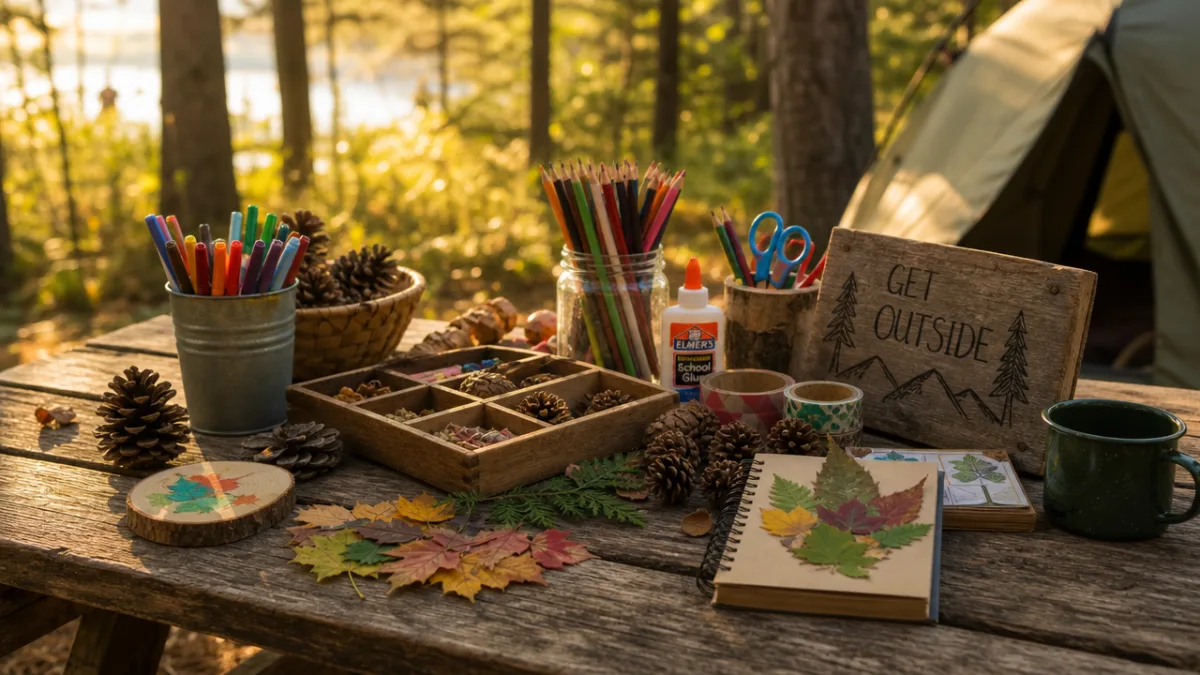
Preparation is the secret ingredient to a successful camping craft session. Before you head out on your trip, it pays to put together a dedicated craft kit that travels easily and contains versatile supplies. A well-stocked craft bag does not need to be heavy or elaborate — a zippered tote or a small plastic bin with a lid works perfectly. The goal is to bring materials that pair beautifully with what nature will provide at your campsite, creating a seamless blend of packed and foraged supplies.
When building your camping craft kit, focus on items that are lightweight, non-toxic, and multi-purpose so that one supply can serve several different projects. Watercolor paints, for example, are thin and compact but can be used for rock painting, leaf art, and nature journaling all in one trip. Similarly, a simple roll of twine opens the door to dreamcatcher-making, friendship bracelets, and stick-frame weaving. Thinking in terms of versatility means you pack less but create more, which is ideal when space in a camping bag is limited.
Here is a solid list of must-have supplies to pack for your camping craft kit:
- Watercolor or acrylic paint in small travel sets
- Paintbrushes in various sizes
- Twine, yarn, or embroidery thread in multiple colors
- Googly eyes and simple stickers
- Glue sticks and a small bottle of craft glue
- Scissors with rounded tips for younger children
- Markers and colored pencils
- A blank sketchbook or nature journal
- Zip-lock bags for collecting natural materials
- Mod Podge or clear sealant spray for preserving finished crafts
In addition to packed supplies, the campsite itself becomes a treasure trove of free crafting materials. Encourage kids to go on a nature scavenger hunt before the crafting begins, collecting pinecones, interesting rocks, fallen sticks, acorns, seed pods, feathers, and colorful leaves. Having a diverse collection of natural items on hand gives children creative choices and sparks spontaneous ideas that even the most carefully planned craft list could never anticipate. The combination of prepared supplies and foraged treasures is where the real magic happens.
Rock Painting and Stone Art Projects
Rock painting has become one of the most beloved camping crafts for kids of all ages, and it is easy to understand why. All it takes is a smooth stone, some paint, and a little imagination to create a tiny work of art that can be tucked into a pocket, placed in a garden, or left on a trail for another hiker to discover. The simplicity of the materials combined with the endless creative possibilities makes rock painting accessible to toddlers and teenagers alike, making it one of the most age-inclusive camping crafts available.
For younger children, rock painting works beautifully as an introduction to color mixing and brush control. Let them experiment freely with painting animals, rainbow swirls, polka dots, or simple emoji-style faces. Older kids might enjoy more detailed designs like mandalas, miniature landscapes, or inspirational word art. You can even tie rock painting into the camping theme by having children paint little campfire scenes, forest animals, or constellation maps that reflect what they have seen or learned during the trip. This connection between the craft and the experience makes the finished product all the more meaningful.
One particularly exciting variation is the concept of kindness rocks, a community tradition where painted stones are left in public places for strangers to find. Before heading out on the trip, talk with your kids about writing a short uplifting message or painting a cheerful image on one of their rocks. Then, as a family activity, walk to a local trail or park and leave the rock somewhere visible. This simple act teaches children about generosity, community connection, and the joy of giving something without expecting anything in return — lessons that extend far beyond the campsite.
Nature Weaving and Stick Frame Crafts
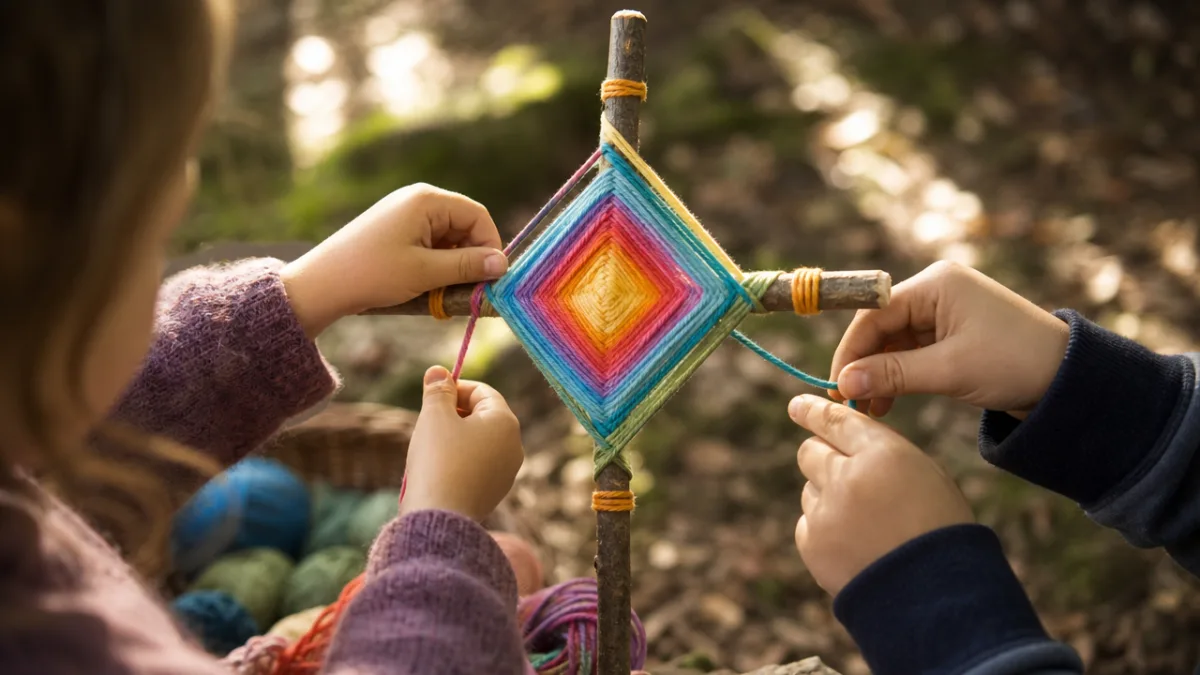
Nature weaving is one of those camping crafts that looks impressively complex but is actually wonderfully simple to execute, even with very young children. The basic concept involves creating a frame from two sticks tied together in a cross or rectangular shape, then weaving yarn, twine, or strips of natural material back and forth to create a textile-style artwork. As children weave, they can incorporate feathers, small leaves, grasses, and flower stems directly into the design, resulting in a piece that is part fiber art and part natural collage.
The process of weaving engages both hands simultaneously and requires a kind of focused, repetitive motion that many children find deeply calming and satisfying. Occupational therapists often recommend weaving-type activities for children who need help developing bilateral coordination and concentration, so this craft carries real developmental value alongside its creative appeal. Around the campfire in the evening, weaving is a perfect quiet activity that keeps little hands busy while the family talks, tells stories, or watches the stars emerge one by one in the darkening sky.
To get started with stick frame weaving, guide children through these simple steps:
- Find two sturdy sticks of similar length, ideally around 12 inches each.
- Tie the sticks together at their centers using twine to form a cross or X shape.
- Begin wrapping yarn tightly around the center knot, alternating between all four arms of the cross.
- After several rows, switch to a different color to create stripes and patterns.
- Weave in natural materials like feathers, leaves, or grasses as you go.
- Tie off the final end and add a loop of yarn at the top for hanging.
Once the basic technique is mastered, encourage children to experiment with different textures and patterns by alternating thick yarn with thin twine, or by creating intentional color gradients from dark to light. Some older children may want to try dream catcher variations, adding a circular hoop made from a bent green branch and incorporating a web of string in the center. These more advanced projects can occupy older kids for an entire afternoon and result in a genuinely beautiful piece of handmade art worth displaying at home long after the camping trip has ended.
Pinecone and Natural Material Crafts
Pinecones are perhaps the most iconic natural craft material in existence, and for very good reason. They are plentiful in forested camping areas, available in a range of sizes, and their layered, textured structure makes them naturally beautiful before a single drop of paint or glue is applied. From simple pinecone animals and bird feeders to elaborate fairy garden decorations, the versatility of this humble natural object is almost hard to believe. Collecting pinecones at the start of a camping trip immediately becomes an adventure of its own as children compete to find the biggest, most perfectly shaped specimens.
One of the most classic and satisfying pinecone crafts is the pinecone bird feeder, a project that is both creative and genuinely functional. To make one, children simply spread peanut butter or shortening over the scales of a large pinecone, then roll it in birdseed until thoroughly coated. A length of twine tied at the top transforms it into a ready-to-hang feeder that local birds will discover and visit throughout the camping trip. Watching a chickadee or sparrow land on something your child made with their own hands is a moment of pure, unhurried joy that no screen-based activity could replicate.
Beyond bird feeders, pinecones can be transformed into a remarkable array of creatures and characters. With the addition of googly eyes, felt scraps, chenille pipe cleaners, and small pom-poms, a simple pinecone becomes an owl, a fox, a hedgehog, or even a tiny Christmas tree. Younger children love these whimsical creature crafts because the results are immediate and delightful, requiring very little technical skill but delivering enormous satisfaction. Set up a little pinecone creature-making station at the picnic table and watch children’s imaginations take over completely, each one inventing a unique character with its own backstory and personality.
Leaf Art, Nature Journaling, and Pressed Flower Projects
Leaf and flower-based crafts offer a beautifully gentle introduction to botanical observation and artistic expression all at once. Nature journaling, in particular, has experienced a wonderful resurgence in popularity as families look for ways to help children slow down, observe carefully, and document the living world around them. A nature journal can be as simple as a blank sketchbook where children draw, paint, or write about what they notice during the camping trip — the shape of a particular tree, the color of a sunset, the pattern on a moth’s wings. Over time, these journals become treasured records of outdoor experiences.
Leaf printing is one of the most satisfying and accessible leaf-based crafts for children of virtually any age. The technique is straightforward: apply a thin layer of paint to the underside of a leaf using a brush or sponge, then press the painted surface firmly onto paper and lift carefully to reveal the print. The resulting image captures every vein and texture of the leaf in stunning detail, often surprising children who did not expect such a precise and beautiful result. Experiment with overlapping multiple leaf prints in different colors to create layered botanical compositions that look genuinely impressive framed on a wall.
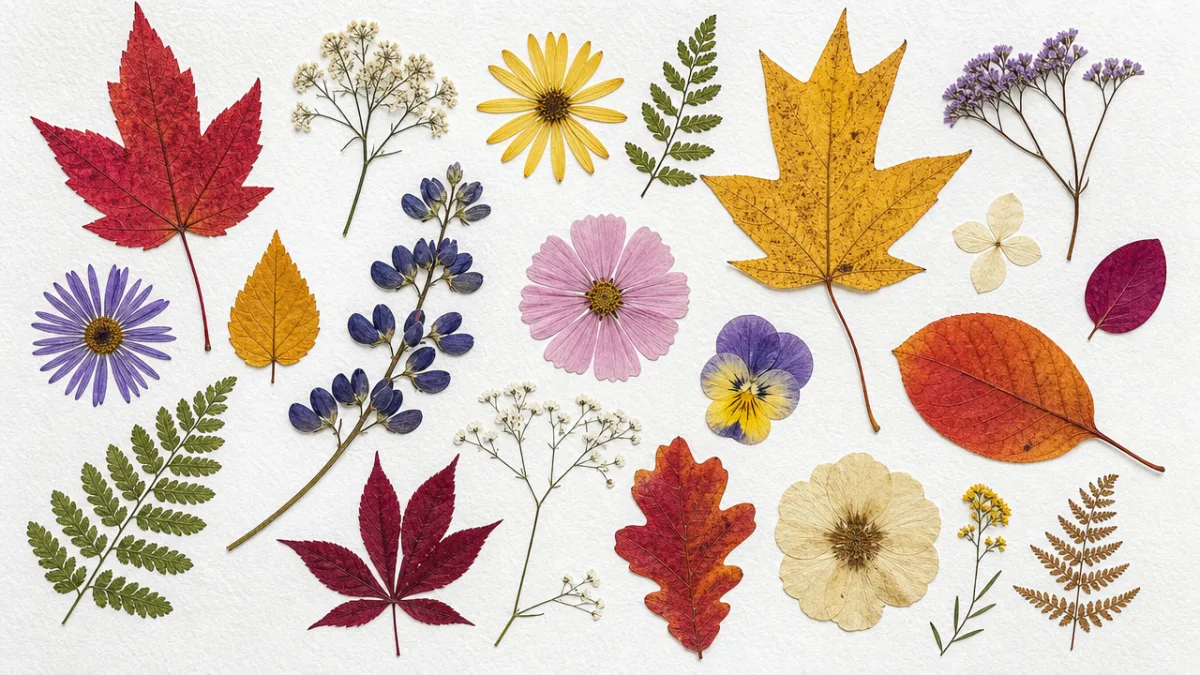
Pressed flower and leaf projects require a little more patience but reward that patience beautifully. To press natural materials at the campsite, children can place flat leaves, small flowers, and grasses between the pages of a heavy book or a dedicated flower press, then apply weight on top and leave them for at least 24 hours. Once pressed and dried, these botanical specimens can be arranged and glued onto cards, bookmarks, or journal pages, then sealed with Mod Podge for a professional finish. The pressed flower bookmark is a particularly lovely project because it is practical, portable, and creates a lasting memento of the specific plants and wildflowers encountered on the trip.
Campfire-Inspired Crafts and Evening Activities
As the sun dips below the tree line and the campfire crackles to life, the evening hours present a perfect opportunity for crafts that complement the warm, glowing atmosphere of the campsite. Friendship bracelets made from embroidery thread are a timeless favorite that children can work on by firelight, their fingers moving through the knotting patterns while conversation flows naturally around them. The meditative quality of bracelet-making suits the slower pace of evening camping beautifully, and the finished bracelet carries the memory of that specific campfire, that specific night, embedded in every knot.
Constellation art is another evening-inspired craft that connects directly to the camping experience in a deeply meaningful way. During the day, children can use a dark sheet of paper or cardstock and a white paint pen or chalk to map out their favorite constellations based on a star chart. In the evening, they can take their artwork outside and try to match their drawings to the actual stars appearing overhead. This activity bridges scientific curiosity with artistic expression and opens up conversations about astronomy, mythology, and the human history of stargazing that have been taking place around fires for thousands of years.
Shadow puppet crafts offer yet another wonderful way to make use of the campfire or lantern light during evening hours. Children can cut simple animal or character shapes from thick cardstock, tape each shape to the end of a stick, and then perform impromptu shadow puppet shows on the side of the tent or a hung white sheet. The entire family can participate in writing a story together and then bringing it to life through the puppet show, blending creative writing, theatrical performance, and visual art into a single collaborative activity. These are the kinds of multi-sensory, screen-free experiences that stay in a child’s memory long into adulthood, becoming the stories they tell their own children someday.
Ultimately, camping crafts for kids are about far more than keeping little hands busy. They are about teaching children to see beauty in the ordinary world around them, to transform a plain rock or a fallen leaf into something meaningful and personal. They are about slowing down together as a family, sharing creative energy in the open air, and building memories that are rooted in place, texture, and the particular quality of light on a specific afternoon in the woods. Pack the supplies, embrace the mess, and let the campsite become a studio — the results will be extraordinary.








What do you think?
It is nice to know your opinion. Leave a comment.