










Easy DIY Plastic Tablecloth Decoration Ideas on a Budget (Outdoor Friendly!)
Why Plastic Tablecloths Are the Unsung Hero of Budget Decorating
When most people think about party decorations or outdoor event styling, plastic tablecloths rarely come to mind as a serious creative tool. Yet these humble, inexpensive sheets of material are secretly one of the most versatile and budget-friendly supplies you can stock up on. Available at dollar stores, party supply shops, and big-box retailers for as little as one dollar each, plastic tablecloths offer an enormous canvas for creativity without requiring a significant financial investment. Their low cost means you can experiment freely without worrying about wasting money.
What makes plastic tablecloths particularly appealing for DIY decorators is their outdoor-friendly nature. Unlike fabric, crepe paper, or tissue-based decorations that wilt or fall apart the moment moisture touches them, plastic tablecloths hold up remarkably well against light rain, humidity, and wind. This durability makes them an ideal choice for backyard birthday parties, graduation celebrations, baby showers, wedding receptions held outdoors, and any other event where weather unpredictability is a real concern. You get the visual impact without the anxiety of watching your décor dissolve mid-party.
Beyond durability, plastic tablecloths come in a jaw-dropping array of colors, patterns, and finishes. From solid jewel tones and pastels to metallic foils, polka dots, and holiday prints, the options available today go far beyond the plain white roll your grandmother used at church potlucks. This variety means you can match virtually any theme, color palette, or aesthetic vision you have in mind. Whether you’re going for a tropical luau vibe, an elegant black-and-gold soirée, or a whimsical rainbow children’s party, there is almost certainly a plastic tablecloth that fits your vision perfectly.
Choosing the Right Tablecloth for Your Project
Not all plastic tablecloths are created equal, and understanding the differences before you begin your project will save you frustration later. Standard disposable tablecloths are thin and lightweight, which makes them excellent for fringe cutting, pom-pom making, and layered backdrop panels. Heavier-duty versions, sometimes marketed as reusable plastic tablecloths, are thicker and more structured, making them better suited for table runners, photo booth backdrops, and applications where you need the material to hold a shape or withstand repeated handling throughout an event.
The finish of the tablecloth also matters depending on your intended effect. Matte plastic tablecloths photograph beautifully and create a clean, modern look that works well for styled shoots and social media content. Metallic or foil tablecloths catch light dramatically and add an instantly festive, glamorous energy to any space, making them popular choices for New Year’s Eve parties, weddings, and milestone birthday celebrations. Iridescent or holographic options are trending strongly right now and create a magical, almost futuristic atmosphere that looks stunning both in person and in photographs.
When planning your project, consider buying a few extra tablecloths beyond what you think you need. Mistakes happen, especially when you are cutting, twisting, or manipulating the material in new ways for the first time. Having backup supplies on hand means a minor error does not derail your entire decorating plan. Additionally, extra material can often be repurposed into smaller accent pieces, streamers, garlands, or filler decorations that round out your overall design without requiring a separate shopping trip.
Creating Stunning Backdrops and Photo Booth Backgrounds
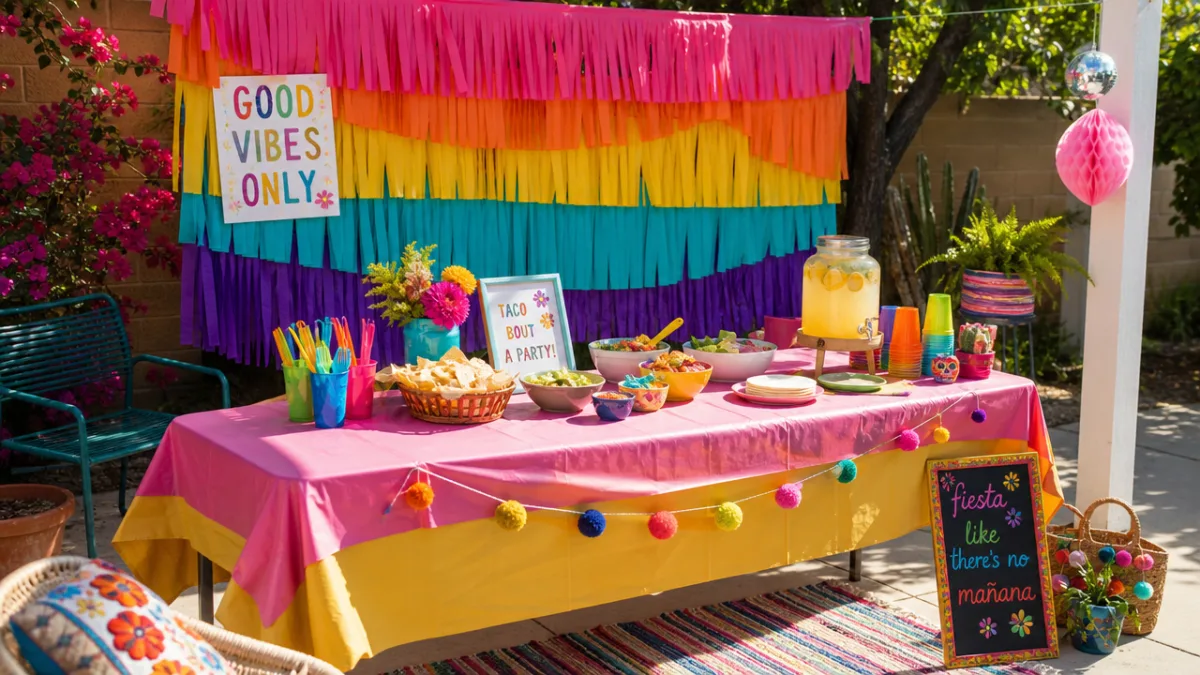
One of the most popular and visually impactful ways to use plastic tablecloths in DIY decorating is creating large-scale backdrops for photo booths, dessert tables, ceremony arches, or gift display areas. The sheer size of a standard tablecloth, which typically measures around 54 by 108 inches, means that just a few panels hung side by side can cover an entire wall or fence section. When you layer multiple colors or alternate between solid and metallic finishes, the result looks surprisingly professional and polished, far beyond what the dollar-store price tag would suggest.
The fringe backdrop is perhaps the most well-known tablecloth transformation technique, and for good reason — it is beginner-friendly, fast, and absolutely eye-catching. To make one, simply lay your plastic tablecloth flat on a clean surface and cut parallel vertical strips from the bottom edge up, stopping a few inches short of the top hem so that the tablecloth remains in one connected piece. The width of your strips determines the texture of your fringe; narrow cuts of about half an inch create a delicate, feathery effect, while wider cuts of one to two inches produce bold, dramatic fringe that moves beautifully in a gentle breeze. Once cut, hang the tablecloth from a tension rod, rope, or Command hooks and gently separate and fluff the strips for maximum volume.
For a more dimensional and luxurious-looking backdrop, consider creating a layered ruffle effect by gathering multiple tablecloths horizontally and attaching them in overlapping rows from top to bottom. This technique mimics the look of expensive fabric ruffles or cascading flower walls but at a tiny fraction of the cost. You can use a single color for an elegant, monochromatic statement or alternate between complementary shades for a gradient ombre effect. Securing the gathers with a hot glue gun, zip ties, or floral wire to a PVC pipe frame or a section of chicken wire stretched over a wooden frame gives you a freestanding backdrop that can be repositioned as needed throughout your event.
Pom-Poms, Fans, and Hanging Decorations
Beyond flat backdrops, plastic tablecloths can be transformed into three-dimensional hanging decorations that add volume and visual interest at various heights throughout your event space. Ceiling installations, in particular, are a highly effective and underutilized decorating strategy that draws the eye upward and creates an immersive, fully decorated atmosphere rather than leaving blank overhead space. Plastic tablecloth pom-poms are among the easiest three-dimensional decorations to make and can be scaled up or down dramatically depending on how many layers of material you use.
To create a large pom-pom, stack several folded tablecloths on top of one another, then accordion-fold the entire stack along its length in sections of about two to three inches. Pinch the folded stack tightly in the center and secure it with a zip tie or length of ribbon, then carefully separate and fluff each individual layer, pulling them alternately upward and downward to form a full, rounded sphere. A single large pom-pom made from five or six tablecloths can measure eighteen inches or more in diameter and makes a genuinely striking statement piece. Clusters of three pom-poms in graduated sizes hung at different heights look particularly elegant above a dessert table or ceremony arch.
Fan decorations are another beloved tablecloth project that requires minimal skill but yields maximum impact. The process is nearly identical to pom-pom construction, but instead of fully separating all layers into a sphere, you spread only one side of the accordion-folded stack into a semicircular fan shape and mount it flat against a wall or fence. These fans can be arranged in sunburst patterns, cascading arches, or geometric grid formations to create truly custom wall installations. Mixing fan sizes and layering colors within each individual fan adds depth and sophistication to what is, at its core, a remarkably simple technique.
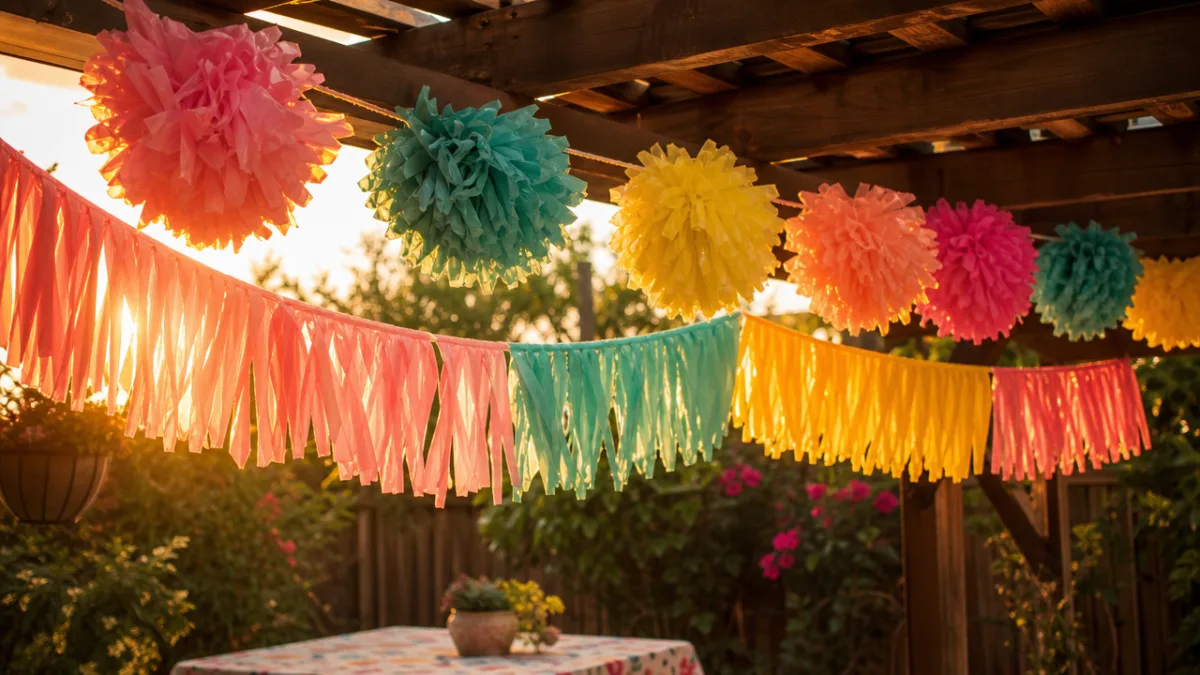
Table Styling and Centerpiece Ideas Using Plastic Tablecloths
While tablecloths are obviously designed for tables, the way most people use them — simply draping them flat and smoothing out the wrinkles — barely scratches the surface of their decorative potential. Elevating your actual table styling with creative tablecloth techniques can completely transform the look of your event without adding significant cost. Layering two tablecloths of different colors, for instance, with the top one cut into a deliberate scalloped, chevron, or geometric edge, creates a custom table covering that looks like something purchased from a specialty party décor boutique.
For outdoor dining tables at garden parties or al fresco dinners, consider using a tablecloth in a rich, deep color as a base and then adding a contrasting runner cut from a second tablecloth in a lighter or metallic shade. Cutting the runner with decorative fringe along both long edges adds texture and movement, especially when there is a gentle breeze. Weighting the corners of outdoor tablecloths with small decorative objects, clips, or strategically placed centerpiece elements is also a practical consideration that prevents the wind from disrupting your carefully styled table mid-event.
Tablecloths can also be used to create budget-friendly chair decorations that tie your overall color scheme together throughout the entire event space. Cutting tablecloths into wide sashes and tying them around the backs of folding chairs instantly upgrades standard rental chairs into something that feels intentional and styled. For children’s parties, cutting tablecloths into cape shapes and tying one around each chair back with a coordinating ribbon creates a playful, whimsical effect that delights young guests. These small details are the kind of thoughtful touches that guests notice and remember long after the party ends.
DIY Centerpiece Vessels and Garlands
Tablecloth material can be used to wrap, cover, or embellish the vessels and containers that hold your centerpiece flowers, candles, or greenery. Wrapping a plain glass vase, tin can, or plastic bucket in a strip of tablecloth material and securing it with a coordinating ribbon or twine instantly transforms a utilitarian container into a cohesive decorative element. For metallic tablecloths in particular, this technique creates vessels that look like they were purchased from a high-end event design studio but cost almost nothing to produce.
Tablecloth garlands are another fast and satisfying project that works beautifully strung between fence posts, wound through stair railings, draped along table edges, or hung from tree branches at outdoor events. To make a simple tablecloth garland, cut the material into long, thin strips and tie them at regular intervals along a length of twine or thin rope. The strips flutter and catch the light as guests move through the space, adding constant subtle movement and visual interest. For a more structured garland, cut the tablecloth into leaf, flower, or geometric shapes and punch a small hole in each piece before threading them onto twine in your desired pattern.
If you want a more dimensional centerpiece element, consider rolling strips of plastic tablecloth material into cone shapes and securing them with tape or a dab of hot glue to create individual flower petals or abstract sculptural forms. Grouping these rolled elements together and attaching them to a foam base or floral foam block allows you to build custom faux floral arrangements in any color combination you choose. While these arrangements obviously lack the organic beauty of real flowers, they are completely weather-resistant, can be made weeks in advance, and are particularly well-suited to highly styled, graphic party aesthetics where bold color and geometry take precedence over naturalistic beauty.
Outdoor-Specific Decoration Projects That Withstand the Elements
Designing decorations specifically for outdoor use requires a different mindset than decorating an indoor space. Wind, humidity, direct sunlight, and the occasional unexpected rain shower are all real factors that can destroy delicate or moisture-sensitive materials within minutes. Plastic tablecloths, however, are almost uniquely suited to outdoor party decorating because they are inherently waterproof, resistant to humidity, and surprisingly resilient against moderate wind when properly secured. Understanding how to maximize these properties allows you to create outdoor installations that look polished from the moment guests arrive until the last one leaves.
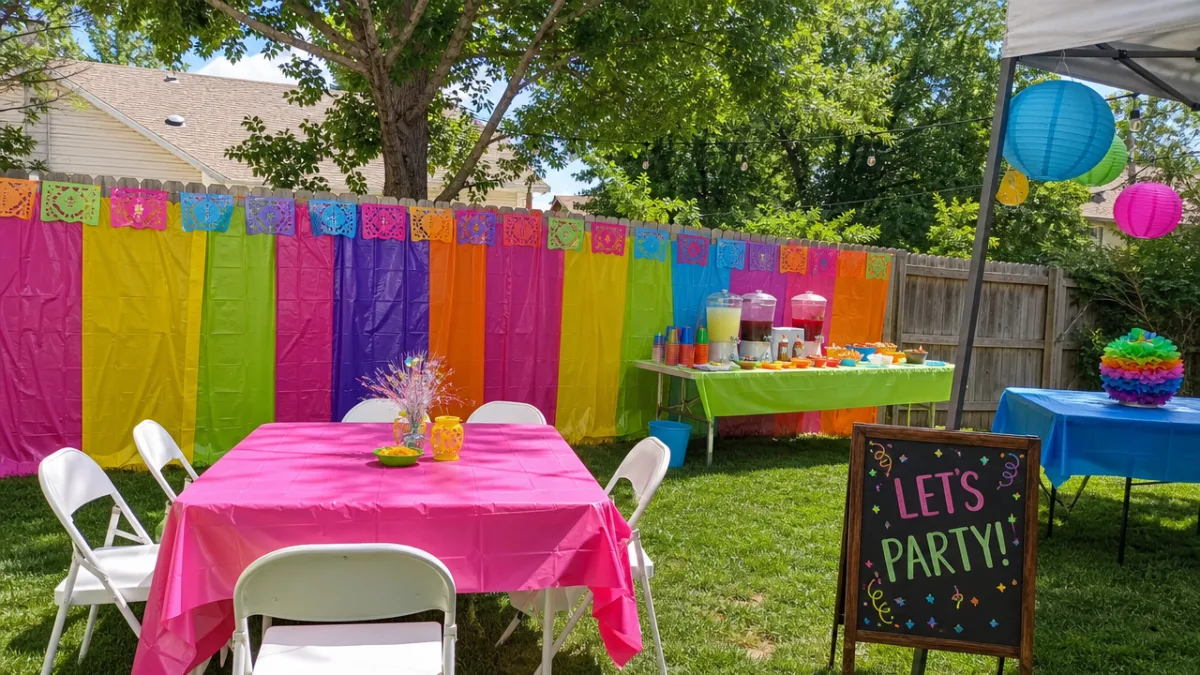
For outdoor fence or wall decorations, tablecloth panels attached with zip ties, binder clips, or outdoor-rated Command strips create instant color-blocking effects on otherwise dull wooden fences, cinder block walls, or chain-link barriers. This technique is especially popular for backyard graduation parties and outdoor birthday celebrations where transforming a utilitarian fence line into a vibrant backdrop is a decorating priority. Using three or more colors in a repeating pattern creates a festive, carnival-like energy, while a single color in a large block creates a clean, modern look that suits more sophisticated events.
Outdoor balloon columns and arches benefit enormously from tablecloth accent decorations. Cutting strips of tablecloth material and weaving them through balloon clusters, tying them in bows around balloon knots, or creating a fringe base at the bottom of a balloon column adds color, texture, and visual weight to balloon arrangements that might otherwise look sparse or incomplete. For tropical or tiki-themed outdoor parties, cutting tablecloths into large leaf or palm frond shapes and attaching them to stakes driven into the ground creates affordable and weather-resistant landscaping accents that reinforce the theme throughout the entire party area.
Quick Setup Tips for Stress-Free Outdoor Decorating
Preparing your tablecloth decorations in advance and organizing them thoughtfully before your event day makes an enormous difference in how smoothly the setup process goes. Most tablecloth projects can be completed entirely in the days or even weeks before your event and stored flat or loosely rolled without any damage to the finished decoration. Creating a clear labeling system for your pre-made pieces — grouping them by location within the party space — means that on the day of the event, hanging and arranging everything takes a fraction of the time it would if you were working from a disorganized pile of loose decorations.
Wind management is the single biggest outdoor decorating challenge, and planning for it proactively rather than reactively will save enormous stress. For hanging decorations, always use at least two attachment points per piece rather than a single central attachment, which allows wind to spin and tangle lightweight materials. For table decorations, consider threading a length of fishing line or thin ribbon through small holes punched along the hem of your tablecloth and tying it to the table legs underneath so that the tablecloth cannot lift or shift even in a brisk breeze. These simple precautions make a dramatic difference in how your decorations hold up throughout a multi-hour outdoor event.
Cost Breakdown and Budget Planning for Your DIY Tablecloth Décor
One of the most compelling arguments for incorporating plastic tablecloths into your event decorating strategy is the remarkable value they represent when you calculate the cost per visual impact. A single dollar-store tablecloth measuring 54 by 108 inches contains enough material to create one large fringe backdrop panel, three to four medium-sized pom-poms, an entire garland stretching ten feet or more, or a complete set of chair sashes for eight to ten chairs. When you consider that event rental companies charge anywhere from five to fifteen dollars per chair sash alone, the savings available through DIY tablecloth projects become impossible to ignore.
For a complete backyard party decoration setup that includes a fringe backdrop, a tablecloth-covered dessert table, hanging pom-pom ceiling installation, fence panel decorations, and chair sashes for twenty guests, a realistic total materials budget using dollar-store tablecloths runs between fifteen and thirty dollars depending on how many colors and finishes you incorporate. Achieving a comparable look through purchased party decorations or rental items would typically cost five to ten times that amount. The labor investment is real — these projects do take time to execute — but for budget-conscious hosts who are comfortable crafting, the trade-off is overwhelmingly worthwhile.
Beyond pure cost savings, DIY tablecloth decorating offers a level of customization that purchased decorations simply cannot match. When you make your own decorations, you control every aspect of the color palette, scale, texture, and placement. You are not limited to whatever combinations happen to be available at your local party store or within your online retailer’s current inventory. This creative freedom is particularly valuable for themed events with very specific aesthetic requirements, for celebrations that incorporate unusual color combinations, or for hosts who want their events to look genuinely unique rather than assembled from a catalog of standard party supply options.
Sustainability Considerations and Reducing Waste
A thoughtful approach to plastic tablecloth decorating includes considering the environmental impact of using single-use plastic materials. While the low cost and accessibility of disposable tablecloths are genuine advantages, mindful decorators can take several steps to reduce the waste generated by these projects. Choosing heavier-duty, reusable-grade tablecloths for your primary installations rather than the thinnest disposable versions means those items can be carefully folded and stored for use at multiple future events, dramatically reducing the per-use environmental impact of each tablecloth purchased.
Repurposing and upcycling unused tablecloth material after your event is another effective waste-reduction strategy. Leftover pieces can be cut into trash can liners, used as drop cloths for future craft projects, incorporated into children’s art and sensory play activities, or donated to schools, community centers, or theater groups that can use them for their own projects. Planning your cutting layout carefully before beginning any project to maximize the usable material from each tablecloth also minimizes scrap waste and stretches your budget even further.
Some crafters have also begun experimenting with using tablecloth material for longer-lasting, reusable decoration elements by heat-sealing edges, reinforcing attachment points with grommets, and storing finished pieces in protective bags between uses. While this approach requires a small additional investment in tools and storage materials, it transforms what would otherwise be single-use party decorations into a growing inventory of reusable assets that pay for themselves after just two or three events. Building a personal library of tablecloth decorations in a range of colors and styles means that future events require only minimal additional purchasing, making the long-term economics of this decorating approach even more attractive.








What do you think?
It is nice to know your opinion. Leave a comment.