










7 Free Macrame Animal Keychain Patterns: Your Complete Guide to Knotted Companions
Introduction to Macrame Animal Keychains
Macrame has experienced a remarkable renaissance over the past several years, transforming from a retro craft of the 1970s into a beloved modern art form embraced by crafters of all skill levels. Among the many projects that have captured the hearts of fiber art enthusiasts, macrame animal keychains stand out as some of the most charming, accessible, and satisfying items to create. These miniature knotted creatures combine the meditative rhythm of macrame with the joy of bringing adorable animal characters to life using nothing more than cord, scissors, and your own two hands.
What makes macrame animal keychains particularly appealing is their perfect balance of portability and creativity. Unlike large wall hangings or plant hangers that require significant space and materials, keychains can be completed in a single afternoon sitting. They make exceptional handmade gifts, can be sold at craft fairs for a tidy profit, and serve as wonderful practice projects for those looking to refine their knotting techniques before tackling bigger macrame ventures. Whether you are a seasoned macrame artist or someone picking up cord for the very first time, these small projects offer enormous creative rewards.
In this comprehensive guide, we will walk you through seven completely free macrame animal keychain patterns, covering everything from the basic fox to more intricate designs like owls, bears, and bunnies. Each pattern section includes material lists, step-by-step guidance, and helpful tips to ensure your finished pieces look polished and professional. We will also cover the foundational knots you need to know, the best materials to use, and practical advice for finishing and personalizing your keychains. By the end of this article, you will have everything you need to start knotting your own miniature menagerie.
Essential Materials and Tools for Macrame Keychains
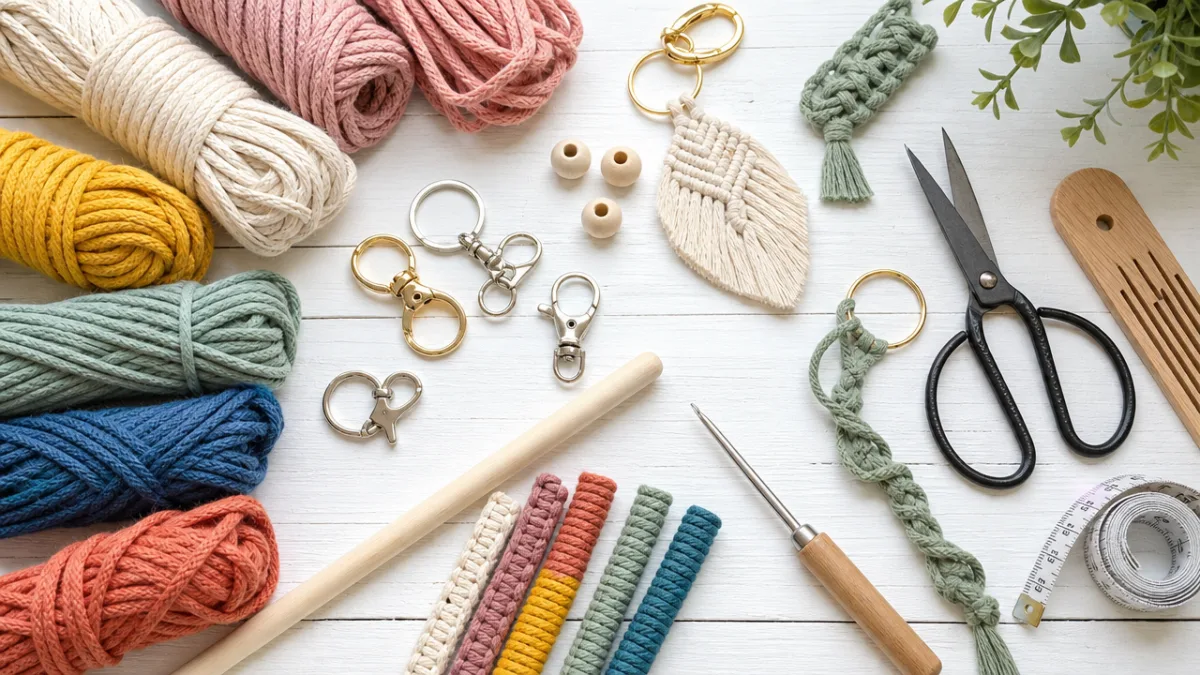
Before diving into any of the seven patterns, it is important to assemble the right materials and tools. The beauty of macrame keychains is that the supply list is refreshingly short and affordable, making this one of the most budget-friendly crafts you can pursue. The single most important material is your cord, and for keychains, most crafters recommend using 3mm to 5mm single-strand or three-strand twisted cotton macrame cord. Single-strand cord, sometimes called macrame string, produces a softer, more fringe-like texture when brushed out, which is perfect for creating fluffy animal faces and tails. Three-strand twisted cord holds its shape more crisply and works beautifully for structured body sections.
Beyond cord, you will need a small selection of tools and accessories to complete your keychains. A sturdy pair of sharp scissors is non-negotiable, as clean cuts make a significant difference in the overall appearance of your finished piece. A fine-tooth comb or a pet slicker brush is invaluable for fluffing and brushing out cord fibers to create that irresistibly soft, fur-like texture that makes macrame animals so appealing. Keychain hardware rings, available at most craft stores and online suppliers, provide the functional attachment point for your creations. You may also want a tape measure or ruler for cutting consistent cord lengths, a foam board or macrame board for pinning your work in place, and fabric glue or clear-drying craft glue for securing knots and preventing fraying.
Color selection is another area where you can truly express your creativity. While many crafters default to natural cream or beige cotton cord for a classic look, the animal keychain format opens up exciting possibilities. Consider using warm brown and rust tones for foxes and bears, soft grey and white for bunnies and cats, golden yellow for lions, rich chocolate brown for puppies, or dusty grey and cream for owls. Many online suppliers offer macrame cord in dozens of colors, and mixing two shades within a single project can add wonderful dimension and realism to your animal designs. Having a small collection of complementary colors on hand before you begin will give you maximum creative flexibility.
Foundational Knots You Need to Know
Every macrame project, no matter how simple or complex, is built upon a relatively small set of core knots. For animal keychains specifically, mastering just four or five essential knots will give you the technical foundation to complete all seven patterns in this guide. The most fundamental of these is the Lark’s Head Knot, which is used to mount your working cords onto the keychain ring at the very beginning of almost every pattern. To execute a Lark’s Head Knot, you fold a length of cord in half, loop the folded midpoint over the ring, and pull both cord ends through the resulting loop. It is simple, secure, and forms the starting anchor for your entire piece.
The Square Knot is arguably the most versatile and widely used knot in all of macrame, and it appears repeatedly throughout animal keychain patterns. A square knot is formed using four cords, where the two outer cords are the working cords and the two inner cords act as filler or anchor cords. The knot is created in two half-hitches, first crossing the left working cord over the fillers and under the right, then crossing the right working cord under the fillers and over the left. When alternated across multiple groups of cords, square knots create beautiful, textured flat panels that form animal bodies and faces beautifully. Practicing this knot until it feels natural is well worth the time investment before beginning your first pattern.
Additional knots you will encounter in these patterns include the Half Hitch, the Spiral Knot (a series of repeated half-square knots), the Gathering Knot used to cinch sections together, and simple Overhand Knots used for details and finishing. Many macrame tutorials recommend practicing each knot individually on a practice length of cord before starting a pattern, particularly if you are new to the craft. There are excellent free video tutorials available on platforms like YouTube that demonstrate these knots in real time, and watching someone else’s hands work through the motions can be far more illuminating than reading written instructions alone. Once your fingers learn the muscle memory of these foundational knots, you will find that the patterns begin to feel intuitive and deeply satisfying.
Patterns 1 Through 4: Fox, Bunny, Bear, and Owl
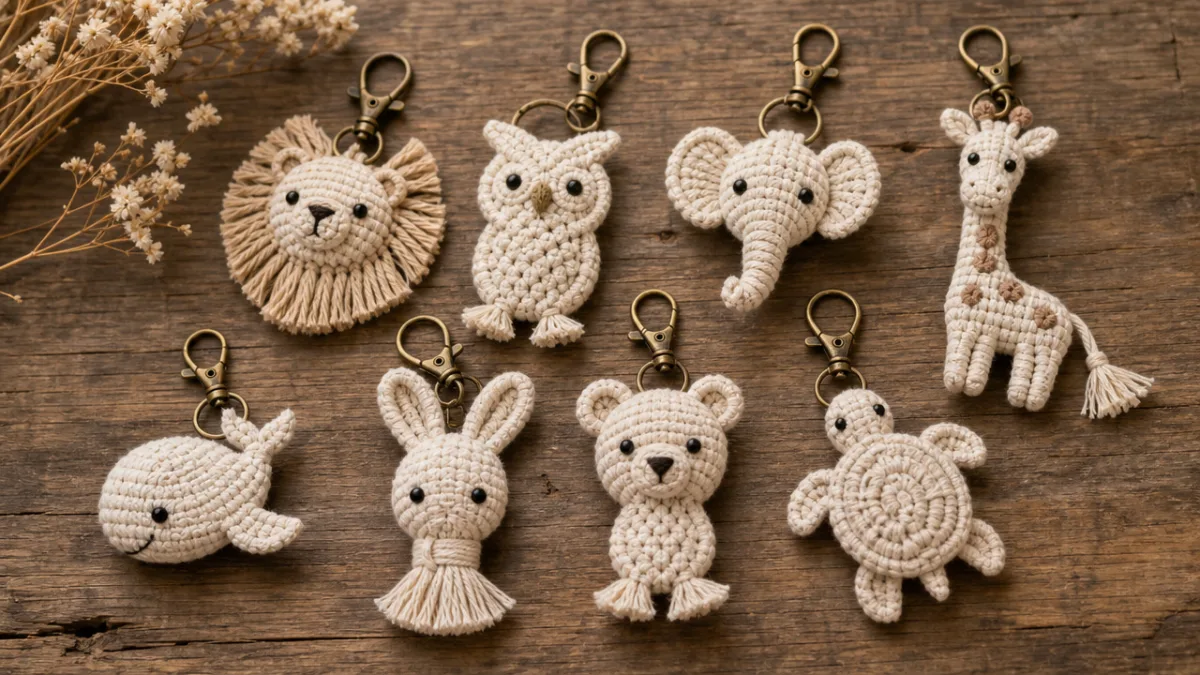
The Fox Keychain is widely considered the perfect starter pattern for macrame animal beginners, and it is easy to understand why. The fox’s distinctive triangular ears, pointed snout, and bushy tail translate beautifully into macrame’s natural textures and shapes. To begin, mount six to eight lengths of 3mm cord onto your keychain ring using Lark’s Head Knots, leaving longer cord ends for the body. Work rows of alternating Square Knots to form the fox’s torso, then separate out four cords for each ear, tying small triangular shapes using Half Hitches. The magic happens when you brush out the lower cord ends into a full, feathery tail. Adding a small length of white cord and brushing it out creates a perfect white-tipped tail finish.
The Bunny Keychain is another fan favorite, beloved for its soft, rounded appearance and the adorably long ears that give it instant recognizability. This pattern uses slightly more cord than the fox due to those characteristic elongated ears. Begin by mounting your cords as usual, then work the body section using Square Knots before separating out specific cords to form each ear. The ears are created by working long chains of Half Hitches along two groups of cords, then folding them upward and securing them to the top of the bunny’s head. A small pompom made from brushed-out cord scraps makes a delightful cotton tail, and you can add tiny black beads or a few drops of fabric paint to create eyes and a nose for extra personality.
The Bear Keychain offers a wonderful opportunity to work with mixed cord colors, using a darker brown for the main body and a lighter cream for the bear’s distinctive muzzle patch. The bear’s round, compact shape is achieved through careful tension control as you work your Square Knots, keeping them tight and even to build a dense, sturdy body. The ears are formed as small rounded loops positioned at the top of the piece, and the muzzle patch is created by adding a separate cluster of lighter cord and brushing it out into a soft circular shape. This pattern also introduces the Gathering Knot, used to define the bear’s neck and create a pleasing silhouette. Bears look particularly charming when made in warm honey-brown cord with touches of caramel and cream.
The Owl Keychain is perhaps the most visually striking of the first four patterns, thanks to the owl’s dramatic wing shapes and the opportunity to create beautifully layered feather textures. Owls are traditionally associated with wisdom and make meaningful gifts for teachers, graduates, or book lovers. The pattern begins similarly to the others with Lark’s Head mounted cords, but diverges as you work the wing sections using sweeping diagonal lines of Half Hitch knots that fan outward from the center body. Large circular eyes can be represented using round wooden beads, button loops, or small rings of cord. The layered feather effect across the owl’s chest is achieved by cutting and fringing multiple short lengths of cord and attaching them in overlapping rows, creating genuine texture and dimension.
Patterns 5 Through 7: Cat, Puppy, and Lion
The Cat Keychain is a natural extension of the bunny pattern in terms of structure, but the triangular pointed ears and slender body proportions give it an entirely different character. Cat keychains look particularly sophisticated when worked in grey, white, black, or a tortoiseshell combination of brown and orange cords. The triangular ears are formed by working decreasing rows of Square Knots on small groups of cords, creating pointed peaks that frame the cat’s face. For added realism, you can use a fine marker or a tiny dab of black fabric paint to draw on delicate whisker lines across the brushed-out muzzle area. Siamese cat enthusiasts might enjoy working the ear tips and lower body in a darker shade than the main body, mimicking those elegant color points.
The Puppy Keychain is unapologetically adorable and consistently one of the most popular designs shared across social media platforms and craft communities. The puppy’s floppy ears are its defining feature, achieved by creating two long, flat sections of closely worked Square Knots that hang down on either side of the face rather than pointing upward. This small structural difference from the cat or bunny pattern creates an immediately recognizable, endearing silhouette. Working the puppy in warm caramel, chocolate brown, or spotted black-and-white cord combinations adds to its charm. The puppy pattern also introduces a fun variation in the tail section, where a short, upward-curling tail is suggested by gathering a small bundle of cords with a Gathering Knot and curling the brushed-out end slightly before setting it with a tiny amount of fabric stiffener.
The Lion Keychain is the most ambitious of the seven patterns and serves as a wonderful culmination project that challenges you to apply everything you have learned. The lion’s glorious mane is what sets this pattern apart, and achieving it requires working with longer cord lengths and more individual strands than any of the other designs. The mane is created by mounting additional fringe cords in a circular arrangement around the lion’s face, then cutting them to graduated lengths and brushing them out into a full, dramatic corona. The face itself uses tightly worked knots to create a rounded shape, with a small brushed-out area forming the lion’s lighter muzzle. Golden yellow, burnt orange, and tawny brown cord combinations produce the most striking and realistic results for this regal little creature.
Finishing Techniques and Personalization Tips
The difference between a macrame keychain that looks homemade and one that looks professionally crafted often comes down entirely to the finishing process. Taking your time with these final steps can dramatically elevate the quality and appearance of your completed piece. The most important finishing step is securing all knot ends to prevent unraveling. Apply a small amount of clear-drying fabric glue or Fray Check to the underside of your final knots, allow it to dry completely, and then trim any excess cord close to the knot. This invisible reinforcement ensures your keychain will withstand the daily wear and tear of being attached to keys, bags, and zippers without coming apart.
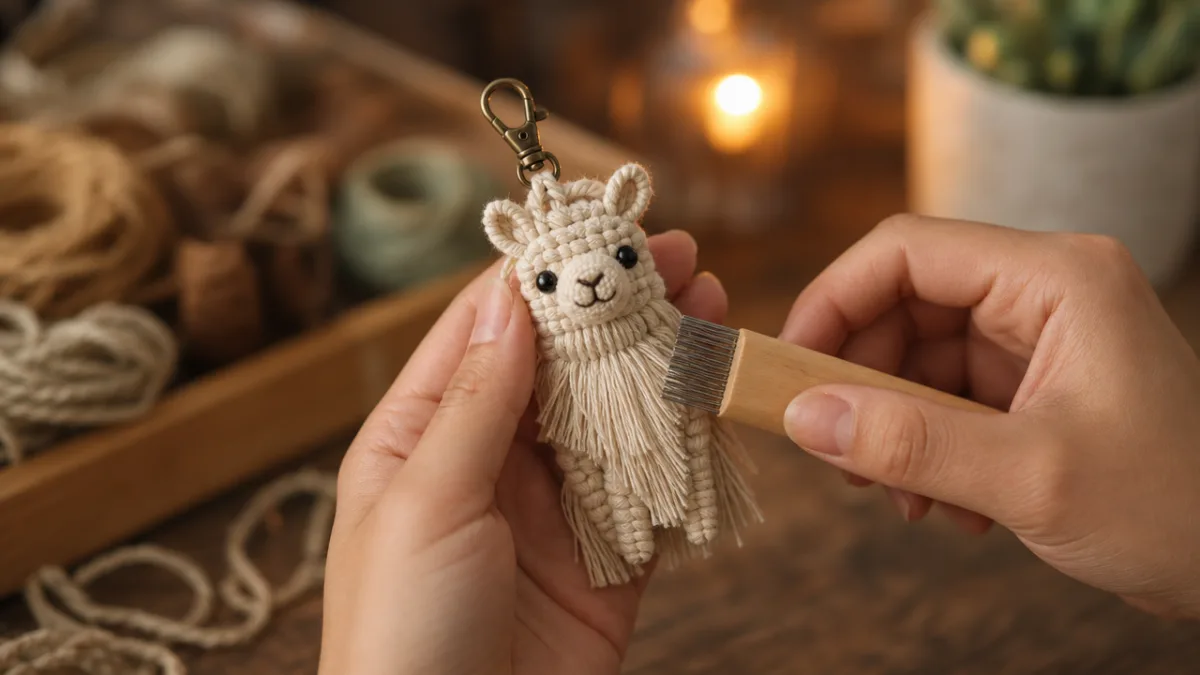
Brushing and grooming your macrame animals is both a practical finishing step and a genuinely enjoyable part of the process. Use a fine-tooth comb or pet slicker brush to gently tease apart the cord fibers in areas meant to represent fur, fleece, or feathers. Work in small sections, brushing from the tips of the cords inward toward the knot, and be patient with the process. The more thoroughly you brush, the softer and fluffier the result. Once your animal is fully brushed out, use sharp scissors to trim the fiber to the desired shape, sculpting ears, muzzles, tails, and manes into clean, defined forms. This sculpting step is where your animal truly comes to life, so take your time and step back frequently to assess the overall shape from a distance.
Personalization options for your macrame animal keychains are nearly limitless, and adding thoughtful custom touches transforms these pieces from simple crafts into genuinely special, one-of-a-kind items. Consider incorporating the following personalizations to make each keychain truly unique:
- Add small wooden or acrylic letter beads to the keychain ring to spell out the recipient’s name or initials, creating a personalized gift element that makes the piece feel truly bespoke and intentional.
- Thread tiny seed beads, crystal beads, or gemstone chips onto individual cord strands before knotting to add subtle sparkle and color variation throughout the body of your animal design.
- Use fabric paint, permanent markers, or alcohol ink pens to add fine details like nose outlines, whisker dots, eye shine spots, or paw pads that cord alone cannot fully convey.
- Attach small charms, bells, or miniature metal pendants to the keychain hardware alongside your animal for added visual interest and a satisfying sound element that makes the piece even more delightful.
- Experiment with gradient dyeing techniques, using RIT dye or fiber-reactive dye to create ombre effects on your cord before beginning to knot, resulting in beautifully subtle color transitions across the finished animal.
Storing and caring for your finished macrame keychains is also worth considering, particularly if you are creating them for sale or as gifts. Keep finished keychains away from prolonged moisture exposure, as cotton cord can absorb water and may develop a musty smell if stored damp. If a keychain becomes soiled, spot clean it gently with a small amount of mild soap and cold water, then allow it to air dry thoroughly before brushing it back into shape. For storage before gifting or selling, individual small zip-lock bags keep keychains clean and prevent the fiber from getting tangled or crushed during transit. A well-cared-for macrame keychain can last for years and continue to bring its owner joy long after the original crafting session.
Selling Your Macrame Keychains and Building a Creative Business
Many crafters discover through making macrame animal keychains that they have both a talent and a passion for the work, and it is entirely natural to begin wondering whether you could turn this hobby into a source of income. The good news is that macrame keychains are among the most commercially viable handmade products available to small craft business owners. They are small, lightweight, and inexpensive to ship, which makes them ideal for online sales through platforms like Etsy, Amazon Handmade, or your own independent website. They are also perfectly priced for the impulse-purchase bracket, typically selling for anywhere between eight and twenty-five dollars depending on complexity, materials, and the market you are serving.
Craft fairs, farmers markets, and artisan markets represent another excellent sales channel for macrame keychain makers. These in-person events allow potential customers to touch and examine your work up close, which is a significant sales advantage for fiber arts where texture is such a central part of the appeal. When preparing for a market event, consider creating a cohesive display that showcases the full range of your animal designs together, arranged on a small tabletop stand or hung from a simple display frame. Price tags should be visible and clearly written, and having a small stock of each animal design ensures you can meet varied customer preferences without running out of your most popular styles mid-event.
Social media platforms, particularly Instagram, Pinterest, and TikTok, have proven to be extraordinarily powerful marketing tools for macrame artists of all levels. Short video content showing the creation process from raw cord to finished animal keychain consistently performs well and attracts both potential customers and fellow crafters who may share your content with their own audiences. Documenting your creative process, sharing behind-the-scenes glimpses of your workspace, and posting high-quality photographs of your finished pieces against clean, attractive backgrounds will help you build an engaged following over time. Consistency is the most important factor in social media growth, so aim to post regularly and engage genuinely with your community by responding to comments and questions from your followers.








What do you think?
It is nice to know your opinion. Leave a comment.