










20 Craft Fair Bestselling Ideas That Sell Like Hot Cakes
Why Craft Fairs Are a Golden Opportunity for Creative Entrepreneurs
Craft fairs have experienced a remarkable renaissance in recent years, drawing thousands of shoppers who are eager to find handmade, unique, and personal items that simply cannot be replicated by mass-market retailers. Whether it is a weekend farmers market, a holiday bazaar, or a dedicated artisan fair, these events create an intimate shopping experience where buyers feel a genuine connection to the maker behind the product. For creative entrepreneurs, this connection is not just heartwarming — it is extraordinarily profitable when you know what to bring to the table.
The key to thriving at a craft fair lies in understanding what buyers are actually looking for. Modern shoppers attend these events with specific motivations: they want something handcrafted, they want a story, and they want a product that feels personal or solves a real problem in their lives. When your offerings align with those motivations, sales come naturally and enthusiastically. The challenge, of course, is identifying which products strike that perfect balance between desirability, profitability, and ease of production at scale.
Another often-overlooked advantage of craft fairs is the immediate market feedback they provide. Unlike selling online, where you wait days or weeks to understand customer response, a craft fair gives you real-time data. You can watch which items draw people in, listen to what questions they ask, and notice which products they pick up and put down. That intelligence is invaluable when refining your product line and setting yourself up for long-term success as a maker and seller.
Handmade Candles and Wax Melts: The Perennial Crowd-Pleasers
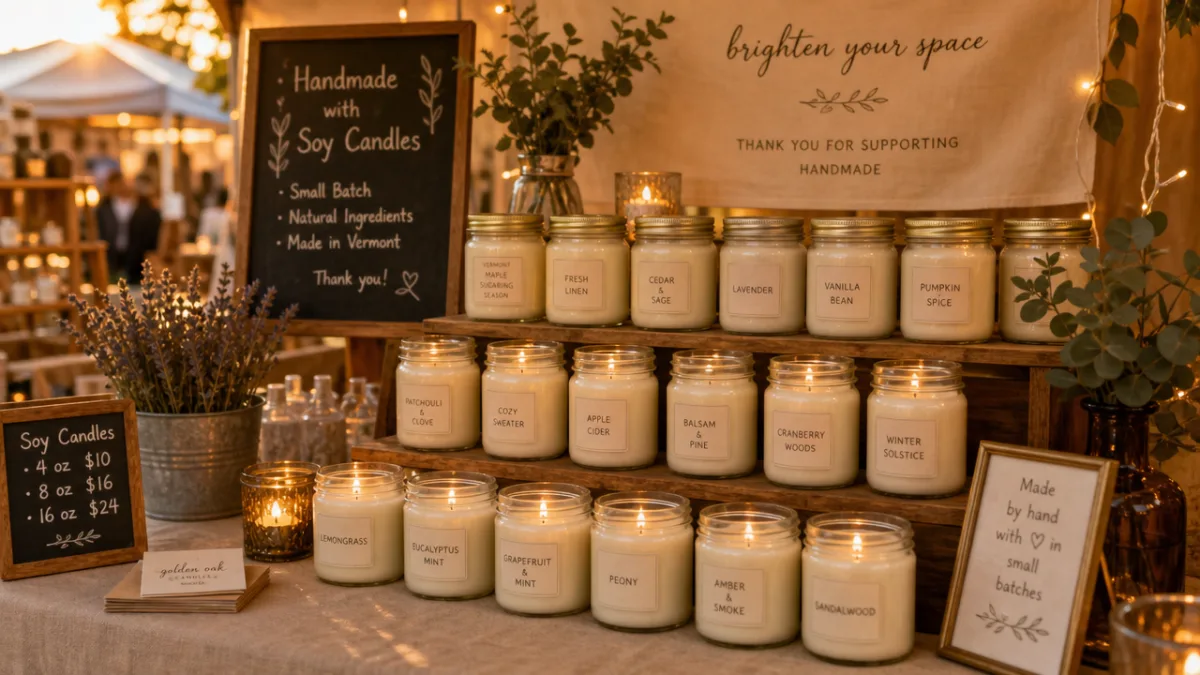
If there is one product category that consistently dominates craft fair bestseller lists, it is handmade candles. The combination of accessible materials, relatively low startup costs, and an enormous range of creative possibilities makes candles one of the most beloved and reliable items to sell. Shoppers are drawn to unique scent combinations, beautiful vessels, and the idea that their home ambiance can be elevated by something lovingly made by hand. A well-branded candle booth can become a destination at any craft fair, drawing repeat visitors who return event after event.
Wax melts have emerged as a strong companion product to traditional candles, and savvy sellers offer both to maximize their revenue per customer. Wax melts are especially appealing to shoppers who have young children or pets and prefer a flame-free fragrance experience. They are also easier to produce in larger quantities, which makes them excellent for stocking your booth with plenty of affordable, giftable options. Pricing wax melts as add-ons or in bundled sets encourages customers to spend more without feeling like they are being upsold.
The visual presentation of candles at a craft fair is just as important as the quality of the product itself. Invest in beautiful labels, cohesive color palettes, and attractive display vessels like concrete pots, amber glass jars, or hand-painted tins. Group your scents into collections — perhaps a botanical line, a cozy winter collection, or a citrus-forward summer range — so that customers can navigate your table intuitively. When your booth tells a clear, beautiful story, browsers become buyers far more readily.
Personalized and Custom Products: The Emotional Bestsellers
Personalization has become one of the most powerful forces in the handmade marketplace, and craft fair shoppers respond to it with genuine enthusiasm. Items that can be customized with a name, a date, a meaningful phrase, or a family initial carry an emotional weight that off-the-shelf products simply cannot replicate. From engraved cutting boards to custom-stamped jewelry, personalized goods feel like a gift that truly sees the recipient — and that emotional resonance drives buyers to open their wallets without hesitation.
The range of personalized products you can offer at a craft fair is remarkably wide, which means there is room for makers with almost any skill set to participate in this trend. Wood burners can create personalized signs, keepsake boxes, or pet portrait plaques. Jewelers can offer hand-stamped necklaces or birthstone rings sized on the spot. Textile artists can embroider names onto tote bags, aprons, or baby blankets. The common thread is that the customer feels like they are getting something made just for them, even if the base product is pre-made and only the final touch is customized.
One practical tip for offering personalization at a craft fair is to have a selection of pre-made items ready alongside your customization service. Not every shopper has the time to wait, but many will purchase a ready-made item if they can see examples of the personalization quality up close. Having an order form for custom pieces that will be shipped after the event is another excellent strategy for extending your sales beyond the physical booth and building a customer base that follows you online long after the fair ends.
Handmade Jewelry: Wearable Art That Never Goes Out of Style
Jewelry remains one of the top-selling categories at craft fairs across every region, demographic, and season. The reasons are straightforward: jewelry is compact, giftable, widely appreciated, and available at nearly every price point. Whether you work with polymer clay, resin, sterling silver, beads, or repurposed vintage materials, there is a jewelry-buying audience waiting for you at every craft fair you attend. The key is differentiating your work through a recognizable aesthetic and communicating the story and craftsmanship behind each piece.
Among the styles currently commanding the most attention are nature-inspired designs featuring pressed flowers, leaf impressions, and organic shapes. Resin jewelry in particular has seen explosive popularity, with makers creating stunning pieces that encapsulate dried botanicals, glitter, or meaningful objects within crystal-clear or tinted resin. These pieces have a visual impact that photographs beautifully on social media, which means your craft fair display can double as content for an Instagram or Pinterest audience, extending your reach far beyond the event itself.
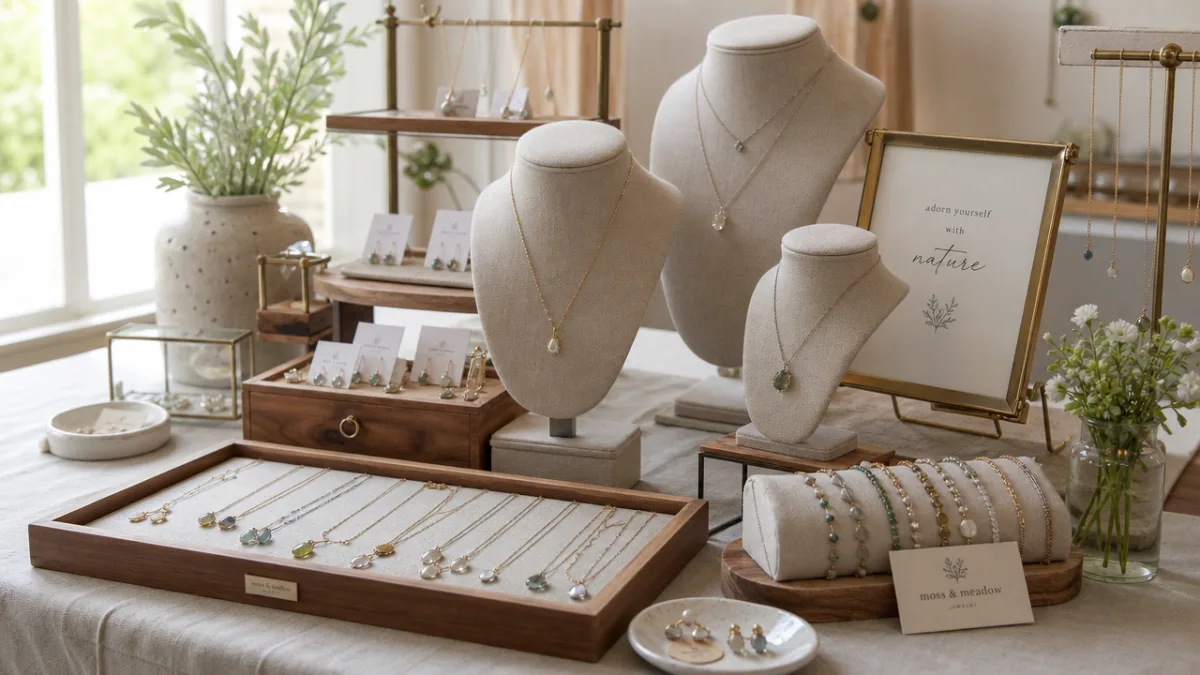
Display is everything in jewelry sales. A cluttered table of tangled necklaces will repel even the most eager buyer, while a thoughtfully arranged display using stands, busts, and tiered trays creates a boutique experience that encourages customers to browse slowly and buy generously. Group pieces by material, color, or collection to make the selection feel curated rather than overwhelming. Offering a small mirror at your booth so shoppers can try pieces on is a simple touch that consistently increases conversion rates.
Pricing jewelry confidently is a common struggle for new makers, but underpricing is one of the fastest ways to undermine your brand and burn yourself out. Calculate your material costs, your labor at a fair hourly rate, your booth fees, and your business overhead, then add your profit margin on top. Customers at craft fairs who are seeking handmade goods understand and expect to pay more than they would for a mass-produced piece, and presenting your work with pride and clear signage that explains the materials and process helps justify the price beautifully.
Home and Kitchen Goods: Practical Items That Practically Sell Themselves
Practical handmade goods for the home and kitchen occupy a special place in the craft fair ecosystem because they appeal to shoppers who might not think of themselves as the type to buy “art” but absolutely cannot resist something beautiful that also serves a function. Items in this category include hand-painted pottery, artisan soap, beeswax food wraps, hand-sewn tea towels, custom cutting boards, and ceramic spoon rests. These are the products that shoppers buy for themselves as much as for gifts, which gives them a naturally broad market appeal.
Artisan soap in particular is a craft fair staple that combines relatively accessible production with an almost irresistibly sensory shopping experience. When you allow customers to smell, touch, and even sample your soaps, you remove the biggest barrier to purchase: uncertainty about quality. Cold-process and hot-process soaps made with natural ingredients, essential oils, and botanicals command premium prices and loyal repeat customers. Packaging your soaps with elegant wrapping, twine, and a simple ingredients card elevates even a modest bar into something that feels genuinely luxurious.
Kitchen textiles are another high-performing subcategory that rewards makers who bring a strong visual identity to their work. Hand-printed tea towels featuring seasonal motifs, local landmarks, botanical illustrations, or witty food-related phrases are popular across demographics and easy to display attractively. Because they are flat, lightweight, and easy to stack or hang, they are also exceptionally booth-friendly products. Offering sets of two or four at a slight discount encourages higher transaction values and helps move more inventory in a single day.
Pottery and ceramics deserve special mention for their ability to command high price points while generating genuine excitement at a craft fair booth. There is something deeply compelling about holding a handmade bowl or mug — the weight, the texture, the subtle irregularities that prove it was shaped by human hands. Shoppers who encounter quality ceramics at a craft fair often become enthusiastic collectors, returning to your booth at every event and following your work online. If you work in clay, never underestimate the power of your medium to build a devoted, long-term customer base.
Seasonal and Holiday Items: Timing Your Inventory for Maximum Sales
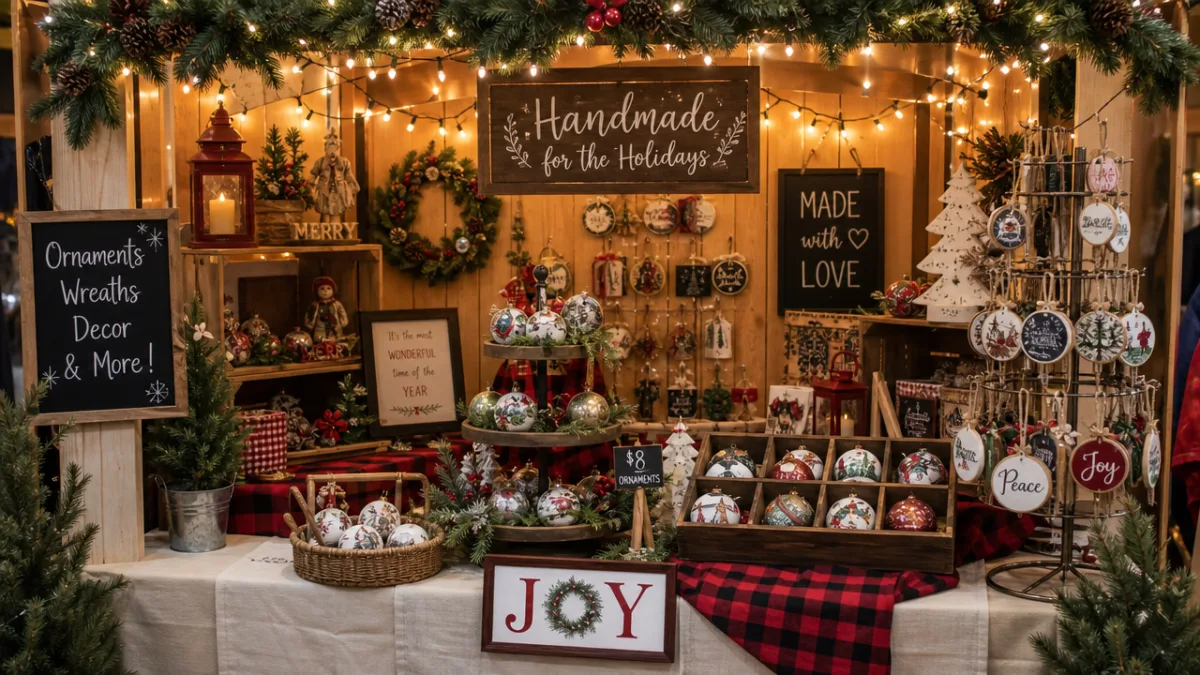
One of the most reliable strategies for craft fair success is aligning your product offerings with the seasons and major gift-giving holidays. Holiday craft fairs held in November and December are among the most lucrative events on the craft fair calendar, drawing shoppers who are actively looking for unique gifts and are prepared to spend generously. Stocking your booth with items specifically designed for gifting — beautifully packaged, clearly priced, and sized for a variety of budgets — positions you to capture that motivated holiday spending energy.
Christmas ornaments, Hanukkah gifts, Valentine’s Day chocolates wrapped in handmade packaging, Easter baskets, and Halloween decor are all proven sellers when executed with genuine craft and creativity. The most successful makers in this space do not simply slap a holiday motif onto a generic product; they create items where the seasonal theme is integral to the design, the material, or the meaning. A hand-stitched advent calendar made from heirloom-quality fabric, for example, tells a very different story than a disposable paper version from a big-box store, and shoppers who value handmade work will feel that difference immediately.
Beyond the major holidays, seasonal themes tied to nature offer year-round opportunities for timely, relevant inventory. Spring florals, summer botanical prints, autumn harvest colors, and winter minimalist designs allow you to refresh your booth with each season and give returning customers a reason to see what is new. This seasonal rotation also keeps your own creative practice energized and prevents the burnout that can come from producing the same items indefinitely. Building a rotating seasonal calendar into your business planning is one of the hallmarks of a sustainably successful craft fair seller.
Building a Brand That Turns Browsers Into Loyal Customers
The most commercially successful craft fair sellers share one quality beyond their excellent products: they have a brand. A brand is not just a logo or a color scheme — it is the entire experience a customer has when they encounter your work, from the way your booth is arranged to the language on your tags to the way you greet and converse with shoppers. When your brand is clear and consistent, it creates trust, and trust is the foundation of every sale and every return visit. Customers who buy from a brand they love become ambassadors who recommend you to friends and follow you across platforms.
Investing time in your visual identity before you set up your first booth will pay dividends for every event that follows. Choose a color palette of two or three colors that reflect the mood and ethos of your work, and apply it consistently across your signage, tags, packaging, and tablecloth. Design or commission a simple logo that works both in print and on social media. Create business cards or postcards with your website and social handles so that every customer leaves with a way to find you again. These small investments in professionalism signal to shoppers that your business is serious and that the quality of your products can be trusted.
Storytelling is perhaps the most powerful brand-building tool available to a craft fair seller, and the good news is that you already have a compelling story: you make things by hand. Do not be shy about sharing your process, your inspirations, and your background with customers. A small sign that explains how your candles are poured, where your clay comes from, or why you started making jewelry can transform a casual browser into a fascinated and invested buyer. People do not just buy handmade goods — they buy the story of the person who made them, and that story is exclusively and powerfully yours to tell.
Finally, collecting contact information at craft fairs is an invaluable strategy for building a business that extends beyond any single event. Offer a simple sign-up for a newsletter or a small giveaway in exchange for an email address, and use that list to notify customers about upcoming events, new products, and online shop launches. The craft fair booth is not just a place to make sales — it is a place to build relationships, and the relationships you cultivate there are the foundation of a creative business that can grow and thrive for years to come.








What do you think?
It is nice to know your opinion. Leave a comment.