










Hollyhocks: From Medieval Medicine to Modern Superfood
A Flower Steeped in History
Not many plants have a backstory quite like the hollyhock. Known botanically as Alcea rosea, these tall, elegant flowers have been growing alongside humans for thousands of years — popping up in ancient gardens from China to the Mediterranean long before they became a staple of cottage fences and farmhouse walls. The way hollyhocks have woven themselves into culture, medicine, and everyday life across so many different civilizations is genuinely remarkable. Their story isn’t just a botanical footnote — it’s a window into human ingenuity stretching back millennia.
The name “hollyhock” most likely comes from the Middle English “holihoc” — a mashup of “holi” (holy) and “hoc” (mallow) — which points to the plant being brought back to England by Crusaders returning from the Holy Land. Some historians think this happened as early as the 13th century, when soldiers and pilgrims carried seeds and dried specimens home from the Levant and Asia Minor. That association with pilgrimage routes gave the hollyhock an almost sacred reputation in some communities, where it was tended in monastery gardens alongside other medicinal herbs and spiritually significant plants.
Chinese records going back more than two thousand years mention the hollyhock’s edible and medicinal uses, and it held a respected place in traditional Chinese herbalism long before Europeans ever took notice. There’s also archaeological evidence from Egyptian burial sites — hollyhock pollen found among offerings — hinting at some kind of symbolic or ritual significance that pushes the plant’s human story back even further. Knowing all of this makes it easier to understand why hollyhock is now having such a genuine moment of rediscovery in kitchens and wellness circles around the world.
The Medicinal Legacy of the Hollyhock
Medieval European healers — herbalists, monks, the “cunning folk” of village life — leaned heavily on hollyhock as a go-to remedy for all sorts of complaints. The plant belongs to the Malvaceae family, a group well-known for its high mucilage content, that thick, gel-like substance that coats and calms irritated tissues. That quality made hollyhock preparations especially useful for sore throats, coughs, digestive inflammation, and urinary tract irritation. Monks catalogued its uses carefully in their abbey records, and it showed up in several influential herbals of the era, including the writings of Hildegard von Bingen.
One of the most commonly recorded uses was a tea or decoction made from dried hollyhock flowers and leaves to ease breathing troubles. The mucilage coats the throat and bronchial passages, bringing real relief from irritation — and this isn’t just folk wisdom. Modern phytochemists have confirmed that it actually works: the polysaccharides in hollyhock mucilage do form a protective film over mucous membranes, which goes a long way toward explaining why this remedy kept showing up across cultures for centuries without anyone seriously questioning it.
Hollyhock also had a life outside of teas and tinctures. Applied as a poultice, it was used on wounds, bruises, and inflamed skin, supported by the flavonoids and phenolic acids in the plant’s tissues. Medieval physicians prescribed hollyhock root as a diuretic and to ease urinary discomfort — uses that were being applied simultaneously in Chinese and Persian traditional medicine. That kind of cross-cultural agreement on the same applications is a pretty strong signal that something real was going on, well beyond placebo or superstition.

Nutritional Profile: The Hollyhock as Superfood
The modern superfood world has a pattern of rediscovering plants that traditional cultures never actually stopped using — and hollyhock fits that pattern almost perfectly. Every part of the plant is edible: flowers, leaves, seeds, and roots. Together, they pack a nutritional punch that holds up well against many of the plants being heavily marketed as dietary powerhouses today. The flowers and young leaves are especially rich in mucilage, vitamins, and antioxidants, while the seeds contain proteins and healthy fats that were historically pressed for oil in parts of Central Asia and the Middle East.
Hollyhock flowers are particularly high in anthocyanins — the same antioxidant pigments that make blueberries, red cabbage, and açaí so popular with health-conscious eaters. Anthocyanins are linked to reduced inflammation, better cardiovascular health, sharper cognitive function, and even some protection against certain cancers in epidemiological research. The deep purples, rich burgundies, and vivid pinks of hollyhock petals are essentially a visual signal of anthocyanin concentration, meaning the most boldly colored varieties may also be the most nutritionally useful. That relationship between color and nutrient density is well-established in nutritional science.
There’s more to hollyhock than antioxidants, though. The flowers deliver meaningful amounts of vitamins A and C, both important for immune health and skin. The leaves — edible raw when very young, or lightly cooked — offer dietary fiber, calcium, and iron, nutrients that matter especially in plant-based diets where those minerals can be tricky to get enough of. Dried and ground hollyhock seeds produce a mild, slightly nutty flour that can supplement conventional flours in baking. Put it all together, and there’s a genuine case for treating hollyhock as something more than a pretty garden flower.
Culinary Traditions and Modern Kitchen Applications
Most Western cooks would be surprised to learn just how long hollyhock has been on the menu in other parts of the world. Across Central Asia, the Middle East, North Africa, and East Asia, it has a real culinary history. In Afghanistan and the surrounding region, hollyhock leaves have been cooked as a vegetable for generations — wilted with olive oil and garlic, or folded into soups and stews much the way you’d use spinach or chard. The mucilage in the leaves gives them a silky, slightly thickened texture when cooked, which also makes them a natural choice for adding body to slow-cooked dishes and broths.
The flowers themselves have a mild, lightly sweet flavor with gentle vegetal undertones, which makes them genuinely versatile in the kitchen rather than just decorative. Raw petals look stunning scattered over salads, dessert plates, or cocktails. Steeped into tea, they produce a dramatic deep purple or blue color that shifts depending on the water’s pH — a natural reaction from the anthocyanin pigments that has made hollyhock tea a favorite among food scientists and creative cooks alike. That same tea can be used to naturally color rice, noodles, and baked goods in shades anywhere from pale lavender to deep indigo.
In farm-to-table and foraging-inspired kitchens, chefs have really taken to hollyhock as both a working ingredient and a visual one. Petals are being candied for cake decorations, infused into syrups and shrubs for cocktails, pickled as an unexpected condiment, and blended into antioxidant-focused smoothie boosters. Hollyhock flour, ground from dried seeds, is showing up in artisanal bakeries as a heritage alternative to conventional flours. As edible flowers continue to gain traction in culinary culture, hollyhock stands out — not just as a garnish, but as a genuinely functional ingredient with deep roots worth taking seriously.

Growing Hollyhocks: A Gardener’s Guide to Cultivating an Ancient Plant
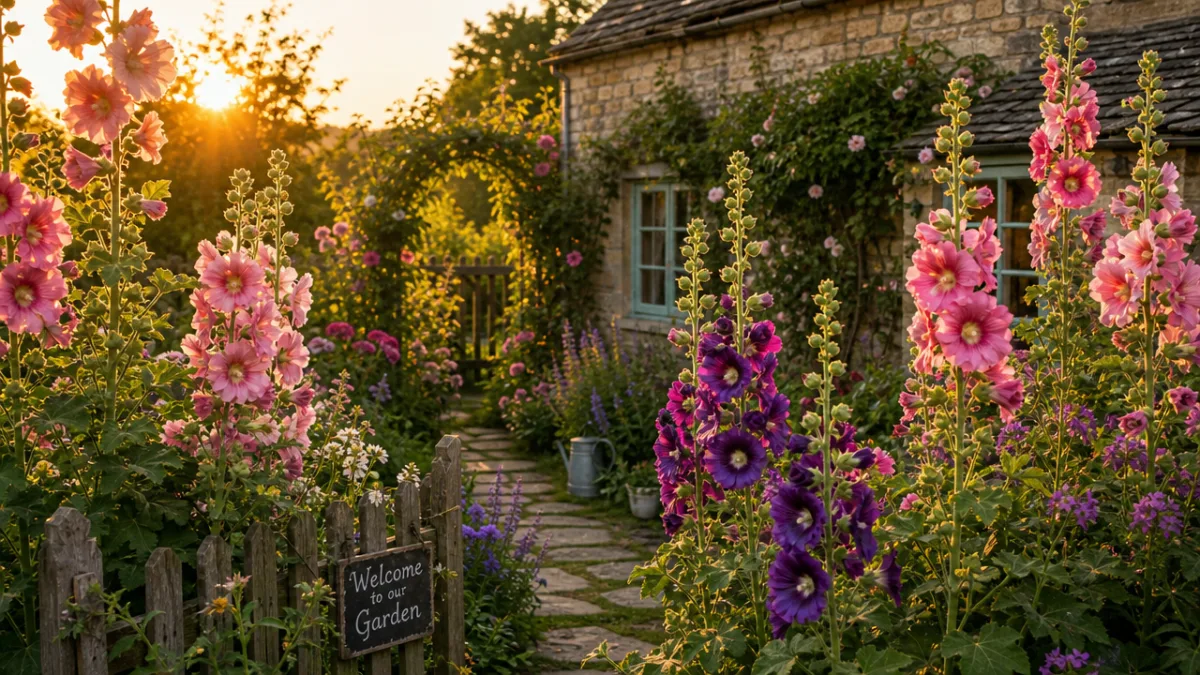
One of the best things about the hollyhock revival is how approachable the plant is for home gardeners. Hollyhocks are biennial or short-lived perennials — they typically spend their first year putting down roots and building a leafy rosette, then come back in their second year with the towering flower spikes that can reach six to eight feet tall under good conditions. They’re reasonably drought-tolerant once established, like full sun and well-drained soil, and are generally forgiving enough for beginners to succeed with. They also self-seed so readily that one planting can quietly become a permanent garden fixture without much effort on your part.
If you’re growing hollyhocks specifically to eat or use medicinally, variety selection makes a real difference. Single-flowered varieties — those with one layer of petals around a central column — tend to be better for both purposes than the double-flowered types, which were bred for looks and often have reduced fertility and lower mucilage content. Heritage varieties with deep, rich flower colors are especially worth tracking down, particularly dark purple and near-black cultivars like ‘Nigra,’ which are notably high in anthocyanins. Specialist seed suppliers focused on heirloom and heritage plants are your best bet for finding these.
Harvesting hollyhock well comes down to timing and a little attention to detail. Flowers are best picked in the morning after the dew has dried, choosing blooms that have just fully opened rather than ones already starting to fade. Leaves are at their best when young and tender, before the plant shifts its energy into flowering and the foliage gets tougher. Root harvesting is traditionally done in autumn from plants at least a year or two old, and should be done carefully so you don’t undermine the plant’s ongoing health. Dry everything thoroughly and store it in airtight containers away from light, and your harvested hollyhock material should hold onto both its color and its active compounds for several months.
The main challenge most gardeners encounter with hollyhocks is rust fungus — caused by Phragmidium alceae — which shows up as orange-brown pustules on the undersides of leaves. It rarely kills the plant, but it can sap its vigor and make it look rough. Good airflow through proper spacing, prompt removal of affected leaves, and avoiding overhead watering all help keep it in check organically. Some gardeners find that simply letting hollyhocks self-seed into a new spot each year naturally reduces rust pressure, since moving the plants around breaks the disease cycle before it can dig in.
The Hollyhock’s Future: Sustainability, Heritage, and the Revival of Forgotten Foods
The renewed interest in hollyhock as food and medicine is part of a bigger cultural shift toward recovering plant knowledge that industrial agriculture helped us forget. Ethnobotanists, seed conservationists, and food historians make a compelling point: when the human diet narrows down to a small handful of commodity crops, we lose not just biodiversity but centuries of accumulated wisdom about how to feed and heal ourselves. Hollyhock, with its long and well-documented history across multiple cultures, is exactly the kind of underutilized plant that deserves a serious second look from researchers, farmers, and home growers alike.
From a sustainability standpoint, hollyhocks have a lot going for them. They need minimal inputs once they’re established, will grow in marginal soils that wouldn’t support conventional crops, and do genuine ecological good as a rich nectar source for bees, butterflies, and hummingbirds across a long blooming season. In water-stressed regions, their drought tolerance makes them a pragmatic option for food gardens adapting to a changing climate. Their vertical growth habit means they can produce a lot of usable plant material without taking up much ground space — which matters quite a bit in urban growing situations.
The science on hollyhock’s pharmacological properties is still catching up with its traditional reputation, but early findings are encouraging. Preliminary studies into its anti-inflammatory, antimicrobial, and antioxidant activities have lent real credibility to many of the folk uses that have persisted for centuries. As the pharmaceutical and nutraceutical industries increasingly turn to botanical sources for new compounds, hollyhock’s rich phytochemical profile puts it squarely in the conversation for more rigorous clinical research. Dismissing that possibility would be shortsighted.
For the home gardener, the backyard forager, or the curious cook, hollyhock offers something genuinely meaningful — a living connection to a human tradition stretching back thousands of years. To grow one is to participate in the same practice as medieval monks, Chinese herbalists, and Afghan cooks who all found real value in this plant. To eat the flowers or brew the petals into tea is to join a conversation about food and healing that crosses cultures, continents, and centuries. In a time when many of us feel increasingly disconnected from the natural world and from our food heritage, the humble hollyhock turns out to be a surprisingly vivid, towering, and thoroughly practical bridge between then and now.
- Flowers: Use raw in salads, steep for tea, candy for desserts, or dry for antioxidant powders and natural food dyes.
- Young Leaves: Sauté as a cooked green, add to soups and stews, or use fresh in salads when very young and tender.
- Seeds: Dry and mill into a protein-rich flour supplement, or press for a light culinary oil with a mild nutty flavor.
- Roots: Decoct into medicinal preparations for soothing sore throats, digestive inflammation, and urinary tract irritation.
- Dried Petals: Infuse into vinegars, syrups, or oils for color and mild flavor; blend into herbal tea mixtures for respiratory support.








What do you think?
It is nice to know your opinion. Leave a comment.