










Night-Blooming Cereus Care Guide: Everything You Need to Know About This Mystical Plant
Introduction to the Night-Blooming Cereus
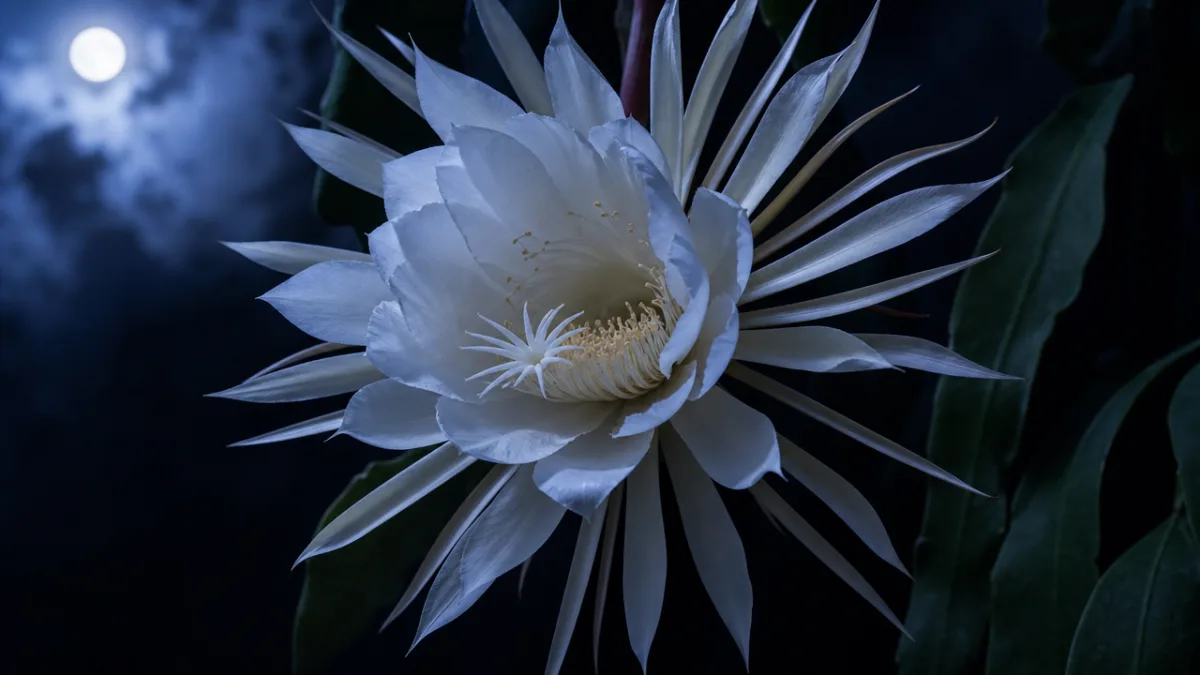
The Night-Blooming Cereus is one of the most captivating and mysterious plants in the botanical world. Known by several names including Queen of the Night, Dutchman’s Pipe Cactus, and Princess of the Night, this extraordinary plant belongs primarily to the genus Epiphyllum, Selenicereus, or Hylocereus, depending on the specific species. What unites all of these plants under the common name is their dramatic and fleeting blooming habit: their large, fragrant white flowers open only after dark and wilt before dawn, making a bloom event a rare and treasured spectacle for any gardener lucky enough to witness it.
Native to the deserts and tropical forests of the Americas, the Night-Blooming Cereus has been revered by indigenous cultures for centuries. Its ephemeral bloom has inspired poets, painters, and plant enthusiasts around the world, and many communities hold viewing parties when a particularly mature plant is expected to flower. The anticipation that builds over months or even years before a bloom event is part of what makes this plant so special. Unlike most flowering plants that bloom reliably each season, the cereus operates on its own inscrutable schedule, answering only to internal biological cues and environmental conditions.
Despite its exotic reputation, the Night-Blooming Cereus is a surprisingly resilient plant that can thrive indoors and outdoors in appropriate climates. It tolerates neglect better than many houseplants, making it an excellent choice for gardeners who travel frequently or who prefer low-maintenance greenery. However, coaxing it to bloom requires understanding its native environment and replicating key conditions that signal to the plant that it is time to produce those legendary flowers. This guide will walk you through every aspect of cereus care, from soil selection to bloom encouragement, so you can enjoy this botanical wonder in your own home or garden.
Understanding the Plant’s Origins and Biology
To care properly for any plant, it helps enormously to understand where it comes from and how it has evolved to survive. The Night-Blooming Cereus is native to arid regions across Mexico, the Caribbean, and parts of Central and South America, though epiphytic varieties hail from more humid tropical forests where they grow attached to tree branches rather than in soil. This dual heritage means the plant family encompasses a wide range of environmental tolerances, and identifying your specific species will help you tailor your care routine to its precise needs. Most commonly cultivated varieties prefer warm, dry conditions that mimic a semi-desert climate.
The plant’s nocturnal blooming strategy is a fascinating evolutionary adaptation. In its native desert habitats, the cereus relies on nighttime pollinators such as bats and hawk moths to carry its pollen between plants. These creatures are active after dark, so the plant evolved to open its flowers specifically during the hours when its pollinators are most available. The powerful, sweet fragrance the flower emits at night serves as a beacon, drawing in these nocturnal visitors from great distances. This highly specialized relationship between plant and pollinator is a beautiful example of co-evolution that has unfolded over millions of years.
Biologically, the cereus is a cactus or cactus-like succulent, meaning it stores water in its thick, fleshy stems. Its root system is adapted to quickly absorb large quantities of water during infrequent rainfalls and then slowly deploy those reserves during dry periods. Understanding this boom-and-bust water cycle is perhaps the single most important piece of biological knowledge for a cereus grower. Overwatering is by far the most common cause of death for this plant, so respecting its evolutionary relationship with drought is absolutely essential to keeping it healthy and setting the stage for eventual flowering.
Choosing the Right Soil and Container
Selecting the proper growing medium is foundational to cereus success. The plant demands exceptionally well-draining soil, and standard potting mixes designed for tropical houseplants will hold far too much moisture and lead almost certainly to root rot. The ideal mix for a Night-Blooming Cereus combines approximately fifty percent coarse sand or perlite with fifty percent cactus mix or a lean potting soil. Some experienced growers add small pieces of pumice or fine gravel to further increase drainage and aeration around the roots. The goal is a medium that allows water to pass through quickly while still providing enough structure for the roots to anchor the plant securely.
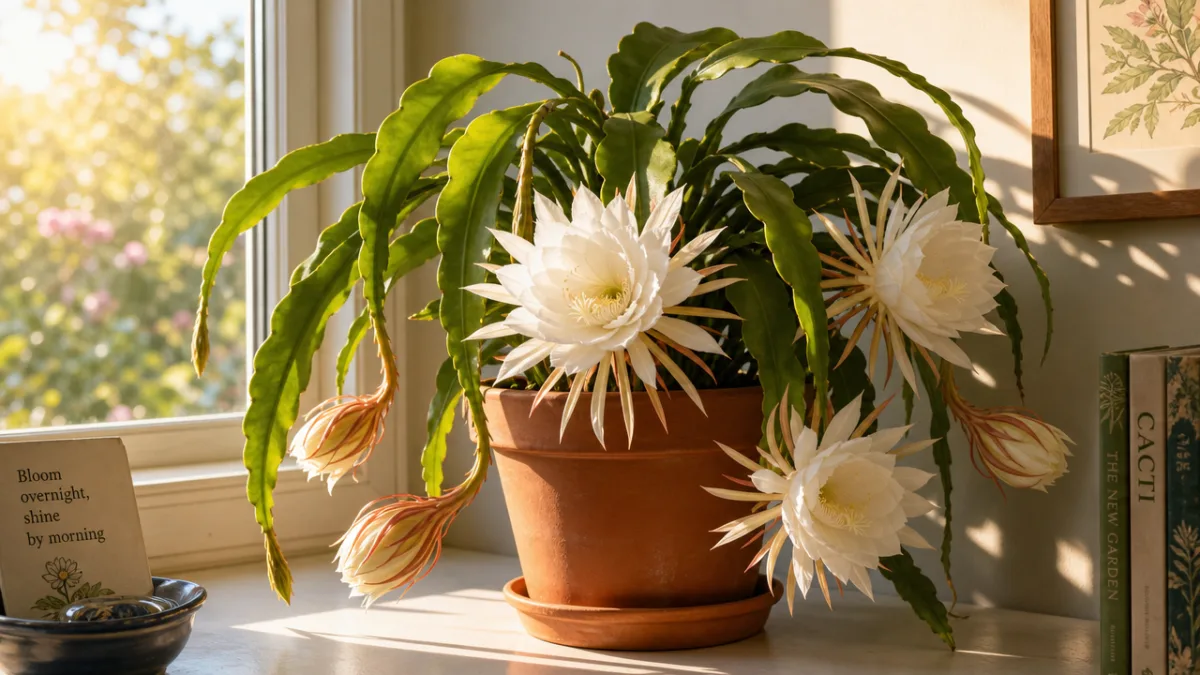
Container choice matters just as much as the soil mix. Terra cotta pots are widely regarded as the best option for cereus because their porous walls allow excess moisture to evaporate from the sides of the pot as well as from the drainage holes at the bottom. This additional evaporation helps prevent the prolonged soil dampness that causes root rot. Choose a pot that is only slightly larger than the root ball of your plant, as cereus actually blooms more reliably when it is slightly root-bound. A pot that is too large will hold more soil than the roots can efficiently dry out, increasing the risk of waterlogging even with a good drainage mix.
Drainage holes are non-negotiable. Never plant a cereus, or any cactus or succulent, in a container without at least one drainage hole at the bottom. Decorative pots without drainage can be used as cachepots, meaning you place the planted container inside the decorative one, but you must be diligent about emptying any water that collects in the outer pot after watering. Repotting should be done every two to three years or when you notice roots beginning to emerge from the drainage holes. Spring is the best time to repot, giving the plant an entire growing season to establish itself in its new container before the cooler months arrive.
Watering, Light, and Temperature Requirements
Watering the Night-Blooming Cereus correctly is an exercise in restraint and observation. During the active growing season, which typically runs from spring through early autumn, water the plant thoroughly but only when the top two to three inches of soil have dried out completely. When you do water, do so generously, allowing water to run freely through the drainage holes, then wait again until the soil dries appropriately before watering again. During winter, when the plant enters a period of dormancy, reduce watering dramatically, providing just enough moisture every three to four weeks to prevent the stems from shriveling. This seasonal watering rhythm closely mimics the plant’s natural experience of wet and dry seasons.
Light requirements for the cereus are straightforward but important to get right. The plant thrives in bright, indirect light for most of the year. A south or east-facing window is ideal for indoor specimens, providing several hours of strong light each day without the intensity of direct afternoon sun, which can scorch the stems. If you move the plant outdoors during summer, acclimate it gradually by placing it in a shaded area first before introducing it to more direct light. Outdoor placement should avoid intense midday sun. Interestingly, a period of reduced light during winter dormancy, combined with cooler temperatures, is thought by many growers to be a key trigger for spring bloom production.
Temperature is another critical factor in cereus cultivation. The plant prefers warm temperatures between 60 and 90 degrees Fahrenheit during its growing season and tolerates, in fact benefits from, cooler temperatures between 50 and 60 degrees Fahrenheit during winter dormancy. Most species are not frost-tolerant, and any exposure to freezing temperatures will damage or kill the plant. If you garden in USDA hardiness zones 10 through 12, you may be able to grow the cereus outdoors year-round, but growers in cooler climates must bring container specimens indoors well before the first frost of autumn. This cold dormancy period, even if brief, significantly improves the likelihood of flowering in the following season.
Fertilizing and Encouraging the Plant to Bloom
Fertilization supports the cereus through its growing season and provides the nutrients it needs to build toward flowering. Use a balanced, water-soluble fertilizer diluted to half the recommended strength, applying it once a month from spring through midsummer. Some growers switch to a low-nitrogen, high-phosphorus fertilizer in late summer, as phosphorus is known to support flower development in many plants. Avoid fertilizing entirely during the fall and winter dormancy period, as feeding a resting plant can stimulate weak, leggy growth and may actually discourage blooming by disrupting the plant’s natural rhythms. Resume feeding the following spring when you begin to increase watering again.
Getting a cereus to bloom is often the primary goal for collectors, and it requires patience above all else. Young plants typically need at least three to five years of growth before they are mature enough to produce flowers, and some specimens take even longer. Key bloom triggers that experienced growers rely on include the following practices:
- Allowing the plant to become slightly root-bound in its container, which sends a stress signal that encourages reproductive rather than vegetative growth.
- Providing a cool, dry winter dormancy period with reduced watering and lower temperatures, mimicking the plant’s native dry season.
- Exposing the plant to genuine darkness for extended periods at night during the lead-up to blooming season, as light pollution from streetlights or interior lights can interfere with the plant’s biological cues.
- Reducing fertilizer nitrogen in late summer while maintaining phosphorus and potassium levels to redirect the plant’s energy toward flower production.
- Placing the plant outdoors during summer in a warm, sheltered location to experience natural temperature fluctuations between day and night.
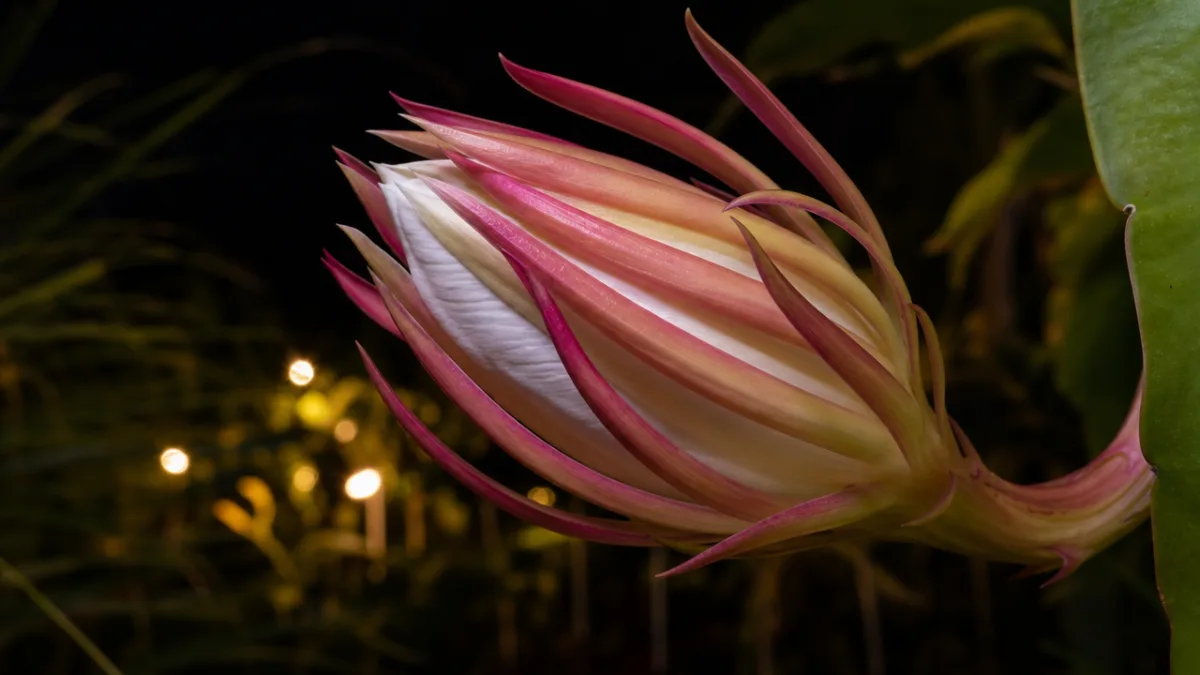
When a cereus is finally ready to bloom, it announces its intention by producing distinctive elongated buds that grow noticeably over the course of several days. Once you see these buds, excitement is justified, but you still have a wait of one to two weeks before the actual blooming night arrives. The flowers themselves are enormous, often six to twelve inches across, and their fragrance is described as somewhere between vanilla and jasmine, intensely sweet and penetrating. Each flower lasts only a single night, wilting completely by morning, though a single plant may produce multiple buds that open on consecutive or staggered nights, prolonging the overall bloom event.
Propagation, Pest Management, and Common Problems
Propagating the Night-Blooming Cereus is a rewarding way to expand your collection or share this remarkable plant with fellow enthusiasts. The easiest method is stem cuttings, which root readily and reliably under the right conditions. Use a clean, sharp knife or pair of pruning shears to take a cutting of at least six inches from a healthy stem. Allow the cut end to dry and callus over in a warm, dry location for three to seven days, which is a critical step that prevents rot once the cutting is placed in soil. Once calloused, insert the cutting about an inch deep into a well-draining cactus mix and place it in bright, indirect light. Avoid watering for the first week to encourage the cutting to seek moisture by developing roots. After that, water very sparingly until you see signs of new growth, which indicates successful rooting.
Like all plants, the cereus has a few pest vulnerabilities to watch for. The most common pests include mealybugs, scale insects, and spider mites, all of which tend to appear when the plant is stressed by overwatering, low humidity, or poor air circulation. Mealybugs look like small cottony masses in the joints and crevices of stems, while scale insects appear as flat, brown, shell-like bumps along the stems. Spider mites produce fine webbing and cause stippled, discolored areas on the plant surface. Treat minor infestations by wiping affected areas with a cotton swab dipped in rubbing alcohol, or spray the entire plant with a diluted neem oil solution. For severe infestations, a systemic insecticide labeled for use on succulents may be necessary.
The most common non-pest problem growers encounter is yellowing or mushy stems, which almost universally signal overwatering and the early stages of root rot. If you catch this early, you may be able to save the plant by removing it from its pot, cutting away any blackened or mushy roots with sterile scissors, dusting the cut surfaces with powdered sulfur or cinnamon as a natural antifungal, and repotting in fresh, dry cactus mix. Allow the repotted plant to recover for a week without watering before resuming a very cautious watering schedule. If the rot has progressed extensively and the main stem is affected, the plant may be beyond saving at the root level, but healthy stem cuttings taken from unaffected portions can still be propagated to preserve the specimen.
Growing Cereus Outdoors and in Different Climates
For gardeners living in warm climates, growing the Night-Blooming Cereus outdoors unlocks its full potential. In zones 10 through 12, the plant can be grown in the ground as a large, sprawling specimen that can reach heights of ten feet or more over many years, with stems that climb fences, trellises, or the sides of buildings. Outdoor plants in these regions often bloom more prolifically than their indoor counterparts because they experience the full spectrum of natural light, genuine temperature variation between seasons, and the presence of natural pollinators that can fertilize the flowers and eventually produce edible fruit. The fruit of several cereus species, particularly Hylocereus undatus, is in fact the commercially grown dragonfruit that has become a popular supermarket item.
In temperate climates where frost is possible, container growing is the practical solution, with plants spending summers outdoors and winters inside. The transition between indoors and outdoors should always be gradual. When moving the plant outside in spring, begin with a shaded, sheltered location for a week or two before introducing it to more sun and wind. This acclimatization prevents the sunburn and wind damage that occurs when plants that have been growing in the stable indoor environment are suddenly exposed to outdoor conditions. The reverse transition in autumn should happen before nighttime temperatures drop below 50 degrees Fahrenheit to avoid chilling stress that can damage the roots and stems.
Even gardeners in quite cold climates can enjoy the Night-Blooming Cereus as a long-term houseplant with careful management. A bright conservatory or sunroom that experiences some temperature variation between seasons is an ideal indoor location. The key is committing to the annual cycle of active growth and dormant rest, adjusting water and temperature accordingly, and exercising patience through the years before the plant reaches blooming maturity. Many growers find that the journey itself, the careful observation, the gradual learning of the plant’s rhythms and preferences, the years of anticipation, makes that first blooming night all the more extraordinary and emotionally resonant when it finally arrives.








What do you think?
It is nice to know your opinion. Leave a comment.