










13 Newspaper Crafts for Kids That Turn Old Papers Into Amazing Art
Why Newspaper Crafts Are the Perfect Creative Activity for Kids
In a world overflowing with digital entertainment and expensive art supplies, newspaper crafts offer something truly refreshing: a chance for children to create something extraordinary from something ordinary. Old newspapers pile up in nearly every home, and instead of sending them straight to the recycling bin, they can become the raw material for hours of imaginative play and artistic discovery. The tactile experience of working with newsprint — its texture, its crinkle, its surprising versatility — engages children in ways that glossy store-bought paper simply cannot replicate.
Beyond the obvious environmental benefit of repurposing materials that would otherwise go to waste, newspaper crafts introduce children to the concept of resourcefulness and creativity-within-constraints. When kids are handed a stack of old papers and asked to make something beautiful, they must think laterally and problem-solve in ways that open-ended access to unlimited supplies rarely demands. This kind of constrained creativity is actually one of the most powerful tools for developing artistic thinking, and it mirrors the real-world challenges that designers, architects, and artists face throughout their careers.
There is also a wonderful cross-generational quality to newspaper crafts. Grandparents who grew up making papier-mâché bowls or origami figures from the Sunday edition will find immediate common ground with grandchildren discovering these techniques for the first time. Parents can share memories of their own childhood creations while learning new twists on classic projects alongside their kids. This shared experience — the mess, the laughter, the occasional frustrated restart — becomes part of the artwork itself, a memory layered into every fold and glued strip of paper.
Essential Supplies and Safety Tips Before You Begin
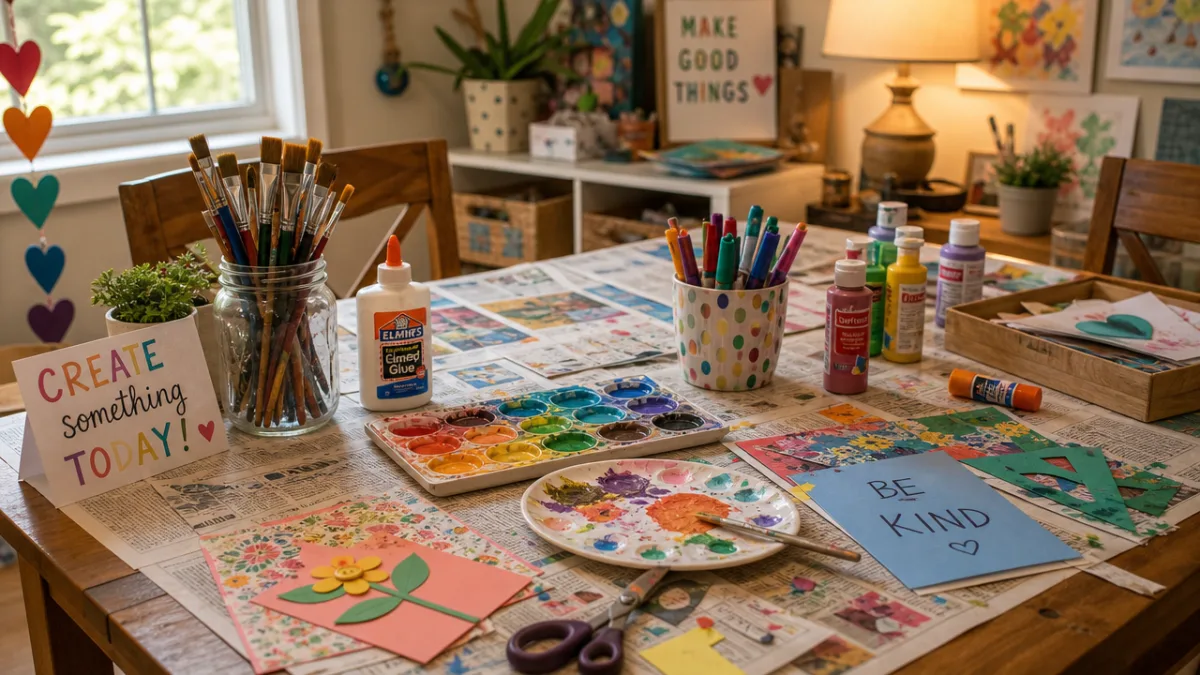
Getting started with newspaper crafts requires very little in the way of specialized supplies, which is part of what makes these projects so accessible. At the most basic level, you need newspapers, a pair of child-safe scissors, and some glue. For more advanced projects, you might want to gather white school glue or a homemade paste made from flour and water, a few brushes in various sizes, tempera or acrylic paints, and some wire or cardboard for structural support. Most of these items are already sitting in a drawer or cabinet somewhere in your home.
Safety is always a priority when crafting with children, and newspaper projects are generally quite low-risk. However, a few precautions are worth establishing from the start. Newspaper ink, particularly from older publications, can transfer to hands and surfaces easily, so covering your work area with a plastic tablecloth or additional sheets of newspaper before beginning is a wise move. Younger children should always be supervised when using scissors, and if a project requires wire, that element should be handled by an adult or older child. For projects involving paint, non-toxic, washable varieties are always the safest choice for little hands.
Before diving into any specific project, it helps to set up a dedicated craft space where mess is not only tolerated but expected. A low table in a garage, a kitchen floor spread with drop cloths, or even an outdoor picnic table on a dry day are all ideal settings. Having a designated “drying area” — a flat surface or a hanging clothesline — where finished pieces can cure without being disturbed will save countless frustrations and prevent the heartbreak of a carefully crafted creation being accidentally squashed before it has set. Preparation transforms a potentially chaotic afternoon into a smoothly running creative workshop.
Five Classic Newspaper Craft Projects Every Kid Should Try
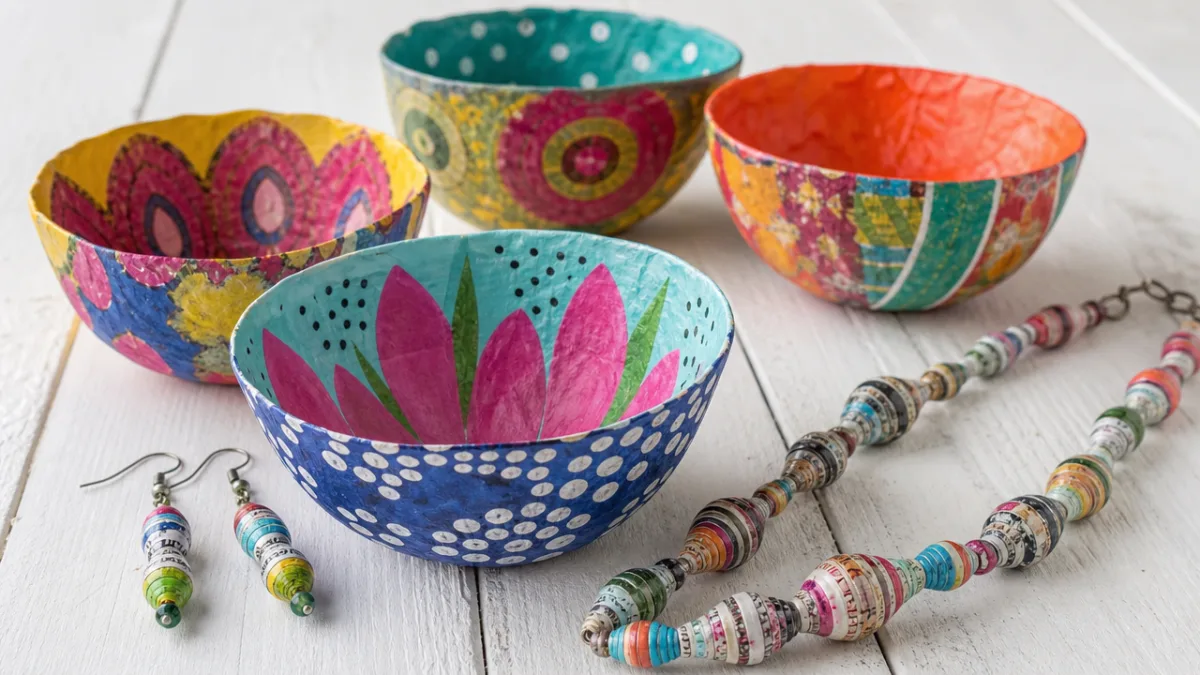
Papier-mâché is arguably the most beloved newspaper craft of all time, and for very good reason. To make a basic papier-mâché bowl, children tear newspaper into strips approximately one inch wide, dip each strip into a mixture of equal parts white glue and water, and layer them over an inflated balloon or an upside-down bowl coated with petroleum jelly to prevent sticking. After three to five layers and adequate drying time — usually 24 hours — the balloon can be popped or the bowl removed, leaving behind a lightweight, surprisingly sturdy shell that can be painted and decorated in any style the child chooses.
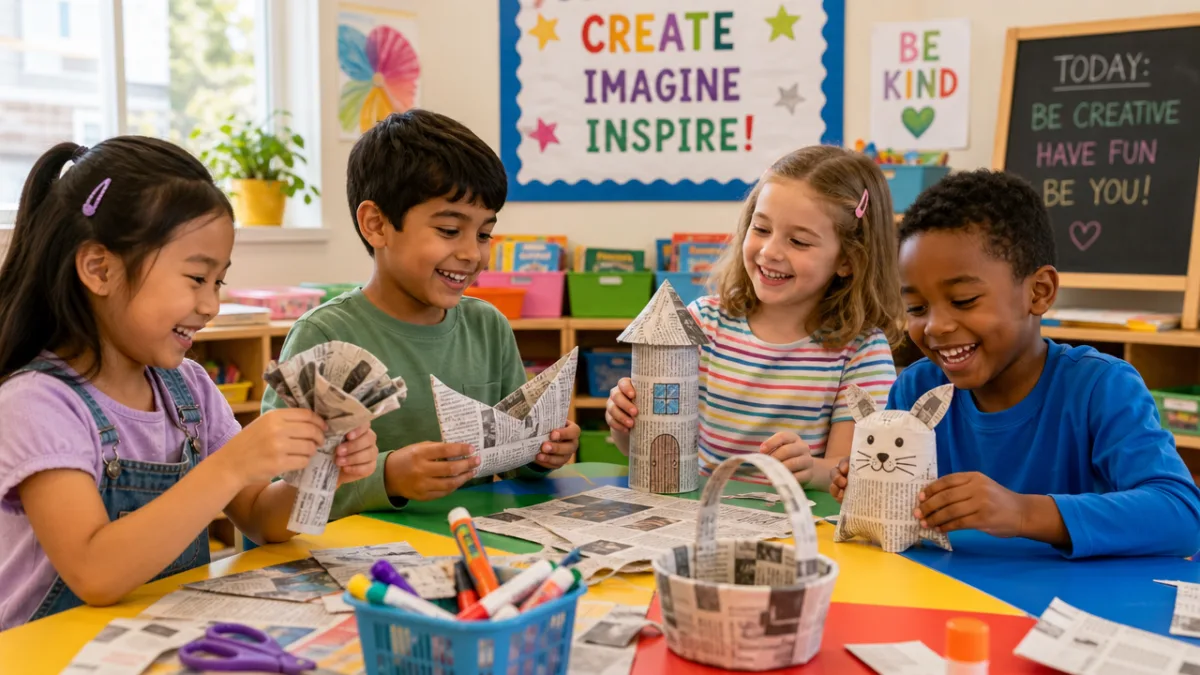
Newspaper hats are another classic that children can make in minutes with minimal instruction. By simply folding a full sheet of newspaper in half, then folding the top two corners down to meet in the middle before turning up the bottom edges to form a brim, kids can create a perfectly functional pirate hat, painter’s cap, or Napoleon-style bicorne. These hats can be customized with markers, stickers, painted designs, or glued-on feathers and sequins, turning a quick fold into a dramatic costume accessory. Hat-making is particularly well-suited for younger children because the results are immediate and wearable.
Newspaper collages introduce children to a fundamental technique used by artists from Picasso to Matisse. By tearing or cutting newspaper into irregular shapes and layering them onto cardboard or thick paper, kids can create landscapes, portraits, abstract compositions, and everything in between. The printed text and photographs that appear on the newspaper fragments become part of the artwork’s visual texture, adding depth and unexpected meaning. Collage is also a wonderfully forgiving medium — there are no wrong moves, and mistakes can always be covered with another layer.
Paper weaving with newspaper strips is a craft that builds fine motor skills while producing genuinely beautiful results. Children cut or tear the newspaper into long, straight strips, then weave them over and under each other on a simple cardboard loom to create a flat mat or panel. The resulting piece has a graphic, textural quality that looks impressive hanging on a wall or serving as a placemat. For added visual impact, some strips can be painted before weaving, introducing color into the naturally monochrome newsprint palette.
Finally, newspaper origami offers an endlessly deep well of projects, from simple cranes and frogs to elaborate modular structures that can occupy an afternoon or an entire weekend. The slightly stiffer quality of newspaper compared to standard origami paper actually makes some folds easier for beginners to hold in place, and the large format of a full broadsheet page allows kids to work at a comfortable scale before graduating to smaller, more precise folds. There are hundreds of free origami tutorials available online, and following them together as a family turns the craft into a shared problem-solving adventure.
Creative and Unexpected Newspaper Craft Ideas to Spark Imagination
Once children have mastered the basics, it is exciting to push newspaper crafting into more unexpected territory. One particularly striking project involves rolling tight newspaper tubes — made by wrapping strips diagonally around a thin knitting needle or skewer — and then using those tubes as building blocks for sculptures, wall art, or even miniature furniture. The tubes are surprisingly rigid once rolled tightly and sealed with a dab of glue, and they can be cut to length, bent, bundled, and woven into an enormous range of three-dimensional forms. This project works wonderfully for children who are drawn to engineering and construction as much as to art.
Newspaper seed pots are a craft that doubles as a gardening lesson, making them perfect for spring and early summer. By wrapping a strip of newspaper around a cylindrical mold — a small tin can or a length of thick dowel works perfectly — and folding the excess paper over the base to form a bottom, children can create biodegradable pots that can go directly into the ground when seedlings are ready to be transplanted. The newspaper gradually breaks down in the soil, feeding the plant as it grows. Kids who make their own seed pots often develop a deeper investment in the plants they grow, checking on them daily with a sense of proud ownership.
Newspaper jewelry is another surprisingly sophisticated project that produces results children are genuinely thrilled to wear. Rolling small, tight triangles of newspaper (cut from pages so the finished roll tapers at each end, creating a bicone bead shape) and sealing them with a coat of glue or clear nail varnish yields lightweight, colorful beads that can be strung on elastic or thread to make bracelets and necklaces. The printed patterns and text visible through the clear sealant give each bead a unique, graphic quality that genuinely looks intentional and stylish rather than makeshift.
- Newspaper Rockets and Airplanes: Rolling newspaper tightly into tubes and cones, children can construct surprisingly aerodynamic rockets and gliders that fly with a satisfying swoosh when launched. Adding painted fins and nose cones to rockets turns this into a multi-session project that blends engineering with artistic expression.
- Newspaper Mâché Masks: Using a face-shaped balloon mold or a store-bought plastic mask as a base, kids can build up layers of newspaper strips into dramatic masks for theater, Halloween, or simply for imaginative play. Once painted and decorated, these masks are genuinely impressive pieces of wearable art.
- Newspaper Kites: A simple diamond-shaped frame made from lightweight sticks and covered with layers of glued newspaper creates a functional kite that actually flies. Decorating the surface with painted designs before adding a tail and string results in a piece that is both beautiful at rest and spectacular in motion.
- Newspaper Monsters and Puppets: Stuffing crumpled newspaper into a paper bag or around a cardboard armature and covering the whole form with papier-mâché creates a three-dimensional puppet or creature sculpture. Painted eyes, fabric scraps for clothing, and yarn for hair bring these monsters and characters to vivid life.
Developing Skills and Learning Outcomes Through Newspaper Crafts
It would be easy to dismiss newspaper crafts as simply a fun way to pass an afternoon, but the developmental benefits these activities provide are well documented and genuinely significant. Fine motor skills — the precise coordination of small hand and finger movements that underpin writing, drawing, and countless daily tasks — are directly exercised every time a child tears paper into strips, rolls a tube, folds a crease, or carefully brushes glue onto a surface. Occupational therapists frequently recommend paper crafts as therapeutic exercises for children working to strengthen these skills, and the fact that the activities are inherently enjoyable means children practice far longer than they would with formal exercises.
Patience and persistence are perhaps even more valuable outcomes of newspaper crafting. Papier-mâché, in particular, requires children to work in stages across multiple days, accepting that their creation will not be finished immediately and trusting that the effort invested today will pay off when they return tomorrow. This experience of deferred gratification — of working toward a goal that cannot be rushed — is increasingly rare in a culture of instant digital rewards, and the lesson it teaches about effort, process, and delayed satisfaction is one that resonates far beyond the craft table.
STEM connections are also surprisingly robust in newspaper craft projects. When children experiment with structural forms — discovering through trial and error that a tube is stronger than a flat sheet, or that distributing weight evenly makes a papier-mâché sculpture less likely to crack — they are engaging in informal engineering thinking. When they mix glue paste to the right consistency or observe how paint behaves differently on rough newsprint versus smooth cardboard, they are conducting rudimentary materials science investigations. These connections are most powerful when they emerge organically from the child’s own curiosity rather than from explicit instruction.
Creative confidence, perhaps the most intangible but ultimately most important outcome, grows every time a child makes something new from something discarded. There is a particular kind of pride that comes from holding up a finished papier-mâché bowl or a newspaper bead bracelet and knowing that it was made entirely from trash. This experience — of seeing potential where others see waste, of trusting your own hands and imagination to transform materials into meaning — is the foundation of a creative identity that will serve children throughout their entire lives, whatever path they ultimately choose to follow.
Tips for Parents and Educators to Get the Most from Newspaper Crafting
The single most important thing a parent or educator can do to support newspaper crafting is to resist the urge to take over. It can be deeply tempting, when a child’s papier-mâché strips are applied unevenly or their newspaper hat fold has gone slightly wrong, to step in and correct the work. But the imperfections in a child’s handmade creation are precisely what make it valuable — both as evidence of their current skill level and as a benchmark against which future growth can be measured. The best adult role in a newspaper craft session is that of an enthusiastic assistant who answers questions, provides materials, and admires the results with genuine warmth.
Building a collection of inspiration images before beginning a project helps children make more confident creative decisions without feeling lost or directionless. A quick search for “newspaper craft kids” on Pinterest or a craft-focused website will yield dozens of finished examples that can spark ideas and set expectations about what is achievable. Importantly, these should be presented as sources of inspiration rather than templates to be copied exactly — the goal is to give children a sense of what newspaper can become, not to constrain them to reproducing someone else’s vision. Encouraging children to combine elements from multiple examples or add their own unexpected twist produces the most satisfying results.
For classroom settings, newspaper crafts offer an additional benefit: they are inherently scalable and adaptable to different age groups and ability levels within the same session. Younger or less experienced children can work on simple hats and collages while older children tackle more ambitious papier-mâché sculptures or weaving projects, and the shared use of newspaper as a base material creates a visual and thematic coherence across the group’s work even when individual projects vary widely in complexity. Displaying finished pieces together as a collective exhibition reinforces the message that creativity takes many forms and that every effort deserves to be seen and celebrated.
Finally, it is worth embracing the mess rather than fighting it. Newspaper crafting at its best is a full-body, fully engaged activity in which children become genuinely absorbed in the physical act of making. Glue gets on faces, newspaper ink ends up on forearms, and the floor accumulates a satisfying drift of torn paper scraps. Rather than interrupting the creative flow with anxious housekeeping, experienced craft parents and teachers set up their space for mess at the outset, let the creativity run its natural course, and save the cleanup for afterward. The memories made during a gloriously messy newspaper craft afternoon will last far longer than the stains.
Displaying, Preserving, and Sharing Newspaper Art Creations
Once a newspaper craft masterpiece is complete, it deserves to be displayed with the same pride that any other artwork would receive. Papier-mâché bowls and sculptures can be sealed with a coat of Mod Podge or clear varnish to protect the paint and give the surface a durable, professional finish. This sealing step also significantly extends the lifespan of the piece, protecting it from the humidity and handling that would otherwise cause newsprint-based art to deteriorate fairly quickly. A properly sealed papier-mâché creation can last for years as a treasured memento of a particular creative phase in a child’s development.
Flat works like newspaper collages and woven panels can be mounted on cardboard backing, framed behind glass, or laminated for display on refrigerators and school bulletin boards. Photographing each finished piece before it is displayed creates a digital archive of a child’s creative development that is genuinely moving to look back on over the years — a visual record of growing skills, evolving aesthetic sensibilities, and changing interests. Some families create annual “newspaper craft books” by printing and binding these photographs alongside short notes about each project, turning the collection into a keepsake that bridges art and memory.
Sharing newspaper crafts with the wider community extends their value beyond the individual child and family. Schools, libraries, and community centers that display children’s newspaper art in public exhibitions communicate a powerful message about resourcefulness, creativity, and environmental responsibility to everyone who passes by. Children who see their work displayed publicly develop a sense of artistic identity and civic participation that is deeply affirming. Some schools have incorporated newspaper craft projects into their sustainability curricula, pairing the creative activity with lessons about recycling, paper production, and the environmental cost of waste, creating a rich interdisciplinary learning experience that resonates with children long after the glue has dried.








What do you think?
It is nice to know your opinion. Leave a comment.