










10 Summer Wrap Top Sewing Free Patterns: Your Complete Guide to Breezy Style
Why Wrap Tops Are the Ultimate Summer Sewing Project
When it gets hot and the days stretch out long and lazy, there’s really nothing better than a wrap top you’ve sewn yourself. These things have been a warm-weather wardrobe staple for decades, and honestly, it makes total sense why. That adjustable tie front works with just about every body type, pulling in at the waist to create a shape that feels as good as it looks. And whether you’re just picking up a rotary cutter for the first time or you’ve been sewing garments for years, a wrap top is one of those projects that just feels satisfying to finish.
What makes sewing your own wrap top so much fun is the customization — store-bought just can’t touch it. You pick the fabric, the length, the sleeve style, where the ties sit, all of it. Want a deep plunge with dramatic kimono sleeves? Go for it. Prefer a modest crossover front with little flutter sleeves? That’s yours too. And with so many free patterns floating around online, this kind of creative freedom is available to literally everyone, no matter where they are in their sewing journey.
Beyond how they look, wrap tops are just genuinely practical summer clothes. Made from light, breathable fabrics, they let air move so you stay comfortable through sticky afternoons and warm evenings. They pull double duty as beach cover-ups over your swimsuit, then transition straight to dinner out paired with linen trousers. That versatility is a big reason why learning to sew a wrap top is such a good use of your summer sewing time — and since there are so many free patterns out there, your wallet gets to stay happy too.
Choosing the Right Fabric for Your Summer Wrap Top
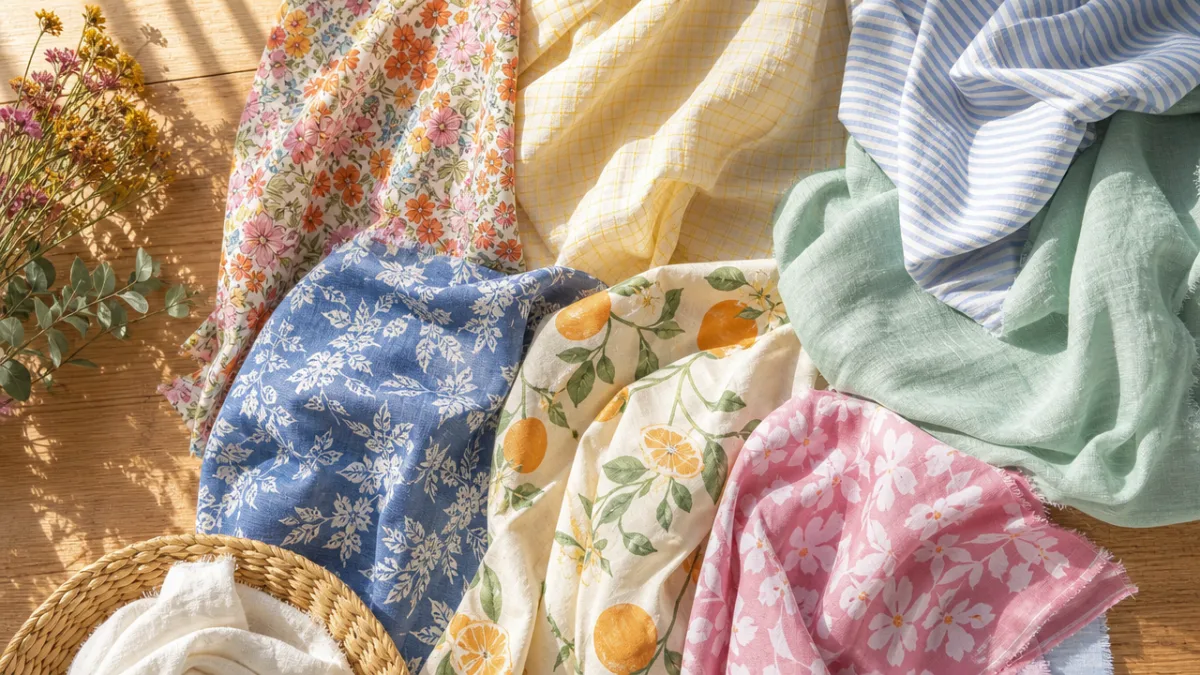
Fabric choice might honestly be the most important decision you make when sewing a summer wrap top. The drape and weight of what you pick will determine how the finished top moves, feels, and looks when you’re actually wearing it. Wrap tops need fabric that flows and drapes naturally — they’re not meant to hold a stiff shape. So step away from the rigid cottons and heavy canvas-type stuff, and reach instead for something with real fluidity that will cascade from your shoulders and swirl around as you walk.
Rayon challis, viscose, and lightweight linen are the crowd favorites for a reason. Rayon challis is a perennial go-to because it drapes beautifully, comes in a huge range of prints and solids, and feels wonderfully cool on your skin even when it’s sweltering out. Viscose is similarly flowy and breathable, with a subtle sheen that gives wrap tops a slightly elevated, almost silky look — without actually having to wrestle with silk. Lightweight linen is a little more structured than rayon, but the breathability is unbeatable, and that relaxed, artisanal vibe it brings is just perfect for summer.
If you’re working with a tighter budget or just want something more beginner-friendly, a lighter-weight quilting cotton can work really nicely for a wrap top with a more relaxed, less flowy silhouette. Chambray is another solid choice — you get that denim look with a fraction of the weight and stiffness. If you want to go a bit more luxurious, georgette and chiffon make genuinely stunning wrap tops for special occasions, though fair warning: those slippery fabrics do ask for a little extra patience when you’re cutting and sewing. And no matter what you choose, please pre-wash before you cut — nothing worse than a beautifully sewn top that shrinks the first time it hits the laundry.
Top Free Wrap Top Patterns for Beginners
If you’re newer to garment sewing, good news: there are some genuinely excellent free wrap top patterns out there that are designed to build your confidence without throwing you into the deep end. The simplest ones have just two or three pattern pieces, easy tie construction, and not much finishing to worry about. These beginner-friendly designs are built to give you a great result even while you’re still getting comfortable with curved seams and neckline edges — the kind of project you can realistically start and finish on a weekend.
One of the most recommended beginner options is a basic crossover wrap top with straight hemlines and either short or no sleeves. You can find these all over sewing blogs and Pinterest, and a lot of them come with detailed photo tutorials that walk you through every step. Designers like Tilly and the Buttons, Made By Rae, and plenty of independent bloggers have shared their expertise through free pattern releases that teach you not just how to sew one specific garment, but how to actually think about putting clothes together.
When you’re picking your first free wrap top pattern, look for ones that already have seam allowances built in — adding your own can get confusing fast when you’re still learning. Also try to find patterns with multiple size options and a finished measurements chart, so you can choose your size based on how you actually want the thing to fit rather than just going off your standard size label. A lot of free patterns also include a simple line drawing showing the front and back of the finished top, which is really helpful for visualizing what you’re making before you commit your fabric to the scissors.
Advanced Free Patterns: Elevated Styles Worth the Challenge
Once you’ve got the basics of wrap top construction down, a whole world of more interesting free patterns opens up — ones with design details that take the humble wrap top somewhere genuinely special. We’re talking gathered sleeves with delicate elastic casings, ruffled hems with real movement, clever back tie systems, and necklines that just sit perfectly without any gaping. These details ask more of you in terms of precision and patience, but the payoff is wrap tops that look like something you’d find in a lovely boutique rather than something homemade.
Puff sleeve wrap tops have been hugely popular for a few years now, and plenty of talented designers have released free patterns that really nail that silhouette without demanding advanced dressmaking skills. The secret to a great puff sleeve is in the gathering and the sleeve cap construction, and the best free patterns walk you through exactly how to get that perfectly round, voluminous puff. Wrap tops with bishop sleeves gathered into a fitted cuff are another stunning option — they photograph beautifully and feel incredibly comfortable to wear all day long.
If you’re drawn to a more artisanal, less polished aesthetic, there are free patterns out there that lean into raw edges finished with a rolled hem on a serger — or even intentionally left unfinished for a deconstructed look. Patterns with asymmetrical hems, tiered ruffle panels, or contrast fabric blocking let you practice more complex construction while still working within the familiar wrap top framework. A lot of these more advanced free patterns live in designer newsletters and sewing community forums, where makers share not just the pattern files but their own modifications, tips, and photos of finished projects.
Essential Sewing Techniques for Beautiful Wrap Tops
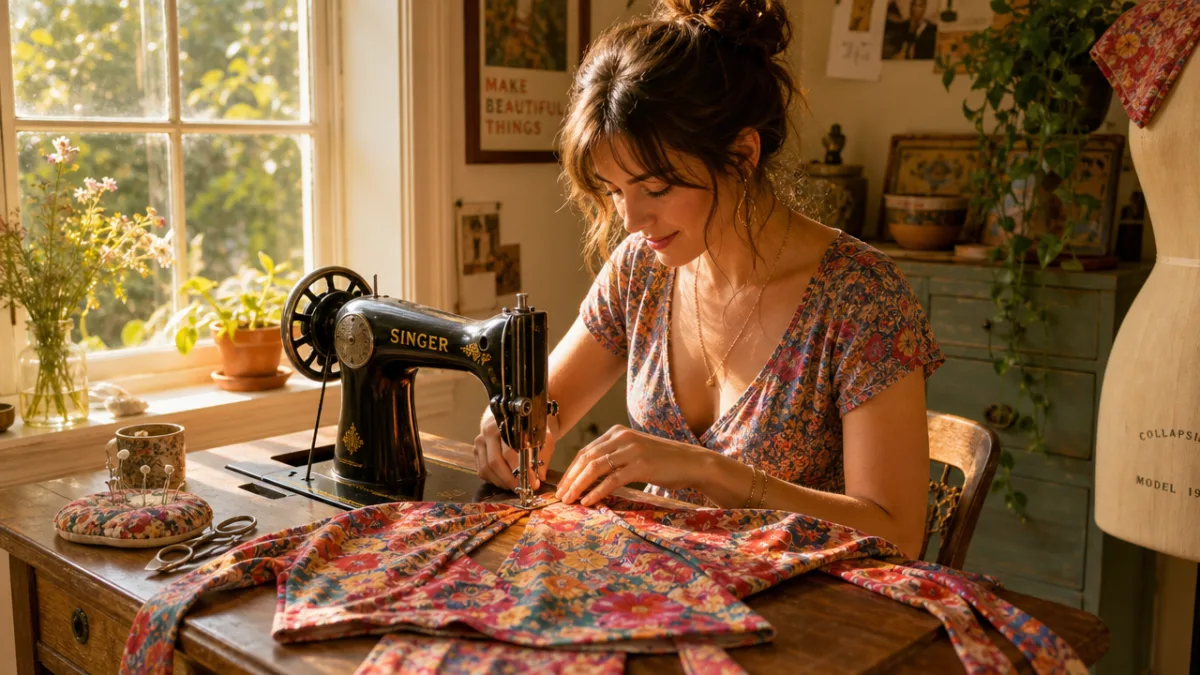
Whatever free pattern you end up choosing, certain techniques are going to come up again and again in wrap top construction — and getting comfortable with them will make a noticeable difference in every garment you sew, not just this one. Finishing raw edges cleanly is probably the most critical skill for wrap tops specifically, because the flowing nature of these fabrics means any fraying will be front and center. Learning to use a serger or a zigzag stitch well to prevent fraying is one of those foundational investments that keeps paying off forever.
Hemming lightweight or slippery fabrics is another one that catches a lot of sewists off guard when they’re tackling their first wrap top. A standard double-fold hem pressed and topstitched can look heavy and stiff on delicate rayon or chiffon, which is why so many experienced makers prefer a narrow rolled hem for wrap top edges. A rolled hem foot for your machine makes this surprisingly quick and produces that delicate, elegant edge finish that works so well with fluid summer fabrics. If you want something even more refined for a special-occasion top, a hand-stitched slip-stitch hem takes more time but gives you an invisible finish that’s genuinely worth it.
Learning to cut on the bias — at a 45-degree angle to the grain — opens up even more possibilities for your wrap tops. Bias-cut versions drape and move in a completely different way than straight-grain ones, giving you a more body-skimming, elegant silhouette that a lot of sewists fall completely in love with. It does use more fabric and requires careful handling during construction, but the results are extraordinary, and there are free patterns specifically designed for bias cutting if you’re ready to try it.
Some additional techniques worth learning for wrap top construction include:
- French seams — enclose raw edges completely for a beautifully finished interior, ideal for sheer or delicate fabrics that will show through to the outside of the garment
- Stay stitching — a row of stitching placed just inside the seam allowance on curved neckline edges to prevent stretching and distortion during construction
- Understitching — a line of stitching that holds facings and linings in place so they do not roll to the outside of the garment and become visible during wear
- Clipping and notching curves — small cuts made into curved seam allowances to allow the seam to lie flat and smooth after pressing and turning
Styling and Wearing Your Handmade Wrap Top
One of the genuinely fun parts of finishing a handmade wrap top is figuring out all the ways you can wear it. The versatility of these tops is real — they dress up and down without much effort. Tuck a solid rayon wrap top into high-waisted wide-leg trousers, add strappy sandals and some simple gold jewelry, and you’ve got a sophisticated daytime look that feels pulled together without being fussy. Take that same top, wear it untucked over cropped linen shorts with flat espadrilles, and suddenly it’s a completely different, easy-going outfit for a weekend market or a slow afternoon at a café.
Printed wrap tops are especially exciting to style because a bold floral or geometric print can carry the whole outfit by itself. When your top is making a statement, keep everything else simple and let the fabric do the work. Neutral bottoms in white, cream, tan, or black give a printed wrap top room to breathe, while simple jewelry and a streamlined bag keep the look cohesive. If you’ve sewn your wrap top in a solid color, you’ve got more flexibility to experiment with printed bottoms or patterned accessories for something a little more playful.
Wrap tops also layer surprisingly well, which stretches their usefulness beyond the peak summer weeks into early autumn. Worn over a fitted turtleneck or a long-sleeve bodysuit, a wrap top becomes an interesting layering piece that adds real dimension to an outfit. Thrown over a swimsuit at the beach, a lightweight wrap top gives you just enough coverage while still letting the breeze through. And the fact that you can tie the front as loose or snug as you feel like on any given day gives wrap tops a wearability that most other garment styles just can’t match.
Building Your Wrap Top Collection: A Seasonal Sewing Plan
Once the wrap top bug bites, it’s pretty natural to start thinking about building a real collection of them. Rather than just sewing the same pattern over and over in different fabrics, it’s worth being a little strategic about it — choosing patterns that cover different silhouettes, sleeve lengths, and neckline depths. A well-rounded collection might include one sleeveless wrap top for the hottest days, one with short flutter sleeves for a bit more coverage, one with longer puff or bishop sleeves for evenings, and one in a dressier fabric for when the occasion calls for it.
Thinking about your fabric choices as a group rather than one at a time is a great way to make sure your finished collection actually feels like a wardrobe rather than a random pile of tops. Consider pulling from a personal color palette where everything works together, so your handmade wrap tops can mix and match with what you already own. Neutral-leaning tones like terracotta, sage green, dusty blue, and warm white play nicely with each other and with a wide range of separates. A curated mix of coordinating prints in similar color families can also create a handmade wardrobe that looks remarkably intentional.
Giving yourself a seasonal sewing challenge is a really motivating way to grow your collection steadily through the summer. Lots of sewing communities run summer challenges on Instagram and in online forums where people share finished projects, swap pattern recommendations, and cheer each other through the inevitable moments of frustration and unpicking. Committing to one new wrap top a month from June through August means you finish summer with three beautiful handmade pieces, each one representing something new you learned or a new fabric you handled. And honestly, there’s nothing quite like the feeling of walking out the door in something you made yourself — a well-sewn wrap top carries that quiet pride really well.








What do you think?
It is nice to know your opinion. Leave a comment.